The Switching Tax Nobody Puts on Their Calendar
You probably already know that multitasking is bad. That’s almost a cliché at this point. What’s less understood is the specific mechanism by which it costs you, and just how steep the bill gets when tasks require genuine thinking. This isn’t about being “distracted” in some fuzzy, motivational-poster sense. There’s a measurable tax on every context switch, and once you see how it compounds, you’ll think differently about how you structure your hours.
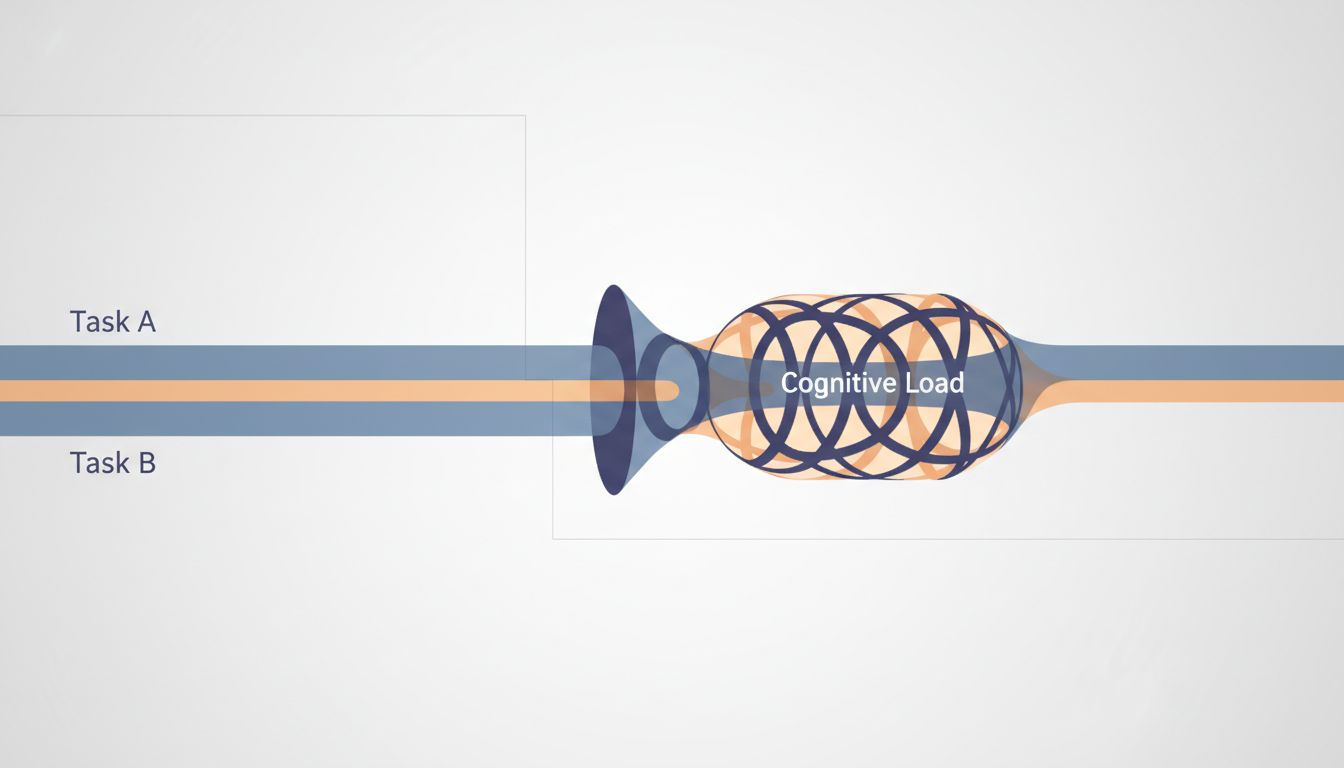
The core phenomenon has a formal name: task-switching cost. When your brain shifts from one cognitive task to another, it doesn’t just pick up the new task cleanly. It goes through a reconfiguration process, loading the rules, priorities, and working memory context for the new task while suppressing the old ones. That suppression is important. Your brain has to actively inhibit the previous task’s mental set, and that inhibition takes time and effort. Neither task gets your full attention in the transition period, and the transition period is longer than you feel it is.
Researcher David Meyer and colleagues at the University of Michigan found that even brief mental blocks created by switching tasks can cost as much as 40% of someone’s productive time. That figure is frequently quoted because it’s striking, but the mechanism behind it matters more than the number. The loss isn’t uniform across task types. Complex, rule-governed work (writing, coding, analysis) suffers far more than simple, repetitive tasks. Checking off items on a packing list while half-listening to a podcast is a manageable split. Writing a technical specification while monitoring Slack is not.
What’s Actually Happening in Your Brain
Your prefrontal cortex manages what researchers call “goal maintenance.” It holds the current task’s rules and priorities active so you can apply them quickly and accurately. When you switch tasks, the prefrontal cortex has to reload a different goal state. This isn’t instantaneous, and it isn’t free.
The residue left by the previous task is another underappreciated factor. Sophie Leroy’s research at the University of Minnesota introduced the term “attention residue” to describe what happens when you move from Task A to Task B before Task A is finished or fully resolved. Part of your attention stays on the unfinished work. You’re technically on Task B, but a background process is still running on Task A. The less complete or resolved Task A was, the more residue it leaves behind.
This is why interruptions during difficult work feel so much more costly than interruptions during easy work. If someone pulls you out of a routine data entry task, you can re-enter it quickly because there’s little working memory state to reconstruct. If someone interrupts you halfway through debugging a complex function, you’re losing a fragile mental model you may have spent twenty minutes building.
Sequential vs. Parallel: The Arithmetic
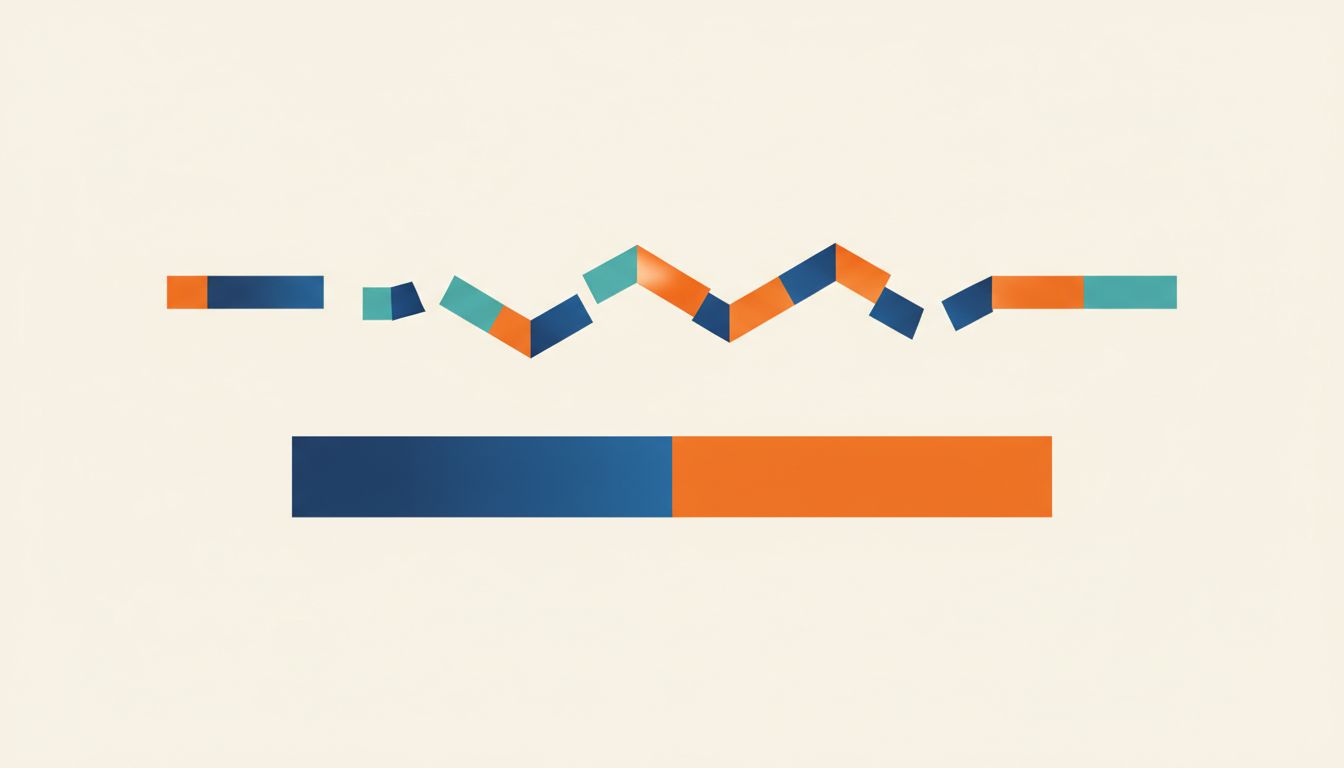
Here’s a useful way to think about the tradeoff. Say you have two tasks, each taking one hour to complete sequentially. If you split your attention evenly, each task takes longer due to switching costs and reduced cognitive throughput. In practice, you might not finish either task in two hours. You end up with two half-finished tasks and none of the closure that comes from completing something.
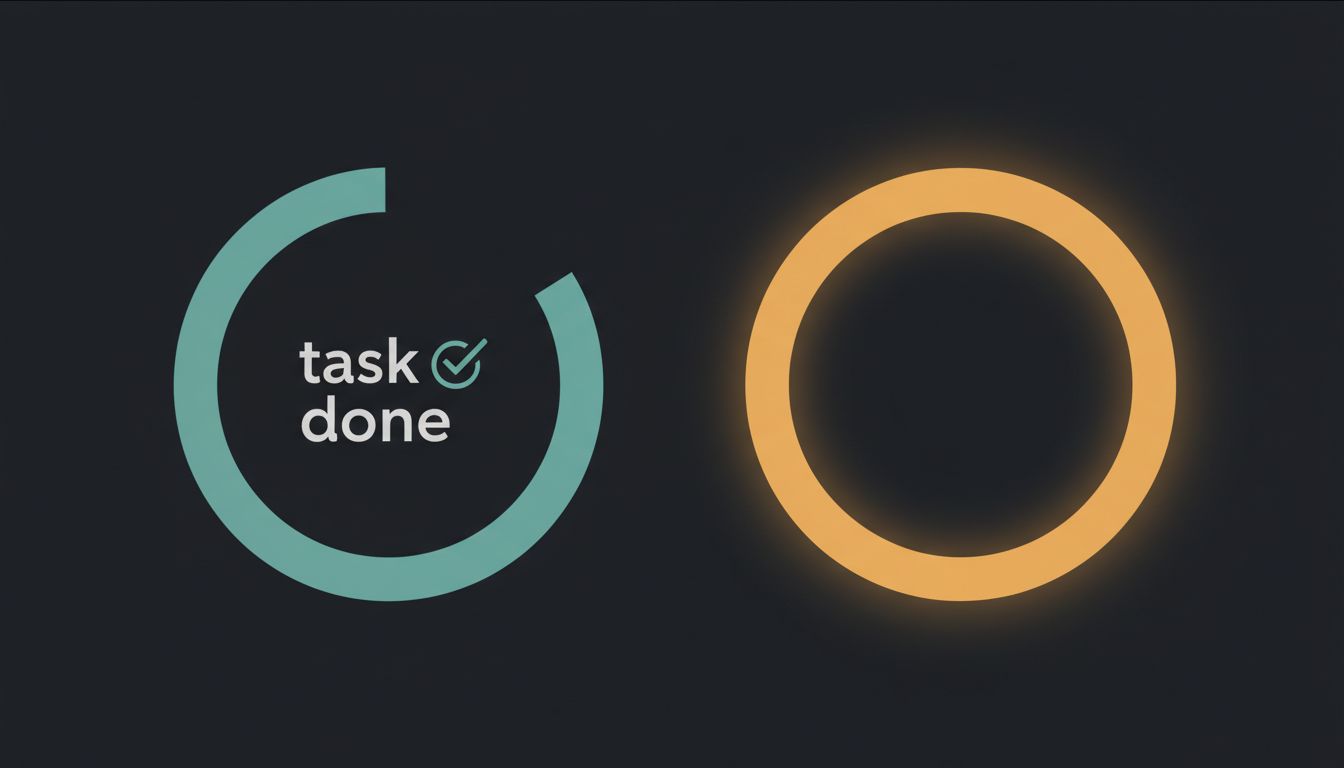
The sequential option costs the same two hours in calendar time, but you get a finished Task A after hour one. That completion matters more than it sounds. Finished work creates forward momentum. It also removes the attention residue dragging on everything else you’re doing. Finishing a task and closing it are not the same thing, but you at least need the first part before you can do the second.
Parallel work on similar, interleaved tasks can work when the tasks are low-stakes and low-complexity, like processing email while waiting on a slow build. The mistake is generalizing from that experience to high-stakes knowledge work. You can’t code and edit prose simultaneously and do either well. Your brain’s language processing, problem-solving, and working memory systems overlap too much.
Why Meetings Make Everything Worse
The modern knowledge worker’s calendar turns this problem into a structural one. Meetings are the most disruptive form of task-switching because they’re socially obligated, they arrive at fixed times regardless of where you are in your work, and they require a different kind of focused attention than solo deep work.
A one-hour meeting in the middle of the morning doesn’t cost you one hour. It fragments a four-hour block into two two-hour blocks. Research on creative and analytical work consistently shows that meaningful output requires sustained focus periods. Two hours is often not enough to reach the depth required for hard problems, particularly if you’re carrying meeting residue from the session you just left.
The pattern many high-output workers arrive at independently is to protect long, uninterrupted blocks for their most cognitively demanding work and batch reactive tasks (communication, review, approvals) into scheduled windows. This isn’t a radical productivity hack. It’s just applying the mathematics of switching costs deliberately rather than letting your calendar do it randomly.
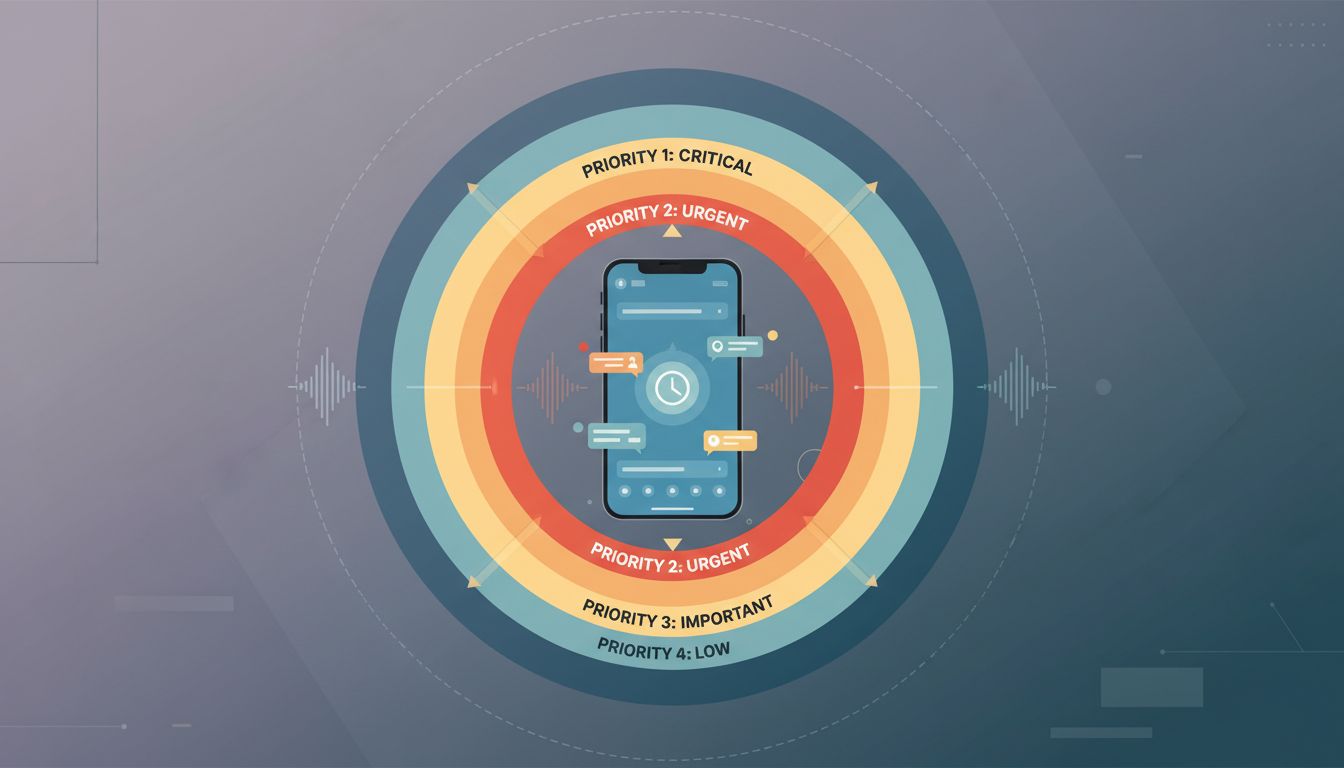
Notifications are interruptions you scheduled yourself is the other side of this problem. Meetings are externally imposed fragmentation. Notifications are fragmentation you invited in.
The Illusion of Parallel Progress
One reason people resist sequential work is that it feels less productive in the moment. Working on one thing while other things sit idle triggers anxiety. The task list gets longer in your mental peripheral vision. You feel the pull of the unstarted.
This is a mismatch between your intuition about productivity and what productivity actually requires. Visible activity across many tasks feels like progress. But most knowledge work isn’t valued by inputs or motion. It’s valued by finished outputs of sufficient quality. A half-finished analysis that took four hours spread across two days of scattered attention is worth less than a finished analysis that took three focused hours. The math favors depth.
There’s also an asymmetry in how mistakes distribute across task types. Errors in creative and analytical work are expensive to catch and fix. They often require re-engaging the full mental context you had when you made them. Splitting attention increases error rate. Errors increase rework. Rework, done while your attention is still divided, produces more errors. This spiral is real and it’s one of the hidden costs that doesn’t show up when you feel “busy and productive.”
How to Actually Restructure Your Workday
You don’t need to overhaul everything. A few targeted changes will produce most of the benefit.
First, identify your two or three most cognitively demanding recurring tasks. These are the tasks where quality matters most and errors are most expensive. Protect contiguous time for them. “Contiguous” means at least 90 minutes without scheduled interruptions, and with notifications off. Don’t negotiate this time down. An 80-minute block becomes a 45-minute block after you account for warm-up and wind-down.
Second, complete one of those tasks before starting the next. This sounds obvious but conflicts with how most people manage multiple projects. The pressure to show progress on everything pushes you toward parallelism even when it’s counterproductive. If you have two major deliverables due this week, finishing one on Tuesday and the other on Thursday is almost always better than having both at 50% on Thursday morning.
Third, be realistic about which tasks actually require your full cognitive capacity. Not everything does. Batching reactive, low-stakes tasks together is a legitimate strategy. The goal isn’t to be a single-task purist. It’s to stop applying the parallel approach where it actively costs you.
Finally, reduce the incomplete task residue you carry into your focused blocks. Before you start a deep work session, close out the open loops you can close quickly. Respond to the email you’ve been avoiding. Make the small decision you’ve been deferring. The real reason knowledge workers lose hours every day is often the weight of unresolved items pulling at attention during work that deserves full focus.
What This Means
Splitting attention across two tasks doesn’t give you two tasks progressing at half speed. It gives you two tasks progressing at less than half speed, with higher error rates and lower output quality than either would get if done sequentially. The switching cost is real, attention residue is real, and the asymmetry between how productive parallel work feels and how productive it actually is will keep fooling you unless you measure outputs rather than activity.
The practical position is this: protect sequential, uninterrupted blocks for your most demanding work. Batch reactive tasks. Complete things before starting new things wherever the project structure allows. These aren’t personality choices or preferences. They’re responses to how cognition actually works under load.