
When Instagram removed the chronological feed, users revolted. When Snapchat redesigned its interface and buried core functionality, the backlash was loud enough to wipe roughly a billion dollars off the company’s market value in a single day. When Twitter (now X) killed third-party API access and gutted features that power users had relied on for years, the eulogies were written immediately. Each of these moves looked, from the outside, like arrogance or incompetence. They were neither. They were the predictable output of a specific economic logic that governs nearly every mature consumer app, and once you understand it, you will never look at a product changelog the same way again.
The Paradox of Growth
Here is the core tension every successful app eventually faces. Early users, the ones who made the app successful, are almost never representative of the users who make the app profitable. Early adopters are high-engagement, high-tolerance, feature-hungry power users who found the product before it was easy to find. They evangelized it, stress-tested it, and built identities around it. They are, in aggregate, a small minority of the eventual user base and, crucially, they tend to generate a disproportionately small share of revenue.
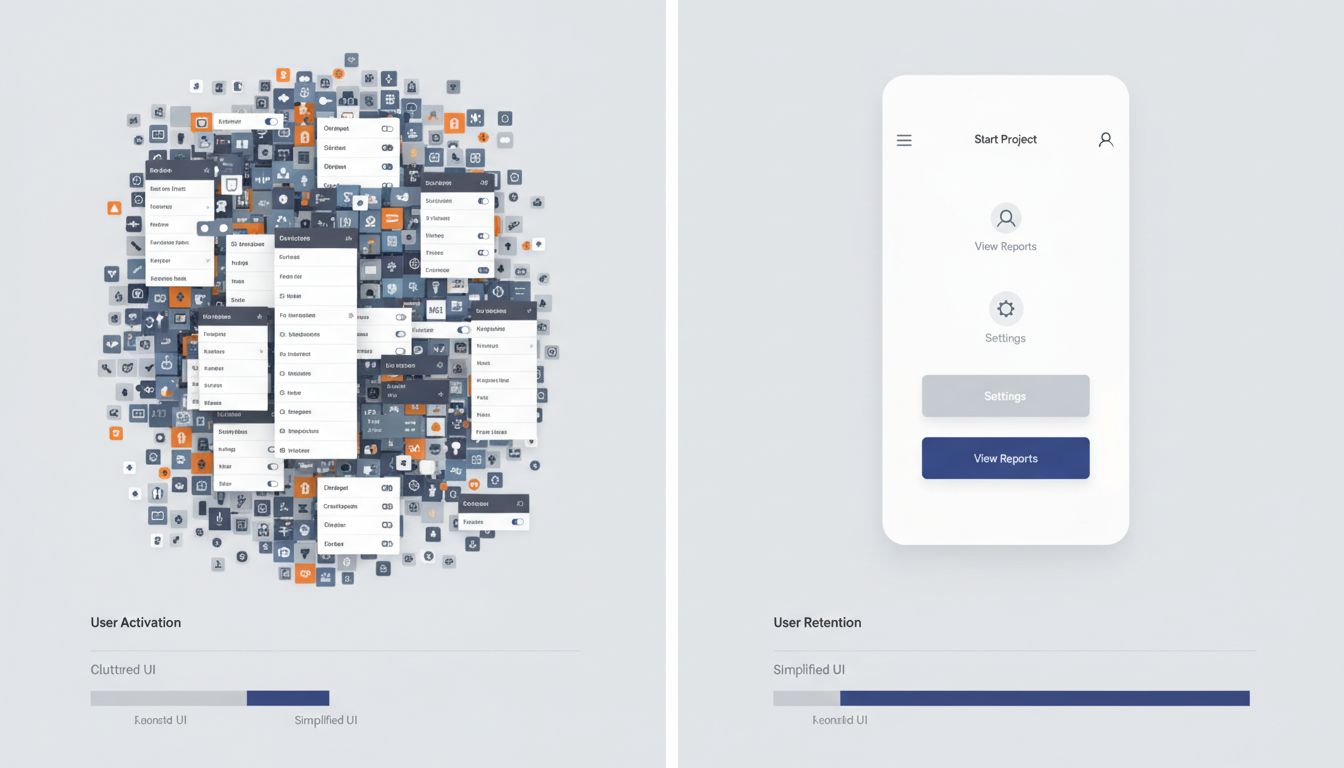
The profitable majority arrives later. These users want fewer choices, not more. They want the app to do one thing reliably. Every additional feature is, for them, a potential source of confusion. And confusion is the enemy of conversion, retention, and the subscription upgrades that fund the whole operation.
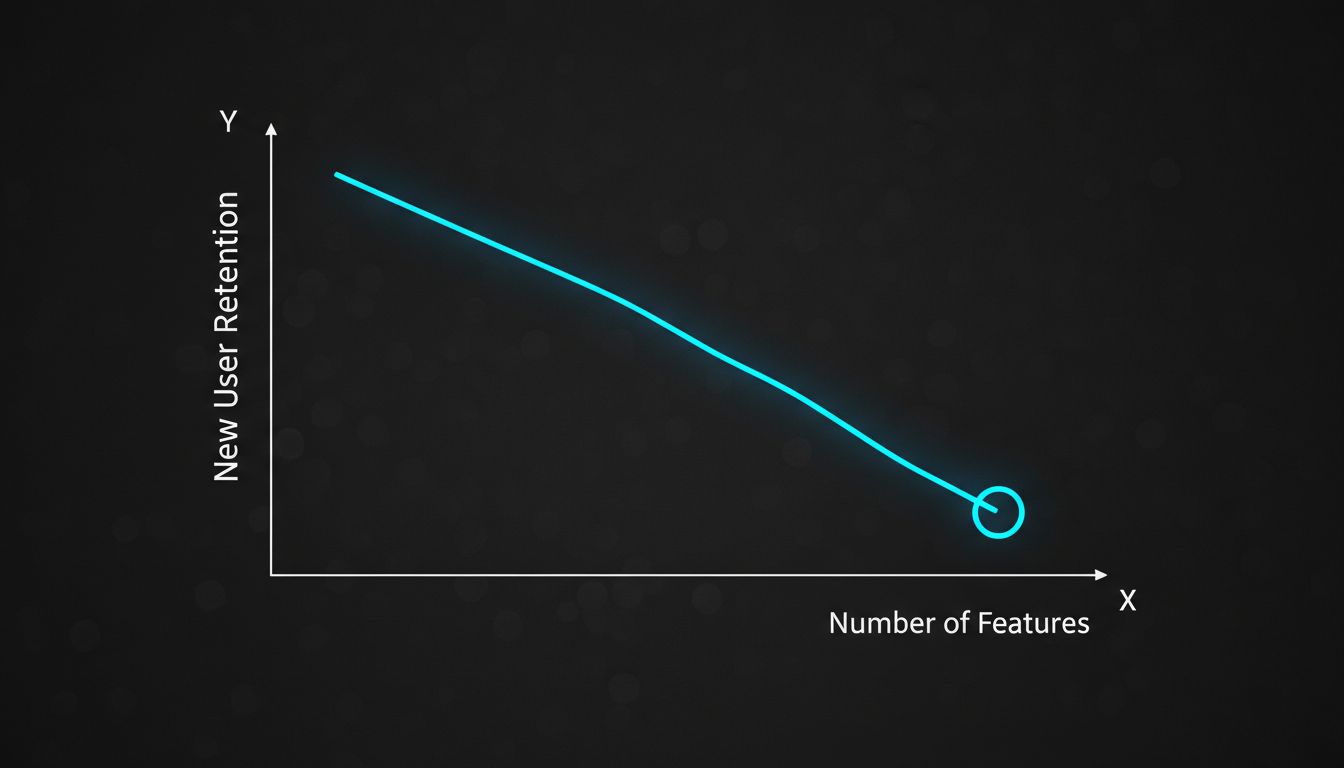
This dynamic has a name in product economics: feature bloat penalty. Studies of SaaS products consistently show that after a certain threshold (usually somewhere around thirty to forty distinct features), each additional feature added to a product reduces new user activation rates. The product becomes harder to explain, harder to learn, and harder to justify in a thirty-second pitch to a skeptical friend.
Subtraction as Strategy
Removing features is not a retreat. It is frequently the most aggressive competitive move a mature product can make. The framing matters enormously here. When a company cuts features, the internal narrative is almost never “we are giving up.” It is “we are doubling down on the users who actually pay us.”
This is the logic Spotify used when it repeatedly simplified its desktop interface over several years, removing granular playback controls that audiophiles cherished. Spotify’s data showed that those controls were used by a fraction of a percent of its listener base but added meaningful cognitive overhead to the interface for everyone else. The calculus was not sentimental. It was actuarial.
The same math governed Slack’s controversial decision to simplify its sidebar and hide lesser-used channels by default. Power users were furious. Onboarding rates for new enterprise customers improved substantially. Slack’s business runs on enterprise seats, not on the preferences of the developers who loved the old layout.
This is also why startups that launch with deliberately missing features often outperform competitors who ship everything from day one. The discipline of omission, it turns out, scales.
The Tyranny of the Power User
There is a specific failure mode that haunts every consumer app at scale: optimizing for the loudest voice in the room instead of the quietest wallet.
Power users are, by definition, highly engaged. They post on Reddit, they write app reviews, they have opinions. When a feature disappears, they are the ones who surface in the press, who generate the angry tweets, who become the face of the backlash. Product teams that lack good data (or the nerve to act on it) will mistake this vocal minority for a representative sample of their user base.
It is a costly mistake. Platform companies understand this better than anyone. They have learned that the architecture of who gets heard inside a product organization shapes the product itself. The companies that systematically strip out features are, in many cases, the ones that have finally built the internal discipline to separate signal from noise.
This is also, incidentally, why notification systems are almost never designed with power users in mind. Notification systems are designed to train behavior at scale, and the behaviors that matter at scale belong to casual users, not enthusiasts.
The Subscription Economics Forcing Function
The shift from one-time purchases to subscription models has dramatically accelerated feature removal. This seems counterintuitive until you look at the incentive structure.
Under a perpetual license model, a company’s primary economic relationship is transactional. It needs to convince you to buy, once, and features are the justification for the price. More features, in that model, read as more value.
Under a subscription model, the primary economic relationship is about retention. The question is not whether you will buy today but whether you will still be subscribed in thirteen months. And the research here is unambiguous: complexity is one of the leading drivers of subscription churn. Users who feel overwhelmed by a product cancel. Users who feel competent and satisfied stay. The math behind subscription pricing is already designed to extract maximum value over time, and feature reduction is one of the levers that makes the model work.
This is why you will almost never see a mature SaaS company add features to its base tier over time. The trajectory is almost always in the other direction: simplify the base product, move advanced features upmarket into more expensive tiers, and let the power users self-select into premium plans where their complexity appetite can be monetized properly.
What Users Are Actually Losing
None of this means that users are wrong to be frustrated. Feature removal is frequently accompanied by genuine loss, particularly for accessibility features, workflow integrations, and the kinds of niche functionality that cannot be replicated by competitors. When a company prunes aggressively, real users lose real tools they depended on.
The honest framing is this: feature removal is a company optimizing for its own economic survival over the preferences of a minority of its users. That is a legitimate business decision. It is also, sometimes, a genuine betrayal of the community that made the product worth building in the first place.
Tech companies have always understood that a pivot away from early adopters is not a failure of vision. It is, usually, the moment when the real vision finally becomes clear. The tragedy is that the people who built the early community rarely get to be part of what comes next.
The next time a favorite app strips out a feature you relied on, the product team is not confused, distracted, or indifferent. They are making a calculated bet that your frustration is an acceptable price for someone else’s simplicity. Whether they are right is a question of data. Whether it is fair is a different question entirely, and one that the economics have never been designed to answer.