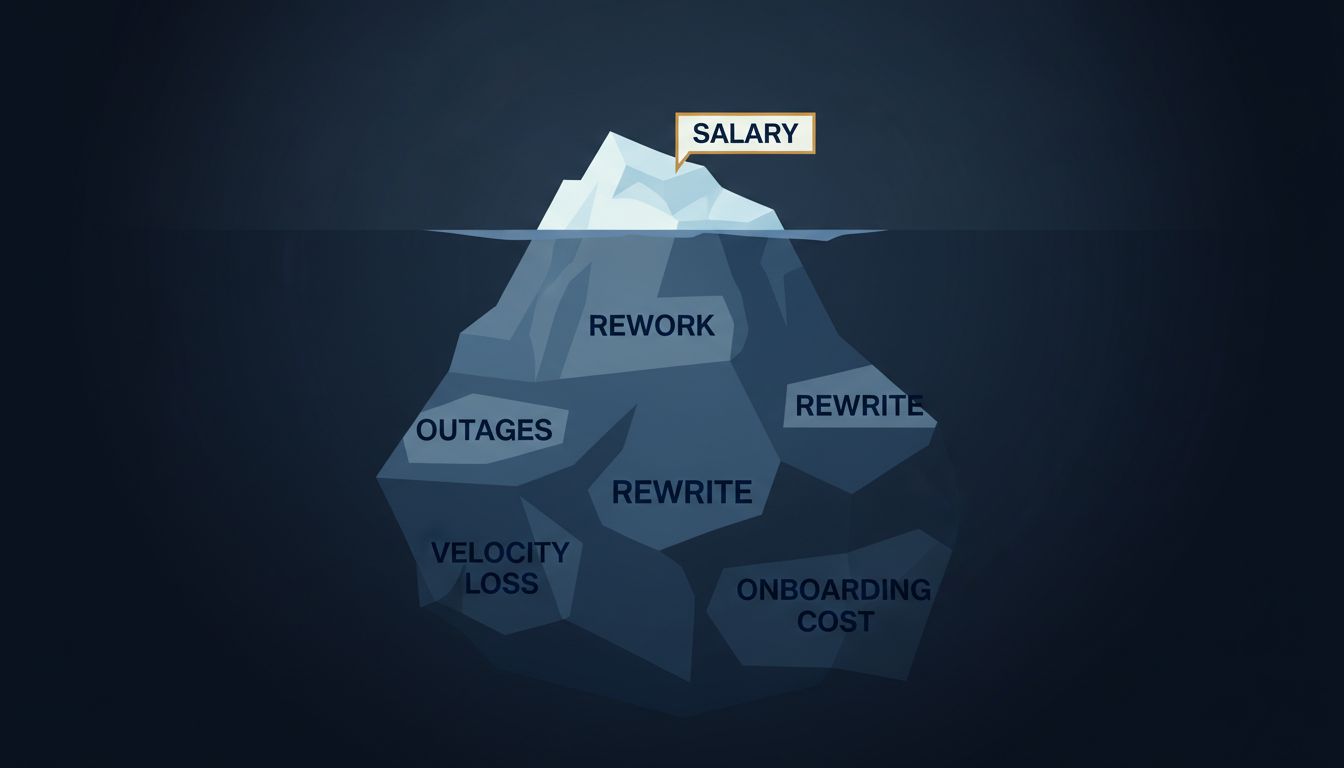

When ChatGPT launched in late 2022, OpenAI imposed strict rate limits on free users almost immediately. When Gmail debuted in 2004, it was invitation-only for nearly two years. When Clubhouse exploded in 2021, you needed a referral to get in. The standard explanation is that these companies were managing server load, protecting infrastructure, and buying time to scale. That explanation is mostly wrong, or at least incomplete. The real reason platforms launch with artificial limits has far more to do with economics, psychology, and long-term retention than it does with keeping the lights on.
This counterintuitive strategy connects to a broader pattern in how tech companies deliberately engineer the conditions for their own success, often in ways that look like constraints but function as fuel. As explored in Tech Companies Deliberately Hide Their Best Features, and the Business Logic Is Ruthless, the most sophisticated platforms routinely use perceived limitation to drive behavior in ways that benefit the company far more than the user.
Scarcity Creates Signal, Not Just Demand
The conventional view of launch limits is supply-side: the company can’t handle the traffic, so it throttles access. But a closer look at the data tells a different story. Gmail’s servers in 2004 were not, by any reasonable measure, incapable of handling more users. Google’s infrastructure at the time was already serving billions of search queries per day. The invitation system was not a technical necessity. It was a manufactured scarcity mechanism.
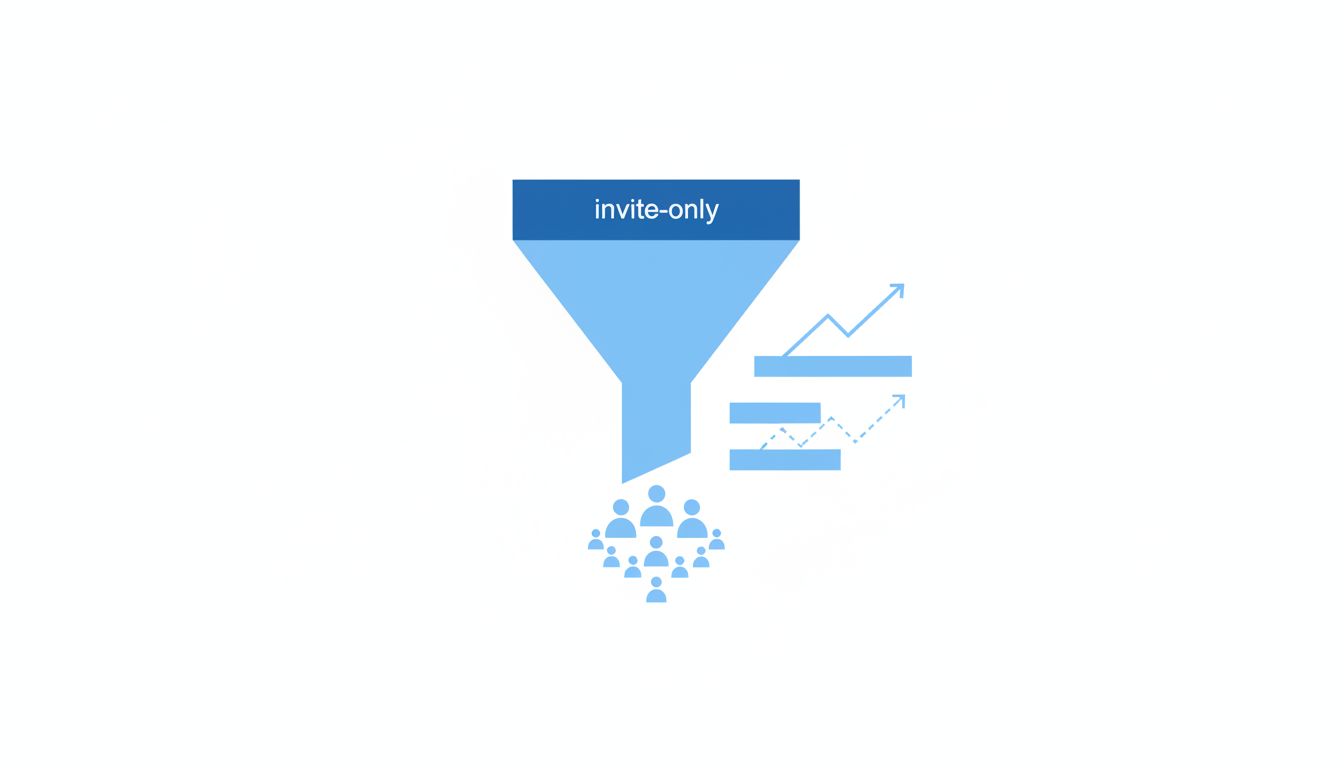
The effect was predictable and measurable. Invitation codes for Gmail accounts were selling on eBay for as much as $150 in the first weeks after launch. The platform had created a secondary market for access before most people had even used the product. That market was doing something valuable: it was revealing who wanted the product badly enough to pay for it, and it was broadcasting social proof to everyone watching.
This is the first hidden function of artificial limits. They filter for high-intent early adopters, which means the first wave of users tends to be more engaged, more vocal, and more likely to recruit others. The platform learns faster, gets better feedback, and builds a reputation among the exact demographic it needs to reach.
The Psychological Mechanics of Restricted Access
Beyond signal, there is a well-documented psychological phenomenon at work. Research in behavioral economics consistently shows that people assign higher value to things they had to work to obtain. This is sometimes called the IKEA effect in product design, but it operates at the platform level too.
When a user earns access rather than simply downloading an app, their relationship with the product changes. They are more likely to explore it thoroughly, more likely to forgive early rough edges, and more likely to advocate for it among peers. Platforms that open their doors to everyone on day one skip this honeymoon period entirely. They get raw, unfiltered users who have no emotional investment in the product’s success.
Clubhouse is an instructive case study in what happens when the honeymoon ends too quickly. Once the platform dropped its invite requirement in 2021, growth accelerated briefly and then collapsed. The restricted access had been propping up perceived value. When anyone could join, the product had to stand entirely on its own merits, and it turned out those merits were not as durable as the scarcity premium had made them appear.
This dynamic is also why some of the most successful apps today began as internal tools built for small, specific audiences, as detailed in Most Successful Apps Started as Internal Tools Nobody Meant to Sell. The accidental scarcity of a tool built for a small team often mirrors the effects of intentional launch limits.
Rate Limits as a Revenue Architecture Tool
Modern platforms have refined artificial limits into something more sophisticated than invite-only gates. Rate limiting, which caps how much a free user can do in a given period, is now the dominant form of launch scarcity. And it is doing several things at once.
First, it protects the economics of a loss-leader free tier. When a platform gives away access at no cost, every additional unit of usage costs money. Compute, storage, and bandwidth are not free. A rate limit converts an open-ended liability into a bounded one.
Second, and more importantly, rate limits create a natural upgrade moment. The user hits their cap exactly when they are most engaged, which is precisely the moment they are most likely to convert to a paid tier. This is not accidental. Product teams at companies like Dropbox, Notion, and Spotify have spent considerable resources identifying where in the usage curve the limit should sit to maximize conversion without triggering abandonment.
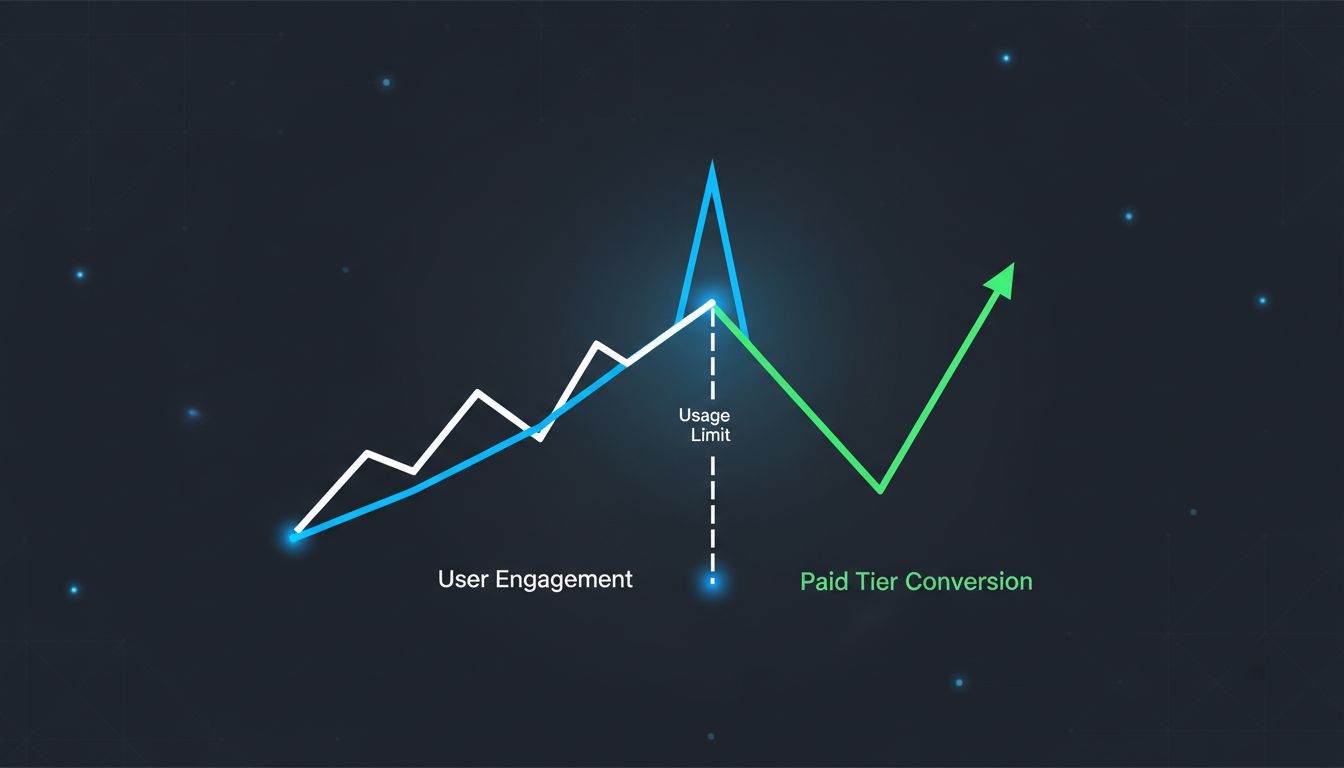
The result is a pricing architecture that turns limitation into a sales funnel. As covered in Tech Companies Deliberately Price Premium Products at a Loss and the Strategy Is Hiding in Plain Sight, the free tier is not charity. It is a calculated investment in future revenue.
Why Gradual Scaling Is Better Business Than Open Access
There is a third function of launch limits that gets almost no attention: operational learning.
When a platform scales gradually, it encounters failure modes in sequence rather than simultaneously. A server that crashes under ten thousand users is a problem you can solve before it becomes a problem under ten million users. But the logic extends beyond infrastructure. Gradual scaling means customer support queues are manageable, feedback is easier to categorize, and product iterations can be tested on a population small enough to draw clean conclusions.
This is why the most technically sophisticated companies, ones with no realistic capacity constraints, still choose to scale slowly. It is not risk aversion. It is a form of controlled experimentation. The platform is learning what its users actually do, not what they said they would do in surveys or focus groups.
This approach reflects a broader philosophy in successful early-stage companies, one that prioritizes deep understanding over rapid growth. Early-Stage Startups Win by Knowing Less Than Their Competitors, Not More makes the case that constraints, including information constraints, often produce better decisions than abundance.
The Limit as a Feature, Not a Bug
The most durable insight here is that artificial limits, when designed well, do not diminish a product. They shape the conditions under which a product can succeed. They filter for the right users, create psychological investment, build natural conversion paths, and buy time for the platform to learn.
The companies that understand this do not treat their launch limits as temporary embarrassments to be removed as quickly as possible. They treat them as deliberate instruments that serve a specific purpose for a specific window of time. When that window closes, the limits come down, but by then the platform has done the foundational work that open access from day one would have made impossible.
Next time a new platform makes you wait, charges you for going over a modest usage cap, or requires a referral to join, consider the possibility that the friction is the point. The company may not be struggling to keep up. It may be doing exactly what it planned.