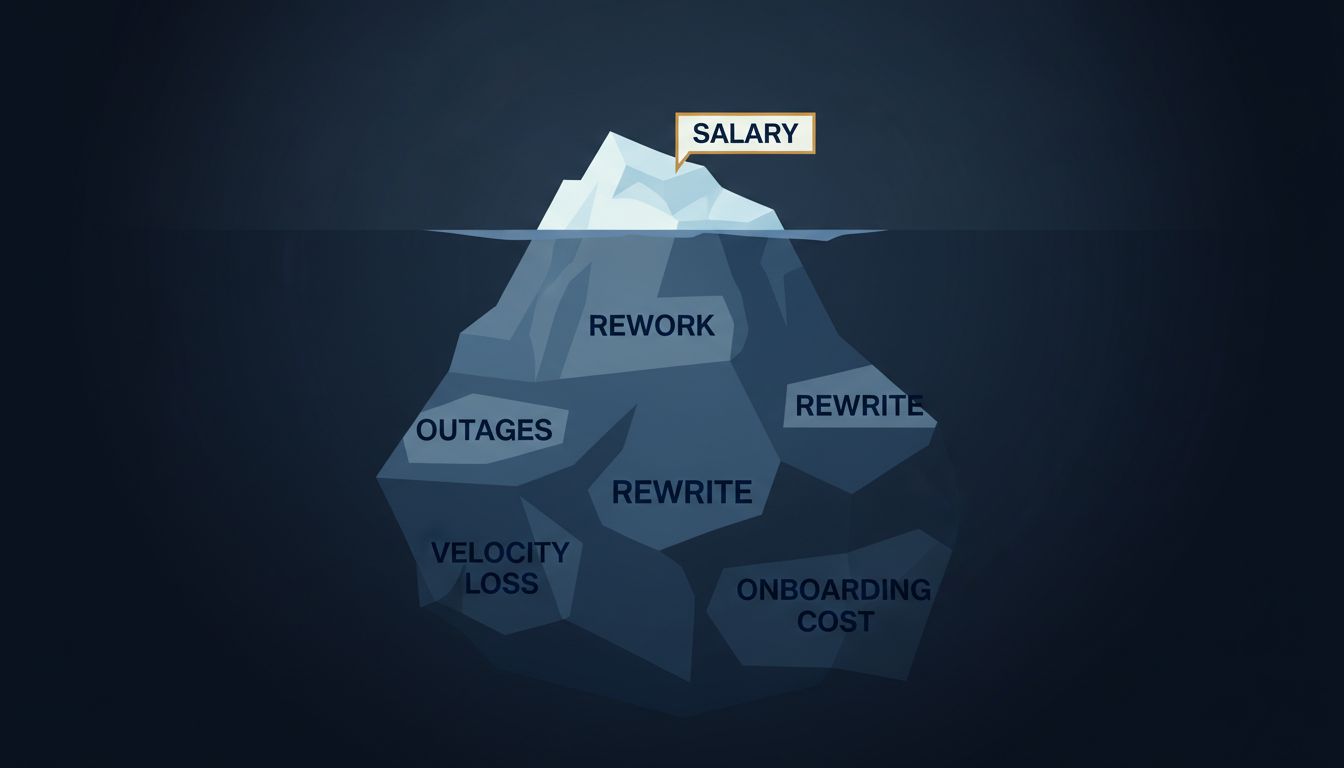

The best engineers at the best companies in the world know something that most business schools still haven’t caught up to: technical debt, that dreaded accumulation of shortcuts, workarounds, and deferred maintenance that makes codebases creak and CTOs sweat, is not always a liability. In the hands of a strategically minded organization, it is a weapon.
This sounds counterintuitive until you realize that the same logic governs almost every deliberately confusing move Silicon Valley makes. Tech companies that make their APIs deliberately difficult to use are not being incompetent. They are building moats. Strategic technical debt operates on the same principle: the mess is the point.
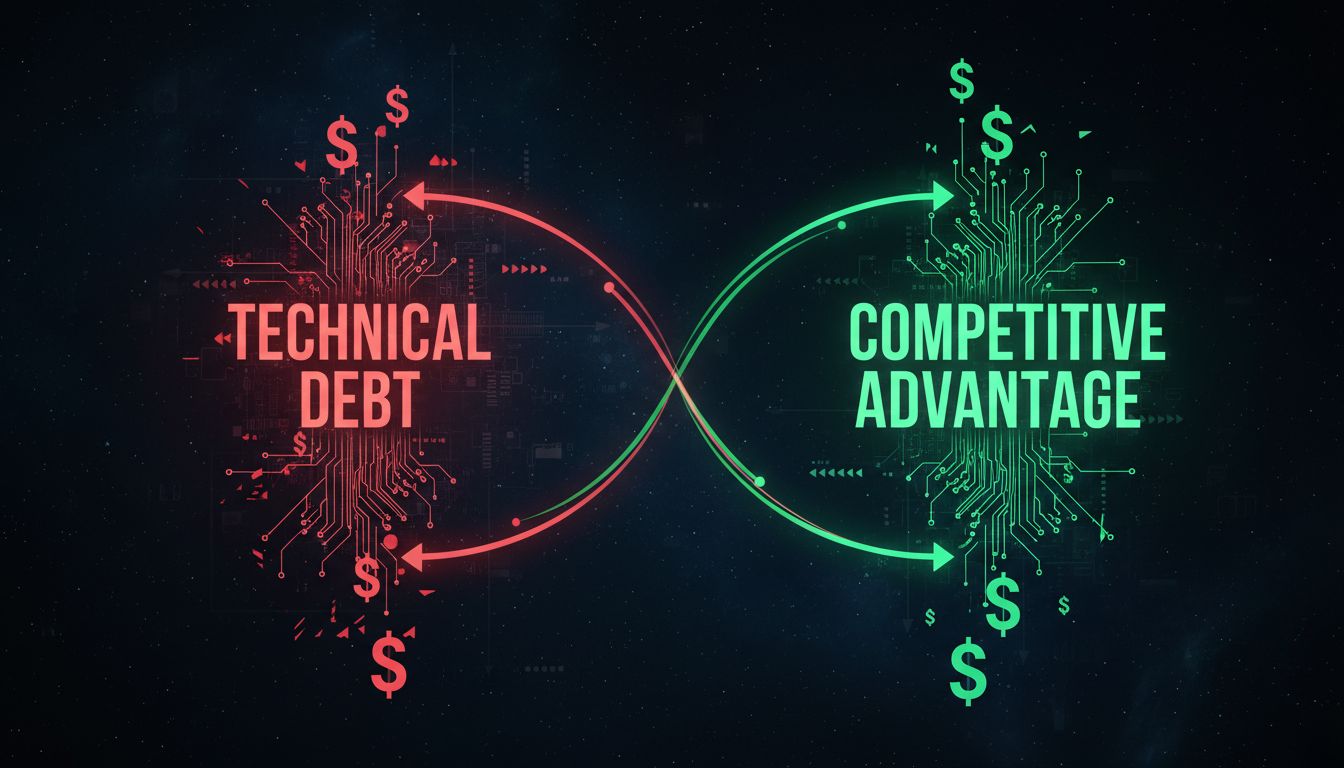
What Strategic Technical Debt Actually Means
Let’s be precise about the distinction, because the term gets mangled constantly. Accidental technical debt is what happens when a team is under-resourced, moves too fast without a plan, or simply makes poor architectural decisions. It compounds over time and eventually collapses under its own weight.
Strategic technical debt is different. It is a deliberate, time-bounded decision to accept known engineering compromises in exchange for a specific competitive outcome. The team knows exactly what corners are being cut, why they are being cut, and what the eventual cost of paying that debt back will look like. The key word is deliberate. The shortcut is not a mistake. It is a bet.
Amazon’s early infrastructure is the canonical example. The company’s legendary internal services architecture, later formalized into what became AWS, was built on layers of expedient decisions. Engineers were writing code that other engineers could barely parse, and for good reason: speed of iteration mattered more than elegance. The debt was real, but the market position it purchased was transformative.
This is not unlike how top performers schedule procrastination rather than fighting it. The insight is the same: not all deferred work is neglect. Some of it is sequencing.
The Three Scenarios Where Debt Becomes Strategy
Strategic technical debt tends to cluster around three recognizable competitive scenarios.
The Land Grab. When a market is forming and the window to establish a dominant position is narrow, shipping matters more than shipping cleanly. The calculus is simple: a technically perfect product that arrives second is worth less than a messy product that arrives first and captures distribution. Slack shipped a product full of known architectural limitations because the collaboration software market was moving fast and establishing the habit loop mattered more than the plumbing underneath it.
The Decoy Architecture. Some companies ship technically compromised versions of a feature not because they have to, but because a deliberately limited implementation creates a forcing function for competitors. When a rival tries to replicate the feature, they replicate the limitation, not the roadmap. By the time they catch up, the originator has already retired the debt and moved to a superior architecture. It connects to a broader pattern of companies launching products they know will fail as a strategic feint.
The Switching Cost Amplifier. Certain technical decisions that look like sloppiness are actually sophisticated lock-in mechanisms. Data formats that require proprietary tools to read, integration patterns that only work smoothly within a single vendor ecosystem, APIs with idiosyncratic authentication flows: these are not accidents. They are investments in friction. Every workaround a customer builds around your technical debt is another reason they cannot leave.
Why Incumbents Are More Vulnerable Than They Look
Here is the part that the incumbents consistently miss. Strategic technical debt is most powerful when wielded by a challenger, not a defender. A large company with a mature codebase cannot easily make the same bet. Their existing debt is accidental, accumulated over years, and the idea of adding more intentionally is terrifying to any engineering organization trying to manage what already exists.
This creates an asymmetric dynamic. Early-stage startups win not by knowing more than incumbents but by strategically knowing less: they have no legacy decisions to protect, no existing architecture to be consistent with, and no internal political battles over whose system gets replaced. They can absorb debt strategically precisely because they have no inherited debt to manage.
The incumbent, meanwhile, is paralyzed. It cannot easily replicate the challenger’s speed without incurring debt it cannot afford. And if it tries to clean up its own existing debt to become more agile, it consumes the engineering resources that could have been used to compete.
The Discipline That Makes It Work
The failure mode for strategic technical debt is predictable: the strategy stops being strategic. Companies borrow against their technical future to win a market moment, win it, and then fail to pay the debt back. The shortcuts become permanent. The workarounds get worked around again. The codebase becomes genuinely unmaintainable, and what started as a competitive weapon becomes the thing that eventually kills you.
The companies that get this right share one discipline: they treat the debt like a financial instrument with a maturity date. Before the shortcut is made, there is a plan, even a rough one, for when and how it gets retired. The team that makes the shortcut is often the team responsible for cleaning it up. The debt is tracked, not euphemized.
This mirrors something that high-performing teams do in other domains. The most productive teams stopped using real-time collaboration tools not because they became less collaborative, but because they got more deliberate about when and how they incurred the cost of coordination. The principle is the same: not all costs are bad, but untracked costs are always dangerous.
The Uncomfortable Truth
Most conversations about technical debt frame it as a failure of discipline. The engineering team moved too fast. Management didn’t prioritize refactoring. The culture didn’t value code quality.
Sometimes that’s true. But the most successful technology companies in the world have all, at some critical moment, made a deliberate choice to ship something they knew was imperfect because the alternative was losing the moment entirely. They borrowed against their own future, on purpose, and then paid it back.
The difference between a company that does this well and one that does it catastrophically is not the debt itself. It is whether anyone made the decision consciously, wrote it down, and treated the payback as a commitment rather than a vague intention.
Technical debt is always a choice. The only question is whether it’s your choice or your codebase’s.