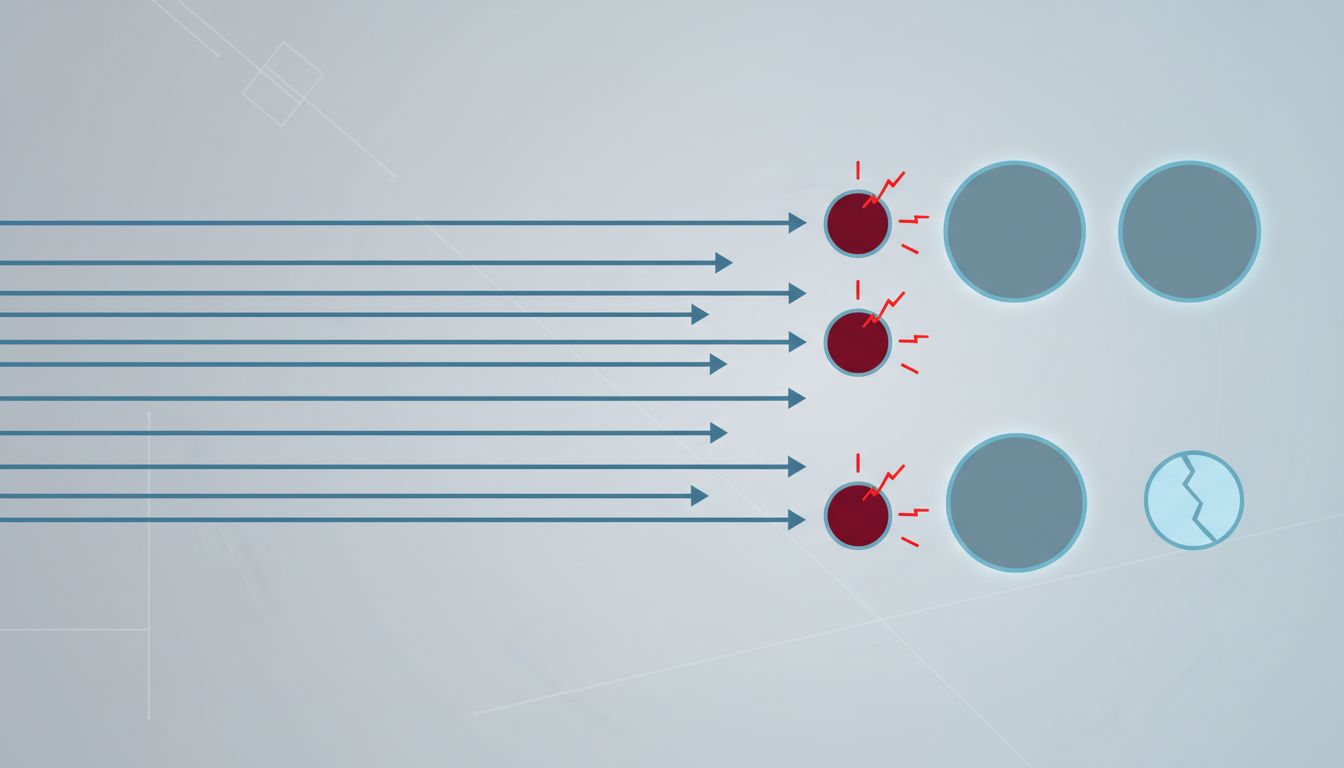
The software bug you never noticed may have been put there on purpose. Not out of incompetence, not because of a rushed deadline, but as the result of a deliberate, economically rational decision made by engineers and product managers who understood exactly what they were doing. This is one of the stranger truths about the modern software industry, and once you see it, you cannot unsee it.
This pattern sits alongside a broader set of counterintuitive industry behaviors. As we’ve examined before, tech companies deliberately delay products that are ready to ship, and the logic driving that decision is the same logic that governs intentional bug architecture: control over user behavior, not engineering limitation, determines what ships and when.
What an Intentional Bug Actually Looks Like
Let us be precise about what we mean. A deliberately introduced bug is not a flaw that crashes your application or corrupts your data. Those bugs are accidents, embarrassments, and occasionally lawsuits. The intentional variety is far more subtle. It is a behavior that functions slightly worse than it could, in a way that nudges you toward a different action, a paid tier, a different product, or a dependency on the company’s ecosystem.
Consider the way certain free-tier cloud storage products slow down file sync speeds imperceptibly as your storage approaches its limit. The slowdown is real but never dramatic enough to trigger a support ticket. It is calibrated to create friction without creating anger. The user does not notice a bug. The user notices, vaguely, that things feel a little sluggish, and eventually upgrades.
This is behavioral engineering wearing a bug’s clothing.
The Economics Are Hiding in the Engineering
The cost calculus here is colder than it sounds. The software industry has understood for fifty years that fixing a software bug costs 100x more than preventing it. Intentional bugs invert this equation entirely. They are cheap to introduce, nearly impossible to detect as deliberate, and expensive for competitors to reverse-engineer and replicate.
There is also the question of what gets built versus what gets released. The industry routinely builds features it never releases on purpose, and intentional bugs operate on the same principle. Just as withheld features can be deployed strategically to respond to competitive threats, friction-as-bug can be dialed up or down depending on business conditions. A company facing a pricing war can quietly reduce the artificial friction on its free tier. When competitive pressure eases, it dials it back up.
None of this appears in the changelog.
The Three Categories of Deliberate Friction
Not all intentional bugs are created equal. They tend to cluster into three distinct types.
The first is conversion friction, illustrated by the cloud storage example above. The bug exists to push free users toward paid plans by degrading an experience in a targeted, deniable way.
The second is retention friction. This is the bug that makes it slightly harder than it should be to export your data, cancel your subscription, or migrate to a competitor. The export button exists. It works. But it requires three more steps than necessary, times out on large datasets with suspicious frequency, or produces files in a format that requires proprietary software to open. These are not accidents. They are moats built from sand, intentionally granular and specifically placed.
The third is attention friction, and it is the subtlest of all. Certain productivity applications introduce minor inconsistencies in their interface, small behaviors that do not quite match user expectations, because inconsistency keeps users mentally engaged with the tool rather than running on autopilot. An application you have to think about is an application you are using, which means it counts toward engagement metrics. This dynamic connects to why tech companies deliberately design slow loading screens, another counterintuitive design choice that turns out to be anything but accidental.
How Engineers Are Convinced to Build This
The more uncomfortable question is not whether this happens but how it gets past the engineers who build it. The answer is that it usually does not look like what it is at the moment of construction.
A product manager does not walk into a sprint review and say “let us introduce a bug that throttles exports.” Instead, the request is framed as a resource constraint. Export jobs are expensive to run at scale. We need to rate-limit them for infrastructure reasons. The engineers implement rate limiting. The rate limit is set to a threshold that, conveniently, affects almost exclusively the highest-volume free-tier users, the ones most likely to be evaluating whether to pay. The infrastructure justification is real. The business justification, never stated aloud, is also real.
This is how deliberate friction maintains plausible deniability inside the organization that builds it, not just outside it. As we have noted in examining why software bugs multiply when teams grow, the communication structures of large engineering organizations are remarkably good at distributing knowledge in ways that leave no single person holding the full picture. Intentional bugs benefit from the same organizational architecture.
The Point at Which This Becomes Regulation’s Problem
There is a legal line somewhere in this territory, and the industry is beginning to feel it. Consumer protection regulators in Europe and, increasingly, in North America are starting to scrutinize what they are calling “dark patterns,” design choices that manipulate user behavior against the user’s own interests. Intentional friction bugs are dark patterns with better cover stories.
The companies most exposed are the ones whose friction is least defensible on engineering grounds. If a rate limit can only be explained by its business effect and not by any genuine infrastructure constraint, the argument that it was a neutral technical decision collapses under adversarial scrutiny. The same AI systems that are now finding patterns in data that human brains cannot see are increasingly being deployed by regulators and researchers to detect behavioral anomalies in software that correlate suspiciously well with business outcomes.
The bug defense is not going to hold forever. The companies that survive this shift will be the ones that achieve the same business outcomes through products good enough to justify the price, rather than bad enough to manufacture the need.
That is a harder problem. It is also, arguably, the correct one.