The Counterintuitive Practice at the Center of Modern Software Testing
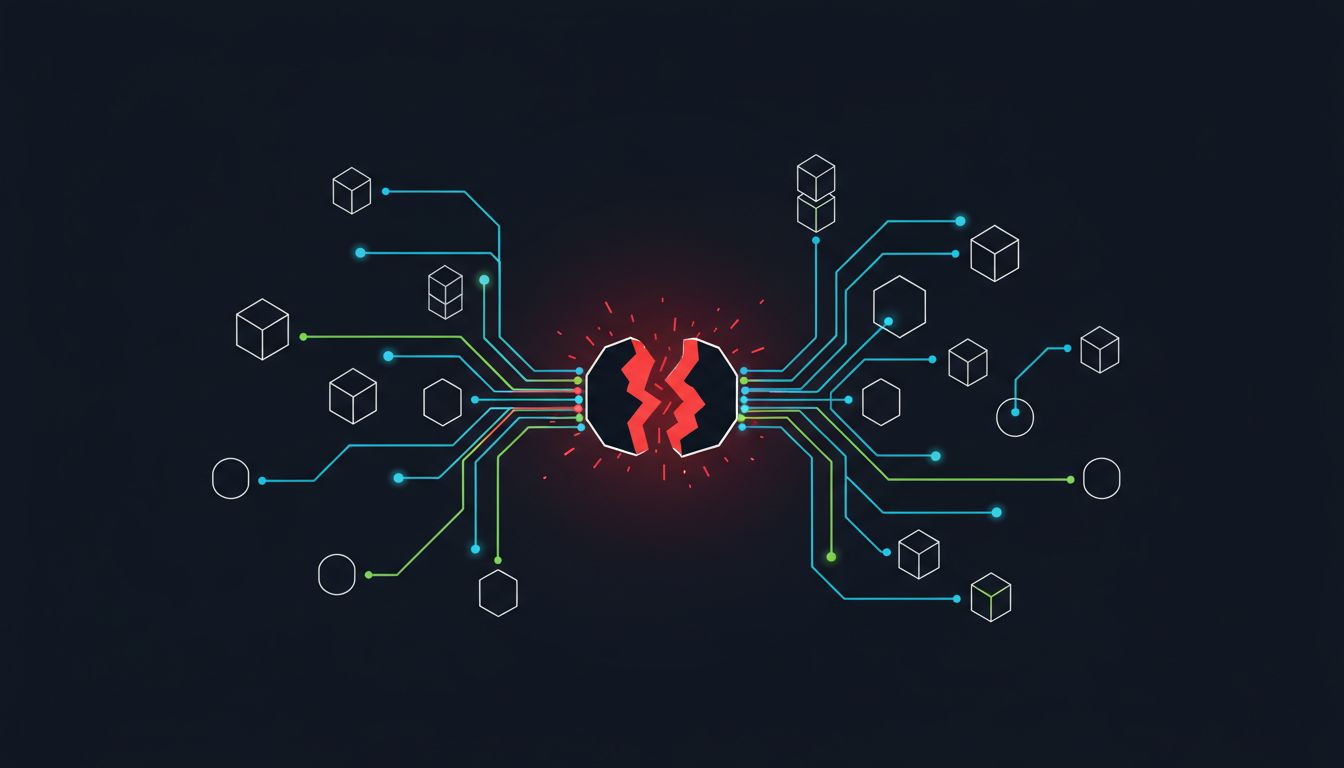
Software teams at companies like Netflix, Google, and Amazon deliberately break their own systems. Not by accident, not as a side effect of poor planning, but as a structured, intentional practice built into the engineering workflow. They introduce known defects, watch what happens, measure how the system responds, and use that information to make the software more resilient. The practice has a formal name, fault injection, and its logic is colder and more rigorous than it first appears.
The premise sounds reckless until you consider the alternative. A software system that has never been tested under failure conditions is one whose failure behavior is entirely unknown. You can write unit tests, run integration checks, stress-test your servers, and still have no reliable data on what happens when a critical dependency goes down at 2 a.m. on a Tuesday. Fault injection answers that question before a real outage does.
How Netflix Turned Chaos Into a Discipline
Netflix made this practice famous when it open-sourced Chaos Monkey in 2012. The tool does exactly what the name suggests: it randomly terminates virtual machine instances in Netflix’s production environment during business hours. The goal is not to create outages for sport. It is to force engineers to build services that assume failure is constant and design accordingly.
The underlying insight is that systems which are only tested in ideal conditions develop a kind of brittleness that is invisible until it matters most. Netflix found that the only reliable way to build genuinely fault-tolerant systems was to run them in an environment where faults were a scheduled part of the day. Over time, Chaos Monkey became part of a broader suite of tools Netflix calls the Simian Army, each designed to test a different failure mode: latency spikes, security vulnerabilities, region-wide outages.
The practice has since spread widely. Google uses a similar approach internally, running “DiRT” (Disaster Recovery Testing) exercises that simulate everything from data center failures to key employee unavailability. The exercises are not optional, and the findings feed directly into system design.

The Economics of Finding Bugs Early
There is a financial argument here that is hard to dismiss. The cost of a defect rises sharply the later in the development cycle it is discovered. A bug caught during design costs relatively little to fix. The same bug caught after deployment can cost orders of magnitude more, in engineering time, customer trust, and in some industries, regulatory exposure.
Fault injection finds bugs early by manufacturing the conditions that would expose them. A memory leak that only appears under sustained load, a race condition that surfaces when two services respond out of sequence, a timeout setting that was never tested against actual network latency, these are the classes of defects that slip through conventional testing and appear in production. Deliberately creating those conditions in a controlled environment is not recklessness. It is the only way to generate the data needed to fix them.
This connects to a broader truth about software reliability: beta versions are often better than final releases because the incentives flip at launch. Pre-release software is tested by people actively looking for problems. Post-release software is used by people trying to get work done, which means failures are costlier and harder to analyze cleanly.
Why “Normal” Testing Misses the Failures That Actually Hurt You
Conventional quality assurance operates on a known-unknowns model. You write tests for behaviors you have thought about: does the login form reject invalid passwords, does the payment processor handle declined cards, does the API return the right error code for a malformed request. This kind of testing is necessary, but it is not sufficient, because it only covers failure modes someone anticipated.
Fault injection operates on a different model. Instead of asking “does the system handle this specific error correctly,” it asks “what does the system do when we remove this dependency entirely.” The answers are frequently surprising. Services that should degrade gracefully instead cascade. Retry logic that looks correct on paper creates thundering herd problems under real load. Fallback systems that were never actually invoked in production turn out to have their own bugs.
This is the category of defect that is most dangerous: the one that lives in the interaction between components rather than inside any single component. Unit tests, by design, cannot find these. Fault injection can, because it operates at the system level.
The Limits of the Approach
Fault injection is not universally applicable, and companies that treat it as a silver bullet misapply it. Running chaos experiments in production requires a baseline level of system maturity that many organizations do not have. Netflix did not start with Chaos Monkey on day one. It developed the practice gradually, with significant investment in observability tools that could measure what was actually happening during an experiment.
Without that observability investment, fault injection produces noise, not insight. You break something, things fail in unexpected ways, you learn nothing useful because you cannot isolate what caused what. This is why the practice is most common at large companies with dedicated reliability engineering teams. Smaller organizations often get better returns from improving their monitoring and incident response processes first.
There is also a distinction worth drawing between intentional fault injection and what might be called accidental chaos, the situation where a production system is so complex and poorly understood that failures are frequent and unpredictable. That is not discipline. That is a different problem, and tech support telling you to reboot reflects a version of it.
The Broader Lesson
Fault injection works because it forces honesty. A system that has never failed has also never demonstrated that it can recover. The engineers who built it have assumptions about its resilience that have not been tested. Deliberately introducing defects converts those assumptions into data, and data is what you need to make systems that hold up when the conditions are not ideal.
The practice is also a kind of institutional humility. It acknowledges that complex systems will fail in ways their designers did not predict, and it treats that reality as a design input rather than an embarrassment to be avoided. That is a more defensible posture than assuming correctness and discovering the gaps when a real outage arrives.