
A smartphone battery costs roughly $3 to manufacture. Replacing that battery at an authorized service center costs $89. The gap between those two numbers is not an accident, and it is not explained by labor costs alone. It is a carefully engineered margin, made possible by a product that was designed, from the first sketch on a whiteboard, to resist outside repair. The inconvenient truth about modern consumer hardware is that its fragility is a feature, not a flaw.
This pattern shows up across the hardware industry in ways that closely mirror how software companies trap users through dependency rather than preference. As research into platform revenue structures has shown, the most durable revenue streams in tech are built not on loyalty but on switching costs, and hardware repairability is one of the most effective switching costs ever constructed.
The Economics of Intentional Fragility
Apple’s repair revenue offers the clearest case study. The company’s services segment, which includes AppleCare warranties and out-of-warranty repairs, generated over $85 billion in fiscal year 2023. That figure did not emerge from a market that simply wanted coverage. It emerged from products engineered to make independent repair difficult, expensive, or legally uncertain.
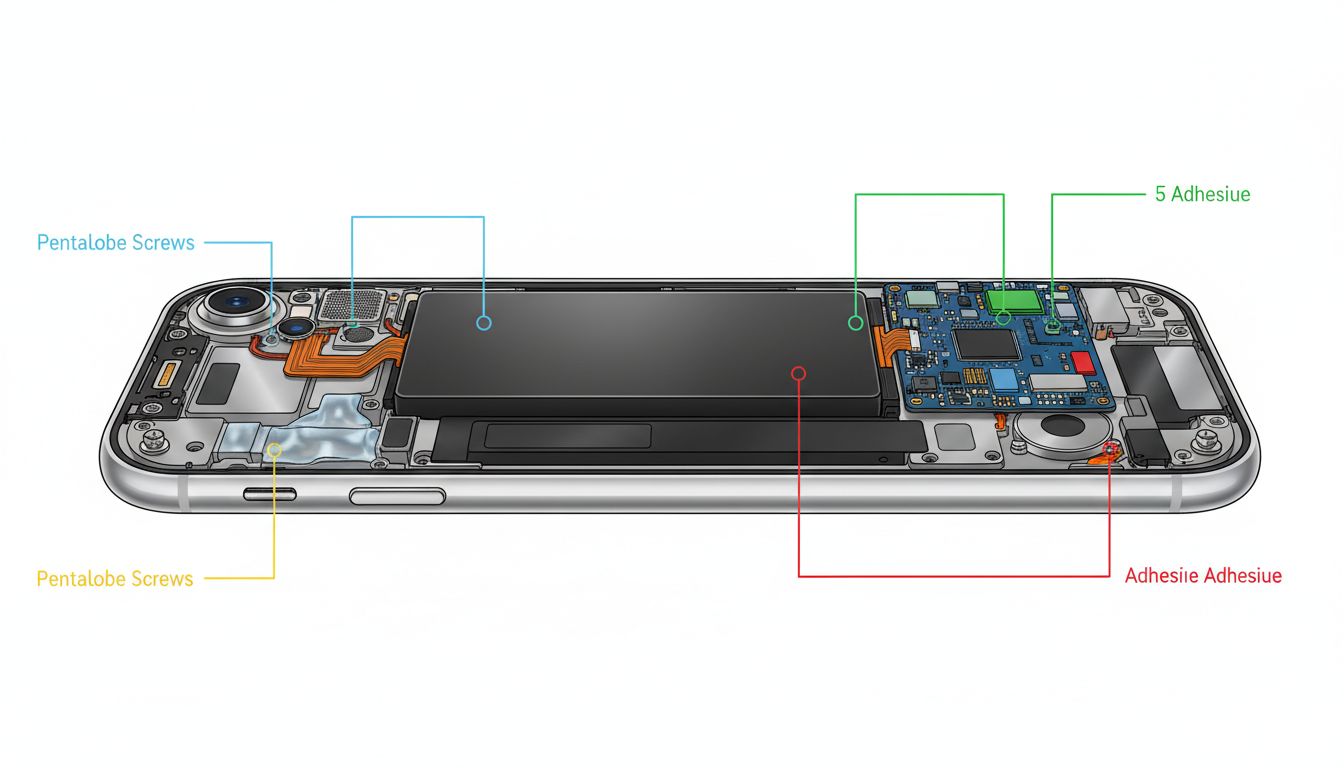
The mechanisms are specific. Proprietary screws that require tools sold almost exclusively to authorized technicians. Adhesive that bonds batteries to chassis with industrial-grade permanence. Software locks that disable replacement parts unless they are paired through official diagnostic systems. A replacement screen installed by an independent shop may restore the glass but trigger a persistent warning message about an “unverified” component. The hardware works. The software punishes you for fixing it.
This is friction used as a revenue instrument, a concept that extends far beyond physical devices. Tech giants have refined friction into a precise business tool across software and hardware alike, and the repair market is where that strategy becomes most tangible.
The Service Contract as the Real Product
When Apple introduced its Self Repair Program in 2022, the announcement was widely covered as a concession to right-to-repair advocates. The reality was more instructive. To replace an iPhone 13 battery through the program, a customer needed to rent a 79-pound repair kit for $49, navigate a 200-page manual, and purchase a genuine Apple battery for $69. Total cost: approximately $120. The cost of an authorized repair at an Apple Store: $89.
The self-repair option was technically available. It was economically irrational. The program did not dismantle the repair business model. It demonstrated how thoroughly that model had been constructed.
This is the logic behind extended warranties and service contracts. Companies like Best Buy, through its Geek Squad protection plans, collect roughly $5 billion annually in warranty and services revenue. That revenue depends on hardware that consumers expect to break, or are afraid might break, because the cost of fixing it independently is prohibitive. The warranty is not insurance against manufacturer error. It is a subscription to the repair ecosystem the manufacturer controls.

How Repairability Became a Competitive Liability
For most of consumer electronics history, repairability was a selling point. Stereo components from the 1970s and 1980s came with full circuit diagrams in the owner’s manual. IBM published service guides for its early personal computers. The assumption was that longevity created brand trust.
The shift happened when companies discovered that hardware margins were structurally lower than service margins. A laptop sold once at a 20 percent margin is a worse business than a laptop sold once and repaired three times over five years, each repair capturing a 60 to 70 percent margin. The move toward thinner, lighter, more integrated designs (celebrated in tech journalism as engineering achievement) also happened to consolidate components in ways that made user repair nearly impossible. The aesthetic and the business outcome aligned perfectly.
Fairphone, the Dutch electronics company, has built an entire brand around the opposite approach. Its modular smartphones are designed so that users can replace batteries, screens, and cameras with a standard screwdriver and no special tools. The company has been profitable in its segment, but it has not scaled to challenge Samsung or Apple, in part because its component costs are higher and its supply chain is more complex. Repairability, at consumer electronics scale, costs more to build in than to engineer out.
The Right-to-Repair Movement and Its Limits
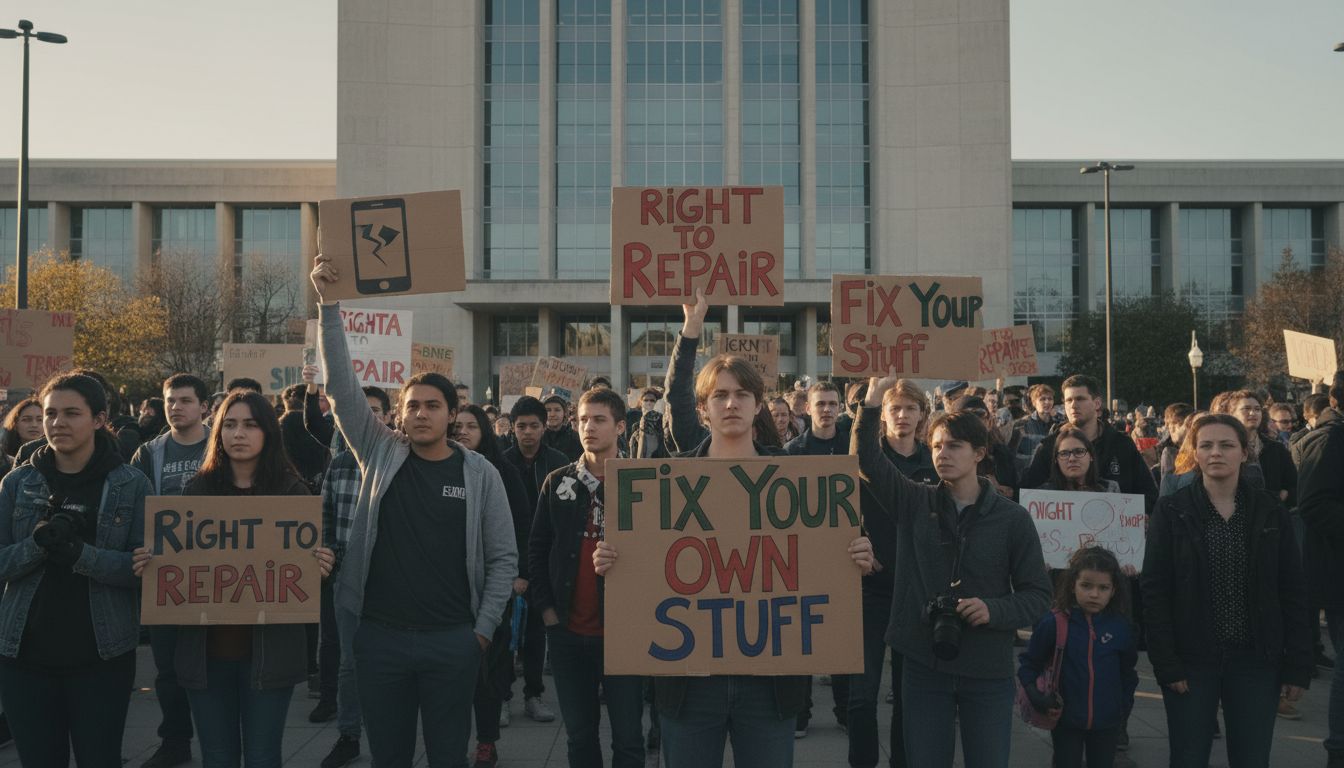
Legislative pressure has begun to change the calculus, slowly. The European Union’s Ecodesign Regulation, which came into force for smartphones in 2023, requires manufacturers to make spare parts and repair tools available for at least five to seven years after a product’s launch. Several U.S. states have passed right-to-repair legislation covering agricultural equipment, consumer electronics, and medical devices.
The industry response has been consistent: comply with the letter of the law while preserving as much of the repair margin as possible. Part pairing, the practice of software-locking replacement components to specific devices, is not addressed by most legislation. Authorized repair networks can be expanded on paper while remaining practically inaccessible in rural areas or developing markets.
This resistance mirrors a broader pattern in how technology companies respond to constraints. Just as software updates are sometimes used to deprecate functionality that competing products or older versions handled well, hardware manufacturers have become skilled at appearing to accommodate regulators while restructuring the underlying economics to protect their service revenue.
What This Means for Consumers
The average American household owns 25 connected devices. The average lifespan of a smartphone in the United States is approximately three years, down from four-and-a-half years a decade ago. The global e-waste volume reached 62 million metric tons in 2022, according to the United Nations, enough to fill 1.55 million 40-ton trucks placed bumper to bumper around the equator.
Those numbers are the downstream result of a repair economy that was deliberately made dysfunctional. When repair costs approach replacement costs, consumers replace. When replacement happens faster, manufacturers sell more units. The environmental cost is externalized. The revenue stays internal.
Understanding this does not require cynicism about engineering or design. The people building these products are solving real constraints around size, weight, and performance. But the business decisions about repairability sit above the engineering layer, and those decisions follow a logic that has very little to do with what is technically possible and a great deal to do with where the margin lives. The $3 battery that costs $89 to replace is, from the manufacturer’s perspective, working exactly as intended.