
Imagine you are a product manager at a consumer electronics company in the early 2000s. Your hardware team has just built something extraordinary, a device that costs your company roughly $350 to manufacture, source, and ship. Your CFO wants to sell it for $400. Your CEO wants to sell it for $299. The CFO wins on paper. The CEO wins in history. That gap between cost and price, the deliberate decision to eat the margin or erase it entirely, is one of the least-discussed and most consequential strategies in the entire technology industry.
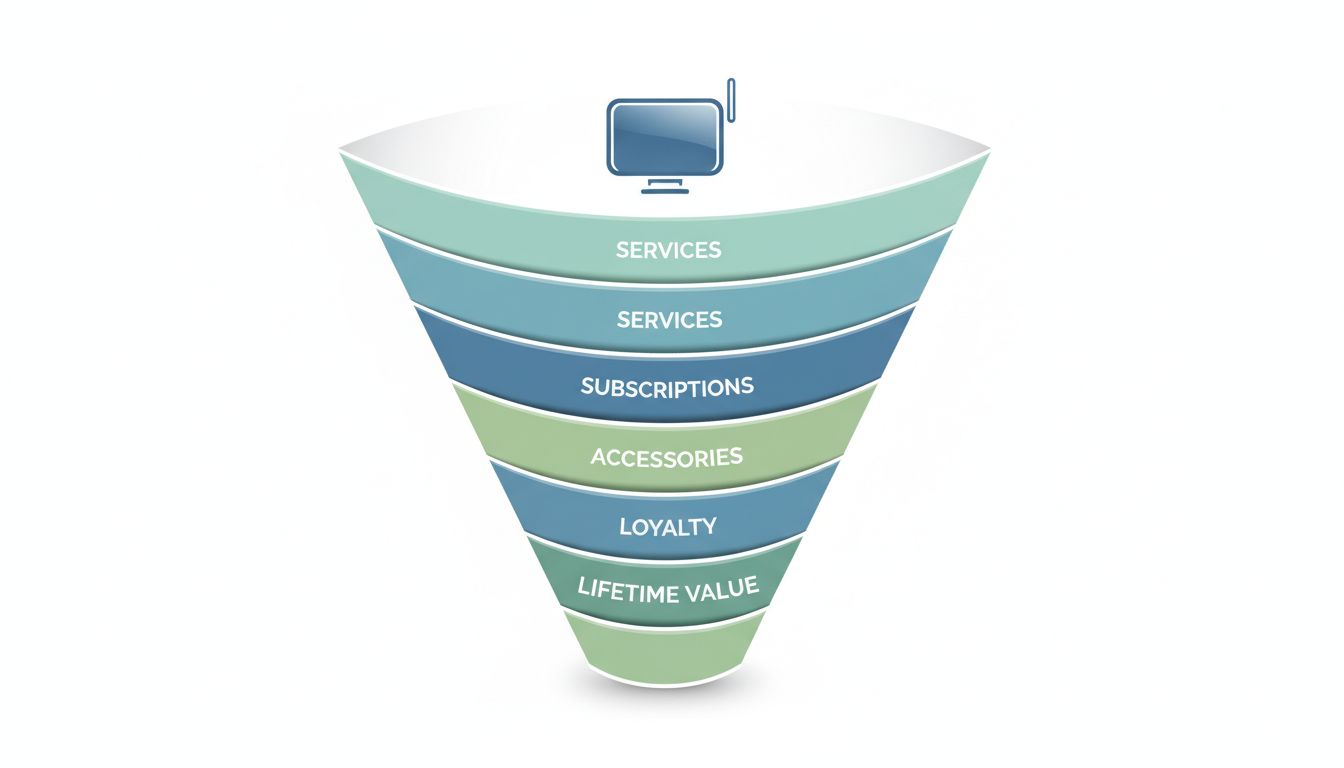
This is not a story about miscalculation or generosity. It is a story about patience, ecosystem capture, and the realization that the hardware is never really the product. If you want to understand why some of the most successful tech companies on earth deliberately sell flagship products below what they cost to make, you have to be willing to rethink what the word “product” actually means. Much like tech companies launching products they know will fail, pricing something at a loss is not an accident. It is a calculated move on a much longer game board.
The Razor and the Blade, Upgraded
King Gillette did not invent the loss-leader strategy, but he made it famous. Sell the razor cheaply. Make your money on the blades forever. The tech industry did not copy this model so much as it turbocharged it.
Consider what Amazon did with the original Kindle. The hardware was priced close to or below manufacturing cost. Amazon was not in the business of selling e-readers. It was in the business of selling books, then subscriptions, then everything else that flows through a customer relationship that begins the moment a device lands in someone’s hands. The Kindle was not a product. It was a door.
Sony’s PlayStation consoles have followed a similar logic across multiple generations. The PS3 launched at a price that reportedly cost Sony over $800 per unit to manufacture, with a retail price of $599. Analysts called it reckless. In retrospect, it was an aggressive land-grab for living room dominance, gaming revenue, and a loyal customer base that would spend years buying software, subscriptions, and accessories.
Google’s Chromecast, Amazon’s Echo Dot, and numerous Android tablets have all been sold near or at cost. The logic is identical: the device gets you into the ecosystem, and the ecosystem is where the real money lives.
What “Ecosystem” Actually Means in Dollar Terms
The word ecosystem gets thrown around so freely in tech that it has almost lost its meaning. Let’s be concrete.
When a consumer buys a deeply discounted smart speaker, the company selling it is betting on a specific sequence of events. First, the device becomes embedded in daily life. Second, the consumer makes purchases, streams media, or accesses services through that device. Third, the consumer buys more devices in the same family because switching costs, the friction of moving to a competitor’s ecosystem, become prohibitive over time.
This is not accidental friction. It is engineered friction. And it is closely related to why software licenses often cost more than the hardware they run on. The hardware is the entry point. The software, the services, the subscriptions, those are where margins actually live.
Apple is the most studied example of this, but it is also the most misunderstood. Apple does not typically sell hardware at a loss, but it prices certain entry-level products aggressively thin to pull consumers into iCloud, Apple Music, the App Store, and eventually higher-margin devices. The iPhone SE has never been about profit per unit. It has been about profit per customer, measured over a decade.

Why This Requires a Different Kind of Patience
This strategy only works if you are willing to think in years, not quarters. That sounds obvious until you are the person explaining to a board why your flagship product is hemorrhaging money per unit shipped.
Most companies cannot sustain this because they are optimizing for the wrong time horizon. Early-stage companies face this tension constantly. The discipline required to absorb short-term losses in service of long-term ecosystem value is the same discipline described when successful startups wait longer than expected before raising their Series A. The underlying principle is the same: resist the pressure to optimize prematurely.
Companies that pull this off successfully share a few traits. They have diversified revenue streams that can subsidize the loss-leader product. They have clear data on lifetime customer value, not just transaction value. And they have leadership that can hold the line when short-term numbers look ugly.
Amazon Web Services subsidized the company’s ability to experiment with Kindle pricing. Apple’s existing high-margin product lines gave it room to price the original iPod aggressively and seed the iTunes ecosystem. The loss-leader only works when there is something profitable waiting downstream.
The Trap Hidden Inside the Strategy
Here is where a lot of companies get it wrong. They see the strategy, copy the surface behavior, and skip the part where they actually build the ecosystem that makes the loss-leader worthwhile.
Selling hardware at a loss without a defensible downstream revenue model is just selling hardware at a loss. It is not strategy. It is hope dressed up as strategy.
The other trap is assuming customers will stay once they are in. They will not stay out of inertia alone. Switching costs matter, but so does the quality of what customers find when they arrive. Companies that use loss-leader pricing to acquire customers and then deliver mediocre services find that they have bought attention, not loyalty. And attention is cheap. Loyalty is what you were supposed to be building.
This connects directly to something most successful consumer tech companies understand intuitively: the initial product is just the opening bid. What keeps customers is whether the broader experience actually delivers. Companies that treat customer complaints as a living product roadmap tend to build ecosystems worth staying in. The ones that treat post-purchase customer behavior as someone else’s problem tend to find their loss-leaders were exactly that: losses.
What This Means If You Are Building Something
If you are a founder or product leader watching this dynamic play out in the market, the lesson is not “sell your product at a loss.” The lesson is more nuanced than that.
Understand what your actual product is. If you are building hardware, your revenue model probably cannot begin and end with the device. If you are building software, your initial pricing may need to be aggressive enough to establish a user base before your ecosystem has value worth charging for.
The companies that do this well are the ones that know, with precision, what they are losing on the front end and what they expect to recover on the back end. They have the data, the patience, and the downstream infrastructure to make the math work. Everyone else is just running a discount.
The premium product sold at a loss is not a concession. In the right hands, it is the most expensive trap ever built, and the customer walks into it willingly.