The Simple Version
Some tech companies do deliberately reduce the performance of older devices. The honest version of why they do it is more complicated than corporate greed, and the complicated version is, in some ways, worse.
What Actually Happened With Apple
In 2017, a developer named John Poole published benchmark data showing that iPhones with degraded batteries were being throttled to lower clock speeds. Apple confirmed it. The company had been quietly slowing down older phones for about a year before anyone noticed.
Apple’s explanation was technically coherent: lithium-ion batteries lose capacity over time, and an old battery forced to deliver peak power can cause a phone to shut down unexpectedly. Throttling the processor reduces peak power demand, which prevents those shutdowns. The alternative, Apple argued, was a phone that turned itself off in the middle of calls.
This was true. It was also a defense Apple chose not to make publicly until it got caught. The company paid $113 million to settle a multistate investigation in the United States and faced additional settlements in Europe. The fines were not for slowing phones down. They were for doing it without telling anyone.
That distinction matters enormously, and it gets lost in almost every popular account of this story.

The Mechanics of Degradation
To understand why this issue is genuinely complicated, you need to understand how phone batteries work.
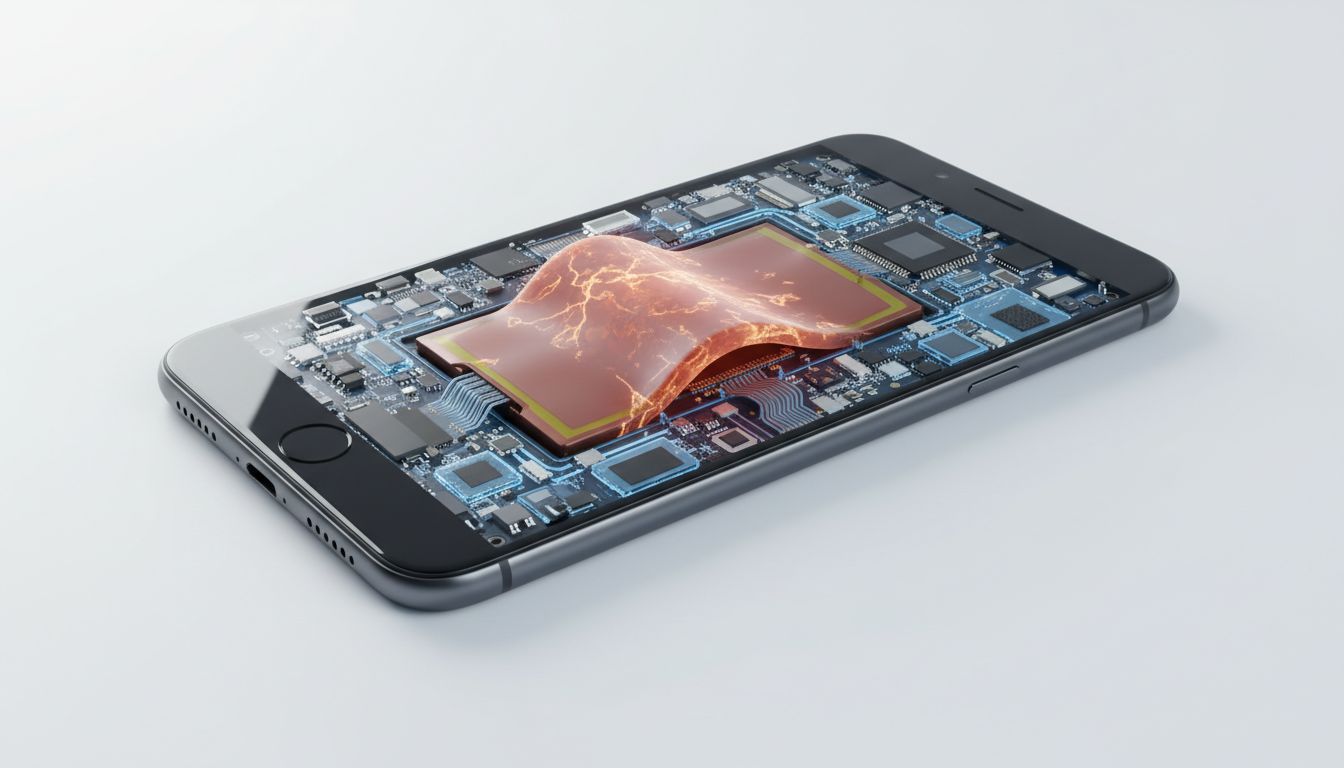
Lithium-ion cells don’t just hold less charge as they age. They also become less capable of delivering current in bursts. A new battery might handle a sudden 4-amp draw without trouble. The same battery after 500 charge cycles might sag badly under that load, dropping voltage enough to trigger the phone’s protection circuits, which interpret the drop as an empty battery and shut the device down.
Apple’s A-series chips, particularly from the A9 onward, were designed to run at high clock speeds that demand exactly those kinds of current spikes. The chip and the battery were co-designed for each other in new condition. After two years of daily charging, that relationship breaks down.
Throttling is one real solution to this problem. Another is replacing the battery, which Apple started offering at a reduced price ($29 instead of $79) after the throttling scandal broke. Battery replacements surged. Many users found that a $29 battery made their two-year-old phone feel new again, which was the most effective piece of accidental consumer education Apple has ever produced.
The planned obsolescence machinery is real, but it rarely operates through the crude mechanism of a kill switch. It operates through design choices made years earlier, choices about repairability, battery accessibility, and software support windows, that only reveal their consequences later.
Where the Cynicism Actually Lives
The throttling itself was arguably defensible engineering. The concealment was not.
Apple had every opportunity to surface the battery-throttling behavior to users. It could have added a setting that let users choose between stability and performance. It could have displayed a prominent notification when throttling activated. It could have made battery health data visible (it eventually did, in iOS 11.3, after the scandal). It chose none of these things.
The most charitable interpretation is that Apple’s designers didn’t want to confront users with information they’d find confusing or alarming. This is consistent with Apple’s general philosophy of abstracting complexity away from users. The least charitable interpretation is that a user who knows their phone’s battery is degraded might replace the battery rather than the phone, and Apple didn’t want to make that choice obvious.
Both interpretations can be simultaneously true. This is often how large companies operate: individual decisions made for locally reasonable reasons that aggregate into something that serves the company’s interests in ways no one explicitly planned.
Software Updates as a Slower Mechanism
Apple is the most prominent case because it got caught and fined. But the broader phenomenon of software updates making older hardware feel slower is not unique to Apple, and it doesn’t require any conspiracy.
As software gets more demanding with each generation, apps and operating systems are developed and tested primarily on current hardware. When those apps run on hardware two or three generations old, they run on processors and memory configurations that were not the development target. The performance gap is real, and it widens with every update cycle.
This isn’t throttling in the Apple sense. It’s something more like ambient obsolescence. The new software wasn’t designed to slow your old phone down. It was designed for the new phone, and your old phone just happens to be in the way.
Android manufacturers face this problem acutely. Google’s own Pixel phones have historically received software updates for three years, which sounds reasonable until you consider that a Pixel 3 running Android 12 was running software with interface animations and background processes tuned for hardware that had launched two years after it. Samsung has since moved to four years of OS updates for flagship devices. Whether this reflects genuine commitment to device longevity or a response to regulatory pressure in Europe is a question worth asking.
What You Should Actually Do With This Information
The throttling story gets retold as a morality tale about tech company greed, and that framing, while satisfying, is not especially useful.
What’s useful: battery health is the single most recoverable cause of sluggish phone performance. On an iPhone, you can check it directly in Settings under Battery. If your maximum capacity has dropped below 80 percent, a battery replacement will almost certainly feel more significant than a new phone. On Android, the data is harder to surface but accessible through third-party diagnostic apps.
What’s also useful: understanding that software support windows are the real planned obsolescence mechanism. A phone that stops receiving security updates is genuinely obsolete, not because the hardware failed but because running unpatched software on a device connected to the internet is a real risk. The hardware could have run updated software for years longer. The manufacturer chose not to provide it.
Apple eventually committed to longer support windows, partly because its silicon advantage means even five-year-old iPhones can run current software without meaningful performance degradation. That’s a genuine engineering achievement, and it’s worth crediting. It also happens to be good for Apple, because a user who trusts their phone will last six years is more willing to pay a premium price for it.
Good business and good engineering can overlap. So can concealment and plausible deniability. The honest answer to whether tech companies deliberately slow down old devices is: sometimes yes, sometimes through neglect, and almost always in ways they’d prefer you not examine too closely.