The software running your business today was probably designed to stop working well around the same time you finish paying for it. That is not a conspiracy theory. It is a business model, and the numbers behind it are surprisingly straightforward.
The five-year obsolescence window in enterprise software is not accidental. Companies like Salesforce, Microsoft, and Oracle have quietly standardized contract and upgrade cycles that align almost perfectly with the point at which their software becomes genuinely difficult to use without purchasing an upgrade or migrating to a new platform. Gartner research found that the average enterprise software replacement cycle sits at 5.3 years, a number that has barely moved in a decade despite dramatic improvements in underlying technology. Understanding why requires looking past the product roadmaps and into the financial architecture underneath them. This same logic appears across the industry, from how tech companies engineer their own products to die on a schedule to the more visible world of consumer hardware.
The Economics of Expiration Dates
Software does not wear out the way a car engine does. Code written in 2018 runs just as well in 2024 as it did on day one, assuming nothing around it changes. The key phrase is “assuming nothing around it changes.” Tech companies have learned to make sure something always changes.
The mechanism works on two levels. First, companies deprecate APIs, meaning they turn off the technical connectors that allow older software versions to talk to other systems. When Salesforce retired its legacy SOAP API endpoints in 2021, customers on older licensing tiers found their third-party integrations simply stopped working. Rebuilding those integrations required, in most cases, upgrading to a higher service tier. Second, companies stop issuing security patches for older versions. This is not laziness. Security support windows are deliberate policy decisions, and they consistently cluster around five-year marks. Microsoft’s mainstream support lifecycle for enterprise products is standardized at five years, with extended support available at additional cost. The moment a company stops receiving security patches, regulators, auditors, and insurers effectively force an upgrade.
Why Subscription Models Made This Worse, Not Better
The shift from one-time software licenses to subscription pricing was sold to customers as a better deal. Pay less upfront, always have the latest version, cancel anytime. In practice, it restructured the incentive to break software in a more sophisticated direction.
Under the old perpetual license model, a company like Adobe had one chance to sell you Photoshop. Under Creative Cloud, they collect from you every month, which means their financial interest is now in managing the moment you consider leaving rather than the moment you consider buying. Research from Price Intelligently found that reducing churn by just five percent increases subscription company profits by 25 to 95 percent. Churn happens most often at two moments: when a product feels stale and when switching feels easy. Companies solve for both. They add just enough new features each year to justify the invoice, and they make sure migrating to a competitor costs more in time and data loss than most customers are willing to spend.
This is related to a broader pattern in platform design. Platform companies generate 80% of their revenue from users who feel trapped, not loyal, and the subscription model gives companies a recurring reason to tighten those traps rather than earn continued loyalty.
The Feature Decay Playbook
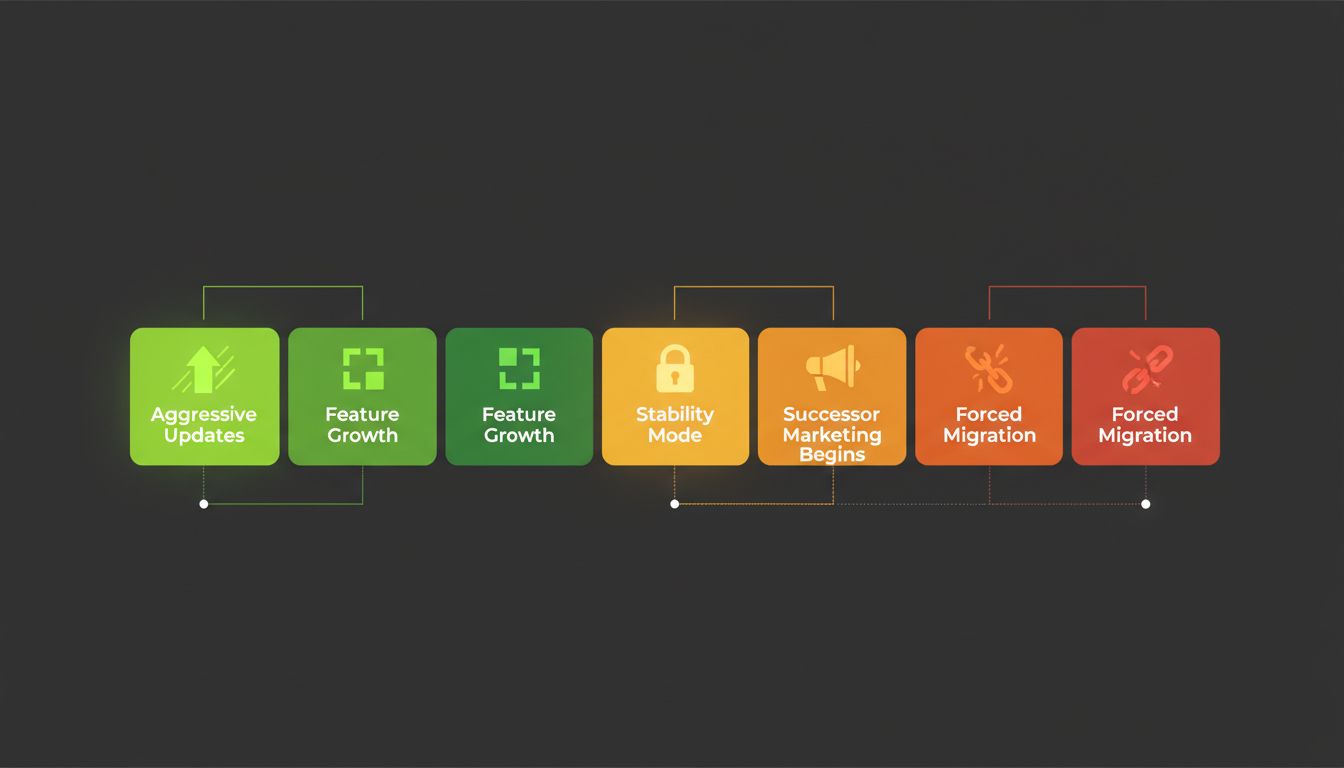
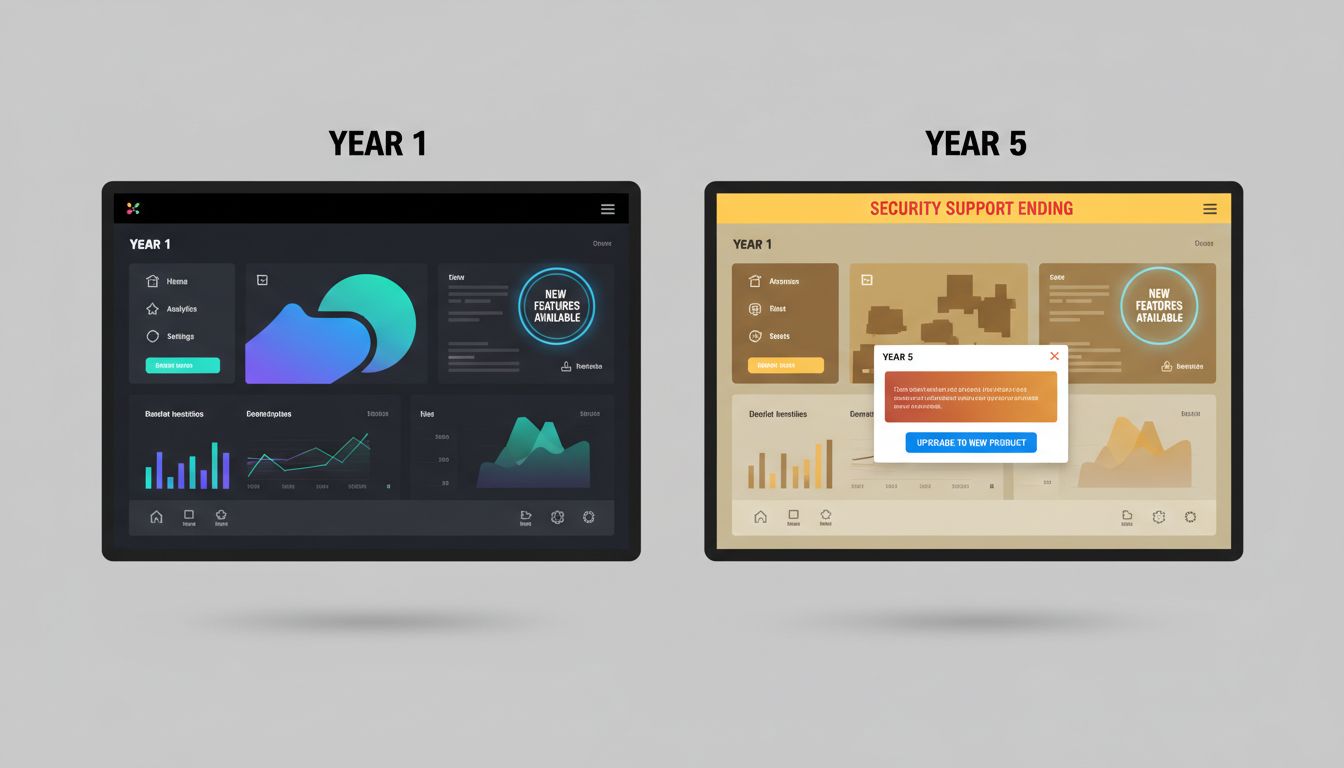
There is a specific and reproducible pattern to how software ages on purpose. In year one and two, a product receives aggressive feature updates, strong documentation, and responsive customer support. By year three, updates slow and are reframed as “stability improvements.” In year four, the company begins marketing a successor product and begins allocating its best engineering talent there. In year five, the original product is still being sold, but it is effectively running on maintenance mode.
The customers who notice this pattern earliest are usually the most technically sophisticated, and they are the most expensive to lose because they influence purchasing decisions for others. This is why companies have learned to time the feature decay carefully, keeping core functionality reliable while letting the edges grow rough. It is a calibrated decline, not a collapse.
This dynamic also explains why companies sometimes build features they never plan to release. Features in development serve as proof of a living product, useful for retaining customers through years three and four even when those features never ship.
The Hidden Cost to Organizational Knowledge
The five-year obsolescence cycle has a cost that rarely appears in software procurement analysis: what happens to the institutional knowledge embedded in the old system.
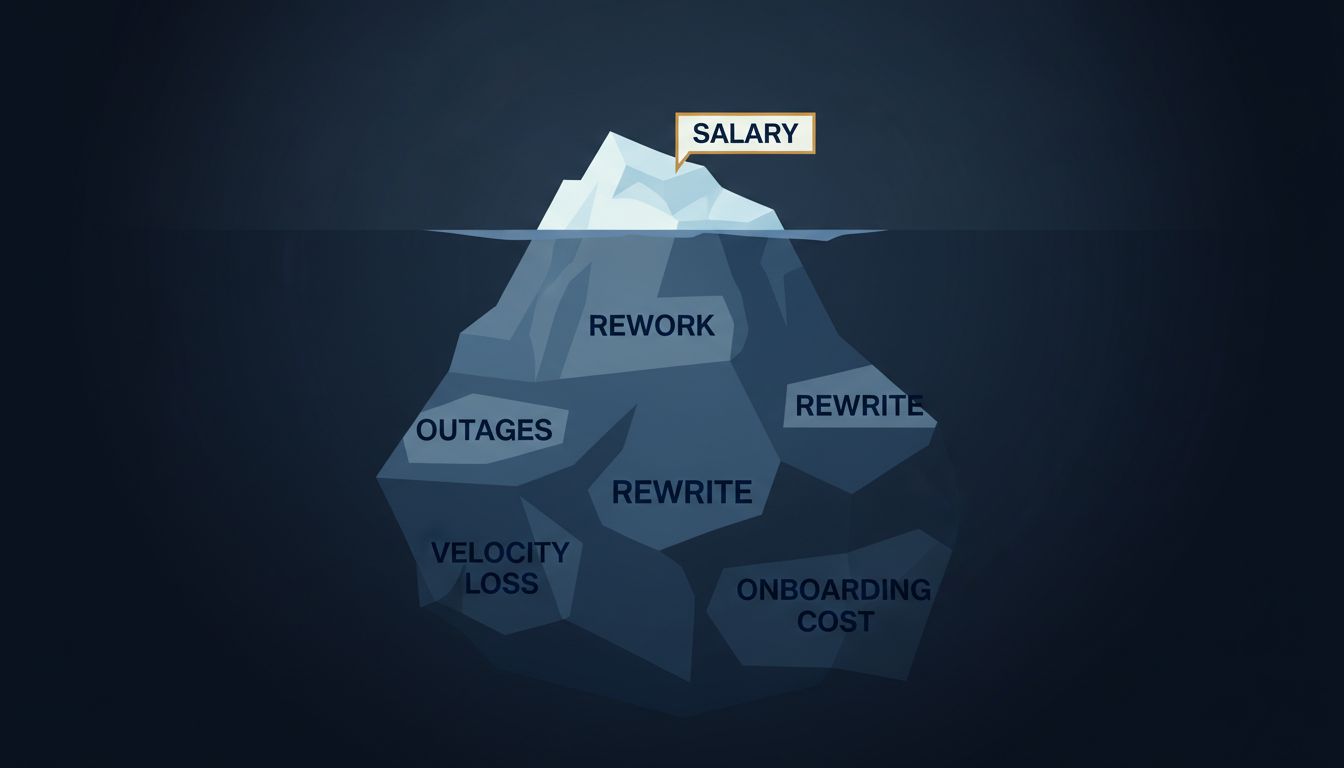
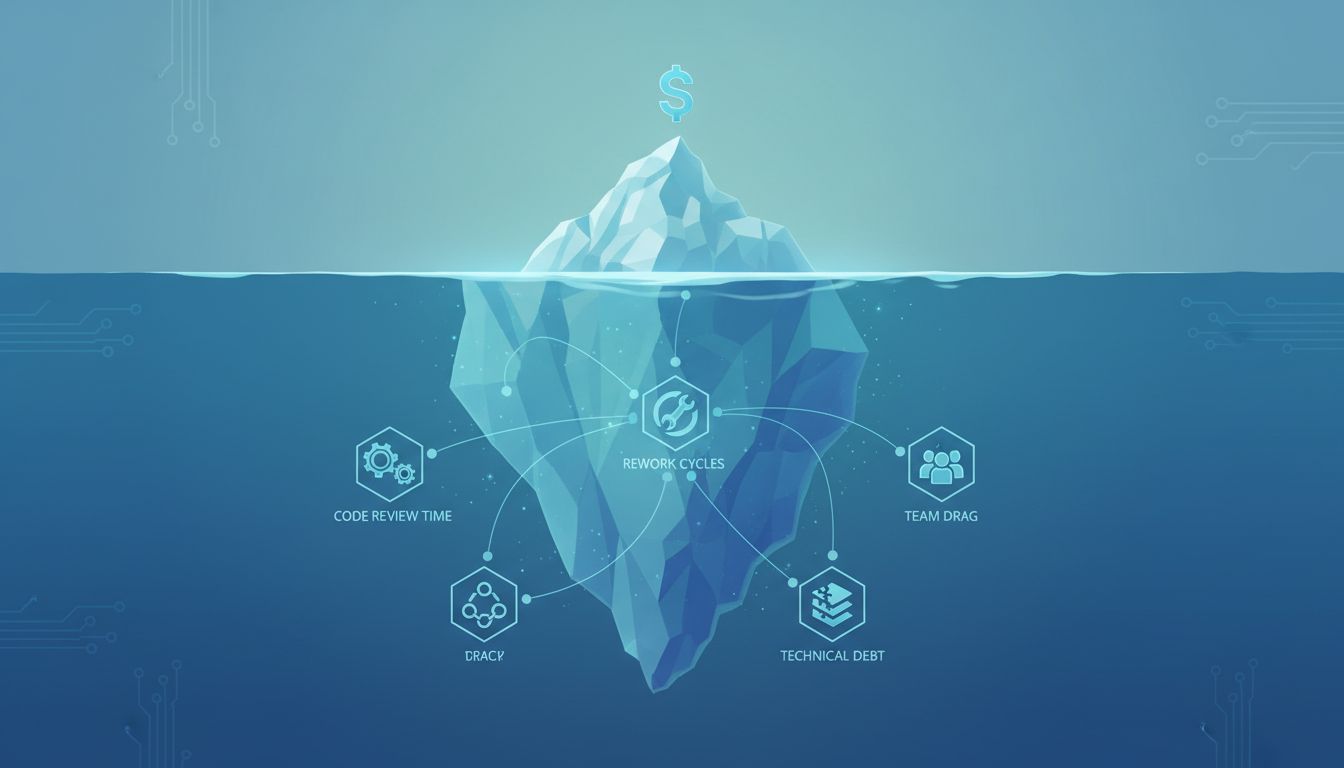
When a company migrates from one platform to another, it loses more than data. It loses the configurations, workarounds, and internal expertise that employees built up over years of use. A 2023 survey by the Harvard Business Review Analytic Services found that 64 percent of IT leaders reported significant productivity losses in the 12 months following a major software migration, with average recovery times of 8 to 14 months. The software company does not absorb that cost. The customer does.
This problem compounds when companies treat their software tools as the system of record for organizational thinking, a risk that applies beyond enterprise software. Tools designed to capture information often substitute for actually retaining it, a pattern explored in the context of digital note-taking apps solving the wrong problem. When the tool expires, so does much of what people thought they had stored.
What Companies Can Do About It
The five-year obsolescence cycle is not going away. The financial incentives are too well aligned for companies to abandon it voluntarily. But buyers can adjust their approach.
First, contract negotiations should explicitly address API deprecation timelines and security support windows before signing, not after. Second, data portability clauses should be standard. If a vendor cannot provide a clear, machine-readable export of all customer data at any time, that vendor is building a lock-in strategy into the product architecture. Third, migration costs should be factored into the total cost of ownership at the time of purchase, not treated as a surprise at renewal. A platform that costs 20 percent less per year but requires a full migration and retraining every five years is often more expensive than a slightly pricier product with genuine long-term stability.
Software companies have built extraordinary businesses on the five-year clock. The ones that will win the next decade are the ones whose customers understand the clock is running and choose them anyway.