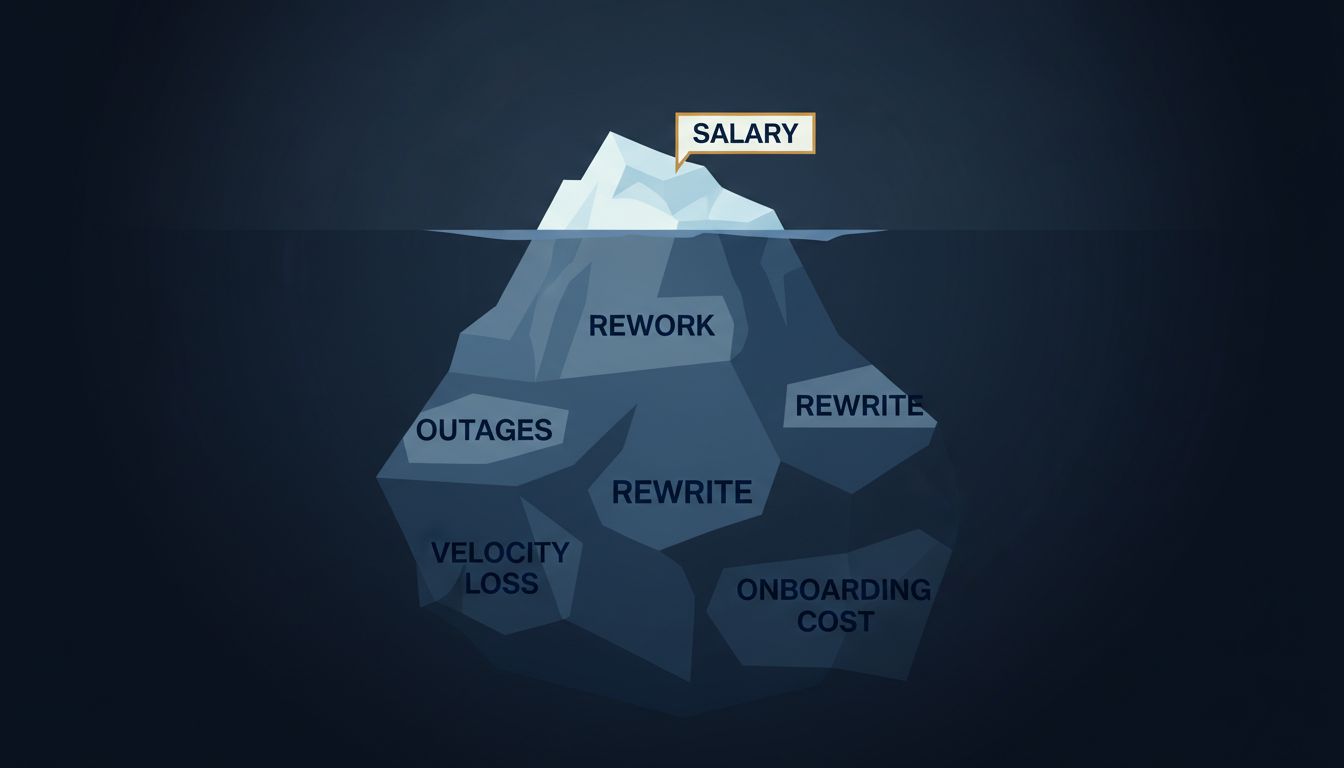
Imagine you are a senior product manager at a large tech company. A startup has built something clever in your space, users love it, and your CEO has noticed. You get pulled into a meeting where someone presents a build-versus-buy analysis. The build column is full of caveats: 18 months minimum, resource contention, unclear product-market fit. The buy column is clean: proven traction, existing team, faster time to market. Six months later, the acquisition closes for nine figures. Three years after that, the product is sunsetted, the founding team has left, and the acquirer has written down most of the purchase price.
This story repeats constantly. Microsoft’s $6.2 billion write-down on aQuantive. Google’s $12.5 billion Motorola acquisition that ended with a sale to Lenovo for $2.9 billion. Yahoo’s long list of acquisitions that collectively destroyed shareholder value across two decades. The pattern is so reliable that it should prompt a serious question: what exactly are these companies buying?
The Build-vs-Buy Analysis Is Almost Always Wrong
The standard framework for evaluating acquisitions treats the startup as a product. Engineers look at the codebase, product managers evaluate the feature set, and finance models out the revenue. But this framing misses what actually made the startup valuable in the first place.
Most successful startups are not valuable because of their code. The code is often a mess. They are valuable because a small group of people found a real problem, felt genuine urgency about solving it, and operated in an environment where bureaucracy could not slow them down. That combination produces speed and focus that large organizations structurally cannot replicate. When you acquire the startup, you get the code and the people, but you immediately begin dismantling the conditions that made those people effective.
The build-versus-buy analysis almost never accounts for this. It compares the cost of acquiring working software against the cost of building equivalent software. That is a category error. You are not comparing like things. The startup’s advantage was never the software.
What Actually Gets Destroyed After Acquisition
Spend time with anyone who went through an acquisition at a large tech company and the stories converge quickly. The first thing to go is decision speed. At the startup, a founder could decide to change the pricing model on a Tuesday and ship it by Friday. At the acquirer, that same decision requires legal review, finance approval, alignment with the broader product roadmap, and sign-off from three layers of management who have never talked to a customer.
The second thing to go is the founding team itself. Acqui-hires typically come with retention packages that vest over two to four years. Most of the key people stay long enough to collect, then leave. This is not cynicism, it is a structural outcome. The founders built something because they wanted to build things their way. The acquisition, by definition, ends that. The retention package is compensation for the gap between what they wanted and what they got.
What remains after the founders leave and the decision-making speed collapses is roughly this: a user base that was acquired at a premium price, a codebase that no one fully understands, and a product that is now competing for internal resources against the acquirer’s existing priorities. The original product usually loses that competition.

The Real Reason Companies Overpay
If acquisitions fail this predictably, why do companies keep doing them? Part of the answer is that the people making acquisition decisions are not the people who will be held responsible for integration. A business development team gets credit for closing a deal. The failure shows up two or three years later as an operational problem owned by someone else entirely.
But the deeper reason is that large tech companies are often not buying technology or talent. They are buying time and competitive relief. When a startup gets traction in your market, the existential fear is not that their product will beat yours. It is that their product will become the platform that your product depends on, or that their user base will shift attention in a direction you cannot follow. Acquisition is how you make that threat disappear. As we’ve examined before, tech giants often buy competitors they could build because building was never the point.
This is a defensible strategic rationale, but it is not what gets presented to the board. The board sees a build-versus-buy deck with a 24-month payback period. The real calculation, buying competitive insurance, is much harder to model and much easier to overpay for. When you are paying for fear reduction rather than technology, there is no obvious upper bound on the price.
Why Building Is Harder Than It Looks and Easier Than It Sounds
The irony is that the build option is usually dismissed too quickly, for the wrong reasons. The argument against building is almost always about time: a startup already has working software, so acquisition is faster. But this conflates shipping software with achieving what the startup actually achieved. The startup did not win because it shipped software. It won because it found a problem worth solving and stayed close to that problem long enough to understand it.
Large companies are genuinely bad at doing this, but not because they lack engineers. They are bad at it because their organizational structure rewards predictability over exploration. A product team inside a large company is expected to hit quarterly targets, integrate with existing systems, and avoid embarrassing the parent brand. A startup has none of those constraints. The startup can take years solving problems nobody asked them to fix, because survival depends on being right rather than being safe.
The honest answer is that large companies cannot replicate startup conditions through acquisition or through internal programs with names like “innovation lab” or “skunkworks.” The conditions that produce valuable startups are structurally incompatible with large organizations. Which means the choice is not really build versus buy. It is whether to acquire something at a premium price that will likely degrade after acquisition, or to partner, integrate, or simply accept that some problems will be solved by companies you do not own.
What a Better Approach Looks Like
A small number of acquisitions work, and they share recognizable traits. The acquirer integrates the team with genuine autonomy rather than absorbing it into existing structure. The founding team retains meaningful control over product direction. The acquisition price reflects what the startup currently is rather than a speculative premium on what it might become inside a larger organization.
Cisco has historically been better at this than most, keeping acquired teams relatively intact and allowing them to operate with some independence. Google’s acquisition of YouTube worked partly because YouTube was left alone to function more like a separate company than a product division. These are exceptions, not templates, and even they involved significant luck.
The companies that spend most recklessly on acquisitions tend to have the same problem: they treat the purchase price as the hard part. The hard part is actually everything that comes after. You can model a discounted cash flow on a startup’s revenue projections. You cannot model whether the three people who built the core product will care enough to keep building it once they work for you. That variable, more than any other, determines whether the acquisition creates or destroys value. And it is almost never in the deck.