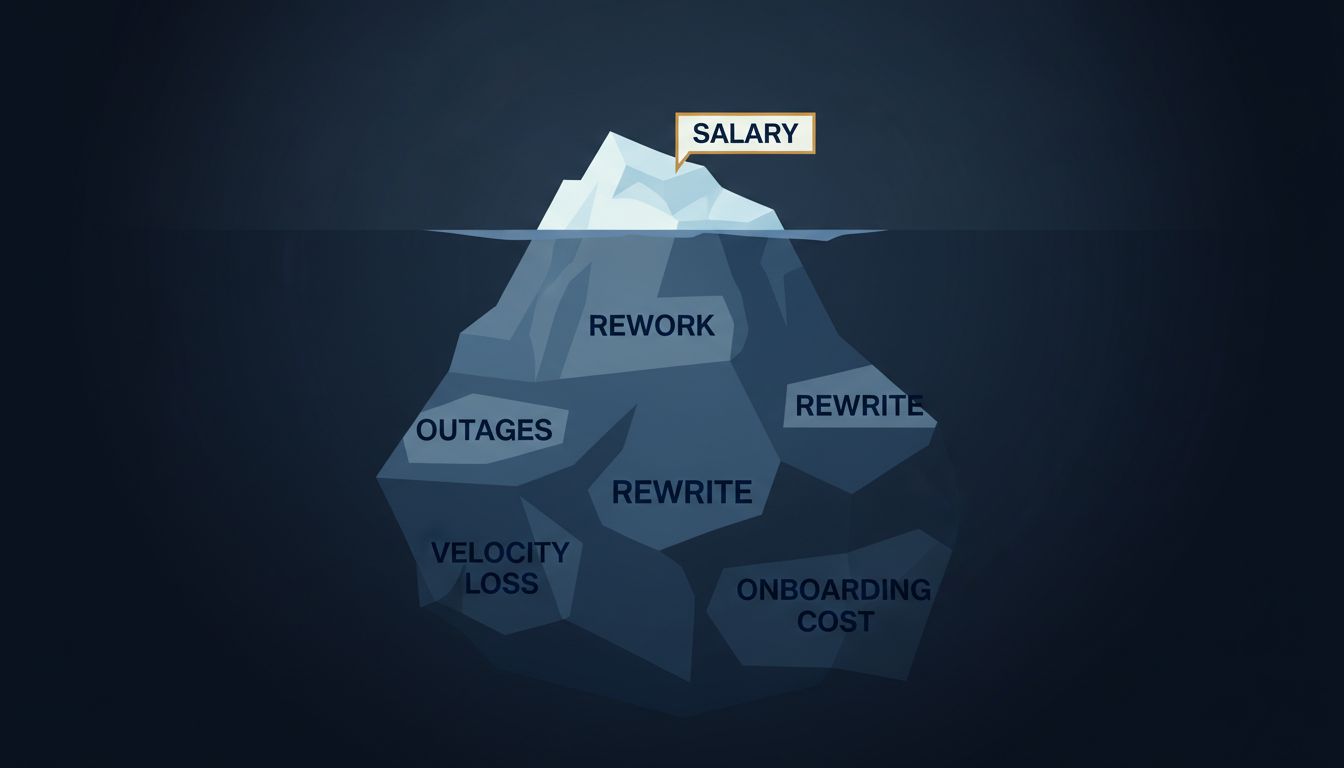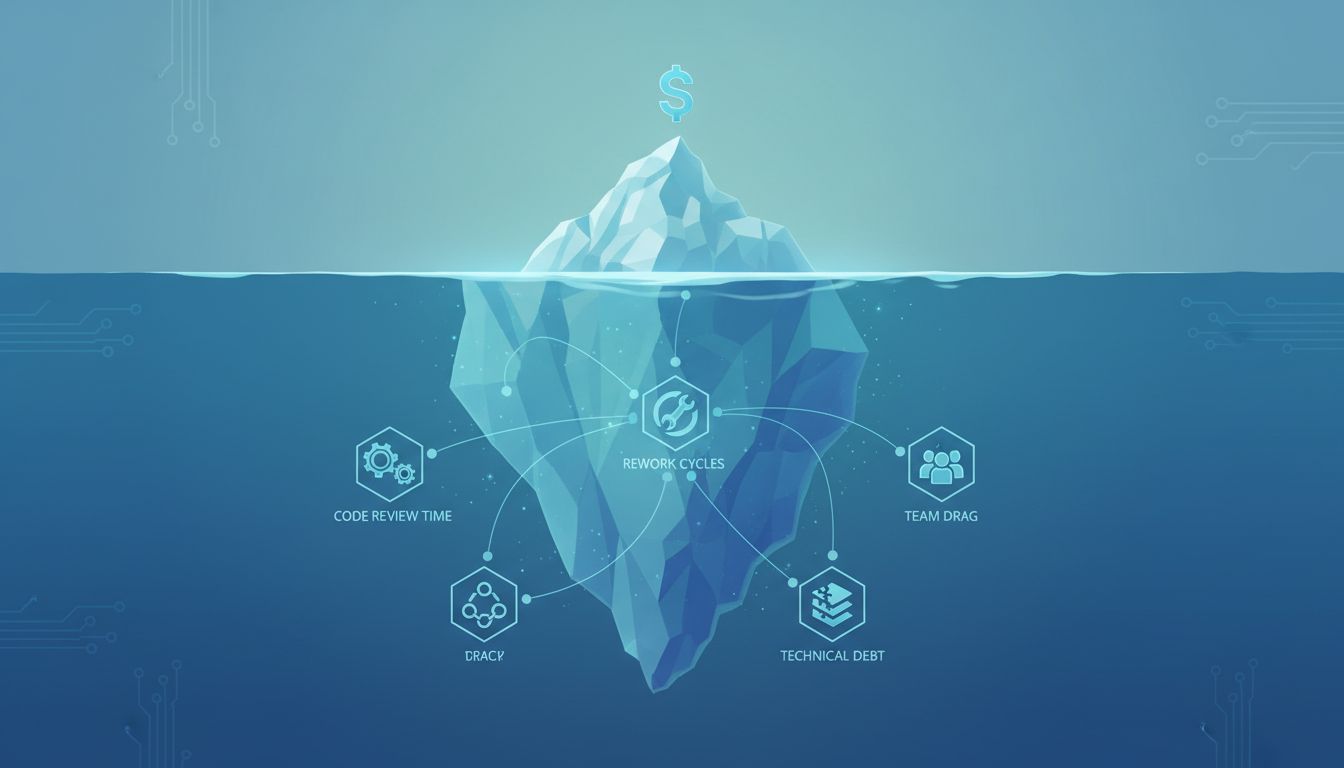
Tech Companies Pay Millions for Domain Names But Give Away Subdomains for Free Because They Are Selling Two Completely Different Things
When Facebook acquired fb.com in 2010 for a reported $8.5 million, the company already owned facebook.com and had hundreds of millions of users. The purchase made headlines as an extravagance. It wasn’t. It was a precise calculation about the cost of ambiguity, and understanding why illuminates something fundamental about how internet infrastructure gets valued and who actually controls it.
At roughly the same time Facebook was wiring millions to the American Farm Bureau Federation (the previous owner of fb.com), countless startups were happily operating on yourapp.github.io or yourstore.shopify.com for free. Both decisions were rational. The domain market isn’t irrational or speculative in the way critics claim. It reflects real economic forces that most people, including many working in tech, never bother to examine.
What a Domain Name Actually Is
Strip away the technical scaffolding and a domain name is a location claim staked in a namespace that nobody owns but ICANN administers. There are roughly 350 million registered domain names globally, but the valuable ones are far fewer. Good .com domains are scarce by design: the namespace is flat, words are finite, and the most obvious human-readable combinations were registered in the 1990s by people who understood what was coming.
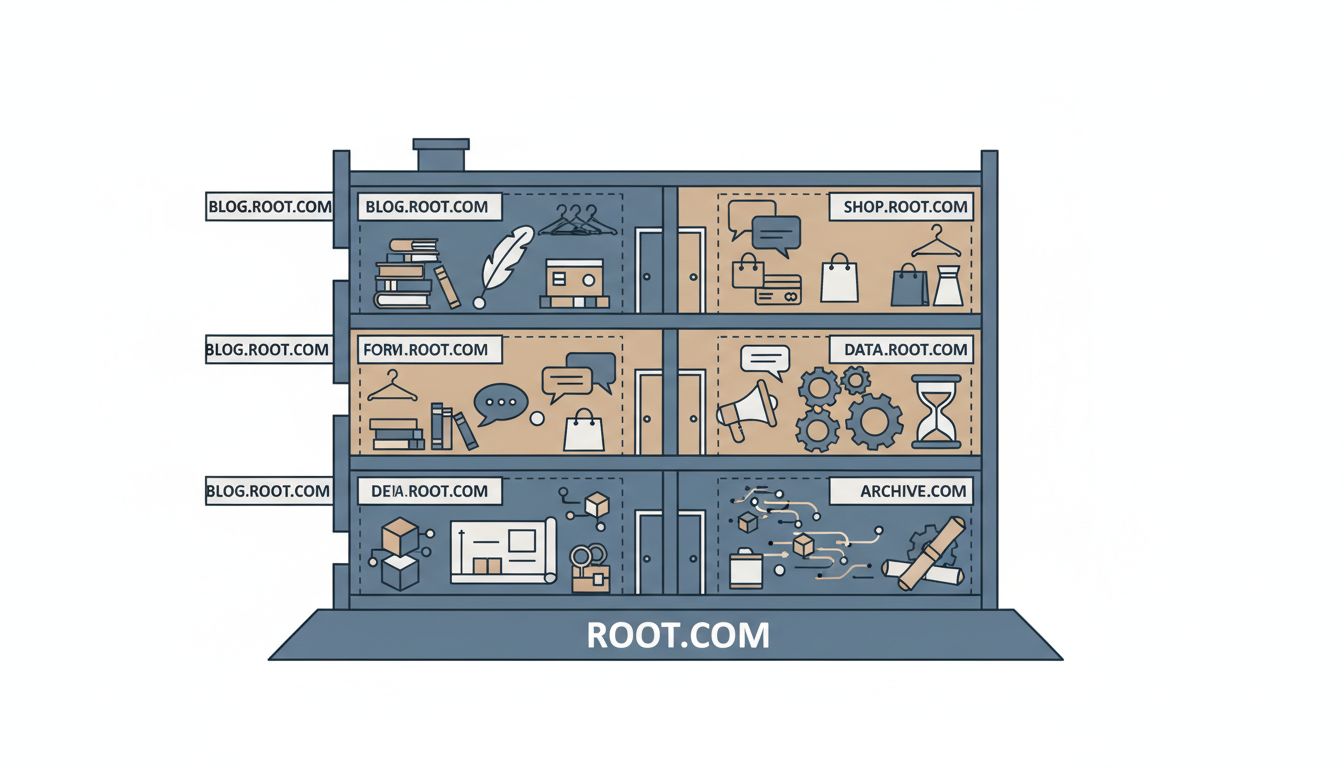
A subdomain is structurally different. When a platform offers you yourname.substack.com or yourshop.myshopify.com, they are not giving you a piece of their namespace. They are extending their namespace into your project while retaining the root. The dot separates not just technical hierarchy but ownership hierarchy. Substack owns substack.com. You occupy a labeled room in their building. You do not own the building, the address, or the signage.
This distinction sounds pedantic until you try to move.
The Lock-In That Hides in Plain Sight
Free subdomains are one of the most effective customer retention mechanisms in software, and they work precisely because most users never think of them as a retention mechanism at all. The logic runs as follows: when you build an audience, a brand, or a body of indexed content at yourname.platform.com, that URL becomes the canonical reference point for everything you have made. It appears in other people’s bookmarks, in Google’s index, in links scattered across the web. The moment you leave the platform, all of that dissolves. The links still point to an address that is now under the platform’s control, not yours.
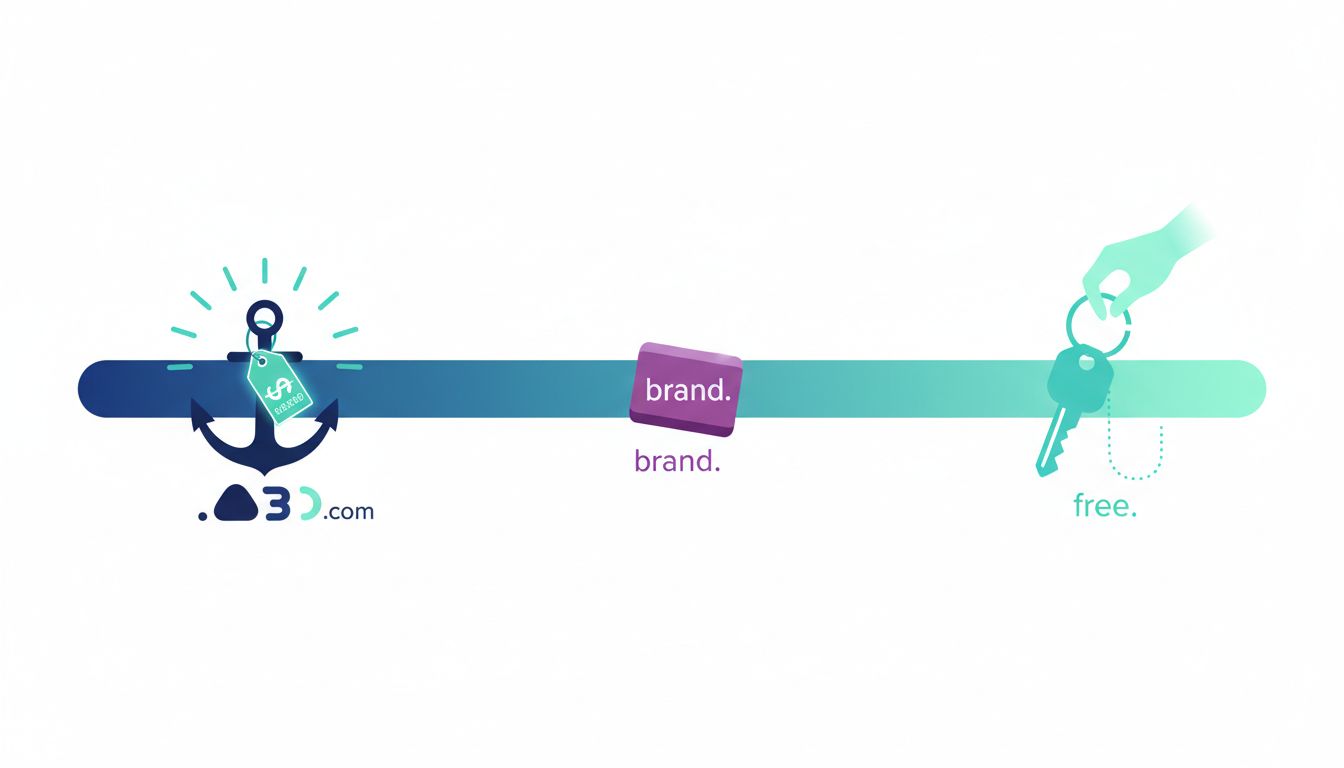
GitHub Pages, Shopify storefronts, Substack newsletters, Tumblr blogs, Squarespace sites: the subdomain offer is structurally identical across all of them. The platform acquires a user, the user builds something, the something becomes entangled with the platform’s domain, and migration becomes costly in ways that compound with time. This is not a conspiracy. It is a straightforward alignment of incentives. Platforms benefit from retention and subdomains create it. They offer the subdomain for free because the lock-in is worth more than whatever they could charge.
Why Premium Domains Command Premium Prices
The fb.com purchase was not about the six characters. It was about removing a specific category of uncertainty from Facebook’s future. As long as fb.com belonged to someone else, it represented a latent problem: a squatter with leverage, a phishing vector, a source of user confusion, a negotiation that would happen at the worst possible moment (during an acquisition, an IPO, a rebranding) rather than on Facebook’s terms.
This is the real driver behind most high-value domain acquisitions. Voice.com sold for $30 million in 2019. Insurance.com sold for $35.6 million in 2010. These prices look irrational if you think of domains as web addresses. They look entirely rational if you think of them as the elimination of specific, quantifiable future risks combined with the acquisition of a generic category term in a competitive market.
Generic category domains (insurance, voice, loans, hotels) function differently from brand domains. They carry ambient search intent. Someone typing insurance.com into a browser is not looking for a specific company; they want the category. That direct navigation traffic, bypass of search entirely, is genuinely valuable and not available at any price on a subdomain.
Brand domains like fb.com are about consolidation and control. Category domains like insurance.com are about capturing intent that no amount of advertising can fully replicate. Both justify prices that sound outrageous when reported in headlines.
The SEO Dimension Nobody Explains Clearly
Search engine optimization adds another layer that the simple buy-vs-free framing misses. When you publish content at yourname.platform.com, the domain authority you build accrues partly to the subdomain and partly to the root domain. Google’s treatment of subdomains has evolved, but the fundamental issue remains: your SEO investment is not fully portable. Switch platforms, and you lose the accumulated signals tied to that URL structure.
Owning your domain inverts this. Every piece of content you publish, every link you earn, every year of age the domain accumulates, belongs to you. A company that has operated at its own domain for fifteen years has built something defensible in search that cannot be replicated quickly by a competitor who spent those years on a platform subdomain.
This is why companies that start on platforms eventually migrate. The migration is painful and the traffic disruption is real, but the long-term position of owning your domain’s authority is worth the short-term cost. As startups discovered early on, the domain matters less at the start than the product. It matters enormously once you have built something worth defending.
The Aftermarket and What It Actually Prices
The secondary market for domains is opaque, which is why it generates such bewildered coverage. Transactions happen privately, prices are often undisclosed, and the logic is not always obvious from the outside. But the aftermarket is pricing something real: the combination of scarcity, category value, brand alignment, and risk elimination that a specific string of characters provides to a specific buyer.
A domain worth $50,000 to an average buyer might be worth $5 million to one particular acquirer for whom it removes a specific threat or enables a specific strategy. Domain investors understand this and price accordingly. The buyer who needs it most will pay the most, and the seller has no reason to discount for anyone else’s valuation. This is standard auction theory, not domain industry chicanery.
The aftermarket also prices in the cost of the alternative. If you cannot acquire the exact domain you want, you will spend money on brand confusion mitigation, misdirected traffic recovery, and eventually a rebrand. Sophisticated buyers calculate these costs and compare them to the ask price. Often the domain is the cheaper option.
The Subdomain Business Model as a Feature
Platforms that offer free subdomains are not being generous. They are making a calculated investment in acquisition and retention. The cost to them is near zero: spinning up a subdomain requires no additional infrastructure beyond what they already operate. The return is a user who builds something on their platform, grows attached to the address, acquires an audience at that address, and faces real switching costs as a result.
This is not inherently predatory. Many users genuinely prefer the simplicity of not managing DNS records, renewals, and registrar relationships. The subdomain offer bundles convenience with retention, and for many use cases the trade is worth making. The mistake is not taking the deal. The mistake is taking it without understanding what you are actually exchanging.
The free subdomain offer is most rational for early-stage projects, personal experiments, and use cases where portability does not matter. It becomes increasingly costly as your project grows, as your audience expects your address to persist, and as your content accumulates SEO value that you cannot take with you. The point at which the economics flip, roughly when you have something worth protecting, is exactly when platforms have the most leverage over you.
What This Means
The domain market’s apparent contradiction (millions for a string of characters, zero for a nearly identical string) resolves cleanly once you understand the underlying assets. Premium domains are being purchased for scarcity, category authority, risk elimination, and full ownership. Subdomains are being offered to acquire users and retain them through structural lock-in.
Facebook buying fb.com was not a vanity purchase. It was risk management and brand consolidation at a scale that justified the price. A startup operating on a free subdomain is not getting a good deal in the long run; they are deferring a cost while building the leverage that will eventually make that cost higher.
The real insight is about control. Owning a domain means owning the root of your digital address permanently, portably, and on your own terms. A subdomain means occupying space in someone else’s namespace under terms that can change. Both have their place. Neither is free.