
A few years back, I was touring an early-stage startup in San Francisco that had maybe forty employees and was burning cash at a rate that should have terrified its board. Their office had a full espresso bar, catered lunch five days a week, and a room dedicated entirely to nap pods. Their marketing budget, I later learned, was almost nothing. They were spending almost nothing to acquire customers and a small fortune making the office feel like a boutique hotel.
At the time I thought this was the particular delusion of a founder who had watched too many Google office tours. Now I think they were, mostly, right.
The thesis is simple: in knowledge-work industries, the product is made entirely by the people. Every dollar you spend keeping a senior engineer comfortable and present is worth several dollars in recruiting costs, onboarding drag, and the silent productivity loss that happens when someone mentally quits but physically stays. Perks aren’t charity. They’re vertical integration.
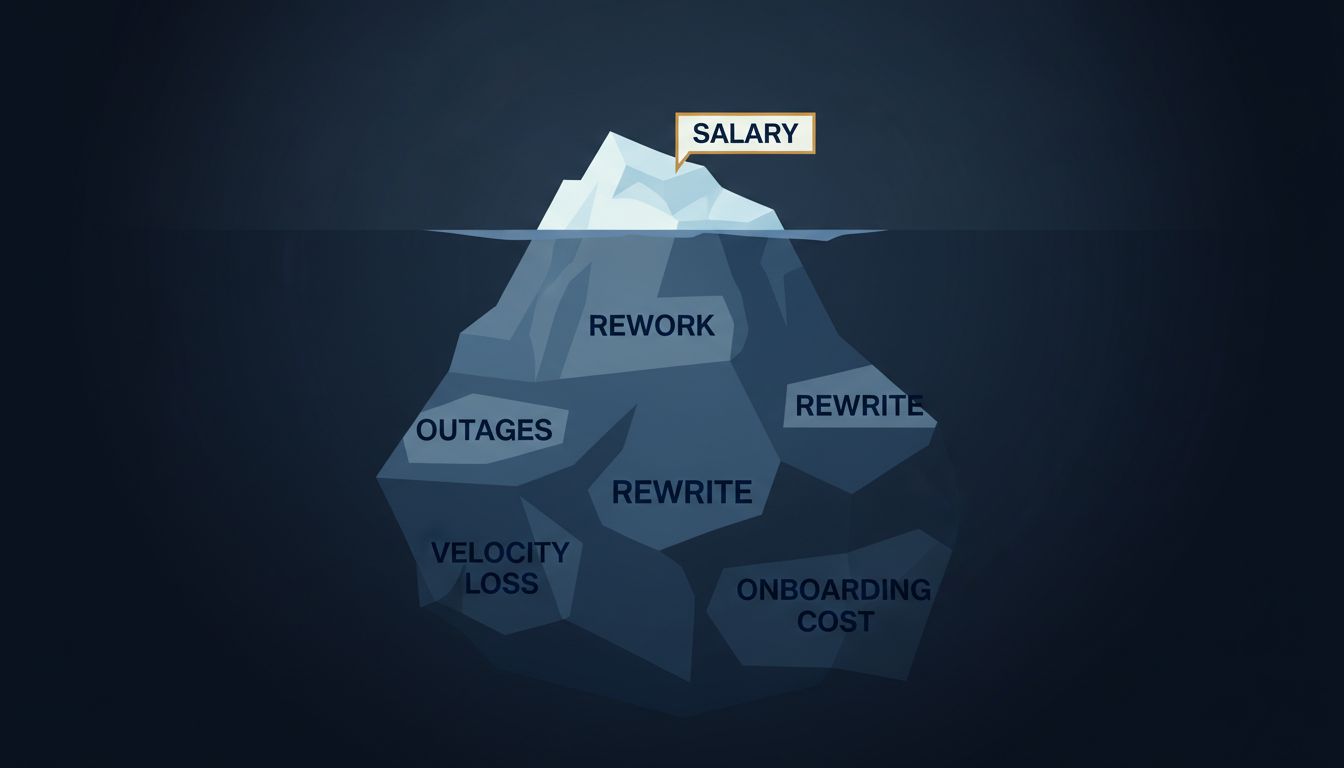
The real cost of turnover is almost always underestimated
The standard HR estimate is that replacing a technical employee costs somewhere between half and twice their annual salary, once you factor in recruiting fees, interview time, onboarding, and the ramp period before they’re fully productive. For senior engineers in competitive markets, the real number is probably higher, because the people you lose often take institutional knowledge and sometimes clients with them.
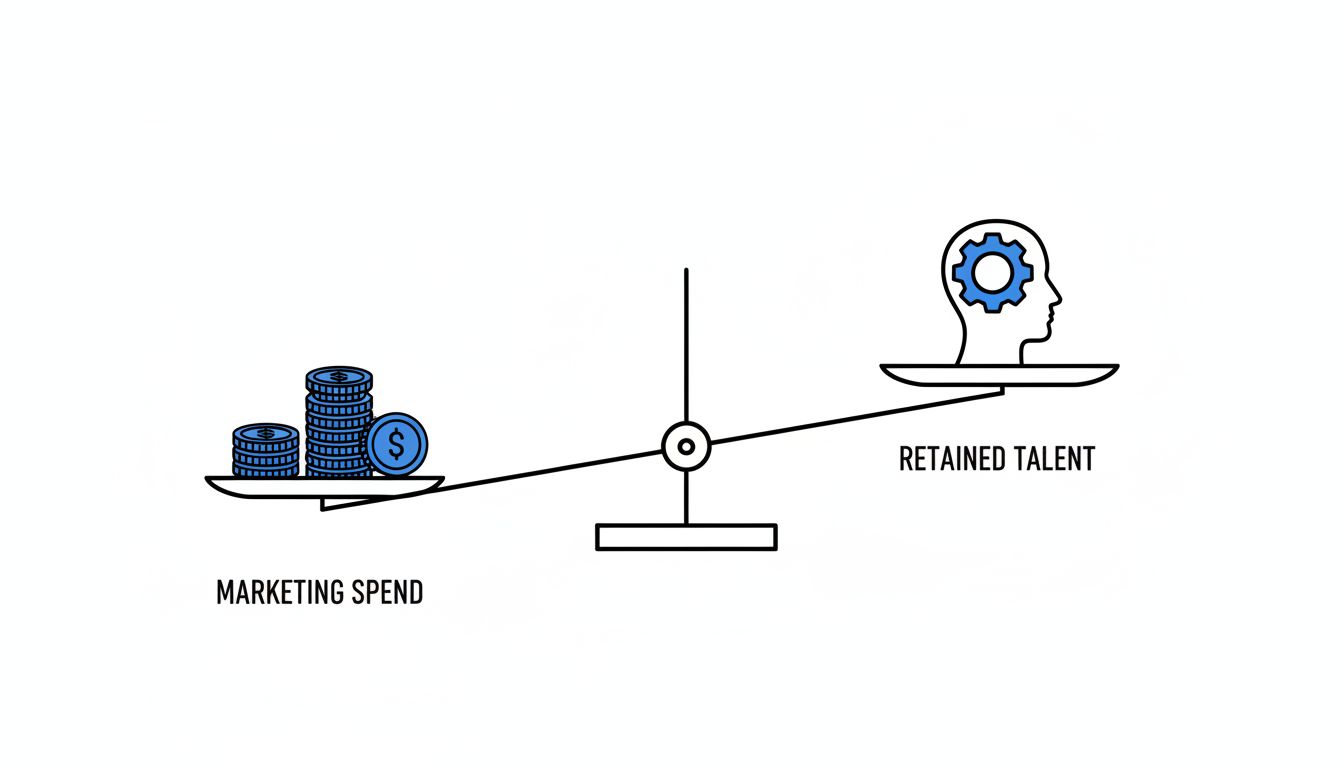
Marketing spend, by contrast, scales predictably. You can throttle a paid acquisition channel. You cannot throttle the cost of losing a staff engineer three months before a major product launch. Perks, in this framing, are essentially turnover insurance. They’re not free, but they’re more predictable than the alternative.
The companies that figured this out earliest, Google foremost among them, built campuses that were explicitly designed to reduce the friction between being at work and being anywhere else. The calculus was never “let’s be nice to our employees.” It was “let’s make leaving feel like a downgrade.”
Perks function as a recruiting signal in a market with bad information
Tech hiring operates in a market with genuine information asymmetry. Candidates can’t fully evaluate culture, team quality, or management competence from a few interviews. Compensation is partly obscured by equity structures that are genuinely hard to value (the lottery-ticket compensation problem is real). What candidates can evaluate is the physical environment and visible benefits, which is why those things get so much investment.
Perks are a credible signal precisely because they cost money. A company that has invested in a real fitness center and genuine parental leave policy is signaling financial stability and a certain seriousness about the employee relationship. A company with a ping-pong table and free granola bars is signaling something different. Candidates who’ve been around long enough can tell the difference.
This is also why perks cluster at companies competing for the same narrow talent pool. When every major tech employer in a geography is offering similar core benefits, the differentiation happens at the margins. You can’t easily compete on base salary above a certain point without distorting your entire compensation band. You can compete on office quality, flexibility, food, and the hundred small frictions you remove from daily work.
Perks buy back cognitive overhead
There’s a less-discussed reason perks matter for companies where the core work is cognitively demanding. Time and attention spent on logistics is time and attention not spent on hard problems. On-site food, dry cleaning, and shuttle buses aren’t perks in the resort sense. They’re interruption-elimination.
A senior engineer deciding where to get lunch, dealing with a long commute, or leaving early for an errand is not a tragedy. But multiply that overhead across a thousand engineers and the drag becomes real. The companies that understand this don’t provide perks because they’re generous. They provide them because they’ve done the arithmetic.
This is the same logic behind dedicated focus time, distraction-free workspaces, and the broader obsession with protecting deep work in technical organizations. The product is thought. Anything that restores more time and cognitive capacity to actual work is an investment, not an expense.
The counterargument
The honest pushback here is that perk spending often continues well past the point of diminishing returns, and that it can become a substitute for actually fixing broken culture or management.
This is true. I’ve seen companies throw elaborate perks at engineering teams that were leaving because of bad management, unclear direction, and incoherent product strategy. The catered lunch didn’t fix any of that. In those cases, perk spending is a cargo-cult response to a retention problem, not a solution to it.
The more cynical read is that perks also function as a form of lock-in. If your commute is covered, your meals are free, and your gym is on-site, the activation energy required to interview elsewhere goes up. That’s not entirely different from big tech hoarding talent rather than genuinely competing for it.
But acknowledging the failure modes doesn’t undermine the core logic. Perks deployed intelligently, in a company with real culture and decent management, are genuinely efficient spend. The problem is that “intelligently” is doing a lot of work in that sentence, and plenty of companies use perk budgets to avoid confronting things that would actually require change.
The spend makes sense when you understand what it’s buying
Outdoor advertising to reach potential software engineering candidates is extraordinarily inefficient. Word of mouth among engineers is not. Every engineer who works at your company and tells their network it’s a legitimately good place to work is doing recruiting you cannot buy directly.
This is why perks spending is really marketing spending, just directed internally. The audience is your current employees, and the conversion event is them staying, performing, and recruiting their peers. That’s a better return on most marketing budgets than banner ads.
The companies that understand this aren’t being naive about money. They’re being precise about where in the value chain their spend actually matters. In industries where the product is built entirely by human judgment and effort, keeping the humans effective and present is the highest-leverage investment available. Everything else, including external marketing, is secondary to getting that right.