Planned obsolescence is one of those phrases that feels like it explains everything. Your three-year-old laptop slows to a crawl after an update. Your phone stops receiving security patches. Your perfectly functional tablet can no longer run the apps your life depends on. The intuitive conclusion is that someone in a boardroom decided this would happen. The truth is more interesting, and more damning, than that.
Tech giants don’t need a coordinated plan to force upgrades. The incentive structure of software development produces the same outcome automatically. That’s not a defense of the industry. It’s a more precise indictment of it.
Software grows faster than hardware can age
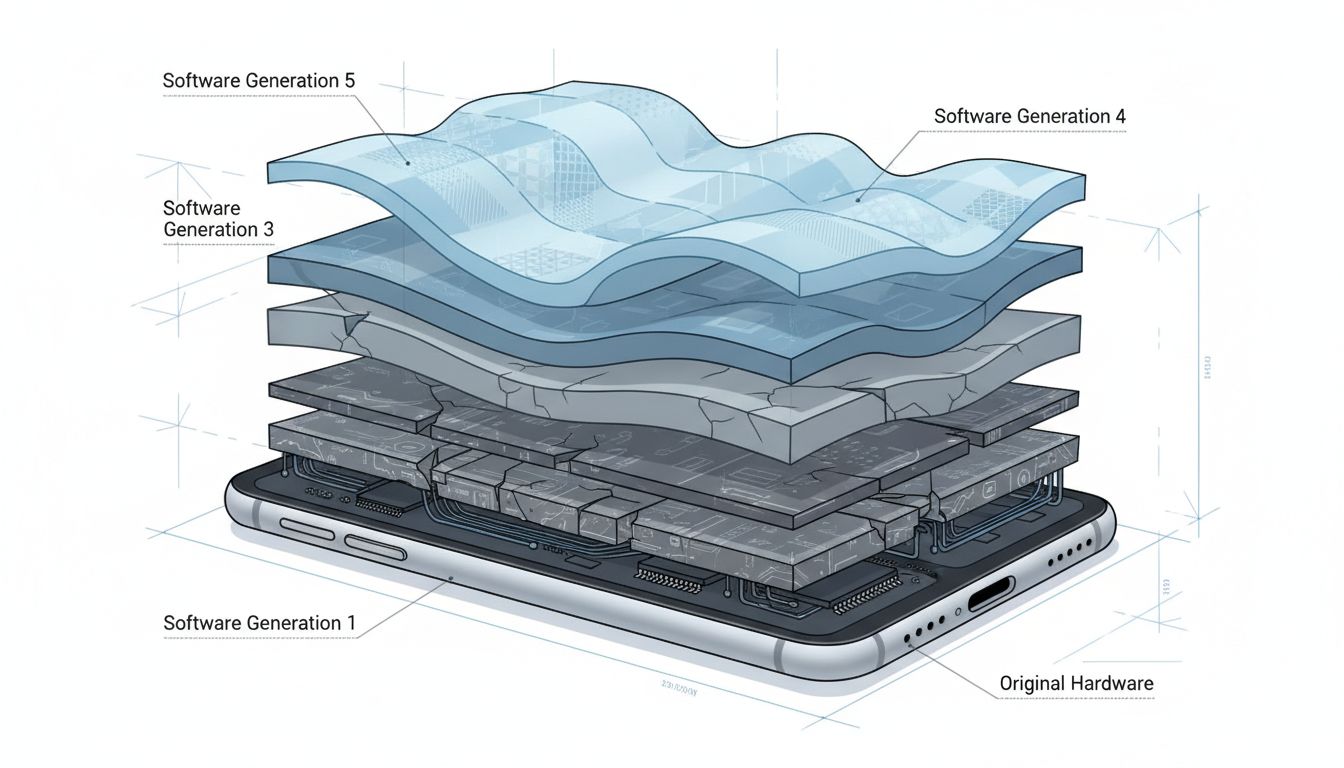
Operating systems and applications are written for the hardware that exists at the time of development, not the hardware that was sold five years prior. When Apple ships a new version of iOS, the engineering team is optimizing for devices with modern processors and memory configurations. Supporting older chips well enough to deliver a smooth experience on them costs real money in testing, compatibility work, and feature restrictions. The incentive to do that work diminishes sharply once a device falls below a certain percentage of the active install base.
This isn’t secret. Apple publishes its supported device lists. Google’s Android fragmentation problem has been documented for over a decade. The result is that software-defined performance degradation follows a predictable arc regardless of whether any executive signed off on it explicitly. Software updates slow your device down on purpose, and the reason is structural.
Security support windows are where the real coercion happens
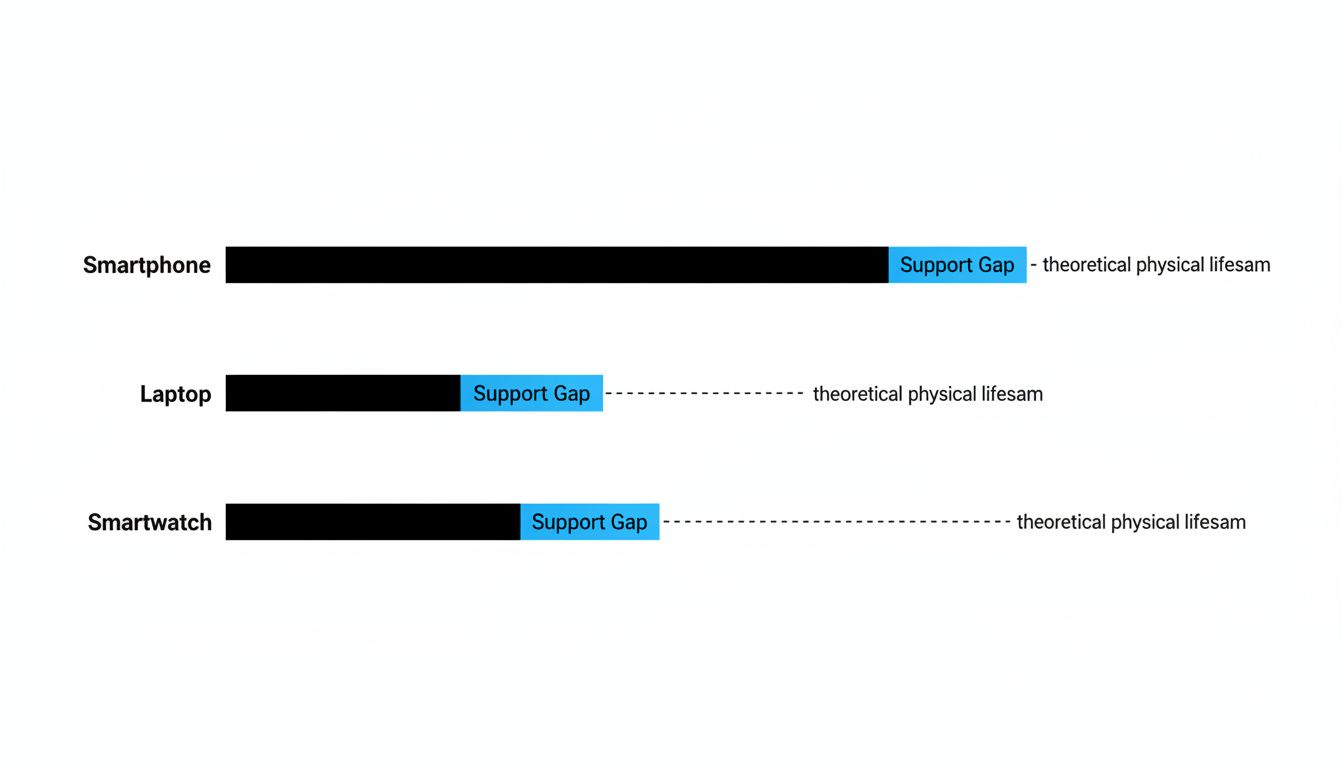
The more honest pressure point isn’t performance. It’s security. When a manufacturer ends security patch support for a device, continuing to use it becomes genuinely risky, not just inconvenient. Microsoft ended support for Windows 10 in October 2025, affecting hundreds of millions of PCs. Many of those machines are physically capable of running Windows 11. Microsoft’s hardware requirements for Windows 11 (specifically the TPM 2.0 chip requirement) excluded a large share of otherwise functional computers.
The TPM requirement has a legitimate security rationale. It also conveniently ensures that a significant portion of the installed base needs new hardware to stay protected. Whether you call that planned obsolescence or an unavoidable security tradeoff depends on how charitable you feel. The financial outcome for PC manufacturers is identical either way.
Repairability restrictions compound the problem
The software angle is reinforced by hardware policy. For years, Apple tied certain component replacements to software authorization checks, meaning a screen or battery replaced with a non-Apple part would trigger warning messages or reduced functionality. The practice drew enough regulatory scrutiny that Apple introduced its Self Repair Program in 2022, but the program’s pricing and complexity limited its practical reach.
Right-to-repair legislation is now advancing in several U.S. states and across the EU, which suggests regulators have concluded the restrictions go beyond engineering necessity. When a company makes it cheaper to buy a new device than repair an old one, the upgrade cycle shortens by design, even if no one explicitly planned it that way.
The subscription model changed the calculus permanently
Hardware sales used to be the primary revenue event. A customer bought a phone, and the manufacturer recognized that revenue once. The shift toward services revenue (iCloud, Apple One, Microsoft 365, Google One) changed the underlying math. Hardware now functions partly as an access point to recurring subscription revenue. Keeping older hardware functional and well-supported extends the life of a device that may be generating services revenue anyway. But it also delays the upsell opportunity that a new device purchase represents.
This creates a genuine tension companies resolve quietly, in favor of the upgrade cycle.
The counterargument
The strongest pushback is that real technological progress explains most of what looks like manufactured obsolescence. The gap between a 2019 processor and a 2024 processor is measurable and consequential for tasks like video editing, machine learning inference, and computational photography. Demanding that software remain optimized for five-year-old chips would slow the pace of innovation for everyone.
This is fair, up to a point. The problem is that the cutoff lines don’t always track actual capability. A device that handles everyday tasks without issue (email, video calls, document editing) shouldn’t require replacement because it can’t run a feature its owner will never use. The industry often draws support windows tighter than technical necessity requires, and the financial motive for doing so is transparent.
The upgrade cycle is a product decision, not a fact of nature
Framing hardware obsolescence as inevitable technological progress lets manufacturers avoid the harder question: how long could they support a device if they had to? The answer, revealed by right-to-repair pressure and extended support programs offered when regulators push hard enough, is almost always longer than current practice suggests.
The mechanism isn’t a conspiracy. It’s a set of rational decisions, made independently across product, engineering, and finance teams, that collectively produce a three-to-five year upgrade cycle. Calling it structural rather than planned doesn’t make consumers whole. It just means the accountability is more diffuse than a single boardroom decision, and therefore harder to assign and harder to fix.