
Amazon Web Services launched in 2006 at prices so low that competitors assumed it was a mistake. It wasn’t. AWS was priced to bleed rivals dry before they could respond, and it worked. Today AWS controls roughly 31% of the global cloud infrastructure market, generating over $90 billion in annual revenue from a platform that was deliberately positioned as a money-loser at launch. The product was never meant to be profitable immediately. It was meant to be inescapable eventually.
This is the loss-leader strategy as it operates at industrial scale, and it is far more systematic than most observers recognize. It is worth understanding not just as a curiosity of corporate behavior, but as the dominant competitive logic shaping entire technology sectors right now. As we’ve noted in our coverage of tech companies launching products they know will fail on purpose, deliberate unprofitability is often a feature, not a bug.
The Razor and the Blade, Scaled to Civilization
The classic razor-and-blade model, popularized by Gillette in the early 20th century, involves selling the handle cheap and profiting on the blades. Tech giants have simply applied this to infrastructure. Google gives away Gmail, Maps, and Search entirely free. The product is advertising access to the people using those free tools. The company generated $237 billion in advertising revenue in 2023, built almost entirely on top of services it provides without charge.
Amazon’s Prime membership follows similar logic. The company has acknowledged in filings that it loses money on shipping for many Prime customers. The point is not shipping. The point is purchase frequency. Prime members spend an average of $1,400 per year on Amazon versus $600 for non-members. The shipping subsidy is a customer-retention investment with a measurable return.
Microsoft has deployed the same architecture in enterprise software. Teams, its workplace communication platform, was bundled into Office 365 subscriptions at no additional cost when it launched in 2017. Slack, which charged separately for similar functionality, watched its valuation trajectory change almost immediately. Microsoft did not need Teams to be profitable. It needed Teams to prevent Slack from becoming the default interface through which businesses ran their operations.
The Invisible Cost of Free
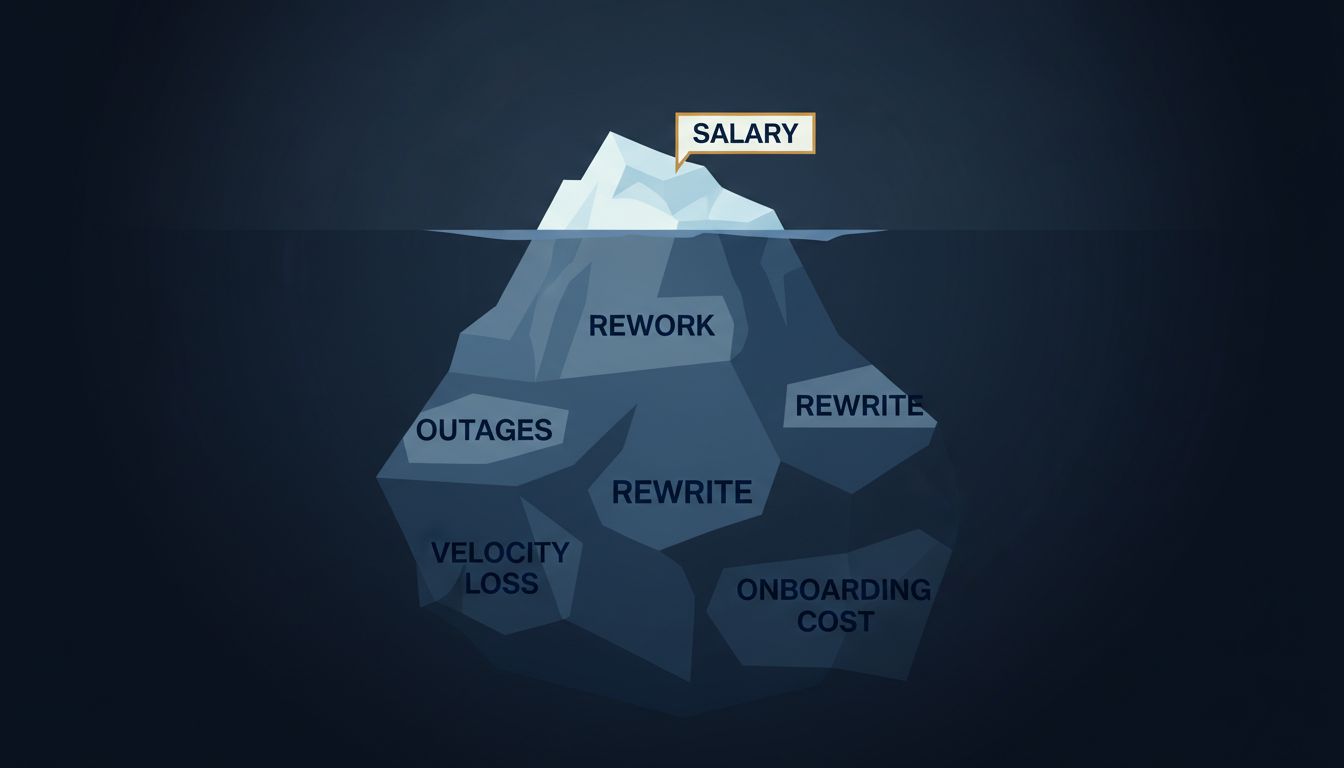
The strategy works because of switching costs, which accumulate silently. Once a business runs its data warehouse on AWS, migrates its workflows to Google Workspace, or builds its internal culture around Microsoft Teams, the cost of switching vendors is not just financial. It is organizational. It is time. It is retraining. It is the months of productivity loss that no spreadsheet fully captures.
This is why software licenses frequently cost more than the hardware they run on. The price is not set by the cost of production. It is set by the cost of leaving. Once a customer is embedded deeply enough in a platform, the vendor can gradually raise prices toward the true ceiling of what switching would cost. The loss-leader phase is simply the process of raising that ceiling as high as possible before monetization begins.
Why Competitors Cannot Respond
The most ruthless element of this strategy is the asymmetry it creates. A well-funded tech giant can absorb losses on a product category for years. A startup or mid-size competitor cannot. When Amazon launched its own private-label products and promoted them above third-party sellers in search results, it was not competing fairly on product quality. It was using the losses in one division (private label) as a weapon funded by profits in another (Prime subscriptions and AWS).
This cross-subsidization across business units is something a focused competitor simply cannot replicate. It is also why regulators in the European Union and the United States have begun scrutinizing bundling practices more carefully. When Google bundles Chrome with Android and sets Google Search as the default, the arrangement is not incidentally anticompetitive. The default position has monetary value that Google itself has quantified. Apple charges Google an estimated $15 to $20 billion per year to remain the default search engine on Safari. That number tells you exactly what a default position is worth, which is to say it tells you what competitors are effectively being denied.
There is a parallel here to how tech companies deliberately delay products that are ready to ship. Timing the market is not about the product. It is about competitive positioning, cash reserves, and the ability to absorb short-term pain that rivals cannot.
The Endgame Is Not Market Share. It Is Market Architecture.
What distinguishes the most sophisticated loss-leader strategies from simple price wars is the goal. A price war aims to win customers. A platform strategy aims to become the infrastructure through which customers must pass regardless of what they are doing.
AWS is not trying to win customers. It is trying to become the water and electricity of the internet economy. Once that position is established, losing any individual customer matters far less than the structural dependency of the ecosystem as a whole. Startups building on AWS are not just customers. They are validation, distribution, and in many cases, future acquisition targets.
This ecosystem logic explains behavior that looks irrational from a product-by-product view. Why would Google invest billions in building Waymo, a self-driving car project with no clear near-term revenue? Because transportation data, at scale, feeds directly into the mapping and location intelligence that underlies Google’s advertising business. The loss in one column is a deposit in another.
What This Means for Everyone Else
For startups, the implication is uncomfortable but important. Building on top of a platform controlled by a potential competitor is a structural risk, not just a business risk. The platform can change pricing, modify APIs, or simply launch a competing product the moment the market segment is validated. This is not hypothetical. It has happened repeatedly across app stores, cloud services, and advertising platforms.
For enterprise buyers, the lesson is to price switching costs into vendor negotiations before they become switching costs. The time to negotiate exit rights, data portability, and pricing caps is when the vendor still needs your business, not after you have rebuilt your operations around their infrastructure.
For regulators, the challenge is that none of this is illegal under frameworks designed for simpler markets. Giving something away for free is not predatory pricing in the traditional legal sense. The harm is architectural, not transactional, and the law has not fully caught up.
The loss-leader at industrial scale is not a promotional tactic. It is a method for reshaping the competitive landscape itself, one subsidized product at a time. The math is patient, the capital requirements are enormous, and the results, once locked in, are very difficult to undo.