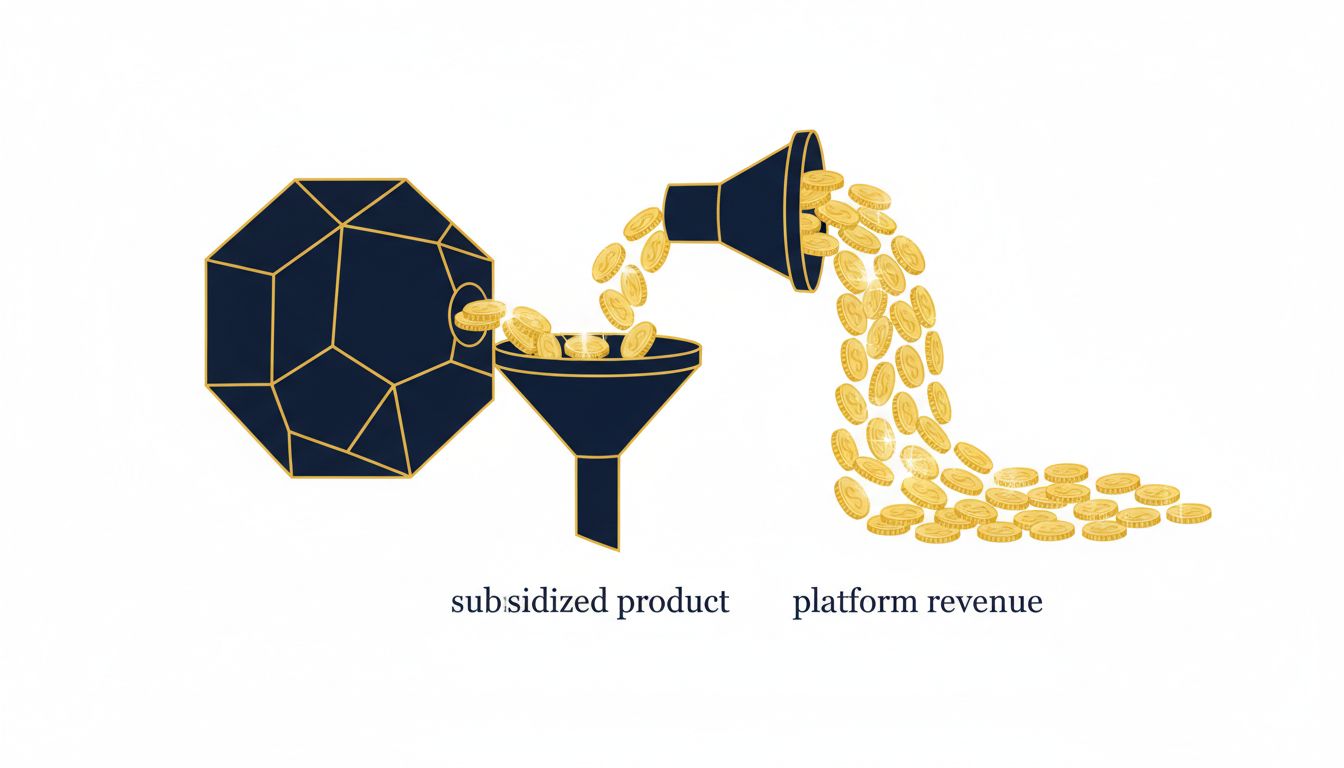
Amazon sells the Kindle at or near its manufacturing cost. Google gives away Gmail, Maps, and an entire operating system. Apple prices its developer tools at zero. None of this is charity. These companies are running a strategy so deliberate and so well-documented that it has a name inside corporate finance circles: the platform subsidy. The idea is to absorb short-term losses on one product to capture long-term revenue on an entirely different one, and the numbers behind it are more extreme than most people realize.
This connects to a broader pattern in tech economics where the product you see is rarely the product generating the profit. As explored in Tech Companies Deliberately Launch Products They Know Will Lose Money, intentional losses are not a bug in the strategy. They are the strategy.
The Kindle Was Never a Device. It Was a Door.
When Amazon introduced the Kindle in 2007, it priced the device at $399, which was already below the cost of production when accounting for supply chain overhead. Over subsequent generations, Amazon pushed that price lower, eventually selling basic Kindles near or below the $30 range. Jeff Bezos confirmed the reasoning publicly: Amazon makes money when people use the device, not when they buy it.
The math holds up. A customer who owns a Kindle purchases roughly four times more ebooks annually than a customer without one, according to estimates based on Amazon’s own disclosures. If that customer spends an additional $100 per year on digital content, Amazon recovers the hardware subsidy within two years and then collects pure margin on every subsequent purchase. The Kindle is not a product. It is a subscription acquisition tool with a screen.
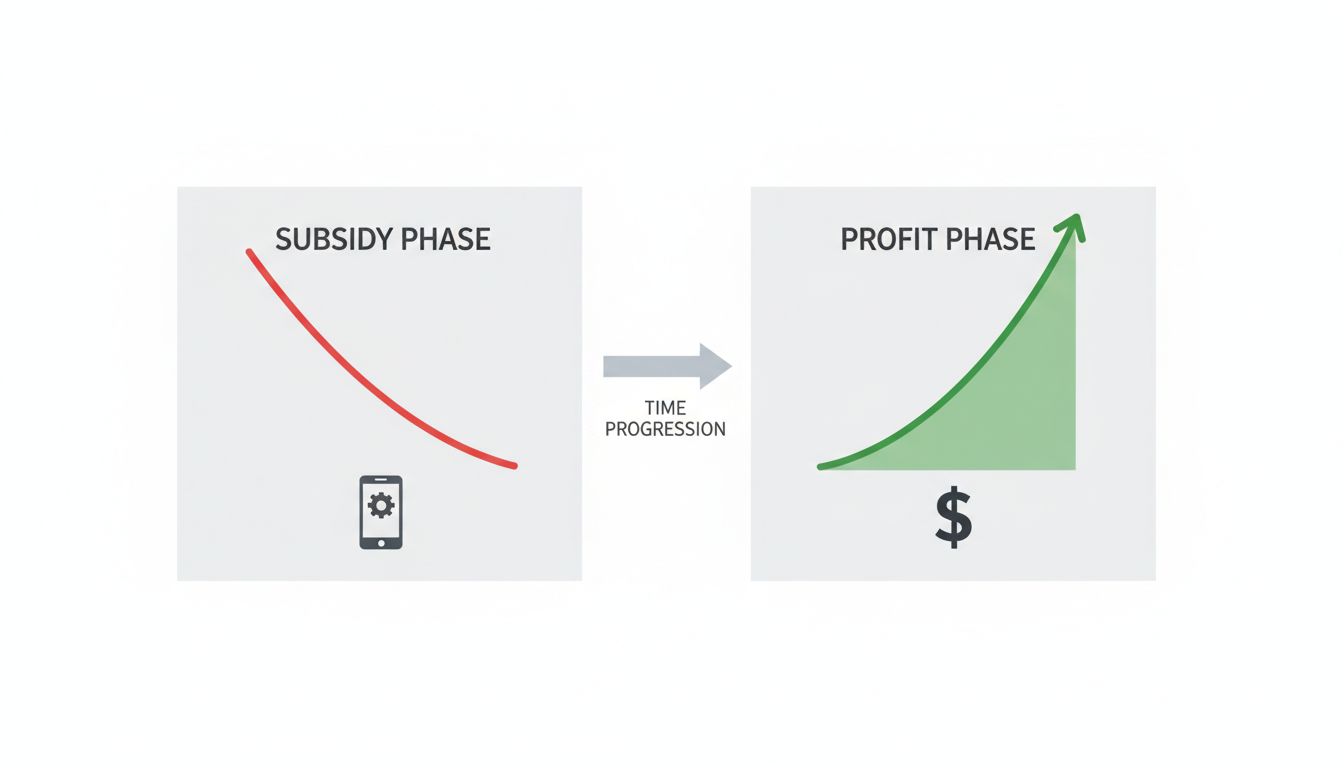
This same logic governs Amazon Web Services in a different direction. AWS was priced aggressively below market from the beginning, which made it difficult for enterprise IT teams to justify not adopting it. Once those teams built their infrastructure on AWS, the switching costs became so high that price increases later were absorbed without significant churn. The subsidy phase created the lock-in. The lock-in funded the profit phase.
Google’s Free Products Are Not Free. You Are Just Paying Later.
Google’s approach to platform subsidies operates on an even larger scale. Android, the operating system running on roughly 72 percent of the world’s smartphones, is distributed free of charge to device manufacturers. Google does not collect a licensing fee. It absorbs the development and maintenance costs entirely. The return comes from the search behavior of Android users, who generate advertising revenue estimated at over $100 per user per year in mature markets.
The arithmetic is straightforward. Android has approximately three billion active devices globally. Even a conservative estimate of $50 in annual advertising revenue per device produces $150 billion in annual returns from a product Google gives away at no charge. The subsidy cost, which is substantial but far smaller, disappears inside that figure.
Google Workspace (formerly G Suite) followed a similar arc. Gmail and Google Docs were priced at zero for consumers, which trained an entire generation of workers to use Google’s productivity tools before they ever entered the workforce. When those workers joined companies, the pressure to standardize on Google’s paid enterprise tier came from employees, not from Google’s sales team. The consumer subsidy effectively funded an enterprise sales motion.
This connects to a phenomenon described in How Billion-Dollar Startups Use The ‘Goldilocks Strategy’ to Price Out 90% of Potential Users, where pricing strategy is rarely about covering costs and almost always about shaping behavior.
The Subsidy Has to Be Targeted to Work
Not every loss-leader strategy succeeds. The ones that fail tend to share a common flaw: the subsidized product does not actually drive usage of the profitable product. They are adjacent but not connected.
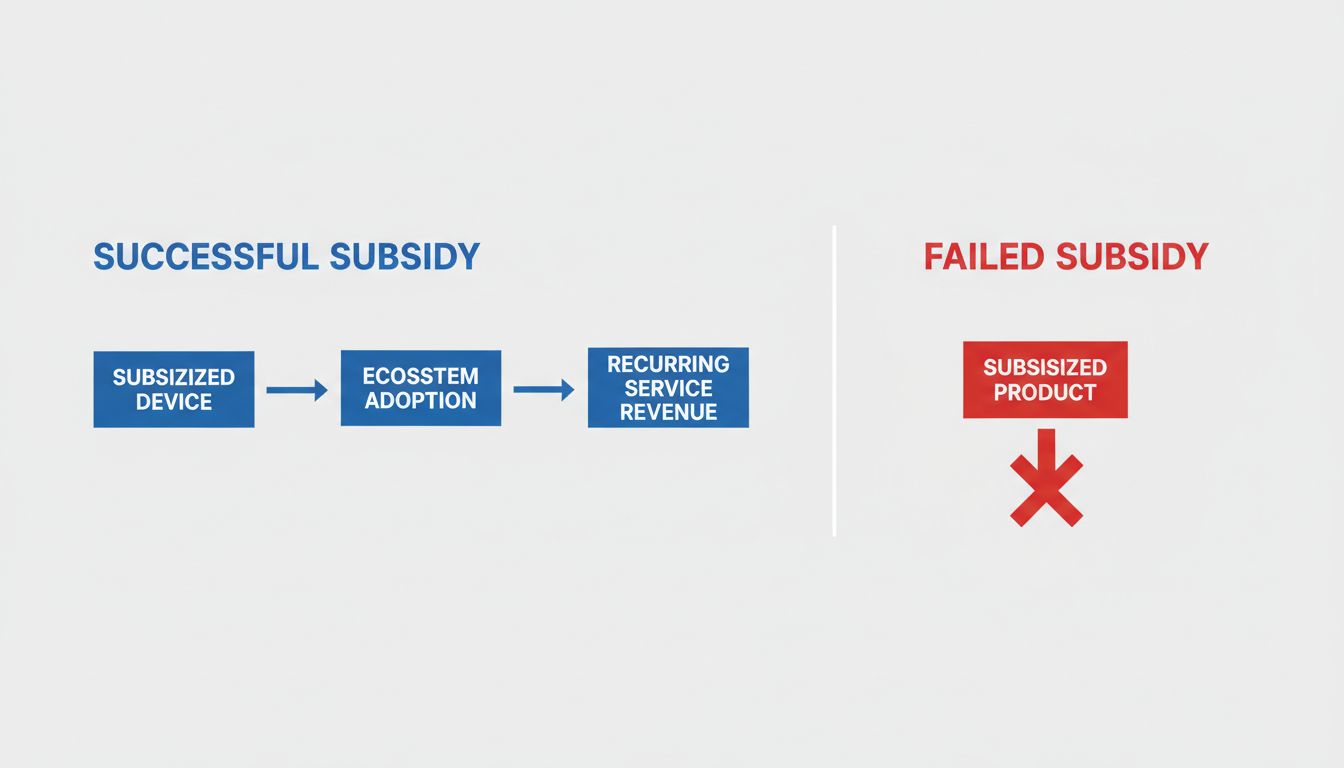
Microsoft’s history provides a useful contrast. Microsoft subsidized the Xbox hardware for years, selling each console below cost to compete with Sony’s PlayStation. The strategy worked because Xbox Live, the paid subscription service, generated recurring revenue that more than offset the hardware losses over the console’s lifecycle. Microsoft has disclosed that its gaming division has operated on negative hardware margins as a feature, not an accident, of its business model.
Contrast that with Google Glass, which was sold as a consumer experiment at $1,500 (well above cost) without a clear ecosystem attached to it. There was no subsidized entry point and no profitable back end. The product had no platform logic and it failed accordingly.
The discipline required to run a platform subsidy correctly is significant. Teams have to resist the pressure to show unit profitability on the subsidized product, which creates internal tension in almost every company that attempts it. Product managers are measured on margins. Finance teams want to see positive contribution. The companies that execute platform subsidies well have leadership willing to override those incentives for years at a time, which is rarer than it sounds.
Why Competitors Cannot Simply Copy the Model
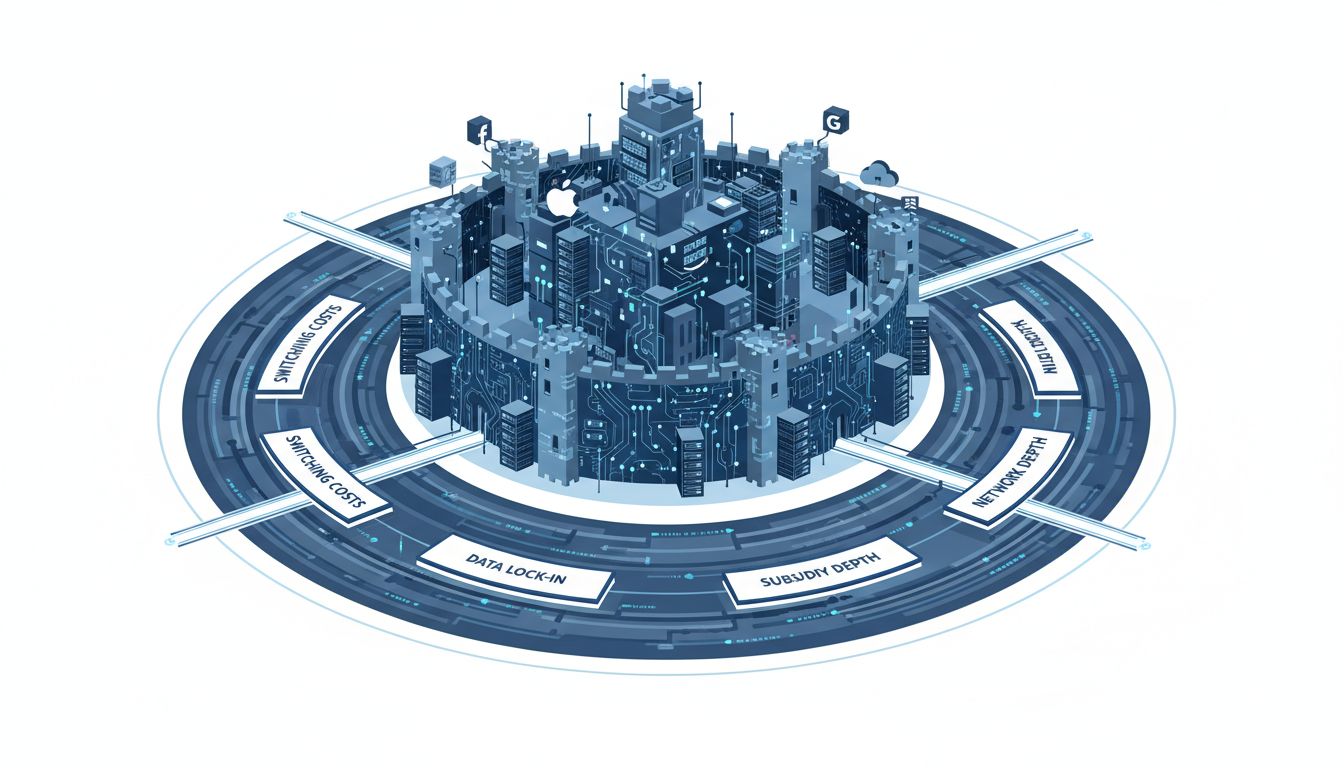
Platform subsidies create a compounding advantage that becomes nearly impossible to replicate once established. Apple’s ecosystem illustrates this clearly. Apple subsidizes iCloud storage, offering 5GB free and pricing higher tiers below the actual cost of data storage at scale. The reason is that iCloud adoption increases the cost of switching away from iPhone. A customer with 10 years of photos, contacts, and app data in iCloud faces a migration project significant enough to keep them buying iPhones even when competitors offer objectively better hardware specifications.
A competitor attempting to match Apple’s subsidy would need to absorb the same storage costs without having Apple’s installed base generating the offsetting hardware revenue. The math only works at scale, which means the company already in the lead gets to widen the gap over time.
This is also why Big Tech’s Patent Portfolios Are Not About Innovation. They Are About Keeping You Out. The same defensive logic applies to subsidies. Once a platform has used subsidies to establish dominance, intellectual property, switching costs, and data advantages combine to make the position nearly permanent.
The Model Reveals Something Uncomfortable About Market Competition
Platform subsidies expose a tension at the center of technology market economics. The companies best positioned to subsidize products are the ones that already dominate adjacent markets, which means the strategy is most available to the companies that need it least. A startup cannot absorb years of hardware losses. Amazon, Google, and Apple can, because they have profitable core businesses funding the experiment.
For analysts and investors, recognizing a platform subsidy in action requires looking past the obvious financial metrics. A product losing money is not necessarily a failing product. It may be the most important product in the portfolio, precisely because its losses are building something that cannot be easily priced or measured in a single quarter.
For everyone else, the lesson is simpler: when a powerful technology company offers something for free or well below apparent cost, the question worth asking is not what they are giving away, but what they are building toward.