The Simple Version
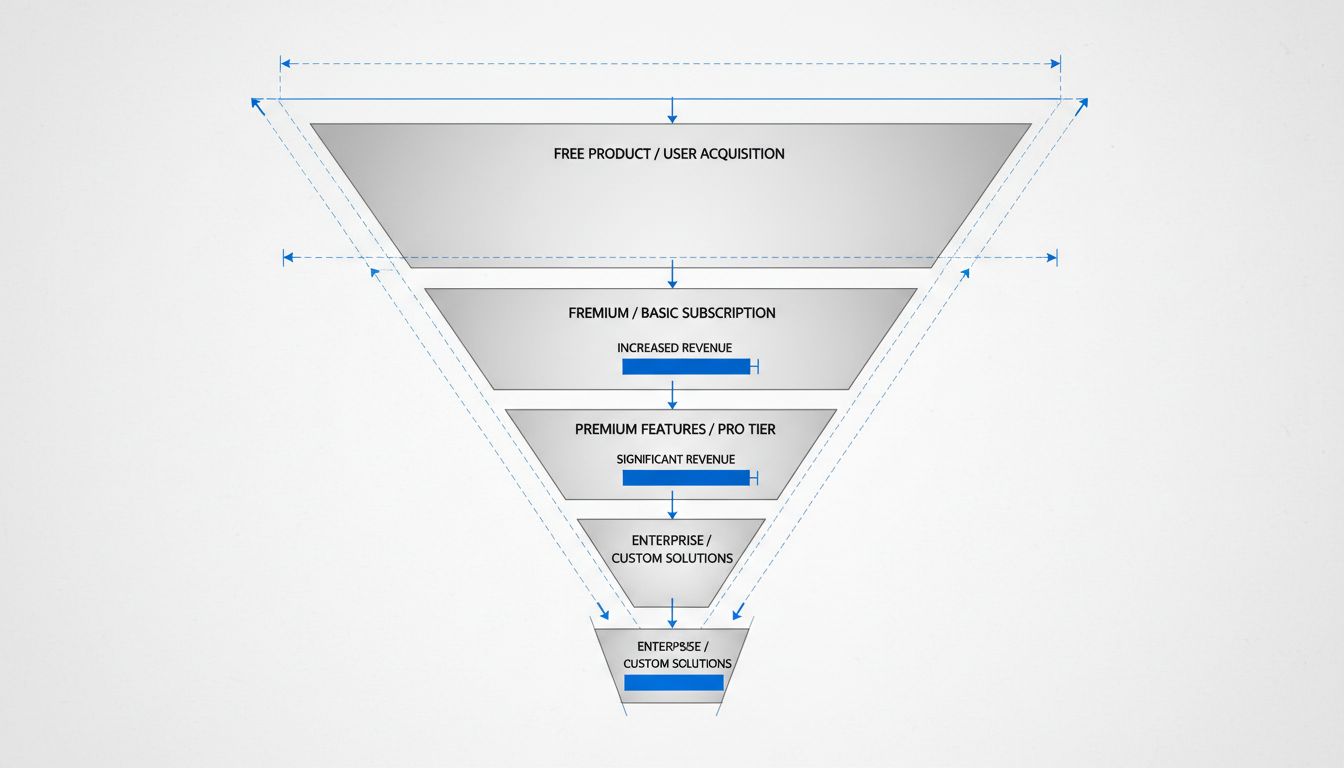
A loss leader is a product sold at a loss to pull customers into an ecosystem where everything else is profitable. Tech companies have turned this old retail trick into the structural foundation of trillion-dollar businesses.
What Grocery Stores Got Right (And Tech Companies Got Better)
The loss leader isn’t a tech invention. Grocery stores have sold milk and eggs below cost for decades, betting that customers who come in for cheap staples leave with a full cart. The math works because the margin on everything else covers the loss on the anchor product.
Tech companies borrowed this logic and made it more powerful in two ways. First, digital products have near-zero marginal cost, which means the “loss” on each additional user shrinks as scale grows. Second, unlike a grocery cart, a digital ecosystem creates switching costs that compound over time. You don’t just buy the cheap product once. You build your life around it.
Amazon sold the Kindle below cost for years, and the strategy had nothing to do with selling books. It was about turning reading into a subscription relationship, where your entire library exists only inside Amazon’s infrastructure.
The Anatomy of an Ecosystem Trap
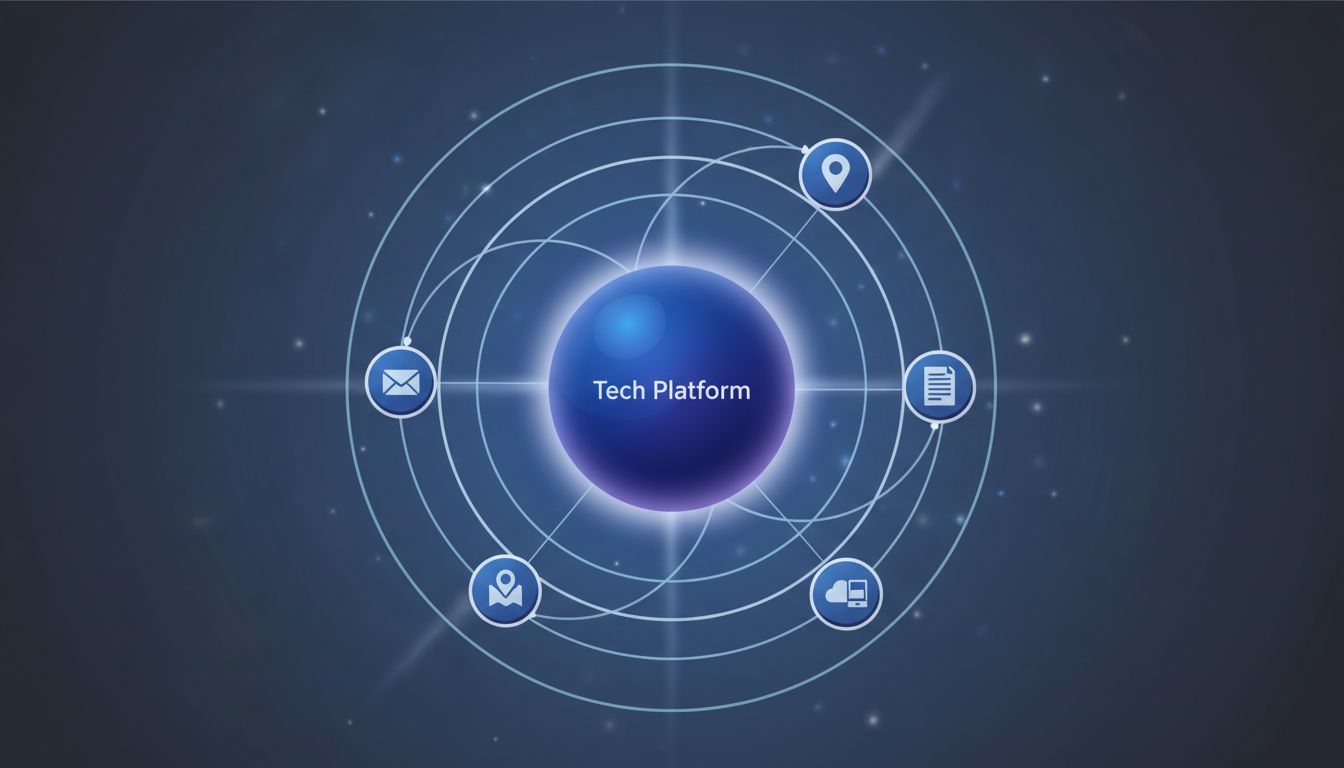
Google’s suite of products is the clearest example of this strategy at scale. Gmail, Google Docs, Google Photos, and Google Maps are all free or priced at levels that don’t come close to reflecting their development cost. Google’s revenue, roughly $280 billion in 2023, comes overwhelmingly from advertising. The free products are the funnel.
But calling them a “funnel” undersells what they actually do. Each free product creates a new reason to stay inside Google’s environment and a new cost to leaving it. Your photos are in Google Photos. Your email history, dating back years, lives in Gmail. Your documents are in Drive. When you add all those switching costs together, the question stops being “is Google worth paying for?” and starts being “what would it cost me in time, lost data, and disruption to leave?”
Most people never calculate that cost explicitly. They just stay.
Microsoft’s Version Is Even More Aggressive
Microsoft’s approach to Office illustrates how a loss leader strategy can evolve. For years, Microsoft sold Office as expensive standalone software. Then competitors, particularly Google’s free Docs suite, started eroding its position with consumers and smaller businesses.
Microsoft’s response was to bundle an enormous amount of capability into Microsoft 365 at a price point that would have seemed impossibly low against its old per-product pricing. Teams, the video conferencing and collaboration tool, was included at no extra charge. At its peak, Teams had more than 300 million monthly active users, largely because it came preinstalled in software that enterprises were already paying for.
The effect was to crowd out competitors. Slack, which had a clear product advantage when Teams launched, found itself fighting against something that cost its potential customers nothing incremental. Salesforce eventually acquired Slack for $27.7 billion in 2021, in part because standalone collaboration tools had become difficult to sell against a bundled competitor.
This is loss leadership used offensively, not just to retain customers but to foreclose entire market categories for rivals.
The Storage Trap Deserves Special Attention
Cloud storage is the loss leader that most people have personally experienced without recognizing it as a strategic tool. Google, Apple, and Microsoft all offer a starter tier of storage for free or nearly free. The free tier is specifically calibrated to be enough to get you started but not enough to stay comfortable.
Over time, as your photos, files, and backups accumulate, you hit the ceiling. Upgrading costs a few dollars a month, which feels trivial. And it is trivial, until you consider what you’ve agreed to: a permanent, recurring payment that becomes more locked-in the longer you pay it, because every additional month means more data that becomes harder to move.
Cloud storage costs get cheaper every year at the infrastructure level, but the savings don’t flow to customers. They get absorbed as margin, because by the time you’re deep into an ecosystem, price is no longer the primary factor in your decision. Inertia is.
Why Regulators Are Struggling to Respond
The loss leader creates a genuine problem for antitrust enforcement, because the consumer harm is subtle. When a company sells you something cheaply, or gives it away entirely, it’s hard to argue you’ve been damaged. Consumer welfare, as traditionally measured, looks fine on paper.
The harm is structural and long-term. Free products kill competing paid products, which reduces the diversity of who can participate in the market. When Google Maps became good enough and free, dozens of mapping and navigation businesses collapsed or were acquired. When Google became the default search engine on Safari (paying Apple an estimated $18 to $20 billion annually for that placement, according to figures cited in the DOJ antitrust case), it made the search market functionally uncontestable for competitors without equivalent distribution deals.
The DOJ and the European Commission have both taken action on these structural issues, with courts and regulators increasingly treating default placement and bundling as anticompetitive mechanisms rather than just aggressive pricing. Whether that reframing leads to meaningful structural remedies remains an open question. The legal machinery moves slowly against a strategy that has already succeeded.
The Question Worth Asking
The loss leader strategy works because we evaluate products individually, at the moment of adoption. Gmail is free and excellent. Yes, obviously. Google Maps is more useful than anything you’d pay for. Sure. Each product passes the individual cost-benefit test easily.
The cost only becomes visible in aggregate, when you try to leave, or when a competitor with a better product can’t get traction because they’re charging for something you already get for free. By then, the ecosystem is already built.
The next time a tech company offers you something useful at zero cost, the right question isn’t whether the product is worth it. It’s worth asking what you’re being pulled into and how you’d get out.