
Sit in enough pitch meetings and you start to notice something strange. A founder gets up, presents a company that has never turned a profit, is burning through cash at a rate that would make a Vegas casino blush, and walks out with a term sheet valuing the business at nine figures. The analysts in the room nod. The partners lean in. Nobody mentions that the company’s revenue would not cover its AWS bill. You either accept this as some kind of faith-based ritual, or you start asking why the rules seem to be completely different here.
Software licenses already cost more than the hardware they run on, and most people never stop to question why. Tech valuations work the same way. The numbers look wrong because you’re reading them with the wrong framework.
The Product Is Not the Company. The Product Is the Exit.
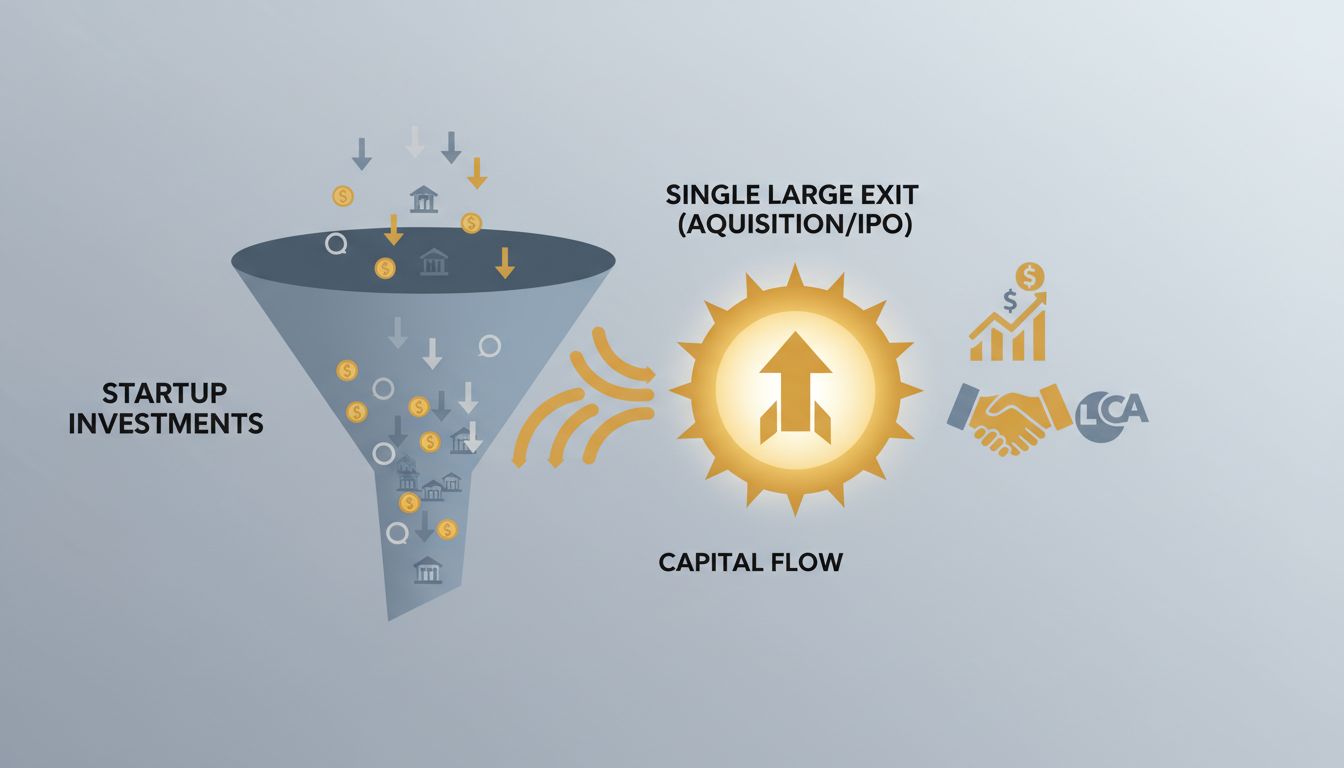
Here is the thing that took me an embarrassingly long time to fully internalize. When a venture capitalist funds a startup at a valuation that seems detached from any earthly business reality, they are not confused about accounting. They are not ignorant of P&L statements. They are simply not buying a business in the way a traditional investor buys a business.
They are buying a lottery ticket with better-than-lottery odds, and the payout is not dividends. It is an acquisition or an IPO. The valuation at funding is not a judgment about what the company is worth today. It is a bet on what a much larger company will pay to own this company’s user base, technology, or market position in five years.
This is why growth rate matters more than margins. A company growing 200% year over year with negative margins is more valuable in this framework than a company growing 8% with healthy profits. The first company is capturing territory. The second company is running a business. Investors want territory.
Why User Counts Beat Revenue Every Time
Once you understand the exit-as-product model, the obsession with user acquisition metrics stops looking irrational. A social platform with 50 million active users and zero revenue is not a failed business. It is a strategic asset that any number of companies would pay billions to acquire, because those users are already there. The acquiring company brings its own monetization engine.
This is why successful startups sometimes deliberately make their first product worse than they could. Friction reduction and user growth often matter more at the early stage than building every feature correctly. You are planting a flag, not building a cathedral.
The classic example is Instagram at the time of its acquisition by Facebook. The company had 13 employees and was not generating meaningful revenue. Facebook paid one billion dollars. By any traditional business metric, that number was absurd. By the logic of acquiring 30 million engaged users before a competitor could, it was a bargain.
The Role of Total Addressable Market in Making Numbers Fictional
There is another piece of this that rarely gets examined honestly. The Total Addressable Market, or TAM, figure in any pitch deck is not a financial projection. It is a permission structure.
When a startup says their TAM is 400 billion dollars, they are not claiming they will capture 400 billion dollars. They are telling investors that even if they capture one percent of this market, the returns justify the risk. TAM is there to make the math of the bet feel less insane.
The problem is that TAM figures are almost always calculated by a method best described as aspirational. A company selling project management software to small businesses might cite the entire global software market as their TAM, on the grounds that every business uses software. This would be like a food truck citing the global restaurant industry as its addressable market.
Nobody in the room calls this out with much vigor, because doing so would require everyone to confront how much of early-stage tech investment is structured speculation rather than fundamental analysis. Early-stage founders who win are often the ones who play loose with established rules, and TAM framing is one of the most well-worn examples of that dynamic.
Net Revenue Retention Is the One Metric That Actually Tells the Truth
If there is one traditional-adjacent metric that sophisticated tech investors actually do care about deeply, it is Net Revenue Retention, or NRR. This measures whether existing customers are spending more or less over time, factoring in expansions, contractions, and churn.
An NRR above 100% means that even if you stopped acquiring new customers entirely, your revenue would still grow. This is the signal that the underlying business has compounding characteristics baked in. It is also the metric that most cleanly separates companies with genuine product-market fit from those that are simply buying growth through heavy discounting or aggressive sales tactics.
SaaS companies that lose money on their cheapest tier are often doing it deliberately to get customers inside the product and then expand them upward. NRR is the report card on whether that strategy is actually working. A company with 130% NRR and negative margins is a fundamentally different animal from a company with 80% NRR and positive margins. The first one has an engine. The second one has a leak.
What This Means for Everyone Who Is Not a VC
If you are building a company, understanding this framework matters because it tells you exactly who you are optimizing for and what story you need to tell. If you want venture money, the story is growth, retention, and market size. If you want to build a sustainable business on your own terms, you can ignore most of this and focus on margins and cash flow, and you will probably sleep better.
If you are evaluating tech companies as an outside observer, remember that the metrics being reported publicly are the ones that support the narrative the company wants to tell. Revenue growth, user counts, and ARR figures are chosen because they look good in the current phase. The metrics that would complicate the story, like customer acquisition cost relative to lifetime value, or the actual margin structure once stock-based compensation is accounted for, tend to require some digging.
Tech valuations are not broken. They are just solving a different problem than the one most people assume they are solving. The sooner you stop trying to apply a restaurant’s valuation logic to a land-grab strategy, the faster everything starts to make sense. It is a different game with different rules, played for a different prize. The mistake is not the valuation. The mistake is thinking you are watching the same sport.