
The most straightforward explanation for why so many breakout software products began as internal tools is also the most uncomfortable one for the startup world: the normal process of building software for strangers is a bad way to build useful software.
Slack started as the internal communication tool for Tiny Speck, the company making a game called Glitch. AWS grew out of Amazon’s attempt to organize its own infrastructure. Gmail was built by Paul Buchheit as a side project for Google employees before it became a public product. Shopify’s founders built their platform to run their own snowboard shop, Snowdevil, before they realized the software was more valuable than the boards. The list is long enough that the pattern demands an explanation beyond coincidence.
The Problem With Building for Someone You’ve Never Met
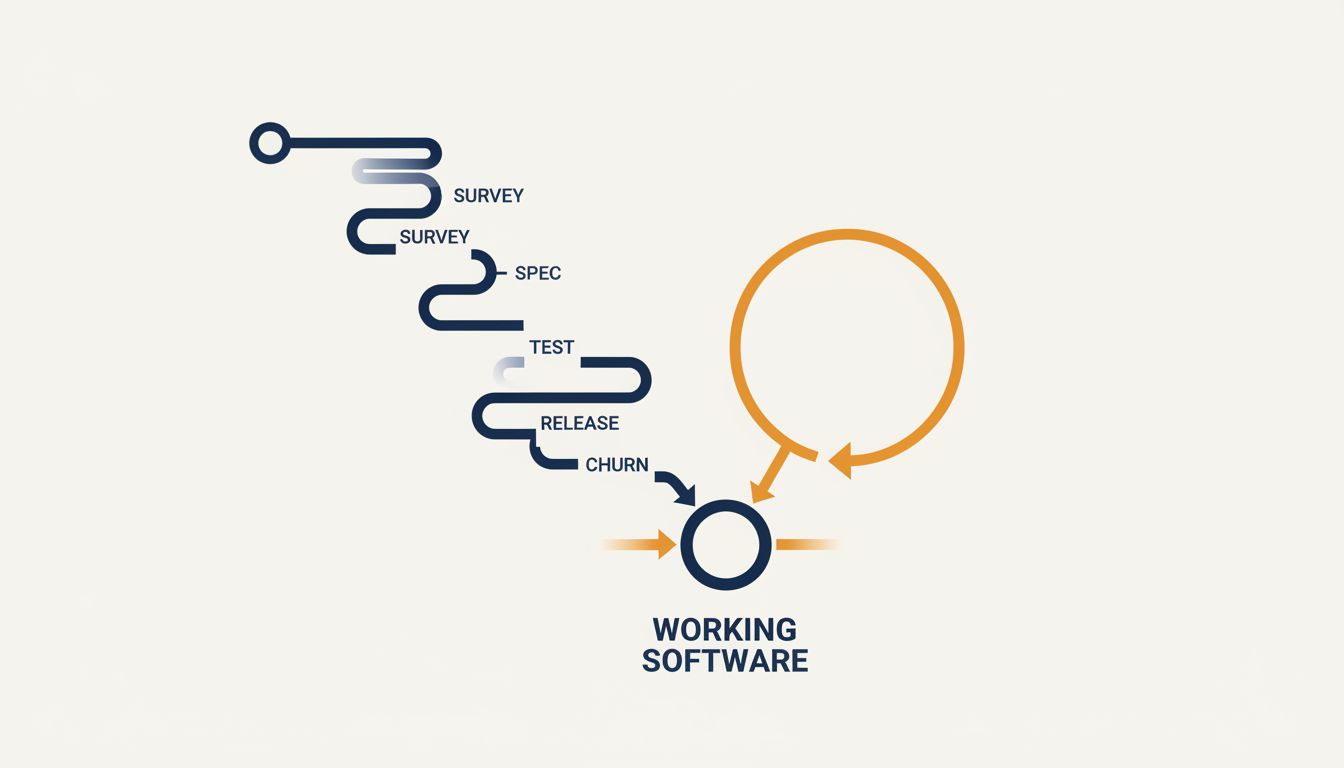
Consumer research is a translation exercise, and every translation introduces error. When a product team interviews prospective users, those users describe their problems in retrospect, through imprecise language, filtered through their own incomplete self-awareness. The team then translates that description into a specification, and the specification into software. By the time the product ships, it’s solving a twice-translated version of the original problem.
Building an internal tool skips most of that translation. The people building the software feel the problem themselves. They know exactly when the existing solution fails because they’re the ones frustrated by the failure at 11 p.m. on a Wednesday. They can watch colleagues use the early version in real time, not in a usability lab. The feedback loop is tight enough that bad design gets corrected before it calcifies.
This is not a minor advantage. It’s the difference between designing a shoe for someone whose foot you’ve measured and designing one based on a written description of feet in general.
Why Captive Users Produce Better Products Than Volunteer Users
There’s a specific dynamic at play with internal tools that doesn’t get enough attention: the users cannot leave.
When a company deploys an internal tool, employees use it whether it’s good or bad. This sounds like a recipe for mediocrity, and for many internal tools, it is. But for the rare team that is paying attention, it creates something invaluable: an honest sample of real usage under conditions of low enthusiasm. Public beta users are self-selected optimists. Internal users are a cross-section of real people who include skeptics, the technologically cautious, and people who would rather keep doing things the old way.
Building for that harder audience forces the product to earn its place through genuine utility rather than novelty. When Slack’s early versions were used inside Tiny Speck, the team couldn’t rely on the excitement of early adopters to overlook rough edges. The software had to actually work for people who weren’t particularly excited to use it. That pressure produced a more durable product.
This connects to a broader principle about how moats get built. Platform companies earn margins by making their customers do the difficult work. Internal tool development is the inverse: the builder does the difficult work of being their own most demanding customer.
The Constraint That Makes Internal Tools Honest
Internal tools also operate under a constraint that forces honesty about what a product actually needs to do: they have to justify their existence in terms of the work they support, not in terms of their own feature set.
When a product team is building for an external market, there’s constant pressure to add capabilities that look impressive in demos or on comparison charts, even when those features don’t address a real problem. The tool becomes a product in its own right, competing on surface-level dimensions.
An internal tool has no such luxury. Nobody in the Tiny Speck office cared whether their messaging tool had an impressive feature list. They cared whether it helped them build the game faster. That functional clarity tends to produce software with better prioritization, because every feature decision is made against the concrete standard of whether it makes the actual work easier.
This is also why internal tools often have unusually strong opinions baked in. They were built by people who knew exactly how they wanted to work, not by a committee trying to serve an abstracted average user. Slack’s threading model, Gmail’s conversation view, and AWS’s infrastructure-as-code approach all reflect the working preferences of their original builders in ways that have proven to be genuinely useful, if sometimes divisive.
Why Companies Keep Discovering This Pattern Accidentally
The curious thing is that almost none of these products started with a plan to build something sellable. Amazon didn’t set out to create a cloud computing business. They were trying to solve their own scaling problems. The commercial opportunity only became visible after the internal solution worked well enough that outsiders noticed it.
This accidental quality is not incidental. It’s part of what makes the pattern work. When a team is building with genuine urgency to solve a problem they feel personally, they make different tradeoffs than when they’re building with a revenue target in mind. They optimize for utility because that’s the only thing that matters to them. The commercial insight tends to arrive later, from outside the team, when someone looks at what they’ve built and realizes the problem it solves isn’t unique to this one company.
Amazon’s AWS story follows this arc closely. The internal infrastructure work done around 2002 and 2003 was motivated entirely by Amazon’s need to scale its retail operations more reliably. The realization that this could be sold as a service came afterward, and it required a different kind of thinking. The product already existed. The business model was the invention.
What This Pattern Actually Tells Founders
The takeaway is not that founders should build internal tools and hope something commercial emerges. That’s the survivorship bias reading of the pattern. Many internal tools stay internal tools because they’re too specific to be useful elsewhere, or because the company never looks up from the immediate problem long enough to notice the opportunity.
The real signal is about what conditions produce genuinely useful software. A clearly defined user whose problem you understand completely. A feedback loop tight enough to catch mistakes quickly. Constraints that force prioritization around actual utility rather than perceived marketability. And users who can’t politely exit when the product disappoints them.
Most consumer app development inverts all four of those conditions. Teams build for users they’ve never met, gather feedback through structured processes that filter out friction, optimize for features that support growth metrics, and measure success by whether users choose to show up.
The internal tool path works not because it’s a clever strategy but because it accidentally reconstructs the conditions under which useful software tends to get built. The startups that replicate those conditions deliberately, by staying close to a specific problem they genuinely understand, tend to produce the same result without waiting for the accident.