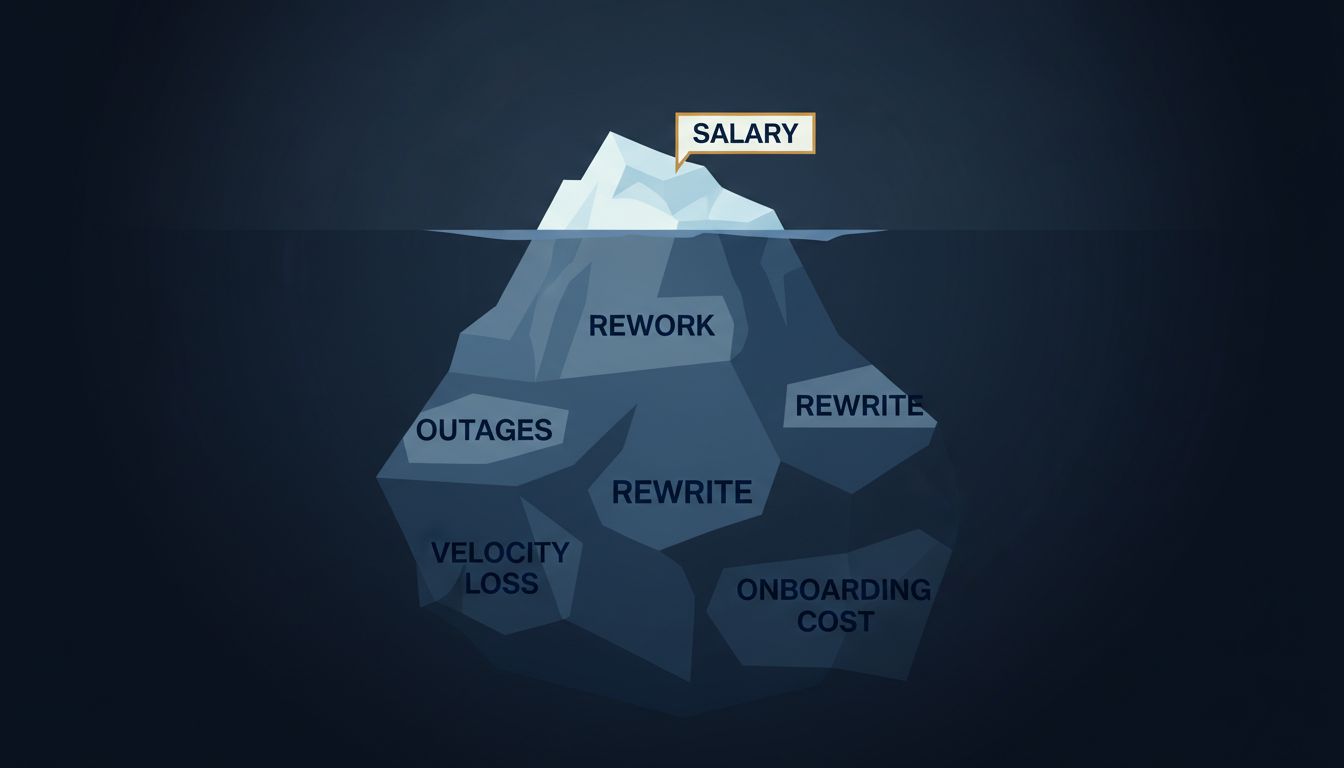

The most reliable signal that a software product will succeed in the market is that someone already needed it badly enough to build it for themselves. Slack started as the internal communication tool for a video game company. Amazon Web Services grew from the infrastructure Amazon built to run its own retail operations. Gmail ran inside Google for nearly two years before it launched publicly. The pattern appears so consistently across successful software that treating it as coincidence is analytically lazy.
The real question is not whether this pattern exists. It does. The question is why it produces better products, and the answer cuts against several cherished assumptions about how software should be built.
The Problem With Building for a Hypothetical User
Conventional product development asks teams to construct a mental model of their future user, usually through market research, personas, and focus groups. The problem is that these methods produce aspirational fiction. People describe how they wish they worked, not how they actually work. They ask for faster horses, as the apocryphal Ford line goes, because they have no vocabulary for the automobile.
When you build software for your own team’s actual daily workflow, you skip this translation layer entirely. The feedback loop compresses from months to hours. The person filing the bug report sits three desks away. The edge case that breaks the tool on a Tuesday afternoon gets fixed by Wednesday because the developer who wrote the code also hit the edge case.
This is not just a quality argument. It is a specification argument. Internal tools get built to solve problems that have already been proven real by the fact that someone is in enough pain to invest engineering resources in solving them. The problem definition is not hypothetical. It has been field-tested under production conditions before the first external user ever touches it.
Slack’s Unlikely Origin Story
Slewfoot Software, later renamed Tiny Speck, was building a massively multiplayer online game called Glitch. The team was distributed across San Francisco and Vancouver, and the existing communication tools, primarily IRC and email, were not working for them. So they built something better for themselves.
Glitch failed and launched in 2012 to modest reception before shutting down. Stewart Butterfield and his team had nothing to show for years of work except a functional internal messaging tool. In 2013, they pivoted and launched that tool as Slack.
What made Slack’s early adoption so fast was not clever marketing. It was that the product had been pressure-tested under real collaborative work conditions by a team that was genuinely dependent on it. Every friction point had an owner. Every missing feature had been missed by someone with commit access. The product that launched to the public was already mature in the ways that mattered, not because of a long QA cycle, but because it had been running in production under real stress.
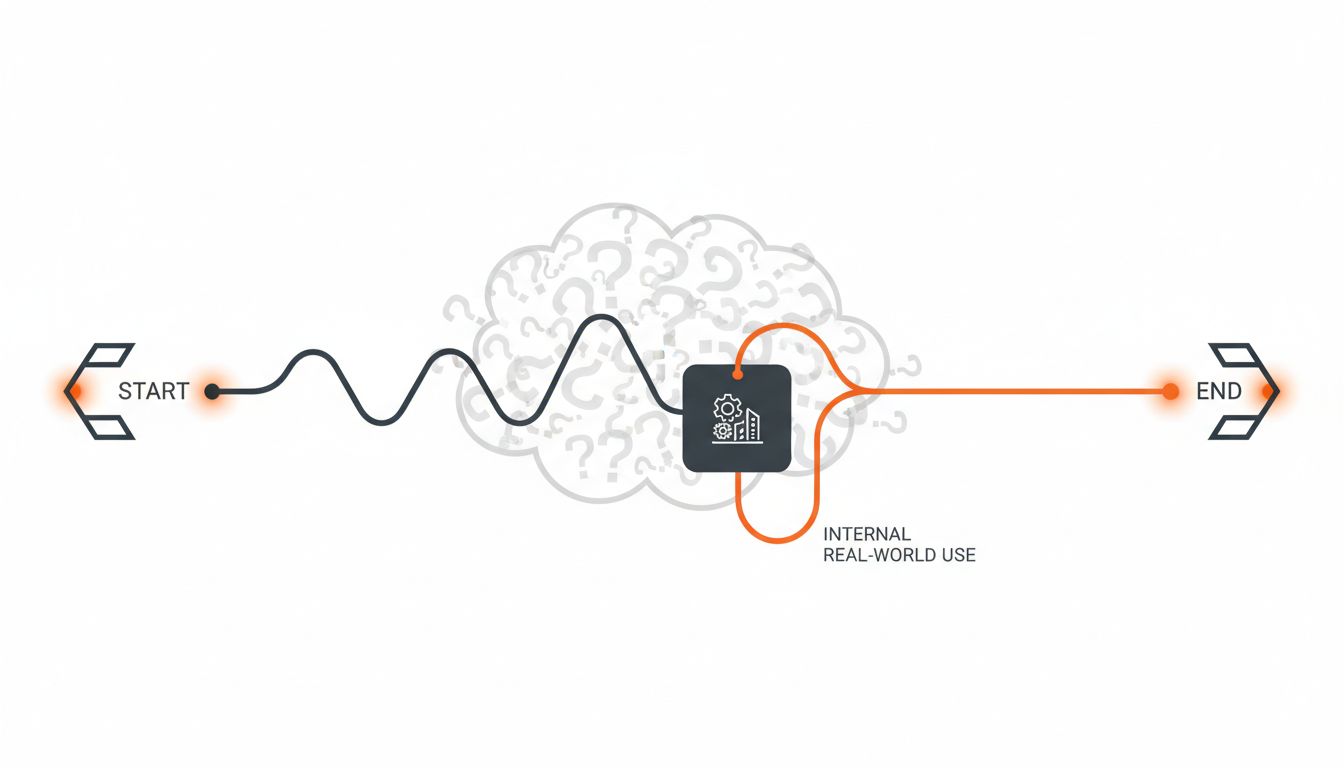
The AWS Case Is Even More Instructive
Amazon’s cloud computing business is now the company’s most profitable division by a significant margin, generating more operating income than the entire retail operation. The origin of this business is often mischaracterized as a sudden insight about selling spare compute capacity. The reality is more interesting.
In the early 2000s, Amazon’s engineering teams were struggling to build new services because they kept having to rebuild the same foundational infrastructure from scratch. Jeff Bezos issued a mandate requiring all teams to expose their data and functionality through service interfaces, and to assume that all interfaces might eventually become external products. This was an organizational forcing function as much as a technical one.
Building for an internal audience that has real demands, real scale, and zero tolerance for excuses created infrastructure that could eventually handle external customers. The product did not emerge from a strategic analysis of the cloud computing market. It emerged from solving genuine internal pain at a scale most companies never encounter, which paradoxically prepared it for external adoption at a scale most competitors could not match.
The economic logic here is important: Amazon had already paid the R&D cost of building this infrastructure to serve its own needs. Selling it externally was almost pure margin. The internal-first path produced a cost structure that competitors trying to build cloud businesses from scratch could not easily replicate.
Why This Pattern Produces Defensible Products
There is a deeper structural reason why internally-incubated products tend to be defensible against competition. When you build software under the pressure of genuine internal need, you end up solving the actual hard problems instead of the imagined ones.
Market research identifies the problems people are willing to articulate. Real use identifies the problems people have not yet found words for. The difference between these two categories is often where durable competitive advantage lives. Notion succeeded against established competitors partly because its founders had spent years frustrated by the gap between how they actually organized information and what existing tools allowed. The specificity of their frustration produced specificity in the solution.
This also explains why many enterprise software products built through pure market research feel generic. They solve the problems everyone agrees exist, which means they solve the same problems every competitor is also targeting. The product becomes a feature list in a commodity market. Internal-first products tend to solve problems that looked too niche or too weird to appear in a market research report, and that specificity is precisely what makes them valuable once the right external audience finds them.
The Counterintuitive Role of Low Polish
Internal tools are famously ugly. They have documentation that assumes you already know what the documentation is about. They have interfaces that make sense to the three people who built them and approximately no one else. This is usually framed as a liability when the product transitions to external use.
But the low polish has a hidden benefit. It forces the external team to confront what is actually essential. When Slack prepared to launch publicly, the team had to decide what to rebuild, what to clean up, and what to leave alone. The process of translating an internal tool for public use is a forced prioritization exercise. You cannot polish everything, so you learn very quickly which rough edges users actually care about and which ones they navigate around without complaint.
The alternative, building for an external audience from day one, tends to produce over-specified interfaces. Teams spend resources on polish and onboarding flows for problems that do not yet exist at scale. Internal-first development is in some ways a form of intentional constraint that improves decision-making, because it removes the option to defer hard product questions behind a layer of design.
What Kills the Pattern
The internal-first path is not automatically successful. Several things break it.
The most common failure mode is that the internal use case is too idiosyncratic to generalize. A tool built for a specific company’s specific workflow may be so tailored to that context that it cannot adapt. The developer tools built at companies with unusual internal architecture sometimes fall into this trap. They work perfectly for one environment and are nearly unusable outside it.
The second failure mode is premature productization. A team identifies that their internal tool has external potential and immediately starts building for the imagined external user rather than continuing to develop it under real internal pressure. The product loses the feedback loop that made it good before it has accumulated enough real-world hardening to survive without it.
The third is when internal use does not actually create pressure. If a tool is adopted internally because it is the only option rather than because it solves a painful problem, the development team never learns what users actually need. Mandatory adoption masks product failure in ways that voluntary external adoption does not.
What This Means
For founders evaluating whether to build a product, the honest question is whether anyone is in enough pain right now to use something rough and incomplete. If the answer is yes, and that someone is you or your team, you have a meaningful advantage over everyone who is building for a customer they have not yet met.
For investors, the internal-origin story is underused as a signal. A team that built something for themselves and found that others wanted it has already cleared the hardest hurdle in early-stage investing: they have demonstrated that the problem is real. The product exists because it was needed, not because someone thought it might be needed.
For the broader industry, the pattern suggests that the most durable software often starts as infrastructure, as plumbing that no one intended to sell. The decision to productize comes after the value has been proven, which means the market validation is baked in before the go-to-market planning begins. That is an unusual form of certainty in a business defined by uncertainty, and it is worth building toward deliberately rather than stumbling into by accident.