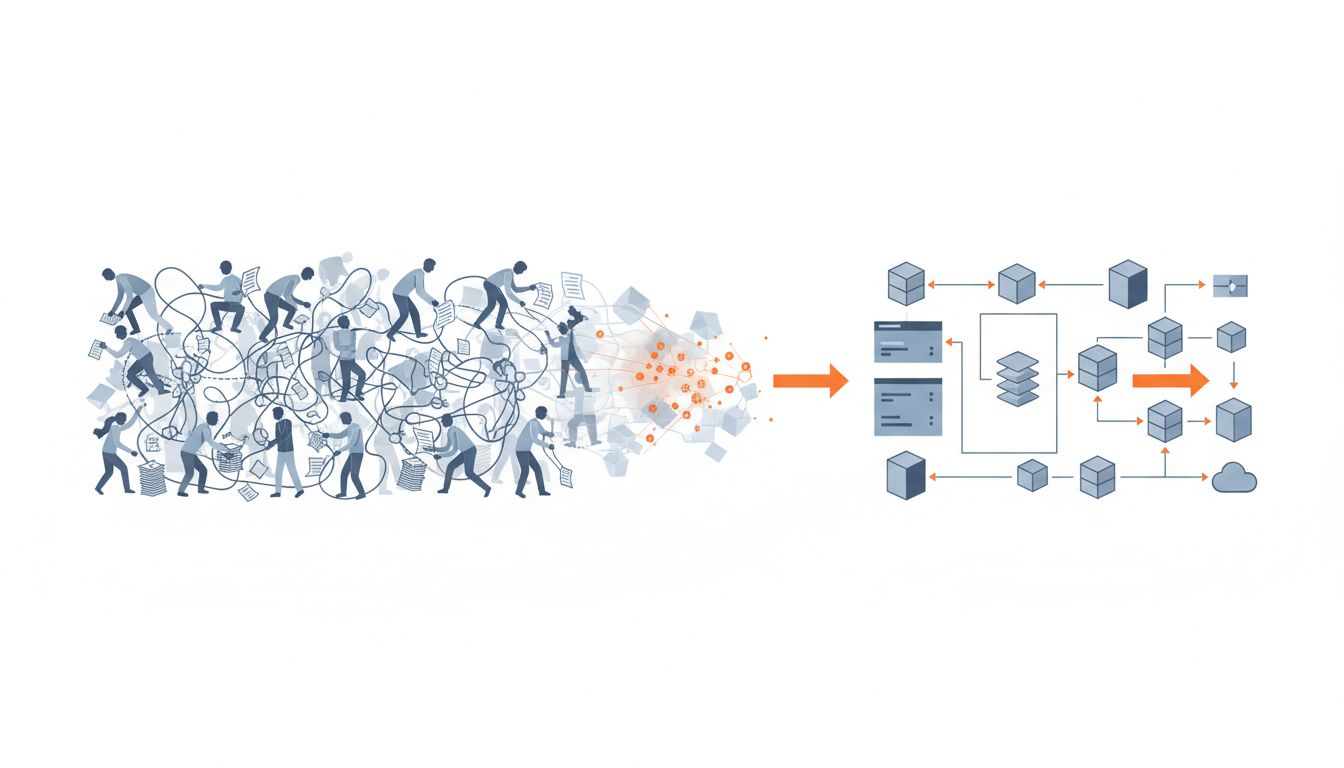
A few years into building a B2B analytics tool, a founder I know got an email from his largest customer. The operations director had prepared a seventeen-point complaint document. Fonts too small. Export function broken for edge cases. The onboarding flow assumed too much prior knowledge. The founder’s first instinct was to fire back defensively, or at least to deprioritize the feedback because this customer was, objectively, a pain.
He sat on it for two days. Then he got on a call, listened for ninety minutes, and rebuilt the onboarding flow from scratch. Three months later, that customer referred four enterprise accounts. The seventeen-point complaint document became the product roadmap.
This is not a heartwarming exception. It is a pattern that repeats across almost every startup that survives long enough to matter.
Why Your Happiest Customers Are Useless
Customers who love your product unconditionally are not giving you signal. They are giving you noise dressed up as validation.
Think about what a satisfied customer actually tells you. They like what you built. They are comfortable with the current state. They have adapted their workflow around your limitations without necessarily realizing it. When you ask them what they want, they describe a better version of what they already have. They are anchored to your existing frame.
This is the core problem with customer satisfaction metrics as a product strategy tool. NPS scores, CSAT surveys, and five-star reviews measure how well you’re serving the customers you’ve already self-selected for. The people who found your product difficult and left are not in your survey sample. The people who stayed despite friction have already absorbed that friction into their mental model of the product. They are, in a sense, your least useful informants.
The churn-risk customer, the angry customer, the customer writing long complaint emails at eleven at night, that person is doing something the happy customer never does: they are telling you exactly where the gap between your product and the market’s actual needs is widest.
The Signal Inside the Complaint
Not all complaints are equal. There is a meaningful difference between a customer complaining that your product doesn’t do something it was never designed to do, and a customer complaining that something core to your value proposition is broken or inadequate.
The first category is often misdirection. Someone bought your project management tool hoping it would also be a CRM. That complaint tells you about a sales misalignment problem, not a product problem. But the second category, complaints that live inside your product’s stated purpose, those are diagnostic gold.
When a customer says “the feature I use every day is slow,” or “I can never find what I’m looking for,” or “I’ve had to build a workaround for this workflow,” they are describing the gap between the promise your product makes and the experience it delivers. That gap is where your competition lives.
There’s another layer worth pulling back. The customer who almost churned and then stayed is especially valuable because they’ve already done the switching cost calculation. They considered leaving, decided it was painful enough to stay, and can now articulate what would have made leaving easier. That’s your competitor’s pitch, handed to you for free.
How Basecamp and Shopify Used Friction to Navigate
Basecamp spent years fielding complaints that their project management tool was too simple, that it lacked Gantt charts and resource allocation and all the features that enterprise project management software had. Most product teams would have caved to that pressure. Instead, they used the pattern of complaints to sharpen their positioning. The customers complaining about missing features were not the customers Basecamp was designed for. The complaints from their actual customers, about complexity and bloat in other tools, reinforced that the simplicity was the product.
Shopify’s early growth tells a different story. Tobi Lütke has been public about the fact that the company started as an online snowboard shop, and the store they built for themselves was the product. The complaints that came from merchants in the early years were not fringe cases. They were the product team’s primary input. The customers pushing back hardest on what the platform couldn’t do were the ones who revealed the platform’s shape.
These two examples point in different directions, and that’s the point. Complaints are not instructions. They are coordinates. You still have to do the interpretive work to figure out whether the complaint is pointing at a product gap, a positioning gap, or a customer fit problem.
The Specific Pattern That Predicts Churn Before It Happens
Most startups treat churn as a retrospective metric. Customer left. Revenue down. Update the spreadsheet. Post-mortem in six weeks.
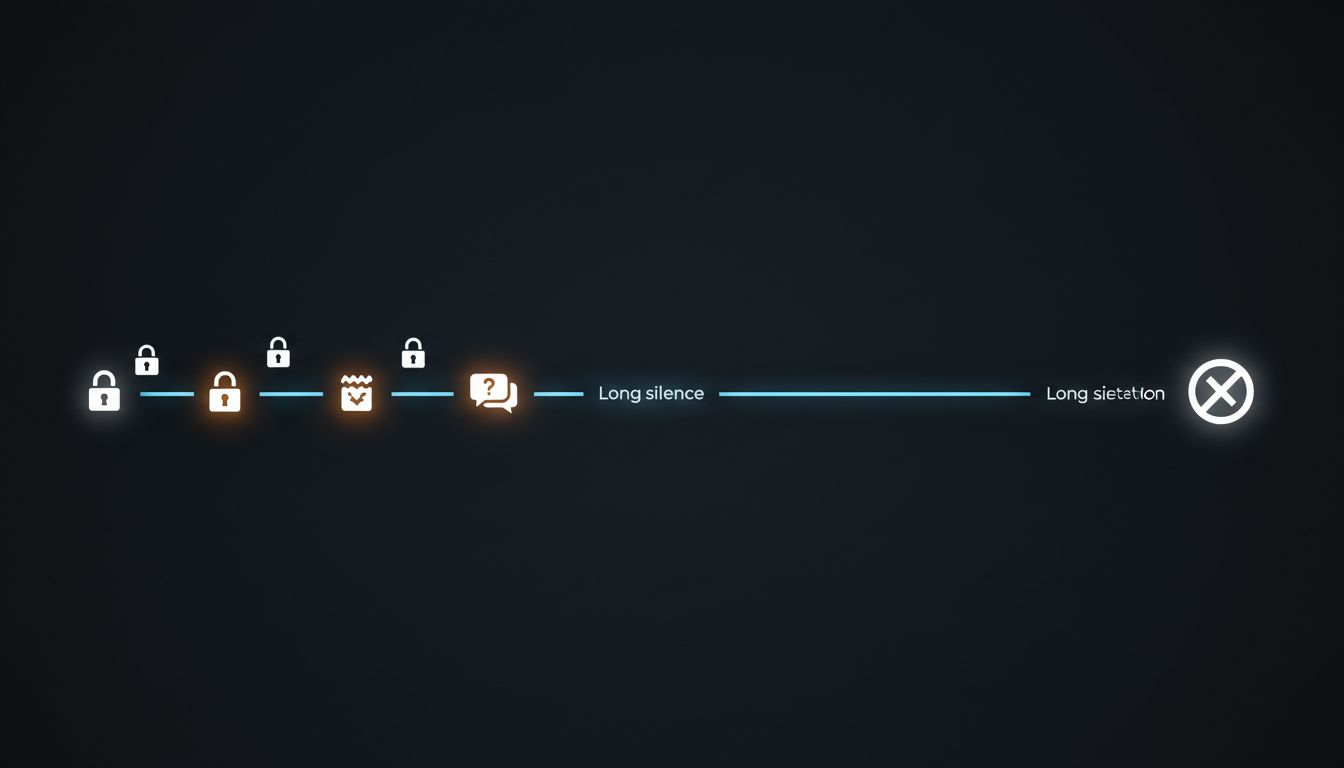
The more useful frame is to think of churn as a sequence of behavioral signals that play out over weeks or months before the cancellation email arrives. Login frequency drops. Support tickets stop (which sounds good but often means the customer has stopped trying). Feature adoption plateaus. The customer who used to respond to your quarterly check-ins within hours now takes four days.
Companies that get good at this, usually through painful experience, learn to treat the early stages of that sequence as a trigger for the most important conversation they can have. Not a retention pitch. An honest diagnostic conversation about what isn’t working.
The question is not “how do we keep this customer.” The question is “what is this customer experiencing that we don’t understand yet.” That reframe matters because it changes what you’re optimizing for. The goal is not to retain the specific customer (though that often follows). The goal is to understand a failure mode in your product before it shows up in fifty more customers.
What Survival Bias Is Doing to Your Customer Research
There’s a structural problem in how most startups do customer research that makes this worse. You survey your current customers. You interview your best customers. You celebrate your case studies. All of this is sampling from the population of people who did not leave.
This is textbook survivorship bias, the same logical error that led early aviation researchers to study battle damage on planes that returned from combat, rather than trying to reconstruct what happened to the ones that didn’t.
The customers who left carry information you cannot get from anyone else. Some of them left because they weren’t a good fit to begin with, and that’s fine. But a meaningful portion left because your product failed them in a specific, identifiable way. That failure is a signal about where your product is weakest, and it’s a signal you’re systematically ignoring every time you limit your research to active users.
Running structured exit interviews is genuinely difficult. People who have already left have no incentive to be helpful, and the conversations can be demoralizing. But the founders who build the habit early, who treat a churned customer as a research opportunity rather than a defeat, accumulate a qualitatively different kind of product intelligence than the ones who don’t.
The Asymmetry in Feedback Value
Here’s the uncomfortable math. A customer who gives you a five-star review is confirming that you did something well. A customer who almost left is telling you something is broken. The first piece of information is nice. The second is actionable.
The reason startups systematically underweight the second type is partly psychological (criticism is unpleasant) and partly structural (your metrics celebrate retention and satisfaction, so that’s what you optimize for). But there’s also a status issue. The difficult customer, the one who escalates, who sends the multi-page complaint, who gets labeled internally as “high-maintenance,” tends to get routed to whoever handles problems, not to whoever shapes product.
This is backwards. The most demanding customers, the ones who push hardest against your current limitations, are often the leading edge of what the broader market will eventually want. Not always. But often enough that you should be putting your most senior product thinkers in the room with them, not your most patient support staff.
This connects to a broader point about who your most strategic customers actually are: the ones who seem like the biggest headache are sometimes the ones with the deepest stake in seeing you succeed.
What This Actually Means for How You Build
The practical shift is this: stop treating complaint volume as a cost center metric and start treating it as a research budget.
Every escalated support ticket, every churn conversation, every customer who pushed back hard in a QBR is a research interview you didn’t have to recruit for. The customer already did the work of identifying something that doesn’t work. Your job is to extract the underlying need from the surface complaint, which is a skill that requires practice and genuine curiosity rather than defensiveness.
A few specific habits that separate the teams who do this well from the ones who don’t. First, route difficult customer conversations to product leadership, not away from it. Second, build a structured log of complaints that gets reviewed as part of sprint planning, not just as a support operations metric. Third, when a customer churns, assign someone to do the exit interview within two weeks, before the memory fades and before the customer has moved on emotionally.
The founders who build durable companies are almost never the ones who attracted the most enthusiastic early customers. They’re the ones who paid the most careful attention to the customers who nearly left, extracted the diagnosis from the frustration, and built something that solved the actual problem.
The seventeen-point complaint document is the product roadmap. Most people just never read it that way.