
The simple version
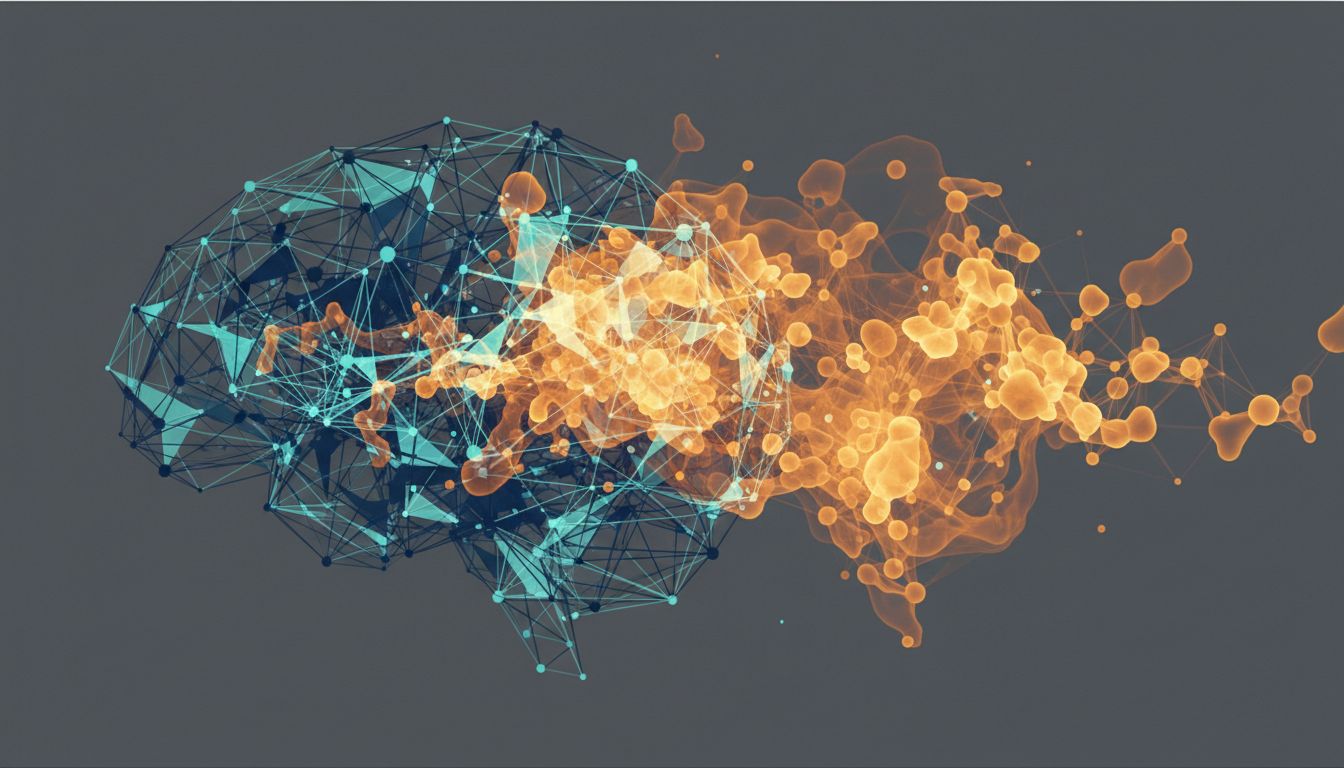
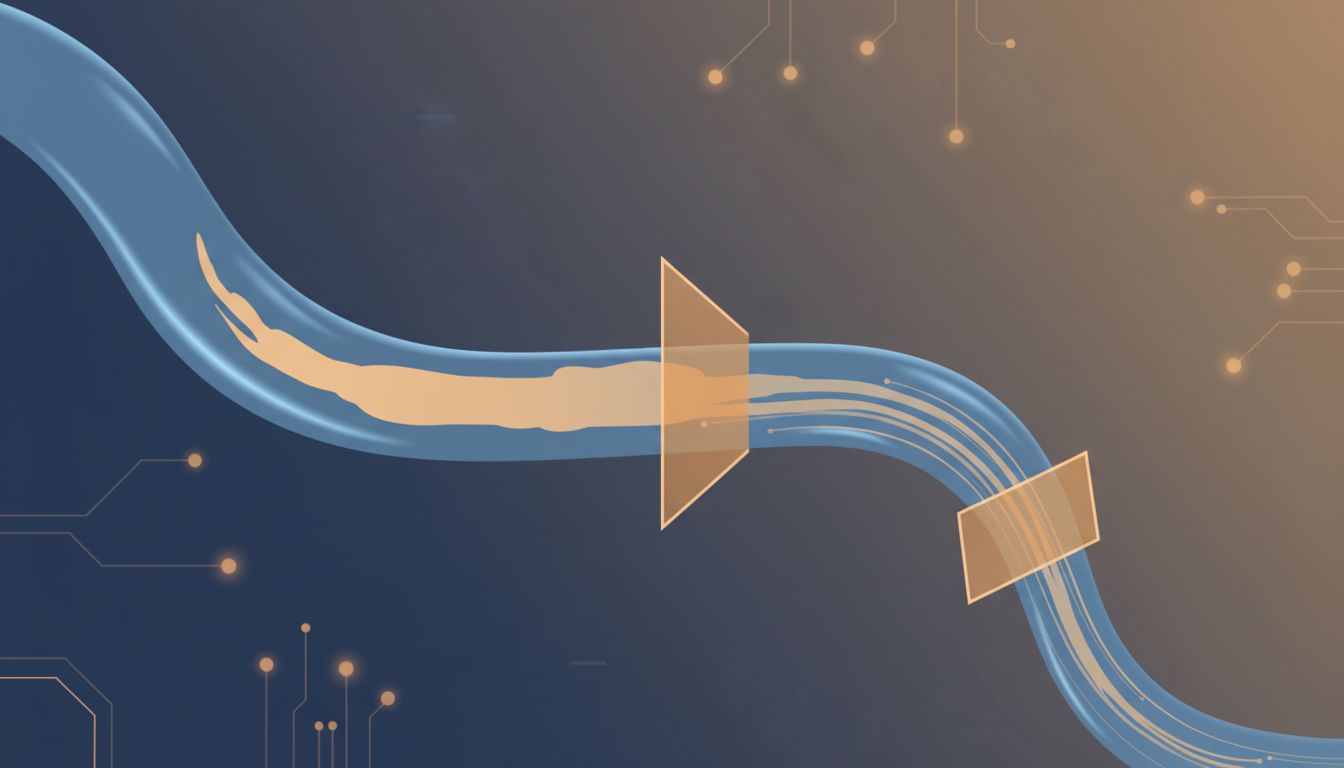
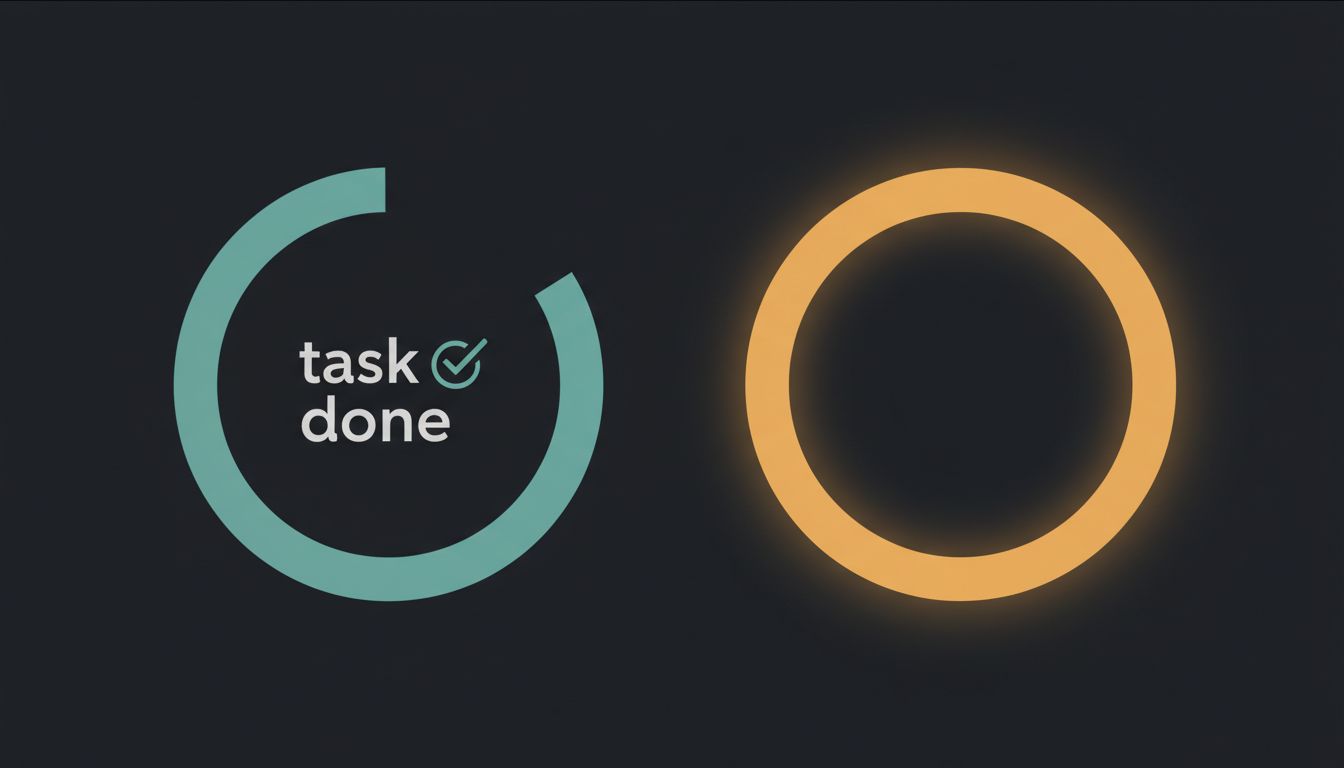
When a notification arrives, your brain begins processing it and abandoning your current task before you consciously decide to look. The interruption isn’t the act of reading the notification. It’s the detection.
What your brain is actually doing when you work
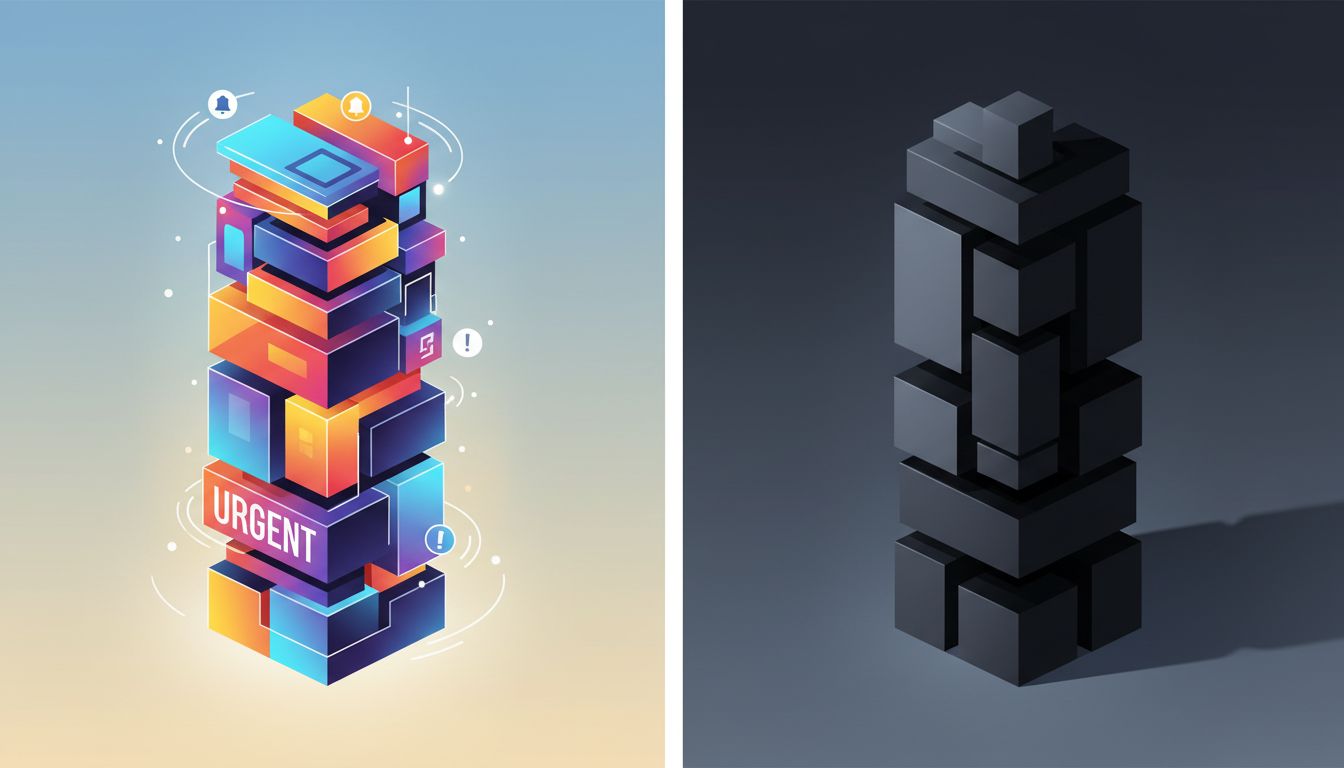
To understand why notifications are so costly, you need a rough mental model of how focused work functions neurologically. When you’re doing something genuinely demanding, whether that’s writing, debugging, designing, or planning, your brain isn’t just holding one thing in mind. It’s maintaining a working context: a stack of relevant information, constraints, partial conclusions, and open questions that you’re actively juggling.
Think of it like RAM. Your prefrontal cortex (the region responsible for planning and complex reasoning) is holding a set of loaded variables. The longer you’ve been focused, the richer and more interconnected that context gets. A good hour of uninterrupted work isn’t just 60 minutes of effort. It’s a compounding structure where each insight builds on the last, where you can hold your full problem space in mind simultaneously.
This state is sometimes called “flow,” though that word has been so overloaded with self-help connotations that it’s almost useless now. The more precise framing: you’ve reduced the cognitive switching cost to nearly zero because everything you need is already loaded. Context switches cost more when you have more loaded.
The moment of detection
Here’s where it gets interesting. Research on attentional capture, which is the involuntary redirection of attention toward a stimulus, shows that unexpected signals don’t wait for your permission. Your brain’s alerting system runs below the level of conscious decision-making. A notification sound, a screen flash, even a vibration perceived in peripheral awareness, triggers an orienting response before you’ve made any choice about it.
A study published in the Journal of Experimental Psychology found that receiving a notification on a phone (without interacting with it at all) was enough to produce a significant decline in performance on tasks requiring sustained attention. The participants didn’t look at their phones. They simply knew a notification had arrived. That was enough to produce measurable distraction.
The mechanism is something like this: the alerting signal interrupts the brain’s default mode, your attention briefly reorients to evaluate the signal’s importance, and that reorientation is a context switch. Partial, brief, but real. Those loaded variables in your working memory start decaying the moment your attention shifts, even fractionally.
Why recovery takes longer than the interruption
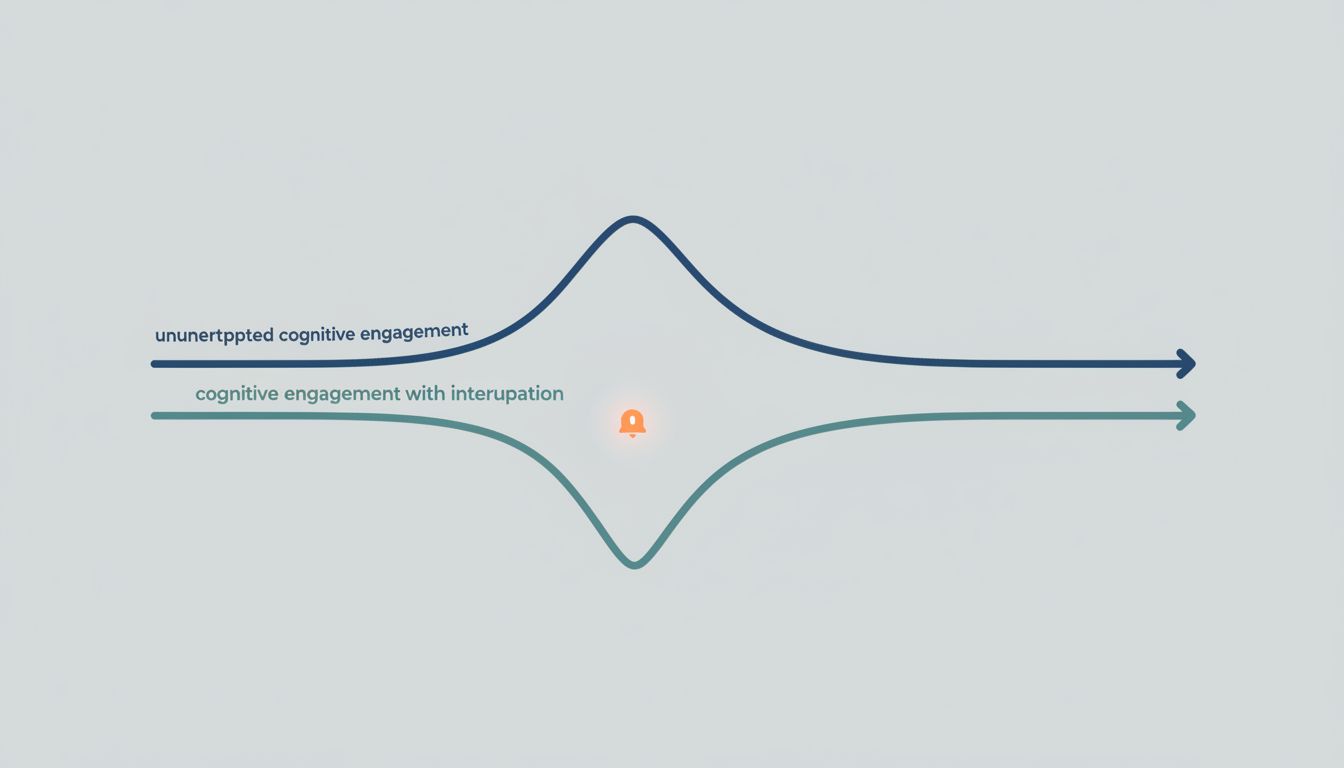
This is the part people consistently underestimate. The interruption itself might be two seconds. The recovery is not two seconds.
Gloria Mark’s research at UC Irvine found that it takes an average of over 20 minutes to return to a task after an interruption. That number gets cited constantly and sometimes skeptically, so it’s worth being precise about what it means: it’s not that you’re unproductive for 20 minutes. It’s that fully reloading the deep context you had before the interruption, and returning to the same quality of engagement, takes that long. You can work during those 20 minutes. You’re just working with a degraded context stack.
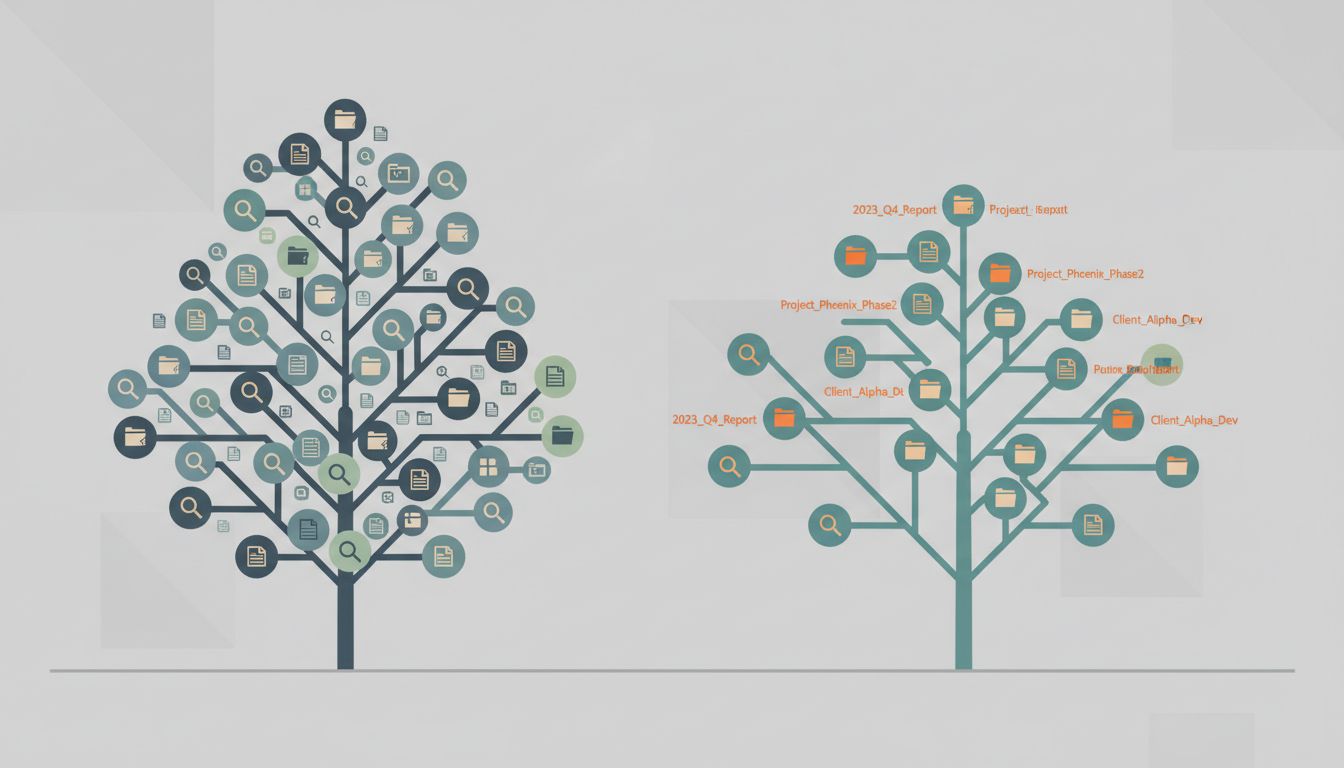
For developers, this maps cleanly to something familiar. Imagine you’re halfway through understanding a particularly tangled bug. You’ve traced the call chain four levels deep, you’re holding the execution state in your head, you know which variables are suspect. Someone interrupts you for 90 seconds to ask a question. When you return, you remember that you were debugging. You remember roughly where you were. But the specific state you’d built up, those four levels of call chain, the suspects you’d mentally highlighted, the hypothesis you were about to test, a lot of that is gone. You have to re-derive it.
That’s not unique to developers. Any cognitive work that requires holding a complex model in mind, a writer tracking narrative threads, a designer balancing constraints, a manager weighing a difficult decision, suffers the same reconstruction cost.
This is the part of the equation that makes deep work recovery time the real culprit, not the notification itself.
The compounding math of a normal workday
Let’s make this concrete. If you get 30 notifications in a workday (a conservative number for anyone using Slack, email, and a phone), and each one triggers a partial attention shift that costs you even 5 minutes of full productivity to recover from, that’s 2.5 hours. Not wasted scrolling. Just friction, reloading, and partial focus, embedded in what feels like a productive day.
The insidious part is that this is largely invisible. You feel like you worked hard. You were at your desk. You responded quickly to things. But the quality and depth of the work that actually required sustained thinking was fragmented in ways that don’t show up anywhere until you wonder why the difficult problem took three days instead of one afternoon.
What actually helps
The obvious answer is to silence notifications during focused work, and that’s correct, but the mechanism matters. Simply silencing isn’t enough if you know notifications are accumulating. That knowledge itself creates a low-level background load (“I should check, maybe something urgent came in”) that competes with your focus.
The more effective framing is to create genuine expectation boundaries. If the people messaging you expect a response within minutes, you’ll always be mentally available to them even with your phone face-down. If they expect a response within a few hours, you can close the loop and focus without residual anxiety about what you’re missing.
This is partly why eliminating unnecessary meetings matters beyond just saving calendar time. Every standing meeting creates an implicit deadline horizon that compresses your work windows and raises the ambient pressure to stay “responsive” between them.
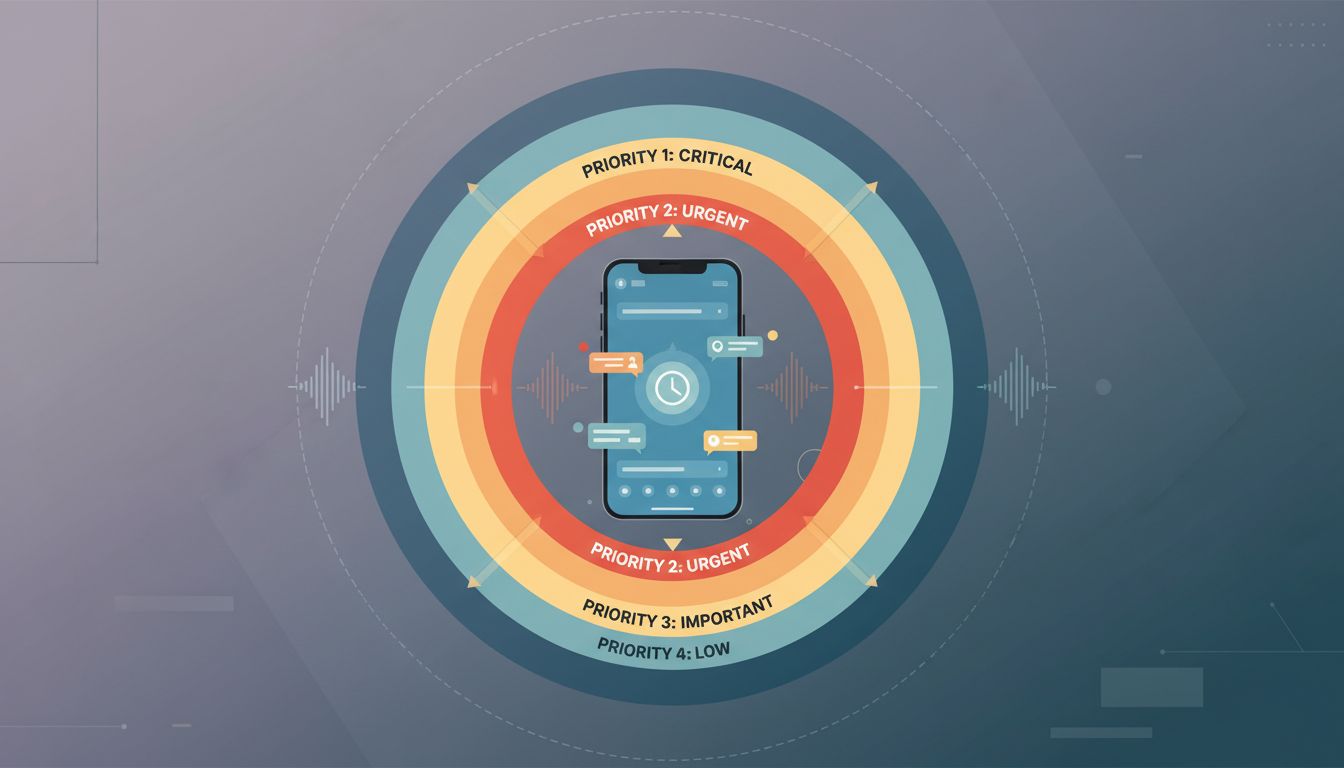
The practical minimum: designate specific times to check notifications (genuinely specific, not “a few times a day”), communicate those windows to your colleagues so the social contract around response time shifts, and physically remove notification delivery from your working environment during the windows in between. Not silenced. Removed. The phone in another room matters because “I could check if I wanted to” is a weaker protection than “I can’t check without getting up.”
None of this is new advice. The reason it works is now clearer: you’re not just reducing distraction. You’re protecting the integrity of a mental structure that took time to build and costs more than you think to rebuild.