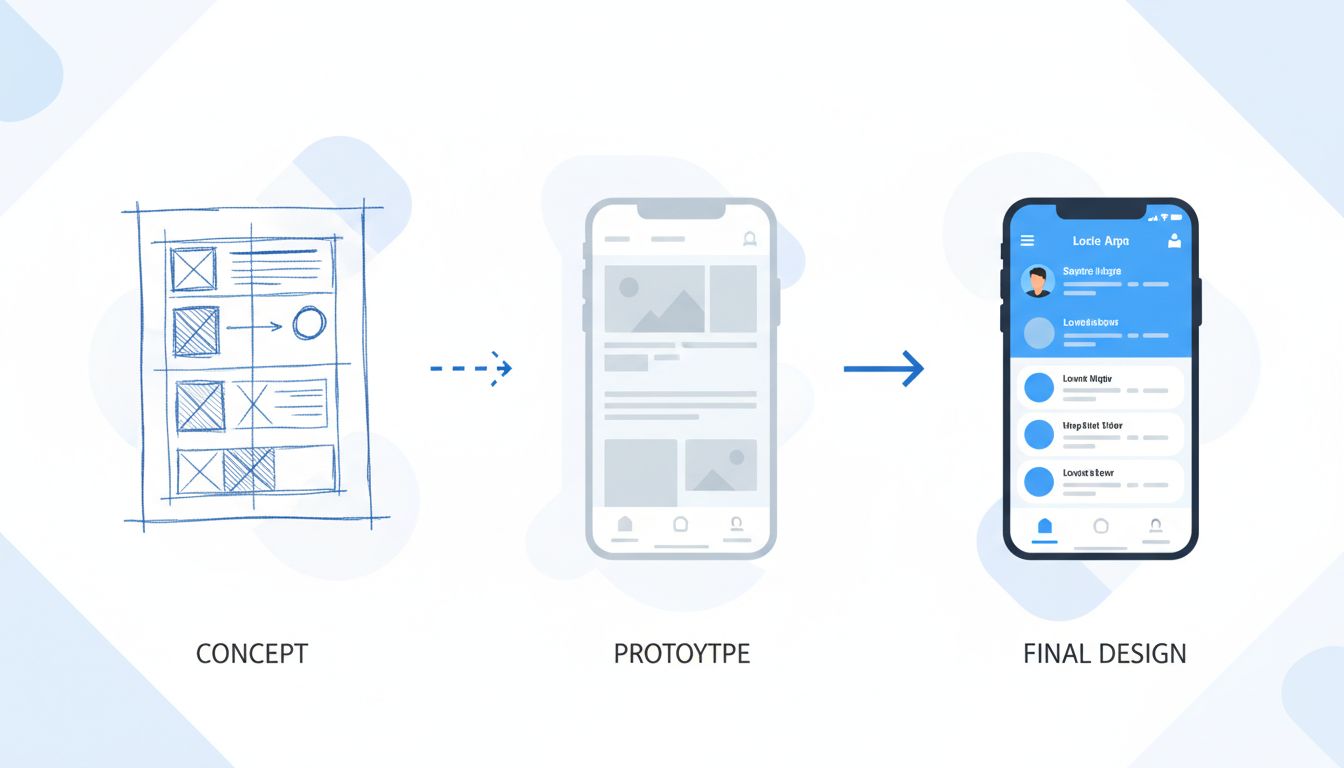
The first version of Instagram was a location-sharing app called Burbn. It was cluttered, confusing, and nearly unusable. Twitter began as a podcasting platform. YouTube launched as a video dating site. Slack started as an internal tool for a video game company that failed. In each case, the product that conquered its market looked almost nothing like the product that first shipped. This is not a coincidence, and it is not a happy accident. It is, increasingly, the strategy.
This pattern runs deeper than the familiar “pivot” story told in business school case studies. The terrible first version is not a mistake that gets corrected. It is, in many cases, a deliberate mechanism for gathering information that cannot be gathered any other way.
The Information Problem That Money Cannot Solve
Here is the core problem facing anyone building a new product: the most important information about what users actually want does not exist until users try something and react to it. No amount of focus groups, surveys, or market research can reliably predict behavior at scale. People are notoriously poor at describing what they want in the abstract. They are much better at reacting to something concrete.
A McKinsey analysis of product development cycles found that companies that released early, imperfect versions and iterated based on real usage data were 2.5 times more likely to reach product-market fit within 18 months than companies that spent longer in internal development. The reason is straightforward: real usage generates signal. Internal development generates assumptions.
This is the logic behind what researchers call “validated learning,” a concept Eric Ries formalized in 2011 but which successful product builders had practiced informally for decades. The goal of version one is not to be good. The goal is to be real enough that people interact with it honestly.
Why Fewer Features Produce Better Products
There is a related dynamic that complicates the conventional view of product development. Most billion-dollar apps launched with only three core functions, and that constraint was the strategy. Snapchat launched with disappearing photos and nothing else. Uber launched with a single button that called a black car in San Francisco. Airbnb launched as a way to rent an air mattress in someone’s apartment during sold-out conferences.
The limitation is not a resource constraint. It is an information strategy. A product with three features generates clean data about which of those three features users actually care about. A product with thirty features generates noise. You cannot tell what is working. You cannot tell what users are ignoring. You end up optimizing everything moderately instead of one thing decisively.
The data supports this. A study published in the Journal of Marketing Research found that products with fewer initial features received higher user satisfaction scores at launch, not because simplicity is inherently appealing, but because focused products are more likely to do one thing well rather than several things adequately.
The Cost of Getting It Right Too Early
There is also a financial argument for shipping imperfect products that rarely gets articulated clearly. Software costs nothing to copy but sells for thousands, which means the marginal cost of distributing an imperfect version is essentially zero. But the cost of building the wrong version of the right product can be enormous.
Consider what happens when a team spends 18 months building what they believe users want, ships it, and discovers the core assumption was wrong. They have lost 18 months of runway and accumulated what engineers call “technical debt,” code built around a premise that no longer holds. The cost is not just the money spent. It is the opportunity cost of 18 months of misdirected learning.
Contrast this with a team that ships in 90 days, discovers the wrong assumption in week 12, and pivots. They have lost 3 months, not 18. They have gained real user data. And the technical debt is minimal because the codebase is small.
This calculus is part of why tech companies deliberately launch products they know will lose money in the short term. The loss on an imperfect version one is an investment in the information required to build version three.
What Users Actually Do With Bad Products
Perhaps the most counterintuitive finding in this area is what users do when they encounter a limited or flawed product that addresses a real need. They adapt. They find workarounds. And those workarounds are extraordinarily valuable data.
When Airbnb’s early hosts started photographing their listings with smartphones in bad lighting, the founders flew to New York and personally photographed apartments with professional cameras. That improvised solution became a scalable service. The workaround revealed the problem. The problem revealed the solution.
This phenomenon, sometimes called “user hacking,” happens consistently when a product has genuine utility but incomplete execution. Users do not abandon the product. They invent ways to make it work. Each workaround is a feature request expressed in behavior rather than words, and behavioral data is dramatically more reliable than survey data.
Research from the Nielsen Norman Group found that user behavior diverges from stated preferences in roughly 70% of usability studies. What people say they want and what they actually do are different things. The only way to access behavioral truth is to put something real in front of real users.
The Deliberate Imperfection That Built Empires
None of this means that quality does not matter. It means that quality is sequential, not simultaneous. The question is not whether to build a good product. The question is which dimension of quality to optimize first.
The founders who built enduring companies consistently chose to optimize for real-world relevance before polish. They shipped the ugly version to find out if anyone cared, then invested in making it better once they knew the answer. Unicorn startups succeed by deliberately ignoring information that would have stopped them, including the information suggesting their first version was not ready.
The terrible first version is not evidence of failure. In most cases, it is evidence of a team that understood something important: you cannot learn from a product that does not exist. The mess is the method.
The apps that now define how billions of people communicate, travel, shop, and work all began as products that industry observers dismissed, users found frustrating, and founders were embarrassed to show in public. The embarrassment was the price of admission. What they got in return was the only education that actually works in product development, the kind you cannot get in a boardroom or a focus group, the kind you can only get from shipping.