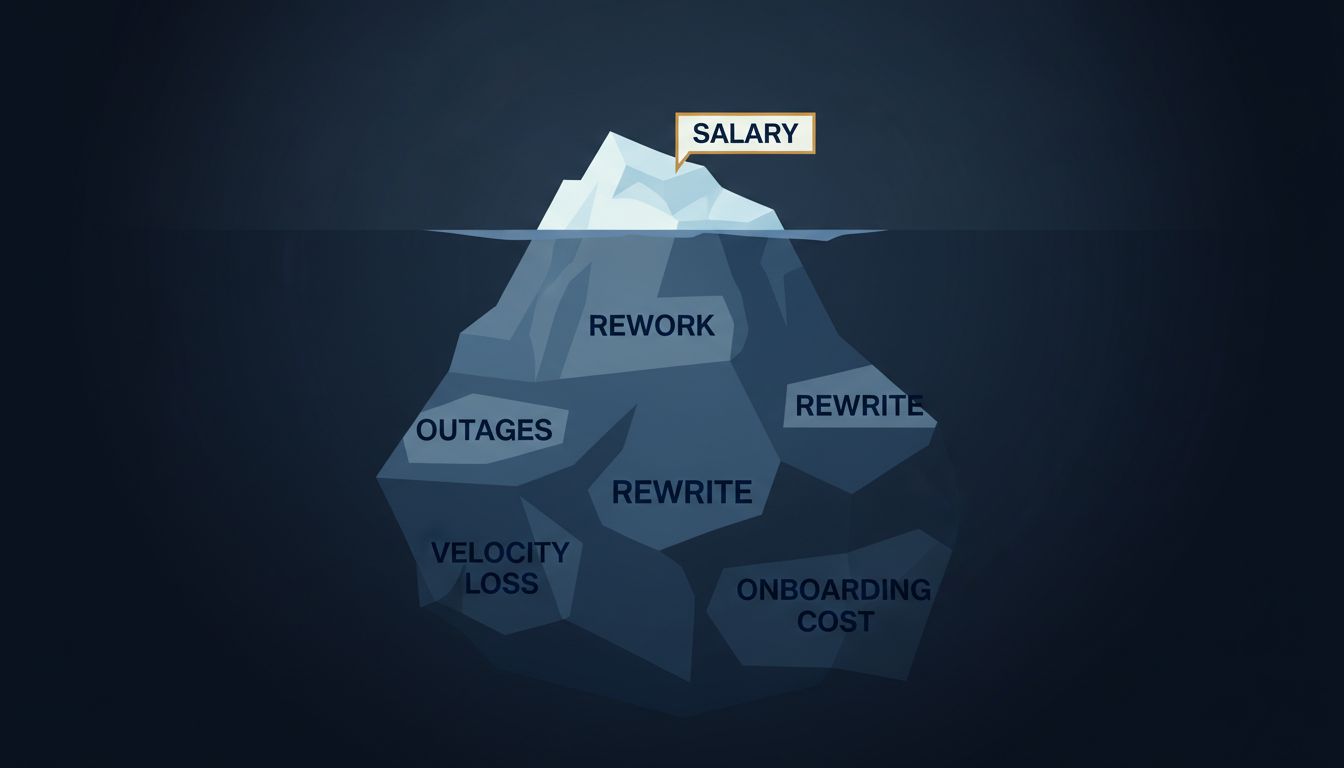

The conventional startup wisdom is that you should find a problem people already know they have and build a solution. Talk to customers. Validate the pain point. Ship something people are already asking for. It is reasonable advice, and it produces reasonable companies. It rarely produces transformational ones.
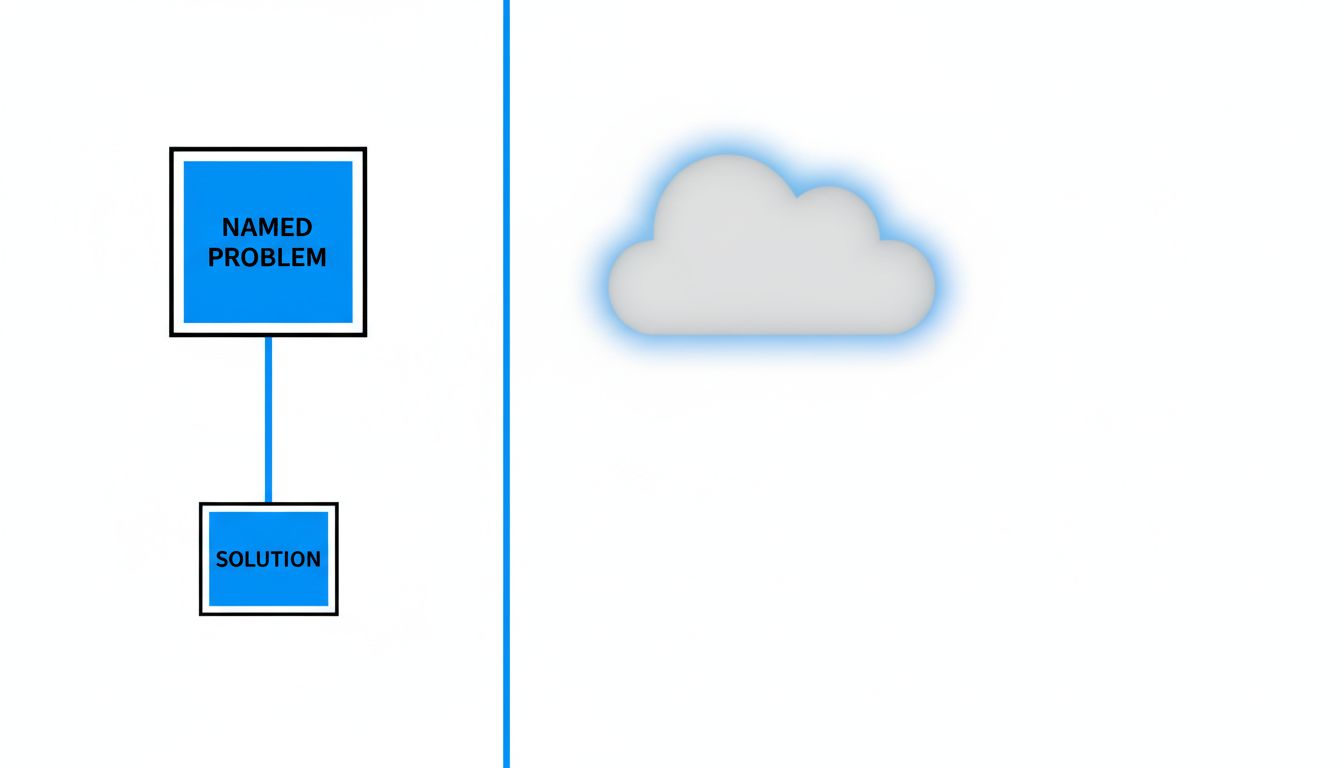
The most profitable apps in history share a different origin story. They didn’t respond to articulated demand. They created the category of demand itself, then positioned themselves as the only logical answer. The problem wasn’t waiting to be discovered. It was waiting to be named.
Naming Is the Product
Before Slack, organizations had email, instant messaging, and a dozen project tools that technically covered communication. Nobody was filing support tickets complaining about “fragmented workplace communication.” The pain existed, diffusely, as friction: long CC chains, context switching between tools, the mild chaos of tracking decisions across platforms. But it wasn’t a named problem with a named solution. Slack named it. The product was almost secondary to that act of definition.
This is harder than it sounds. Naming a problem that people haven’t consciously registered requires enough genuine insight into behavior that users recognize themselves in the description the moment they hear it. The reaction isn’t “I never thought of that.” It’s “I never thought of it that way, but yes, obviously.” Slack’s early pitch wasn’t really about features. It was about getting people to see their current workflows as broken in a specific, fixable way.
Dropbox pulled the same move earlier. File synchronization across devices was technically solvable with USB drives, email attachments, and VPNs. People managed. Drew Houston’s insight wasn’t that people needed file sync. It was that people were performing an elaborate workaround that they had normalized into invisibility. Once you saw it as a problem, the workaround became intolerable. Dropbox didn’t win because its technology was uniquely hard to replicate. It won because it defined the problem before anyone else got there.
The Monetization Follows the Awareness
There is a direct economic logic here that gets underappreciated. When you solve a problem people already know they have, you’re entering a market with existing competitors and a customer base that already has reference prices. You’re negotiating from a position of comparison. When you create problem awareness, you set the terms. The customer has no prior anchor.
This is part of why pricing power in tech concentrates so heavily at the category-creation end of the market. Companies that name problems can charge for the naming itself, in the form of brand premium, in the form of being the default, in the form of customers who would find it cognitively uncomfortable to switch because the alternative requires them to re-accept a problem they have already decided to solve. The switching cost isn’t just technical. It’s psychological.
Consider how this plays out in productivity software. The apps that charge the most per user aren’t usually the most feature-rich. They’re the ones that have most successfully convinced their users that the alternative is not “using a cheaper app” but “returning to chaos.” The software hasn’t just solved a problem. It has made the absence of the software feel like a choice to suffer. This dynamic is worth understanding clearly if you’re thinking about per-user pricing models and why they scale so reliably once a product achieves this kind of hold.
Why Surveys Lie
The failure mode for companies that miss this is almost always the same: over-reliance on user research that asks people what they want. Market surveys are useful for refining known solutions. They are nearly useless for discovering latent problems, because people describe their situation in terms of what they’ve already accepted as normal.
If you had asked office workers in 2012 what collaboration tools they needed, almost none of them would have said “a channel-based messaging app with persistent search and integrations.” They would have described improvements to email, or better meeting software, because those were the categories they already inhabited. The question presupposes the questioner’s framework. Breakout products require a different kind of research, closer to anthropology than surveys: watching what people actually do, mapping workarounds, noticing where people spend cognitive energy on things that seem, on the surface, fine.
This is the genuine insight behind the much-repeated but often misunderstood quote attributed to Henry Ford about horses and faster cars. The point isn’t that customers are wrong. The point is that customers describe solutions within the constraints of their current mental models. Problem-creating products escape those constraints, which is why they can look, before launch, like solutions in search of problems. They often are. The trick is finding the latent problem the solution has already implicitly diagnosed.
The Second-Mover Disadvantage Is Real Here
One consequence of this dynamic is that being second in a category-creation market is genuinely hard in a way that being second in a conventional market is not. When a company has successfully named a problem, they don’t just have market share. They have definitional authority. Competitors have to argue that their version of the solution is better, but the first mover owns the vocabulary. This is why disruptive startups often ignore the problems everyone has officially admitted exist and focus instead on the ones hiding just below the surface of normal.
The strategic implication for founders is uncomfortable: the most defensible position is not a better solution to a known problem. It’s the first credible solution to a newly named one. The moat isn’t technology. It’s vocabulary, timing, and the psychological sunk cost of having accepted that the problem is real and this product is how you address it.
Profitability, in this framing, isn’t primarily about margins or cost structure. It’s about whether you’re selling into a market you helped define or a market someone else did. Companies that do the former don’t just win more. They tend to win differently, with pricing power and retention that compounds over time in ways that incremental improvement rarely delivers. The problem you didn’t know you had turns out to be worth quite a lot, once someone names it for you.