Most people treat passwords like they treat PINs: pick something meaningful, keep it somewhere mental, and rotate it when forced. This approach made a certain kind of sense when you had three accounts. The average person now has well over a hundred. At that scale, the strategy doesn’t just strain, it collapses.
The core problem is a direct conflict between two things humans want simultaneously: passwords they can remember and passwords that can’t be guessed. These goals are not in tension. They are opposites. The moment a password becomes memorable, it becomes predictable. And predictable passwords are the primary reason most account compromises happen.
Why Human-Generated Passwords Are Structurally Weak
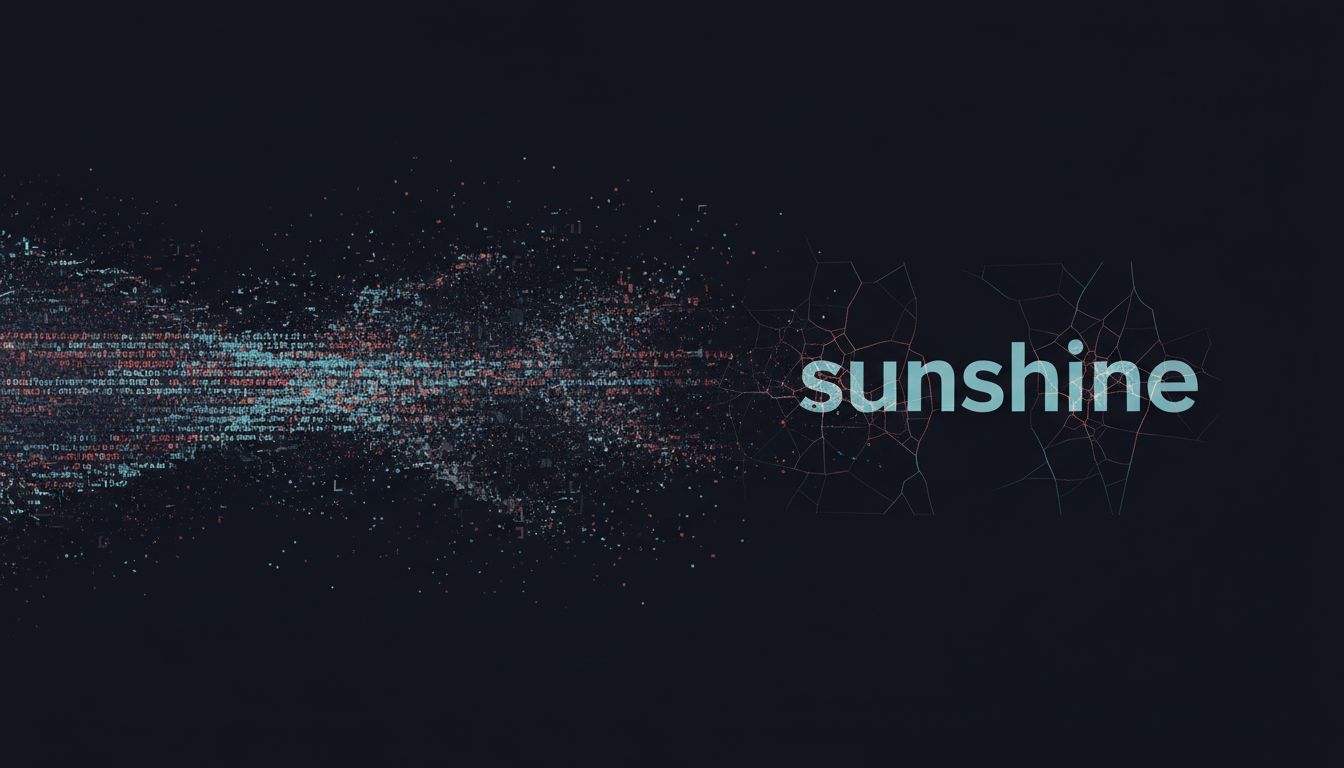
When people choose passwords, they draw from a small pool of cognitive shortcuts. Birthdays, names, dictionary words with a capital letter at the front and a number at the end. Security researchers call these patterns “low entropy,” which is a technical way of saying the password contains less randomness than its length implies. A twelve-character password like “Sunshine2024!” looks complex but represents a tiny fraction of the possible twelve-character strings because it follows rules that millions of other people also follow.
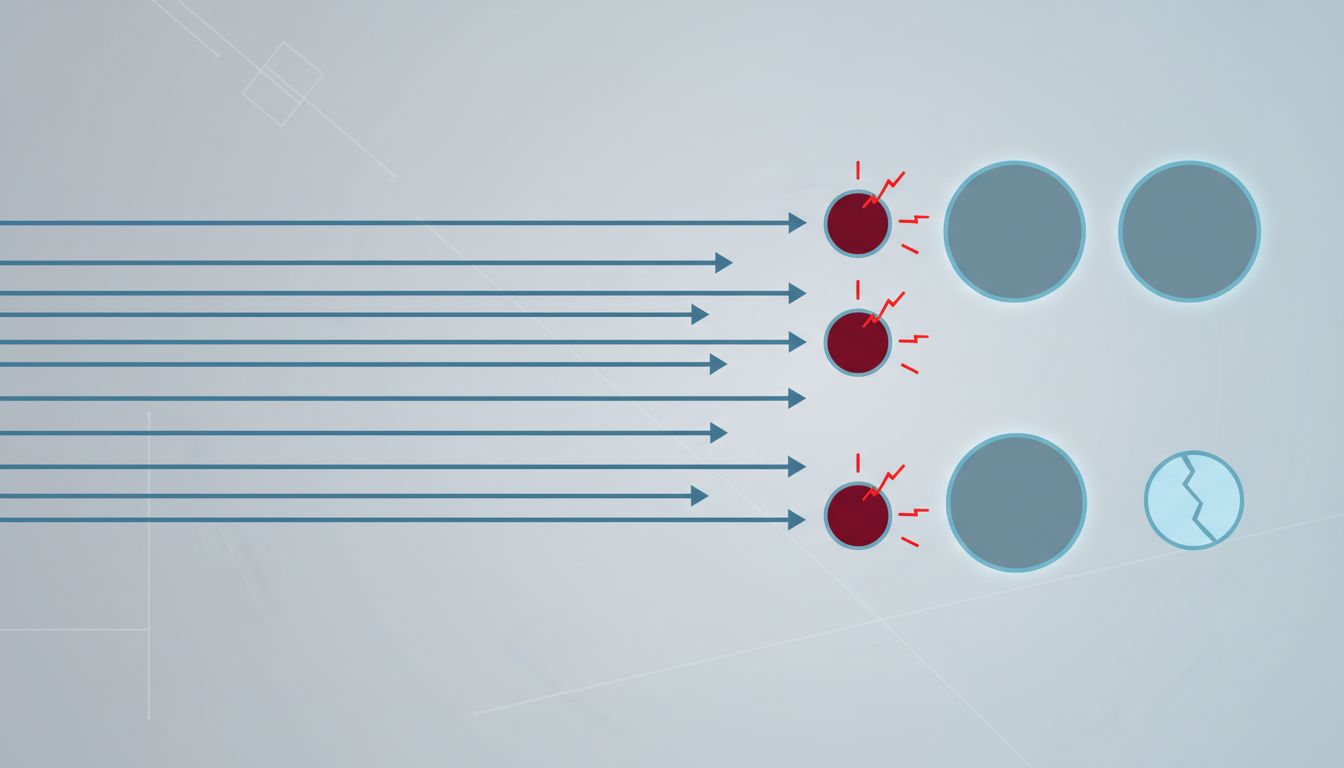
Attackers know this. Modern password cracking doesn’t try every possible combination sequentially. It runs through known patterns first: words from dictionaries in dozens of languages, common substitutions (the “@” for “a”, the “3” for “e”), name-plus-year formats, and password lists harvested from previous breaches. When the RockYou2021 compilation surfaced, it contained more than eight billion unique plaintext passwords from prior leaks. That list tells attackers exactly how real humans think when creating passwords, and they exploit that thinking systematically.
The practical consequence: if you generated your password, an attacker’s tools already have a model of how you think.
What Actually Makes a Password Secure
Security comes from entropy, the measure of unpredictability in a string. A truly random sixteen-character password drawn from letters, numbers, and symbols has roughly 100 bits of entropy. That means a brute-force attack would need to test, on average, more combinations than current hardware can process in any practical timeframe. The same sixteen characters arranged as “CorrectHorseBatteryStaple” (the famous example from xkcd) has lower entropy than it looks, not because it’s short, but because the word selection feels random while actually following recognizable patterns.
The catch is that genuine randomness is cognitively hostile. “f7#Kp2!mQx9@LwZ” is secure precisely because nothing in it anchors to anything you know. You cannot build a memory palace around it. You cannot derive it from something meaningful. Your brain, which is built to find patterns and attach meaning to sequences, has nothing to grip.
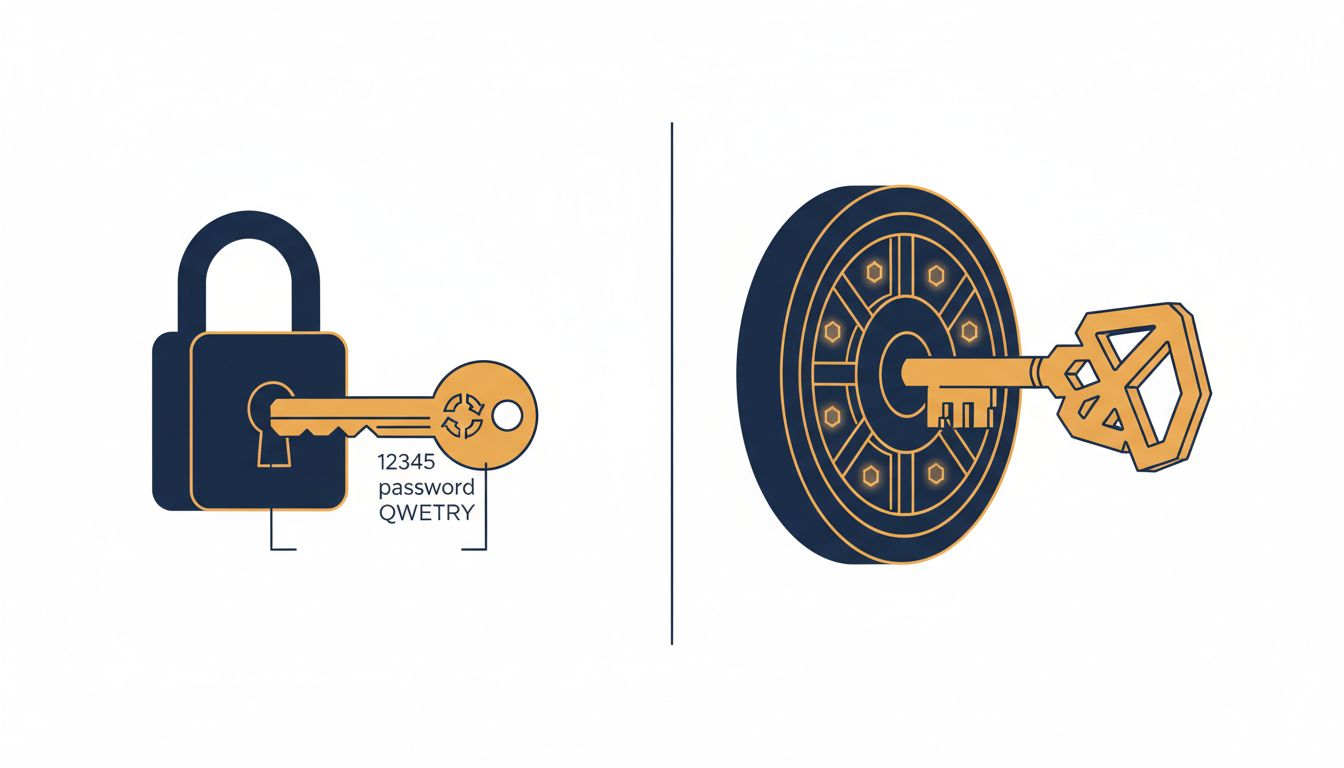
This is not a design flaw in passwords. It is the mechanism. The incomprehensibility is the security.
The Password Manager Solves the Wrong-Feeling Problem
The friction people feel when told to use a password manager usually sounds like a trust objection: “What happens if the manager gets hacked?” This is worth taking seriously, but the math favors centralized management by a wide margin. A password manager that generates and stores unique, high-entropy credentials for every account means a breach at one service exposes exactly one account, not every account that reused the same password. The security model is compartmentalization, and it works.
The more honest friction is psychological. Delegating credentials to software feels like giving up control, and handing authentication to a single point of failure feels intuitively dangerous. Both feelings are understandable and both are misleading. The “single point of failure” framing ignores that your current system, some variation of a remembered password reused across accounts, is already a single point of failure. The attacker only needs to breach one site to try your credentials everywhere else.
Password managers like Bitwarden (open-source and audited), 1Password, and others store your vault encrypted with a key derived from your master password. The service itself never sees your credentials in plaintext. The master password never leaves your device during normal operation. This is a well-understood cryptographic architecture, not a trust exercise.
The Passkey Question
Passkeys are the technology the industry is betting will eventually replace passwords entirely, and they deserve attention because the underlying mechanism is genuinely different. A passkey is a cryptographic key pair generated on your device. The private key never leaves your device. The service stores only the public key. Authentication happens when your device signs a challenge with the private key, which it will only do after you verify your identity locally, through a fingerprint, face scan, or PIN.
This architecture eliminates phishing attacks almost entirely. There’s nothing to steal remotely because the secret never travels across a network. Google, Apple, and Microsoft all support passkeys now, and adoption is accelerating among major services. FIDO Alliance data suggests hundreds of millions of passkey authentications are now happening monthly.
The tradeoff is device dependency and recovery complexity. If you lose access to your devices without a backup, recovery is harder than with a traditional password. These are solvable problems, and they’re being solved, but they’re real friction for users right now.
The Practical Argument for Forgetting
Here’s what good credential hygiene actually looks like: a password manager generating credentials you never see and couldn’t reproduce from memory, a strong unique master password for the manager itself, hardware-based or app-based two-factor authentication on critical accounts, and a bias toward passkeys on services that support them.
Nothing in that list requires you to memorize anything except one passphrase. The rest you surrender to entropy.
This feels uncomfortable because memory and ownership feel connected. If you can’t recall your password, does the account really feel like yours? But that instinct is exactly what attackers count on. The accounts most worth protecting are the ones where the security inconveniences you a little, because that inconvenience is identical to the mechanism keeping everyone else out.
Forgetting your password is not a failure mode. At this point, it’s the goal.