In 2008, a small payments company called Braintree was processing transactions for a handful of high-volume merchants. These customers were generating serious revenue. They were also calling support constantly, demanding custom integrations, and pulling the engineering team in directions that made the product worse for everyone else. So Braintree fired them.
Not all of them, and not recklessly. But the company made a deliberate decision that certain customers, despite their revenue contribution, were incompatible with where the product needed to go. Bryan Johnson, who had founded the company, understood that the short-term hit was real but the alternative was worse: building a product defined by the loudest and most demanding customers rather than the most representative ones.
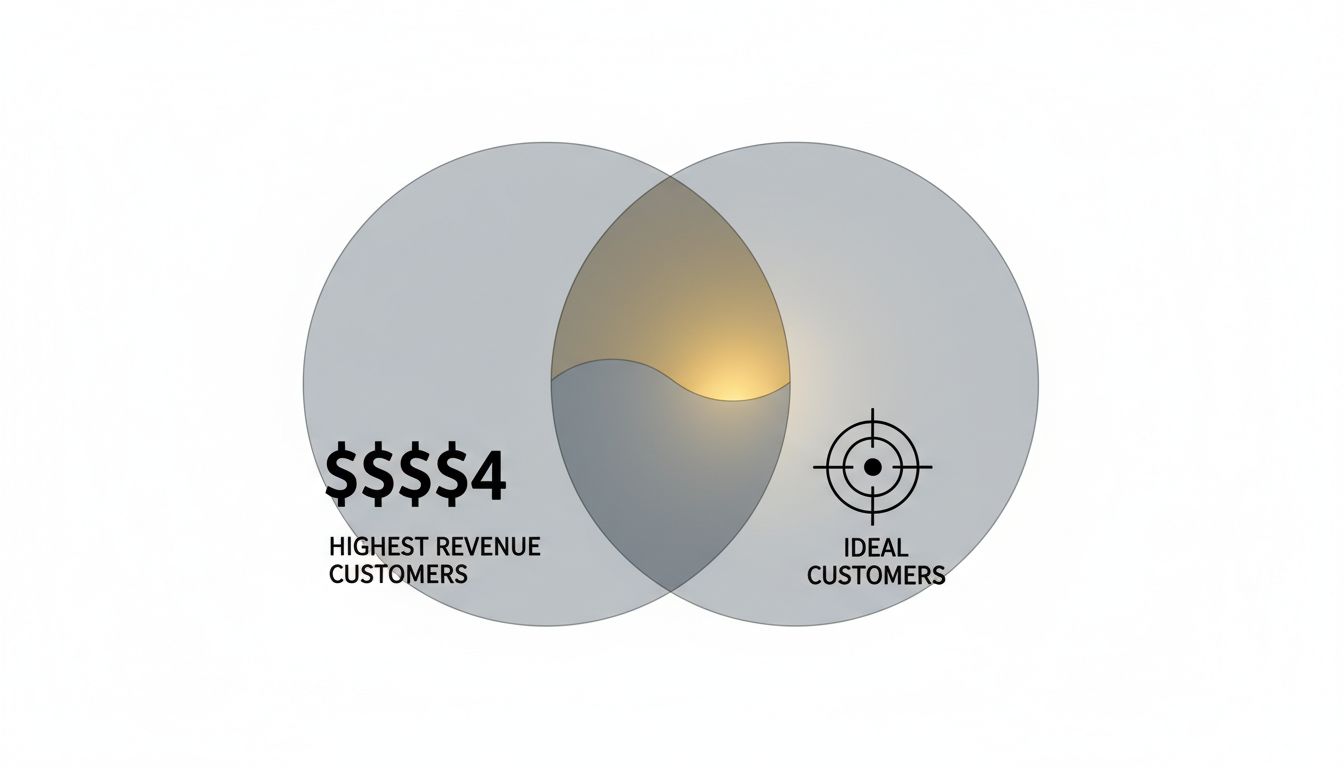
This is not a comfortable strategy. Most startup founders have been conditioned, reasonably, to treat customer acquisition as survival. Losing a customer feels like failure regardless of context. But the companies that have done this deliberately and survived to talk about it tend to have one thing in common: they understood the difference between revenue and the right revenue.
Why Your Best Customers Can Be Your Worst Problem
The problem starts with what “best” usually means inside a company. Best typically means highest revenue, longest tenure, or loudest voice in the room during quarterly business reviews. None of those metrics measure strategic fit.
A customer generating significant revenue but requiring disproportionate support, pushing your product toward edge cases, or consuming engineering cycles that could go toward features that serve the broader market is not actually your best customer. They are your most expensive customer with a revenue line that obscures the cost.
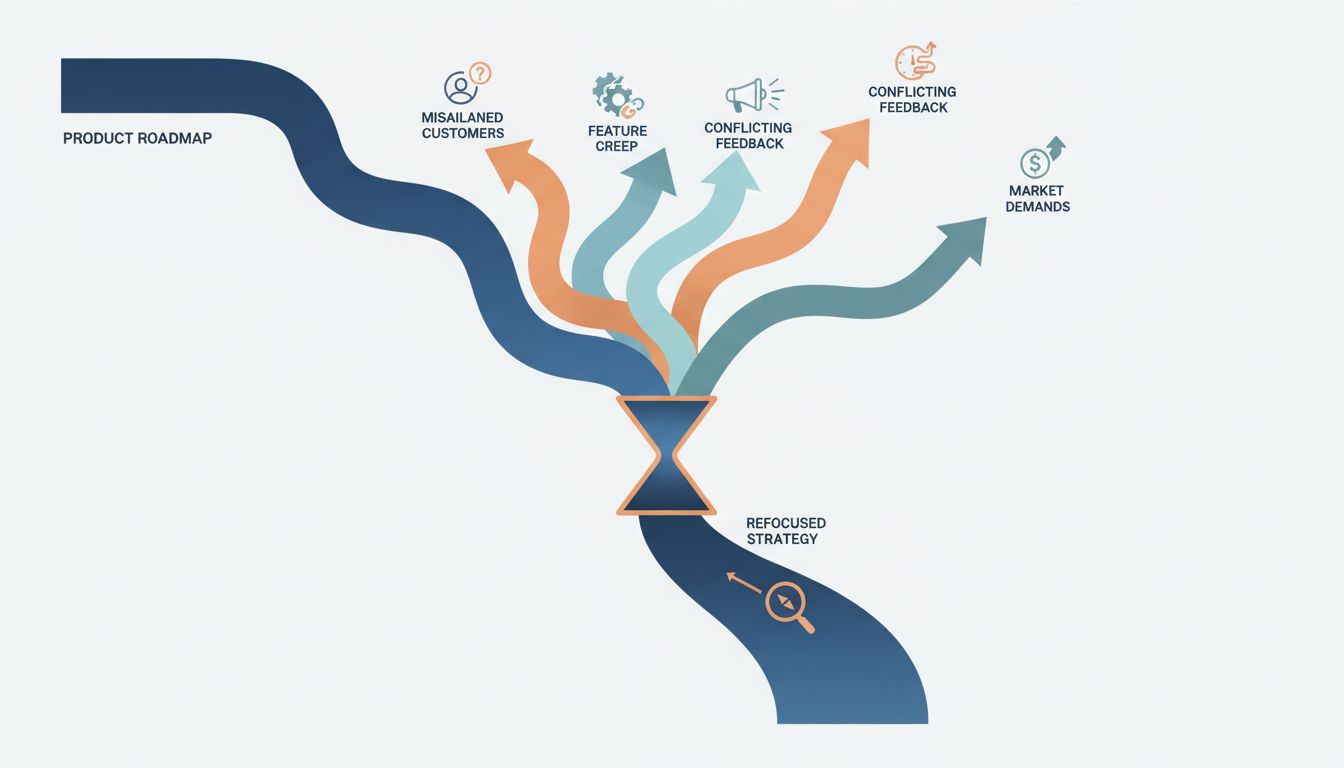
The deeper issue is influence. High-value customers get heard. They get on calls with the CEO. Their feature requests get triaged to the top of the backlog. Their complaints generate emergency responses. Over time, a product built under this dynamic starts to reflect the needs of a small set of powerful buyers rather than the market the company is actually trying to serve.
This is how enterprise software companies end up with feature lists that look like they were assembled by committee, because they were. It is also how B2C companies quietly pivot toward power users and lose the casual users who were always the real market.
The Math That Makes This Hard
Suppose you are running a SaaS company with $2 million in ARR. Three customers represent $600,000 of that, roughly 30 percent. They are demanding, misaligned with your roadmap, and consuming about 40 percent of your support and engineering bandwidth. The math to fire them looks obvious on a whiteboard. In practice, it feels like financial recklessness.
What founders undercount is the opportunity cost of keeping them. That 40 percent of engineering bandwidth, redirected toward product improvements that serve your core segment, has a compounding value that is genuinely hard to model but very real. Support bandwidth recaptured means faster response times for customers who actually fit. Freed roadmap space means building features that attract the next hundred customers instead of patching around the needs of three.
The gross margin picture is often worse than it appears when you account for the full cost of servicing a difficult customer. Revenue is visible. The cost to support, retain, and appease that revenue is frequently distributed across headcount in ways that never appear in a single line item.
How Companies Actually Do It
Firing a customer is not the same as abruptly canceling their contract and sending a tersely worded email. The companies that have done this well tend to follow a recognizable pattern.
First, they categorize honestly. This means building a real picture of customer profitability that includes support costs, engineering time, and the indirect cost of roadmap distortion. Most companies have never done this analysis. When they do it seriously, the list of genuinely profitable customers looks different from what the revenue dashboard suggests.
Second, they identify what made the customer a bad fit, not just that they are a bad fit. Is the problem their industry vertical? Company size? A specific use case you are not actually built for? This matters because it shapes how you close the relationship and what you learn from it.
Third, they help customers leave gracefully. This is both ethical and strategic. A customer who is fired abruptly becomes a vocal detractor. A customer who is genuinely helped toward a better-fit alternative becomes something more neutral, and sometimes even a referral source for the customers you do not want.
Freshbooks went through a version of this when they made a decision to focus exclusively on self-employed professionals and small business owners rather than growing upmarket toward larger companies. Some existing customers fell outside that definition. The company held the line anyway, and the product clarity that followed became a genuine competitive advantage.
What Gets Built When the Pressure Lifts
The most interesting thing that tends to happen after a deliberate customer culling is not what the company stops doing. It is what it finally gets to start doing.
Engineering teams that have been stretched across incompatible use cases suddenly have the headspace to go deep on the things that matter for the core segment. Support teams stop context-switching constantly and develop genuine expertise. Sales teams, freed from defending a product that has been contorted in multiple directions at once, can actually tell a coherent story about who the product is for.
This is not a small thing. Coherence is underrated as a competitive asset. A product that does something specific extremely well, for a well-defined customer, is easier to sell, easier to retain, and easier to build. The alternative is a product that does many things adequately for a diffuse set of customers, which is a much harder business to operate and a much harder story to tell.
There is also a signal quality improvement that happens with your remaining customer base. When your most demanding and least representative customers are gone, the feedback you receive starts to actually reflect your target market. Product decisions get better because the inputs are better. This is especially important early, when your first wave of customers can systematically mislead your roadmap if you let them.
The Specific Situations That Justify This
This is not a blanket endorsement of firing customers whenever the going gets rough. There are specific conditions under which deliberately ending customer relationships is strategically sound rather than just defensive.
The clearest case is when a customer is pulling your product toward a use case that contradicts your core thesis. If you are building a tool for solo consultants and an enterprise client wants you to build out multi-tenant team management, that is not a feature request. That is a different product. Building it for one customer at enterprise pricing rarely ends well, and it poisons the product for the customers you were actually built for.
The second case is when a customer is consuming resources disproportionate to their strategic value. Revenue is not the only form of strategic value. A customer who is a marquee reference, who operates in a vertical you want to expand into, or who generates referrals that convert well has value beyond their contract. A customer who contributes revenue but nothing else, while consuming outsized resources, is a different calculation.
The third case is cultural. Some customers are simply corrosive to the team. Constant escalations, unreasonable demands, and bad-faith interactions have real costs to morale that do not appear in any dashboard. A team that dreads interactions with a customer is a team that is quietly burning out in ways that will matter later.
What This Actually Requires of Leadership
The reason this is hard is not analytical. The analysis is usually not that complicated. The reason it is hard is that it requires a kind of conviction about where you are going that many founding teams do not actually have, or have but cannot hold under financial pressure.
Firing a customer is a bet that the alternative use of those resources will produce more value. That bet requires a clear enough picture of your actual strategy to defend the decision internally when someone runs the revenue numbers and panics. It requires the kind of focus that is easy to endorse in theory and genuinely difficult to maintain when a check clears.
The startups that do this well tend to have founders who have already resolved the question of what they are building and for whom. The decision to fire a customer is downstream of that clarity. Without it, the analysis that says you should fire them will always lose to the anxiety of losing revenue.
Braintree eventually became part of PayPal after a $800 million acquisition in 2013. The product discipline that came from making hard choices about customer fit was part of what made the company worth acquiring. The customers they fired early were not in the room for that outcome.
What This Means
Firing a customer is one of the few startup decisions that looks clearly right in retrospect and clearly terrifying in the moment. The companies that have done it deliberately share a common understanding: not all revenue is equally good, and the cost of the wrong customers is paid not in the P&L but in product quality, team bandwidth, and strategic coherence.
The analysis starts with honest accounting of what a customer actually costs, not just what they pay. It continues with a clear picture of who your product is actually built for. And it ends with the willingness to act on what the analysis shows, even when the revenue number is real and the future benefit is not yet.
That last part is the whole game.