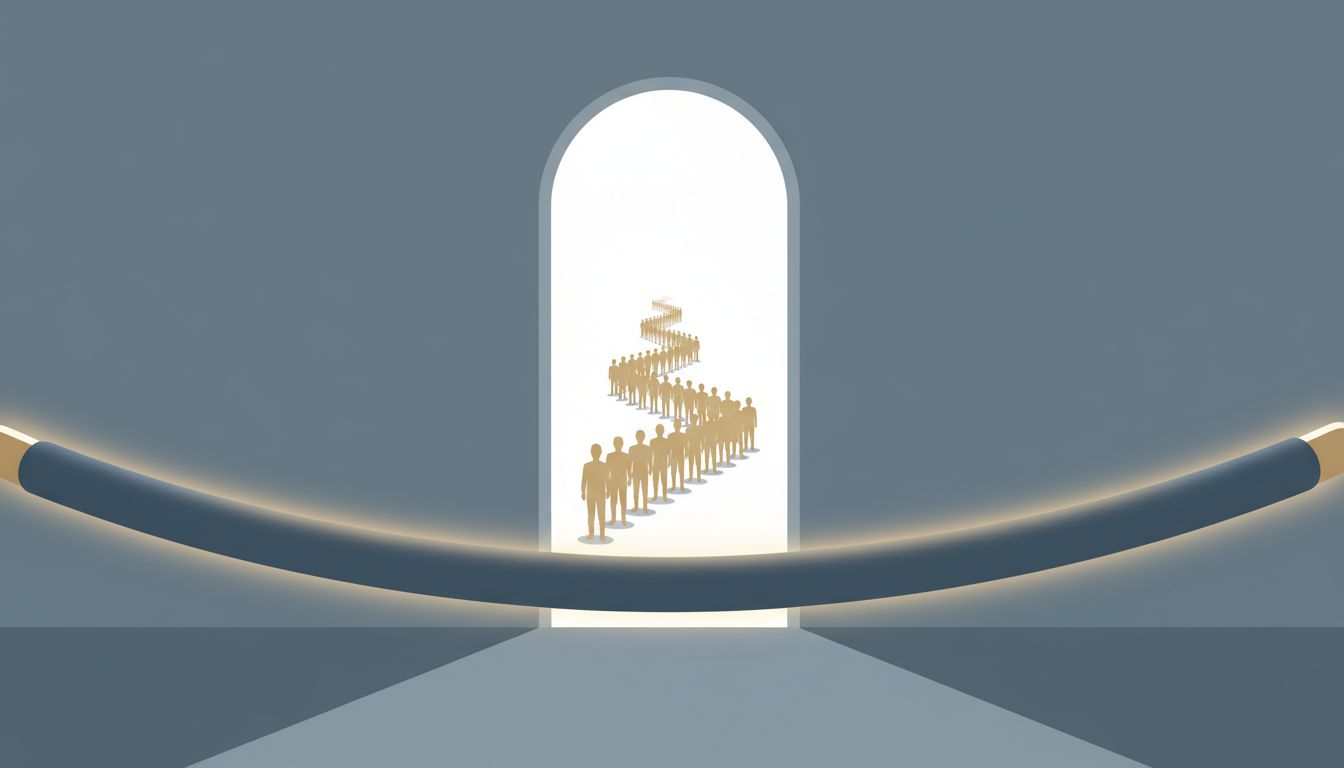
The waitlist is one of the most effective pieces of marketing ever invented, largely because it doesn’t look like marketing at all. It looks like demand. When Robinhood launched its no-fee trading app in 2013, it collected nearly one million email addresses before a single trade was placed. When Google launched Gmail, invitations were so scarce that they sold on eBay for real money. When Superhuman, a startup selling a $30-per-month email client, built a waitlist into its core growth strategy, it turned the act of waiting into a signal that something was worth waiting for. None of this was accidental. The waitlist is not a queue. It is an advertising campaign you opted into and paid for with your own attention.
This needs saying plainly: manufactured scarcity is manipulation. When a company with functioning servers and no meaningful capacity constraints puts you on a waitlist, it is not managing supply. It is manufacturing desire. The two things are completely different, and the tech industry has spent the better part of two decades blurring the line between them.
Scarcity Is a Signal, and Signals Can Be Faked
Humans read scarcity as a proxy for quality. If something is hard to get, our instinct is to assume it must be worth getting. This is not irrational. For most of human history, scarcity tracked reality. Food was scarce because crops failed. Medicine was scarce because production was hard. Software is not scarce. Distributing an additional copy of a web application costs a company somewhere between nothing and a rounding error.
When Clubhouse launched in 2020, it was invite-only for months. The app ran on ordinary cloud infrastructure. There was no technical reason millions of people couldn’t join simultaneously. The constraint was manufactured to create the impression that getting in meant something. And it worked, brilliantly, for a while. Twitter Spaces eventually ended the experiment by offering the same product without the rope line. Clubhouse’s monthly active users collapsed.
The Clubhouse arc is instructive because it shows both the power and the limit of manufactured exclusivity. It can flood a product with early adopters. It cannot substitute for a product those users will stick with.
The Waitlist Is Free Research and Free PR
Beyond manufacturing desire, waitlists serve two other functions that companies rarely acknowledge openly. First, they are a low-cost mechanism for gauging real demand before you’ve built anything substantial. A waitlist of 50,000 emails is a funding pitch, a hiring argument, and a product validation all at once. Robinhood’s million-person waitlist was instrumental in its early fundraising conversations. The company was selling proof of demand, not a product.
Second, waitlists generate press coverage on their own. A reporter covering a new AI model sees a waitlist and writes “thousands signed up in the first 24 hours,” which generates more signups. The loop is self-reinforcing and entirely free. OpenAI’s ChatGPT did not use a formal waitlist, but early access controls around GPT-4 and various API features created the same dynamic. The scarcity became the story.
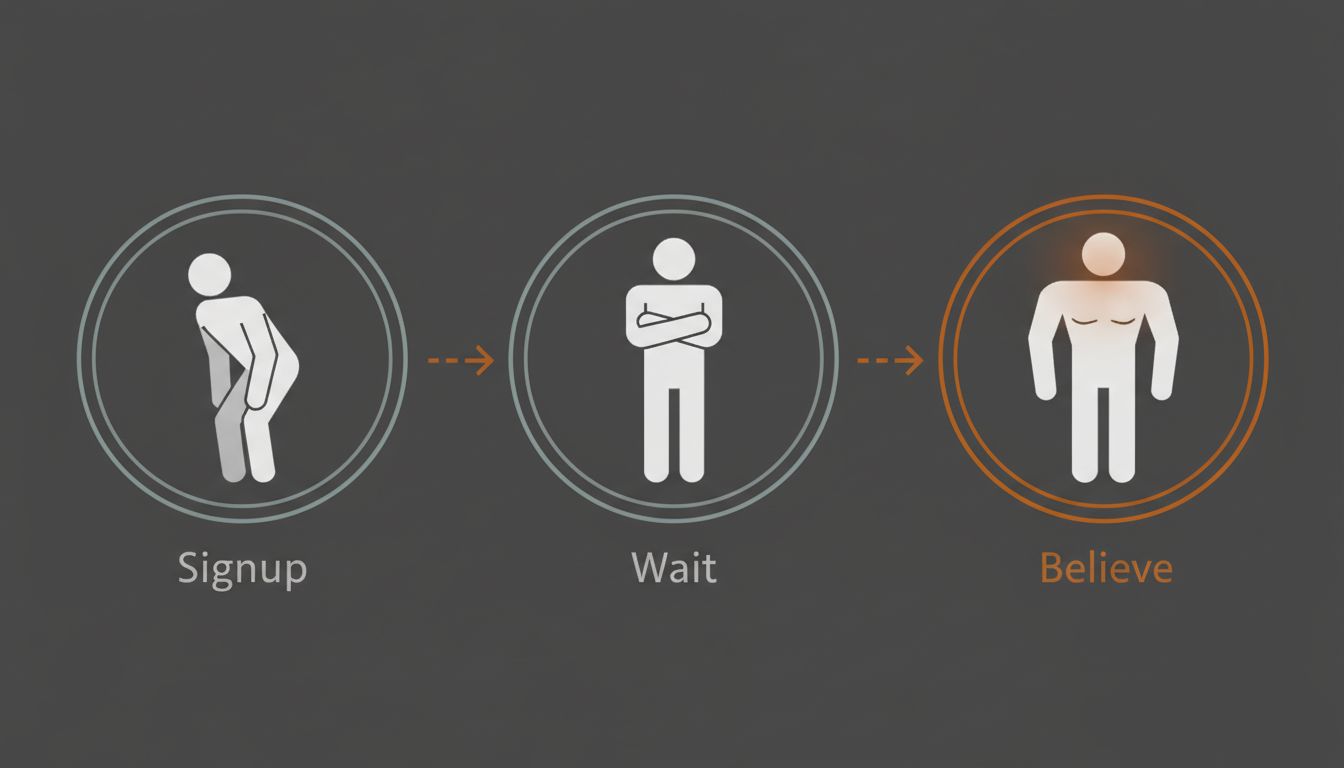
Exclusivity Builds Identity Before the Product Can
There’s a subtler mechanism at work that gets less attention. When someone joins a waitlist, they make a small psychological commitment. They have, in a minor way, declared themselves interested. By the time access arrives, they are predisposed toward the product. They want it to be good, partly because they have already told other people it’s worth waiting for.
Superhuman understood this better than almost anyone. Its waitlist included a manual interview process with a founder or employee, ostensibly to match users with the “right” workflow. The real function was to make users feel selected rather than subscribed. When you finally opened Superhuman, you weren’t trying an app. You were confirming a belief you already held about yourself.
This is not neutral. It’s the same psychology that makes people defend products with obvious flaws, because criticism of the product feels uncomfortably close to criticism of their own judgment. Tech companies use deliberate confusion to make you accept things you’d otherwise reject, but the waitlist achieves something more durable: it makes you a willing participant in your own persuasion.
The Counterargument
The fairest defense of waitlists is also a practical one. Some early-stage products genuinely need controlled rollouts to catch bugs, stress-test infrastructure, and avoid the kind of chaotic launch that destroys user trust before it can be built. If Discord had opened to 10 million users in its first week, it might have collapsed under load and never recovered. Staged rollouts are real.
The problem is that very few companies using waitlists today are actually constrained in the ways they imply. A mobile app backed by AWS is not going to break because too many people downloaded it on Tuesday. When a company that has raised $50 million in venture capital tells you it’s “carefully managing capacity,” the word it’s reaching for is not “capacity.” It’s “attention.”
Controlled rollouts can also benefit users by producing genuinely better first experiences. But this argument has a clear limit: it applies to the first few thousand users, not the hundred thousand on a months-long list. Once you’re deep in that queue, you’re not a beta tester. You’re a marketing asset.
The Long Game
Manufactured scarcity is a strategy that works exactly once per product. You can create desire through artificial exclusivity, but you cannot sustain it. Clubhouse is the obvious case. But the pattern recurs broadly. The list of products that built enormous waitlists and subsequently disappointed is longer than the list of those that didn’t. The waitlist optimizes for a specific moment, the launch, at the possible expense of everything after.
What it reliably does not do is make bad products good. It makes unknown products known, and it turns passive observers into active participants in a company’s growth story. That has real value for the company. For the person waiting, its value is considerably less clear.
The waitlist is a technology for harvesting your own enthusiasm and reflecting it back at you. Recognizing it for what it is doesn’t make you immune to it. But it’s worth noting that the line between a company managing a rollout thoughtfully and a company running a marketing campaign without a media budget is much thinner than the loading screen suggests.