In 2018, a team of Google engineers working on Android battery optimization noticed something odd in their telemetry data. Battery drain correlated with time of day in ways that exceeded what app usage alone could explain. Phones lost charge faster between 9 and 11 a.m. and again around 2 p.m., patterns that matched typical meeting schedules across their user base. The engineers had stumbled onto something that wasn’t really a software problem.
It was a stress problem. And the physics behind it are worth understanding.
The Setup
Google’s Android team had spent years optimizing Doze mode, the background power management system that throttles network access and CPU wakes when a phone sits idle. By 2016, Doze had meaningfully extended standby battery life. But in-use drain remained stubbornly high, and the distribution across users was strange. Heavy users drained batteries at roughly predictable rates. But a significant subset of users showed spike patterns that didn’t track with screen time or data usage.
The investigation that followed is documented in part through Android’s public battery optimization research, and it pointed toward a cluster of behaviors that are now well-understood but rarely discussed plainly: the phone in your pocket during a high-stakes meeting is working significantly harder than the same phone sitting on your desk during routine work.
The mechanisms are several, and they compound each other.
What Actually Happens
Start with the most direct cause: grip and body heat. Human hands generate enough heat to measurably affect lithium-ion battery chemistry. A battery at 35 degrees Celsius degrades and discharges faster than one at 22 degrees. When you’re nervous and holding your phone tightly, or when it’s pressed against your body in a warm pocket, you’re running the battery at suboptimal temperature continuously. This isn’t a dramatic effect in isolation, maybe a few percentage points of additional drain per hour, but it’s real and it’s constant.
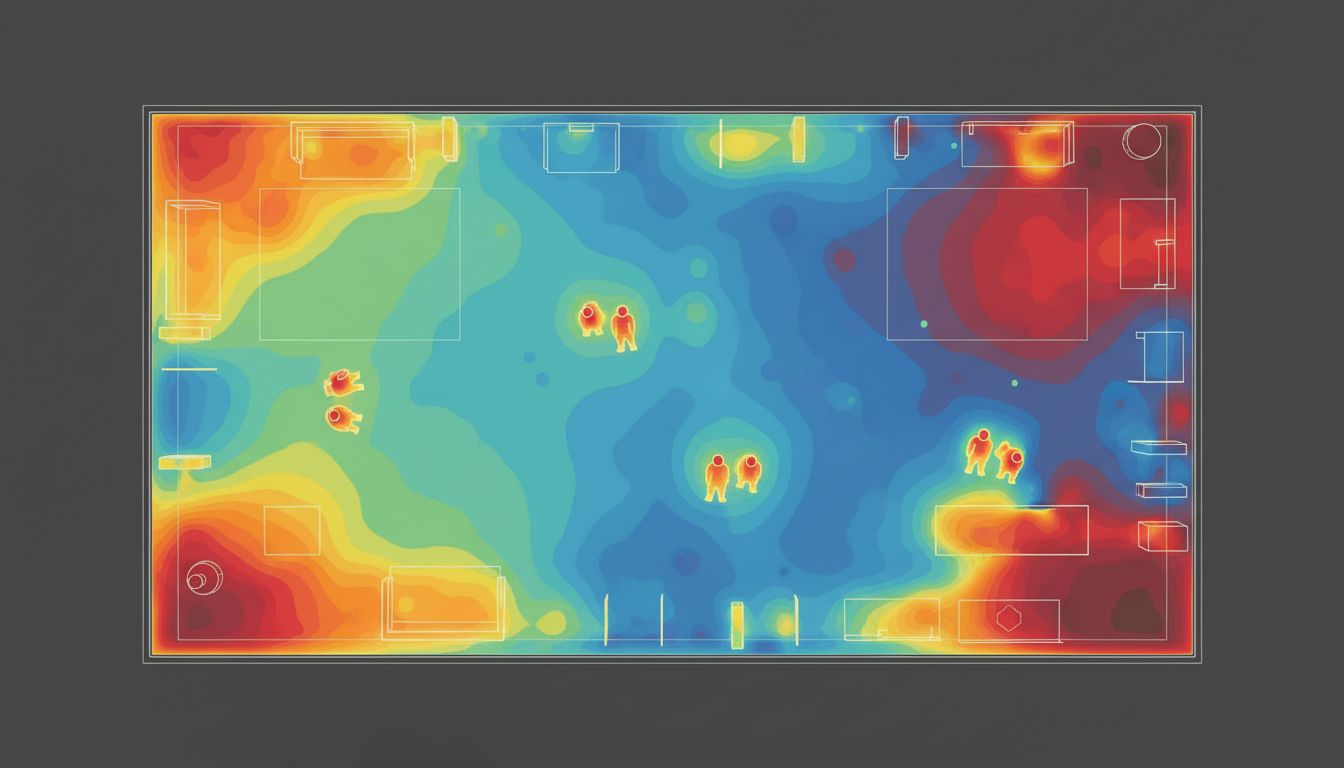
More significant is what your phone’s radio is doing. Mobile radios (both cellular and Wi-Fi) consume power proportional to how hard they’re working to maintain signal. The physics here are well-established: maintaining a weak signal requires the radio to transmit at higher power. Meeting rooms are notorious for signal problems. They’re often interior rooms with thick walls, frequently packed with people whose bodies absorb radio frequency signals, and sometimes in buildings with materials that interfere with transmission. Your phone is burning extra milliwatt-hours just to stay connected.
But the largest factor is probably the one nobody talks about: notification behavior. When you’re anxious about something, you check your phone compulsively. Research on phone checking behavior, including work published by the American Psychological Association, consistently finds that people check their phones more frequently during periods of stress and social anxiety. Each check wakes the display, which is by far the largest single power draw on a modern smartphone. A few extra checks per hour is trivial. Checking every 90 seconds for a two-hour meeting is not.
And there’s a feedback loop. Each check that reveals no urgent message provides momentary relief but also reinforces the checking behavior, which increases the frequency of subsequent checks. The phone learns nothing from this; you’re just running your display through a series of short bursts that prevent the processor from entering deep sleep states between checks.
Why This Matters Beyond Battery Life
The Google team’s findings, and the broader research they draw on, reveal something more interesting than battery management tips. Your phone’s battery is a crude but functional sensor of your own cognitive state.
This became practically relevant when teams studying enterprise device management started noticing that battery-related complaints clustered around specific types of workplace events: performance reviews, difficult client calls, all-hands meetings during periods of organizational uncertainty. The battery drain was a symptom of user behavior that was itself a symptom of workplace stress.
Some MDM (mobile device management) vendors now build analytics that flag unusual battery drain patterns as potential indicators of employee stress or disengagement. This sounds invasive because it is. But it also points to something genuinely useful: if your phone is dying consistently in certain contexts, that’s information about your behavior in those contexts.
A company I spoke with that manages device fleets for financial services firms discovered that their traders’ phones consistently drained faster on days with high market volatility, even controlling for data usage. The correlation was strong enough that their IT team initially assumed it was a network configuration issue. It wasn’t. The traders were checking their phones more, holding them more tightly, and spending more time in signal-poor trading floor areas during volatile sessions.
What We Can Learn
The practical battery advice is straightforward: in important meetings, set your phone to Do Not Disturb, place it face-down on a hard surface (not in your pocket), and leave it there. Do Not Disturb prevents notification-triggered wake events. The hard surface keeps it at ambient room temperature rather than body temperature. This alone can halve drain in a two-hour meeting.
But the more interesting lesson is architectural. The modern smartphone was designed to be always-on and always-available, which is excellent for the use case of scrolling content at home and counterproductive for the use case of being present in a difficult conversation. The device doesn’t know the difference between a context where you want interruption and one where you don’t, so it optimizes for interruption universally. The battery cost is one symptom of that mismatch.
The deeper question is whether the anxiety-check-drain loop is a bug or a design feature. Given what we know about how notification systems are built to maximize engagement, the generous interpretation is that it’s an unintended consequence. The less generous interpretation is that a phone which keeps you anxious enough to check it constantly is a phone that’s working exactly as intended. The economics of attention make both outcomes equivalent from the platform’s perspective.
Your battery dying during the board presentation isn’t random. It’s the physics of how you behave when you’re stressed, made visible in milliwatt-hours.