
The Feedback Loop Is the Feature
There’s a specific feeling you get when you move a task from “In Progress” to “Done” on a Kanban board. Or when you check off three items on a to-do list before 10am. It’s small, but it’s real. Your brain registers it as progress.
The problem is that your brain is wrong, and the systems you’re using know it.
Most popular productivity techniques aren’t actually optimized for output. They’re optimized for engagement with the productivity system itself. The metric they maximize is how often you experience a sense of completion, not how much meaningful work you produce. These are not the same thing, and confusing them is expensive.
This isn’t a character flaw. It’s a design consequence. When productivity tools are built by companies whose retention depends on daily active use, the incentive is to make you feel productive, because feeling productive keeps you coming back. The tool that makes you feel most accomplished gets the best reviews, not necessarily the one that correlates with your actual output over six months.
What “Getting Things Done” Actually Measures
David Allen’s Getting Things Done system, usually called GTD, has been influential enough to generate its own certification industry. The core premise is sound: capture everything, clarify what it means, organize it, reflect on it, engage with it. The cognitive offloading idea, writing things down so your brain stops holding them, is well-supported by how working memory actually operates.
But here’s what happens to GTD in practice. People spend enormous energy on the capture and organize phases. The weekly review becomes a ritual. The inbox-zero moment feels like an achievement. And then the actual hard work, the thinking, the building, the decisions that require sustained concentration, gets parceled into tasks small enough to fit neatly on a next-actions list.
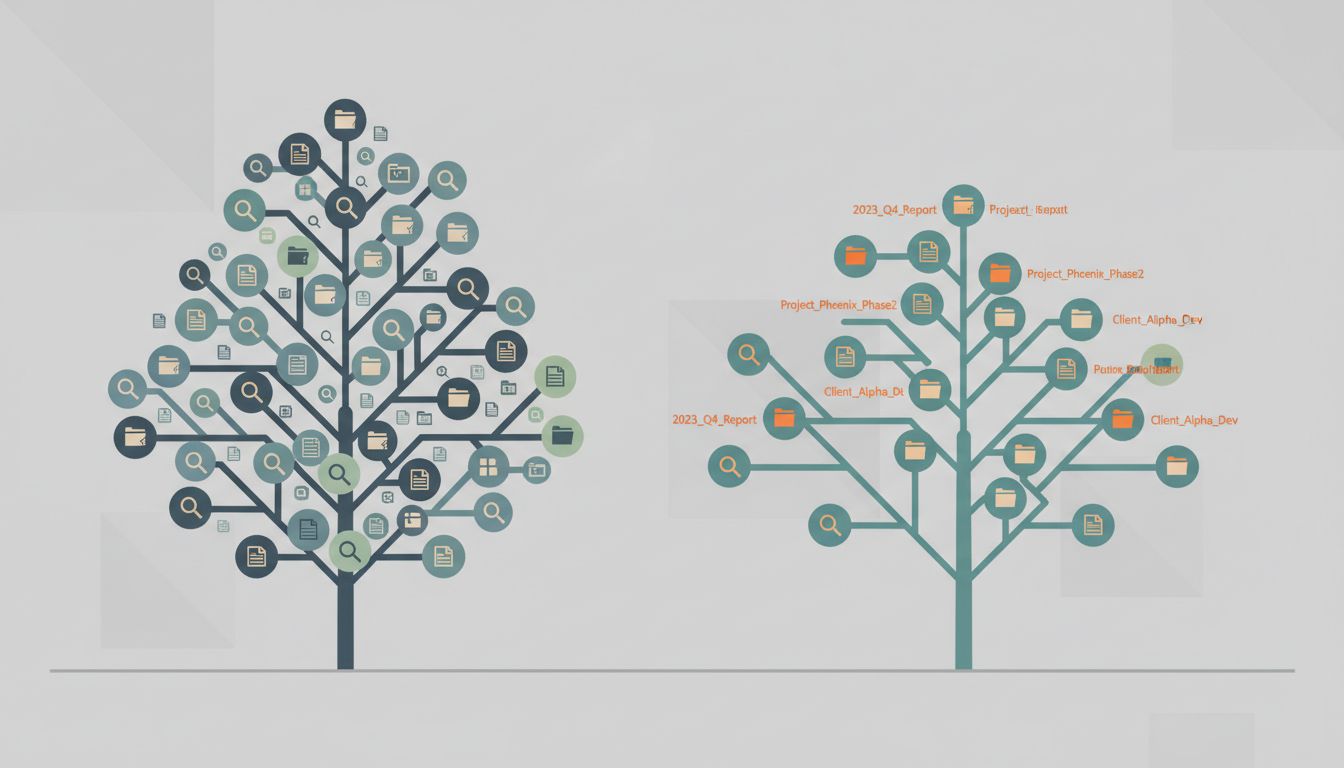
Taskification is the word I’d use. You take something that is genuinely difficult and requires deep, uninterrupted thought, and you chop it into task-shaped pieces so it can be processed by your system. “Draft section 2 of report” is a task. “Figure out whether our pricing model is structurally wrong” is not. So the second thing either doesn’t get entered, or it gets broken into fake sub-tasks that don’t capture the actual cognitive work required.
The system rewards what it can represent. Complex thinking is hard to represent. So you do more of what’s easy to represent.
Why Pomodoro Optimizes for the Wrong Thing
The Pomodoro Technique, developed by Francesco Cirillo in the late 1980s, is simple: work for 25 minutes, take a 5-minute break, repeat. After four cycles, take a longer break. The goal was to reduce the impact of interruptions and train focus.
For certain kinds of work, it’s fine. If you’re doing something that naturally segments, like writing individual unit tests, or answering a queue of support tickets, or processing expense reports, the 25-minute rhythm imposes just enough structure to keep you moving.
For deep technical work, it actively interferes.
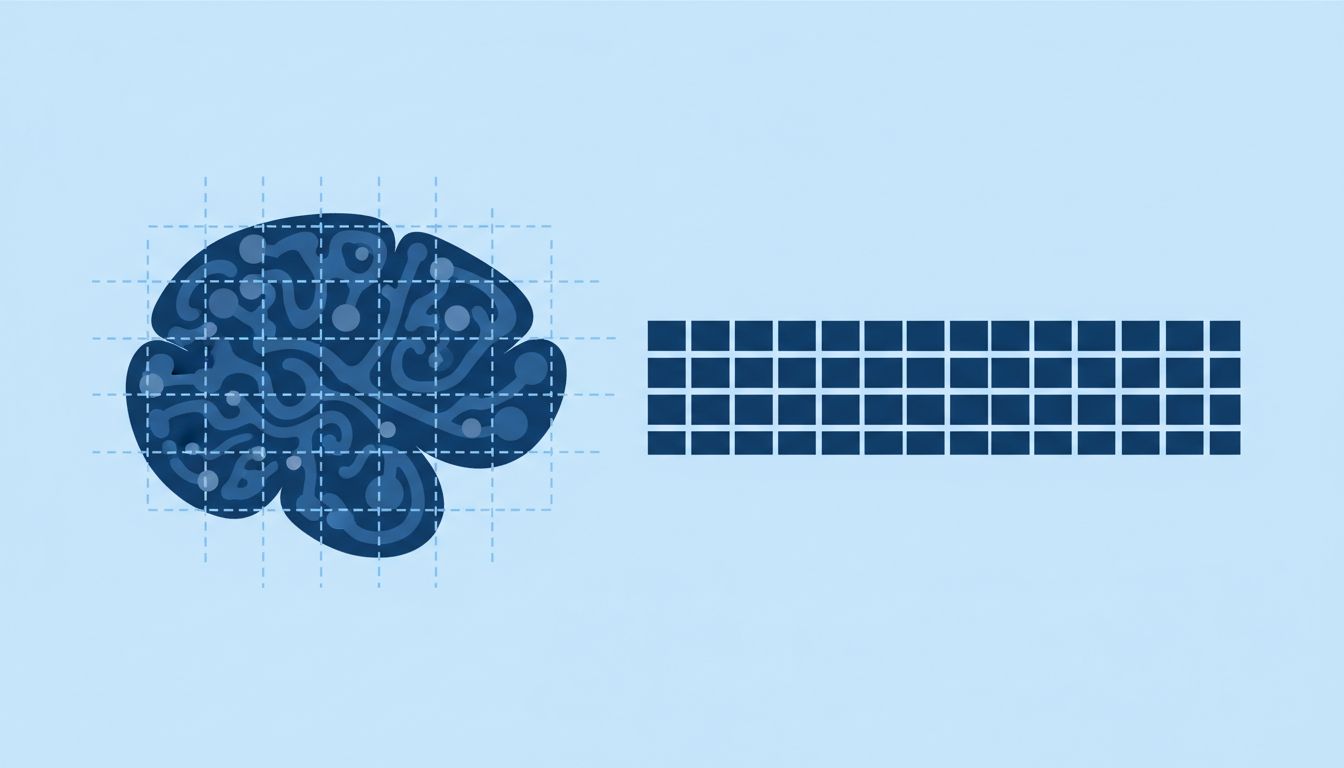
Think about what it takes to hold a complex system in your head. When you’re debugging a subtle concurrency issue, or designing a data model that has to accommodate several conflicting access patterns, or working through the architecture of something genuinely new, you spend the first 10-15 minutes just reconstructing the mental model. You’re loading state. By the time you’re actually in the problem, you’re already halfway through your pomodoro, and the timer going off doesn’t just interrupt you, it throws away the loaded state entirely.
The psychological research on this is consistent: recovery time after an interruption isn’t the time until you’re back at your desk, it’s the time until you’re back at the same cognitive depth. For complex tasks, that can be 20 minutes or more. A system that interrupts you every 25 minutes is, for certain kinds of work, a system that mostly generates reload cycles.
Pomodoro survives because the frequent transitions and the ticking timer create a sensation of urgency that people interpret as productivity. You feel like you’re racing. Racing feels like working hard. Working hard feels like being productive. The chain of inference is wrong at every link.
The Task List Is a Local Maximum
In optimization terms, a local maximum is a solution that looks optimal from where you’re standing, but is actually not the global best, because you’d have to get temporarily worse before you could get better.
Task lists are local maxima for your workday.
A fully-checked task list feels like a successful day. But consider what it actually tells you. It tells you that you completed the things you were able to formulate as tasks yesterday (or last week). It says nothing about whether those were the right things. It says nothing about the important thing you didn’t do because it was too large and amorphous to fit into a task slot. It actively hides the opportunity cost of every checked box.
There’s a pattern that anyone who’s spent time in software teams will recognize. The engineer who closes the most tickets isn’t always the most valuable engineer. Sometimes they’re the person who’s best at picking tractable tickets. The deep architectural thinking, the kind that prevents a whole category of future tickets, rarely shows up as a task because it doesn’t have a clear endpoint that can be declared “done.”
Task systems optimize for closure. Important work often resists closure. So important work loses.
Time Blocking Has the Same Bug
Time blocking, the practice of scheduling specific tasks into specific calendar slots, sounds like it solves the problem. If you block Tuesday from 9 to 11 for “deep work on the pricing model,” you’ve protected time for the amorphous thing, right?
Sometimes. But time blocking as commonly practiced has its own distortions. The calendar becomes the productivity theater. People block enormous amounts of time and then feel busy because their calendar is full. The blocking is visible to others and to yourself. It looks like intentionality. But a blocked calendar is just a to-do list with a timestamp, and the same failure modes apply.
The subtler problem is that time blocking assumes you know in advance which hours will be your best thinking hours, which depends on sleep quality, what happened in the earlier meeting, whether the environment is right, whether the problem has reached the point in its incubation where your brain is ready to engage with it productively. None of those are schedulable.
Forcing yourself into a “deep work” block when you’re not ready tends to produce the worst of both worlds: you’re not doing the easy tasks (you blocked that time), and you’re not doing genuinely deep work (you’re not in the right state). You’re staring at a document, feeling guilty, watching the blocked time drain away.
What Actually Correlates with Output
This is where I want to be careful not to just tear things down without saying what works. The honest answer is that the research on knowledge work productivity is messier than the productivity industry admits, and anyone claiming to have a universal system is selling something.
That said, a few things show up consistently.
Identifying one or two things that, if completed this week, would make the week genuinely successful, works better than exhaustive lists. Not because it’s a magic framework, but because it forces you to distinguish between work that moves your real goals forward and work that keeps the system running. These are very different categories that task lists blend together.
Protecting the largest continuous blocks of time for the work you most want to avoid, rather than the work you’re most ready to do, is uncomfortable but effective. The discomfort is a signal that you’re doing the hard thing. The pleasant momentum of crossing off easy tasks is a signal that you’re not.
And periodically auditing the system itself for rot matters more than any technique. Productivity systems accumulate dead weight. Tasks that were relevant six months ago sit on lists and create low-level cognitive drag every time you scroll past them. The system starts requiring maintenance that doesn’t produce anything.
What This Means
The techniques most people use for productivity, GTD, Pomodoro, task lists, time blocking, share a structural problem: they’re optimized for the experience of completing things rather than the outcome of completing things. They generate a lot of closure signals. Closure signals feel good. Feeling good about your system keeps you using your system.
For work that is inherently hard to represent as discrete tasks, inherently resistant to fixed time windows, and inherently slow to produce closure signals, these systems don’t just fail to help. They actively displace the conditions under which that work gets done.
The fix isn’t a better system. It’s recognizing that the most valuable work you do is probably the work your current system handles worst. Design around that, and treat the satisfying task-list stuff as what it is: administrative overhead, not the work itself.