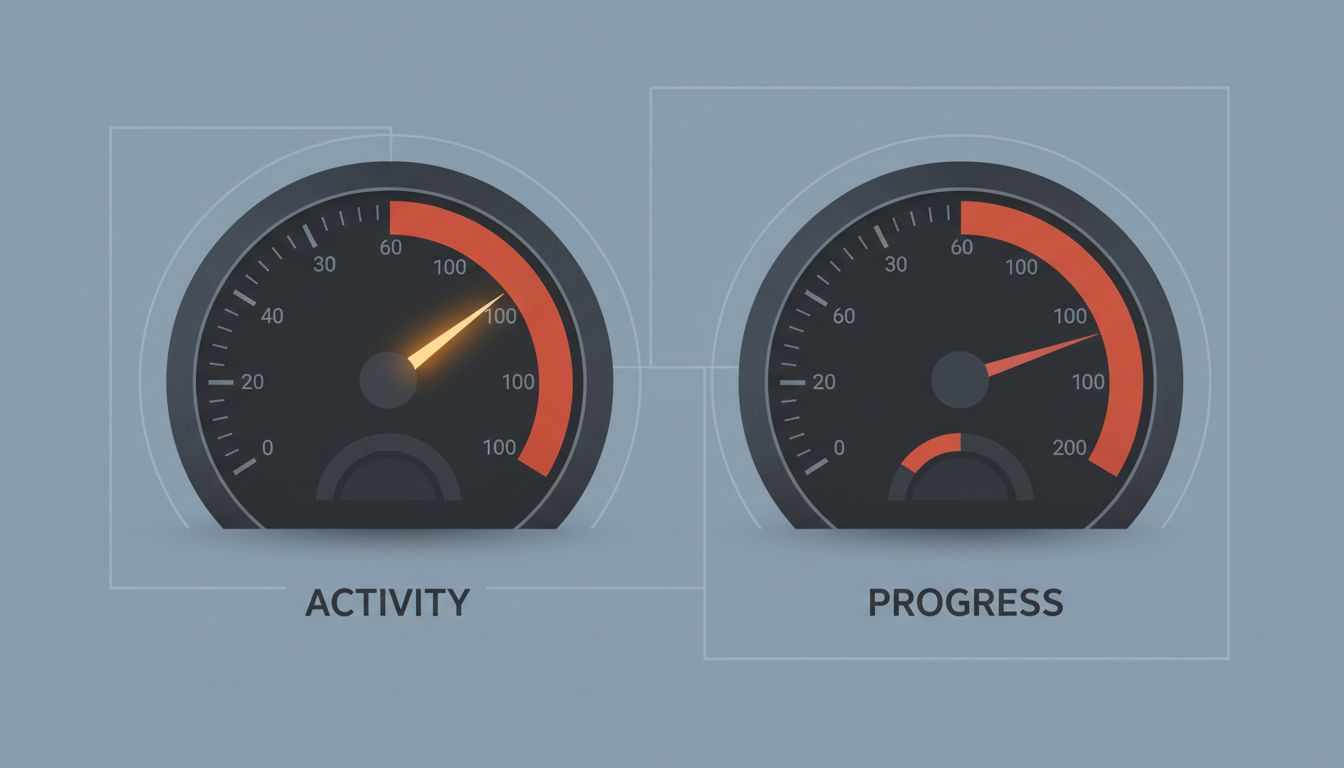
Your Productivity Tools Are Measuring the Wrong Thing
Busyness is not progress. You know this. And yet, if you look at how you spend most of your workday, and more importantly, how your tools reward you for spending it, you would find something uncomfortable: the systems designed to make you more productive are optimized for activity, not outcomes.
This is not a small distinction. It shapes what you work on, how you measure your own performance, and whether you end the day feeling accomplished or just tired.
The Tools Reinforce the Wrong Signal
Most productivity software measures things that are easy to count. Emails sent. Tasks completed. Pull requests merged. Messages replied to. These numbers are available, trackable, and genuinely satisfying to increment. The problem is that they are proxies for work, not work itself.
Take your task manager. The dopamine hit of checking something off is real and well-documented. But the list does not know the difference between a task that moves your most important project forward and a task you added specifically so you could cross it off. You get the same little animation either way.
Slack and Teams have the same structural problem. Responsiveness becomes a performance. Being online, replying quickly, keeping threads moving, all of this registers as contribution, even when the conversation produces no decision and closes no loop. As context-switching research consistently shows, every one of those interruptions carries a hidden tax on the deeper work that actually creates value.
Visible Effort Gets Rewarded Over Invisible Output
Knowledge work has a visibility problem. Writing a thoughtful document that prevents three future meetings is invisible. Being in three meetings is visible. Reviewing a colleague’s proposal carefully and returning it with useful notes is quiet. Sending sixteen Slack messages is loud.
Organizations tend to reward the louder version, not because managers are foolish but because they are working with the signals available to them. And the tools produce more signal about activity than about impact.
This creates a feedback loop. You learn which behaviors get noticed. You optimize for those behaviors. Your calendar fills up. Your inbox becomes a to-do list you keep current. You finish the day having done many things, none of which substantially moved the needle on anything that matters.
The Calendar Disguises Urgency as Importance
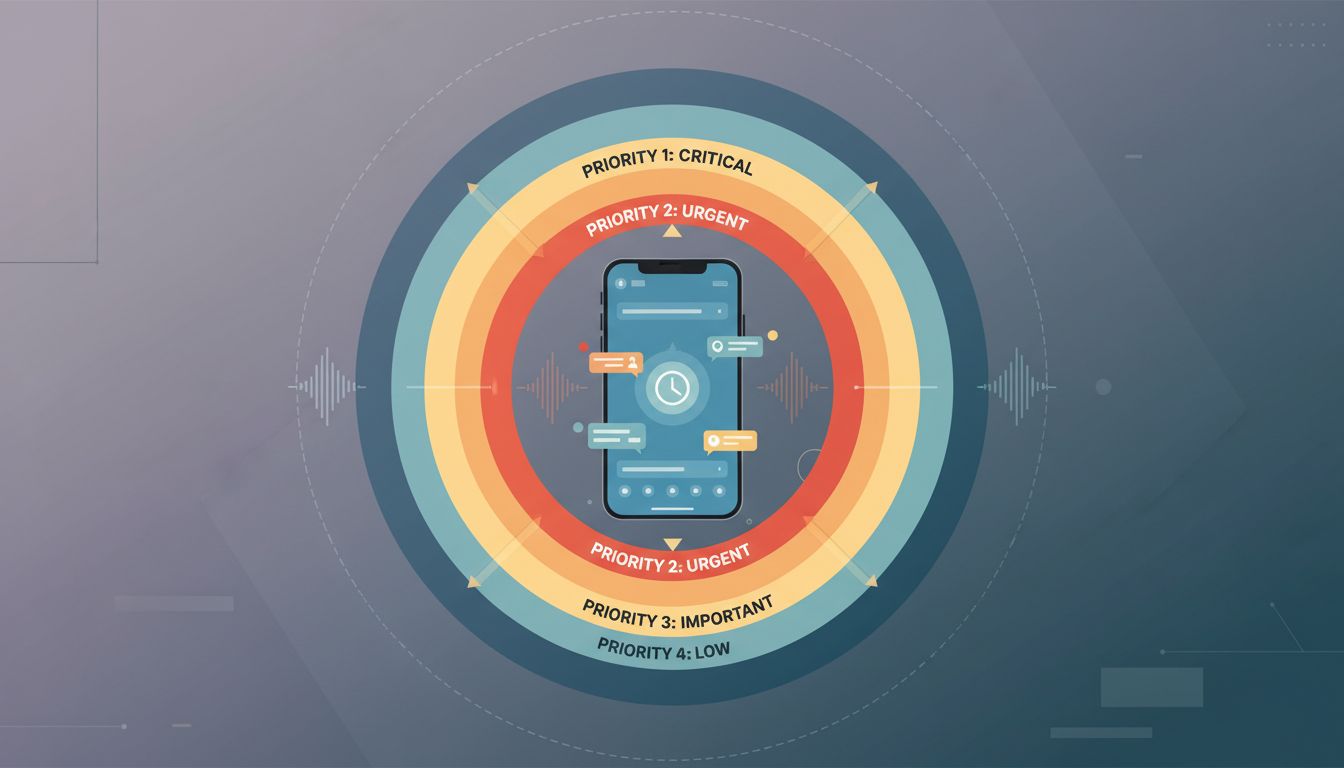
Your calendar is neutral about what belongs on it. A meeting about your company’s product strategy and a meeting to align on font choices for a slide deck appear identically, a colored block of the same weight and urgency.
What your calendar actually tracks is not importance. It tracks commitment. And once something is on the calendar, it carries a default legitimacy that is hard to challenge without social friction. You end up protecting low-value appointments the same way you protect high-value ones.
The fix is not a new app. It is a habit: regularly asking which calendar events, if canceled, would nobody notice. What you cancel reveals as much about your priorities as what you attend. But most productivity systems never push you to ask that question.
The Counterargument
Some people will say the tools are fine and the problem is self-discipline. If you know that a full inbox is not a measure of impact, just ignore the inbox more. If you know that task-count is a vanity metric, stop tracking it. The tools are neutral; the choices are yours.
This argument is not wrong, but it underestimates how much design shapes behavior. Every dark pattern expert and behavioral economist working in Silicon Valley understands that defaults matter, that friction shapes choices, and that systems train habits even when you know better intellectually. Telling knowledge workers to simply resist the incentives their tools create is like building a casino and telling guests to gamble responsibly.
The smarter companies are starting to figure this out. Distributed teams in particular have had to get serious about deep work because remote work makes the visibility problem acute: you cannot signal effort by being present in an office, so you are forced to define contribution differently.
How to Start Working Against the Grain
You will not fix this by switching apps. Here is what actually helps.
Define two or three outcomes you need to achieve this week, not tasks, outcomes. Write them down somewhere that is not your task manager. Review your planned activities against those outcomes daily. If an activity does not move any of them forward, it needs a very good reason to stay on your schedule.
Audit what your tools are measuring and ask whether those measures correspond to anything you actually care about. If your team celebrates velocity on a sprint board while the product is not getting meaningfully better, that gap is worth naming out loud.
Create friction for the things that feel productive but are not. Batch your email. Turn off notifications for channels you do not need to monitor in real time. Let the response time slip a little and see if anyone notices.
Busyness is comfortable because it is legible. You can see it, count it, and report it. Progress on hard things is often invisible right up until it is not. The tools you use will keep optimizing for what is legible unless you actively choose otherwise. That choice is yours, and it is worth making deliberately.