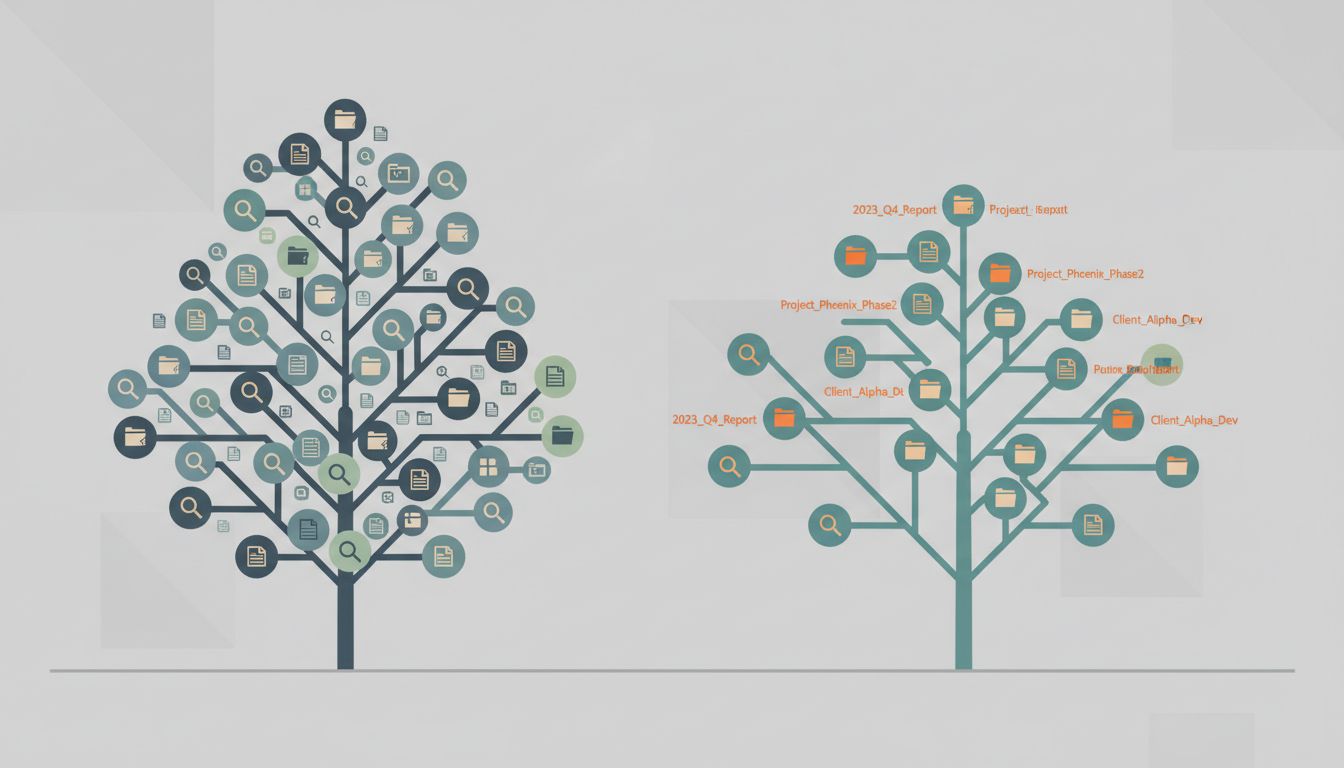
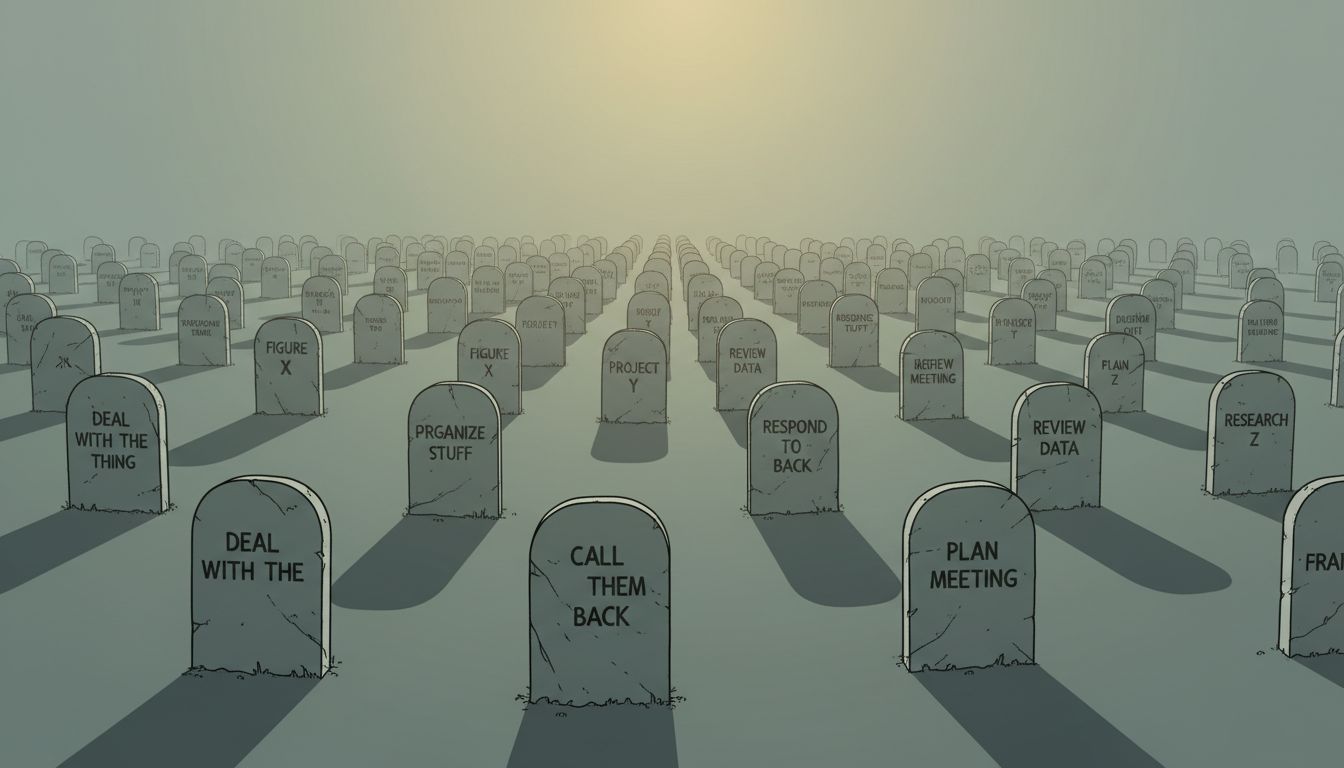
Open your task manager right now. Scroll past the first twenty items. You’ll find it: a task that’s been sitting there for two, maybe three weeks. Something like “research vendors for X” or “follow up with team about Y” or “figure out what to do with Z.” It sounds like a task. It isn’t.
It’s a deferred decision wearing a task’s clothing.
This is the thing that nobody tells you when they hand you a productivity framework: task managers are excellent at holding actions, and completely useless at holding choices. When you blur that line, your list starts to rot from the inside.
What a Task Actually Is
A task has a clear, executable next action. David Allen’s original formulation in Getting Things Done is still the most useful: a task should begin with a verb that describes a physical action. “Call Marcus about the contract.” “Write the intro paragraph for the Q3 report.” “Book the conference room for Thursday.”
You can sit down, start, and finish each of those. There’s no ambiguity about what “doing” them looks like.
Now consider: “Deal with the marketing situation.” “Figure out the pricing thing.” “Revisit the vendor question.” These aren’t tasks. They’re signals that somewhere upstream, a decision is waiting. Until that decision gets made, the task can’t be defined. And so it sits. You look at it, feel a small twist of anxiety, and move on to something easier.
The list grows. The anxiety compounds.
How Decisions Get Disguised as Tasks
The disguise happens at capture time. Something comes up, you’re busy, you don’t want to lose it, so you throw it into your system. The friction of capture is low by design. The friction of clarification is higher, and you skip it.
But there’s a second mechanism that’s subtler: you might actually know the decision needs to be made, and you’re using the task list as a place to store your avoidance. Writing it down feels productive. It feels like you’ve handled it. You haven’t. You’ve just relocated the discomfort from your mind to your list, where it will sit, quietly reproducing dread every time you scroll past it.
This is related to what behavioral economists call the “completion bias,” the way we prefer to finish small, clear tasks over sitting with open-ended problems. Your brain gets a small reward from checking things off. Deferred decisions never get checked off, so they become furniture you stop seeing.
The Three Types of Items That Shouldn’t Be in Your Task List
Once you start looking, you’ll find the same culprits in almost everyone’s system.
Undecided projects. “Research project management tools” is not a task if you haven’t decided you’re actually switching tools. Before that decision is made, the research is optional exploration, not an actionable commitment. It belongs in a reference list or a someday/maybe file, not your active task list where it crowds out things you’ve actually committed to.
Waiting-on items with no trigger. “Follow up with Sarah” is only a task when Sarah hasn’t responded by a specific date. Without that trigger, it’s a monitoring job you’ve assigned to yourself with no clear moment to execute it. Add the date. If you can’t, the decision of when to follow up hasn’t been made yet.
Vague aggregations. “Handle onboarding documentation” is probably five to ten actual tasks, and also maybe a conversation with someone about what onboarding even needs to cover. The aggregation sits on the list because the work of breaking it down requires making choices, and making choices takes energy you didn’t have at capture time.
None of these belong in an active task list. They belong in a weekly review, where you do the actual work of deciding.
The Weekly Review Is Where Decisions Should Happen
Allen’s weekly review gets treated, in most productivity circles, as a list maintenance chore. Inbox zero for your task manager. That’s not what it’s for.
The weekly review is when you process deferred decisions. You take each item that’s been sitting, and you ask: what is the actual decision this requires? Can I make that decision now? If yes, make it, and record a real task. If not, why not? What information am I missing? Who do I need to talk to first?
A good weekly review should feel a little uncomfortable, because you’re confronting the things you’ve been avoiding. If it feels easy, you’re probably just shuffling tasks around rather than resolving anything.
The goal is that after your review, every item in your active list is a genuine action you’ve committed to. Not a placeholder for a decision you’ll make later. Later doesn’t exist in a task manager. There’s only the list you open Monday morning.
What Happens When You Clean the Graveyard
When you go through your list with this filter, a few things happen.
First, the list gets shorter. Often dramatically. Many items you thought were tasks turn out to be decisions you can make in two minutes once you sit with them. “Research vendors” becomes “Email three vendors from last year’s shortlist” (if you decide you’re moving forward) or it moves to someday/maybe (if you decide you’re not). Either way, it’s resolved.
Second, the items that remain feel different. They feel like commitments rather than aspirations. There’s a meaningful psychological difference between a list of things you might do and a list of things you’ve decided to do. The latter is shorter and less paralyzing, even when the individual tasks on it are harder.
Third, your capture behavior changes. Once you’ve experienced the pain of a bloated list, you become more careful at capture time. You start asking the clarifying question before you write things down: “What is the actual next action here, and have I decided to do it?” If the answer is no, you route it differently.
A Simple Triage Framework
When you audit your list, or when you’re processing new captures, run each item through this sequence.
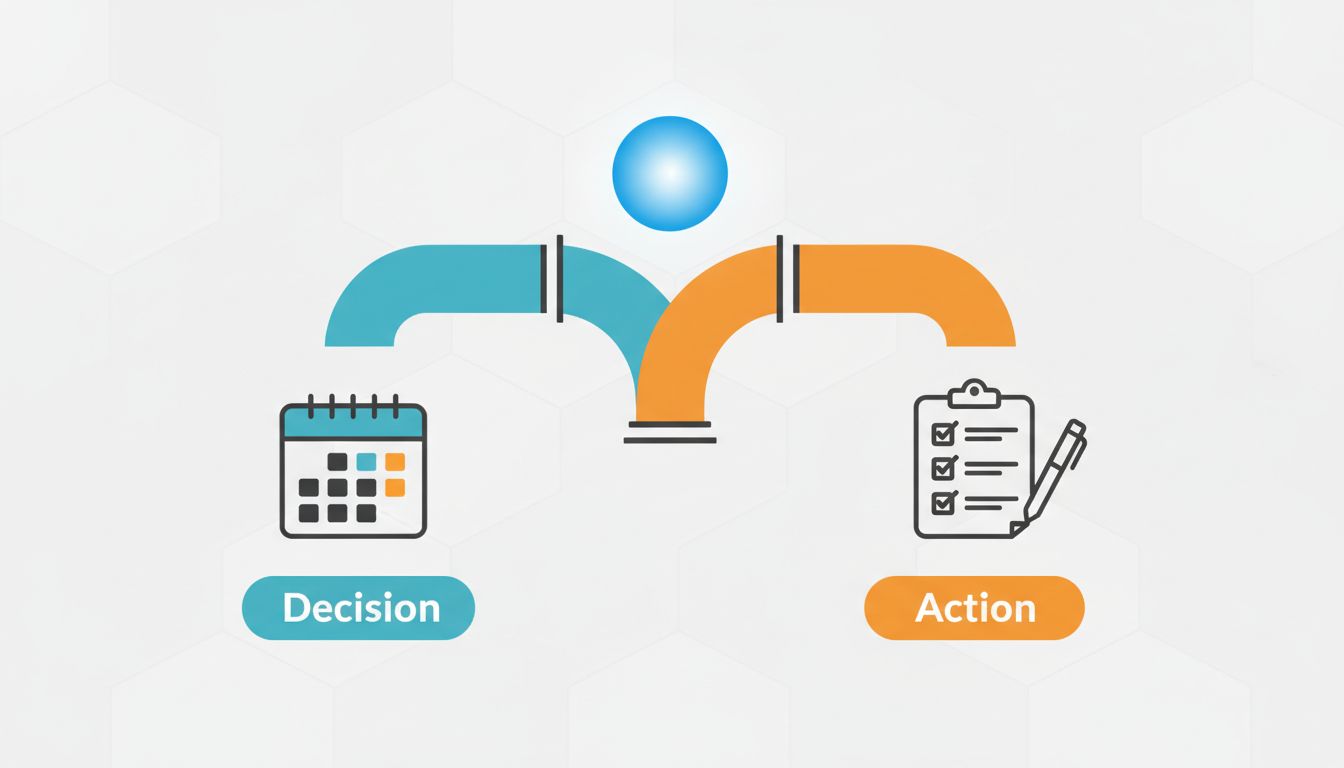
Is there a decision that has to be made before this task can be defined? If yes, the task is “make that decision,” and it might be a calendar block rather than a to-do.
Have I actually committed to this? Not “would this be good to do,” but “have I decided I’m doing this in the near term?” If not, it belongs in a reference or someday file.
Can I write the next action as a specific verb plus object? If you can’t, you haven’t defined the task yet. Don’t put it on the list until you can.
Is there a trigger or deadline that makes this timely? If not, consider whether it belongs on a calendar instead. Some tasks are only relevant after a certain event occurs. Put the trigger on your calendar, not the task on your list.
This isn’t a rigid system. It’s a set of questions that force you to do the thinking you skipped at capture time. The point isn’t to add friction for its own sake. It’s to keep your active list honest.
What This Means in Practice
Your task manager is only as useful as the clarity of the items it holds. A list full of deferred decisions doesn’t organize your work; it obscures it. You spend cognitive energy re-reading the same vague items, deciding not to decide, and moving on. That’s overhead that masquerades as productivity.
The fix isn’t a better app. It’s a cleaner boundary between decisions and actions. Make the decision first, capture the action second. Use your weekly review to confront what you’ve been avoiding. Move anything you haven’t genuinely committed to out of your active list.
Do that consistently, and your task manager becomes what it was supposed to be: a reliable record of things you’ve decided to do, not a holding tank for things you’re not sure about yet. The list gets shorter. The work gets clearer. And you stop dreading the scroll.