Six Reasons Raising Your API Price Made It Sell Better
Counterintuitive but consistent: higher API prices often attract more serious buyers, reduce support burden, and improve retention. Here's the mechanism behind each.
The software holding up the internet is often maintained by unpaid volunteers. Here's why that's a structural problem, not a gratitude problem.
The salary number on an offer letter is the least important variable in engineering economics. Most companies never learn this until the damage is done.
Companies that have actually cracked async communication aren't just sending fewer Slack messages. They've redesigned how decisions get made and recorded.
We've built a culture of instant dismissal around features that cost enormous effort to create. That asymmetry is worth taking seriously.
Your calendar isn't broken. It's doing exactly what you trained it to do. The problem is what you've been training it to optimize for.
Raising money before you have leverage feels like progress. It's usually the opposite. Here's what it actually costs you.
Early adopters save your startup. They also, if you're not careful, define it in ways that make scaling nearly impossible.
The skills that make you good at writing READMEs and API docs are the same ones that make you good at prompting LLMs. This is not a coincidence.
AI coding tools make you faster. They also quietly erode the understanding that makes you a good engineer. That tradeoff deserves more honesty.
Load balancers ship with defaults tuned for a world that may not match yours. Those defaults are actively shaping your traffic right now.
One design decision, made in an afternoon, has cost the software industry billions of dollars and uncountable hours of debugging. Its inventor knows exactly why.
Most startups that survive their first product die on their second. It's not bad luck. It's a set of structural traps that repeat with eerie consistency.
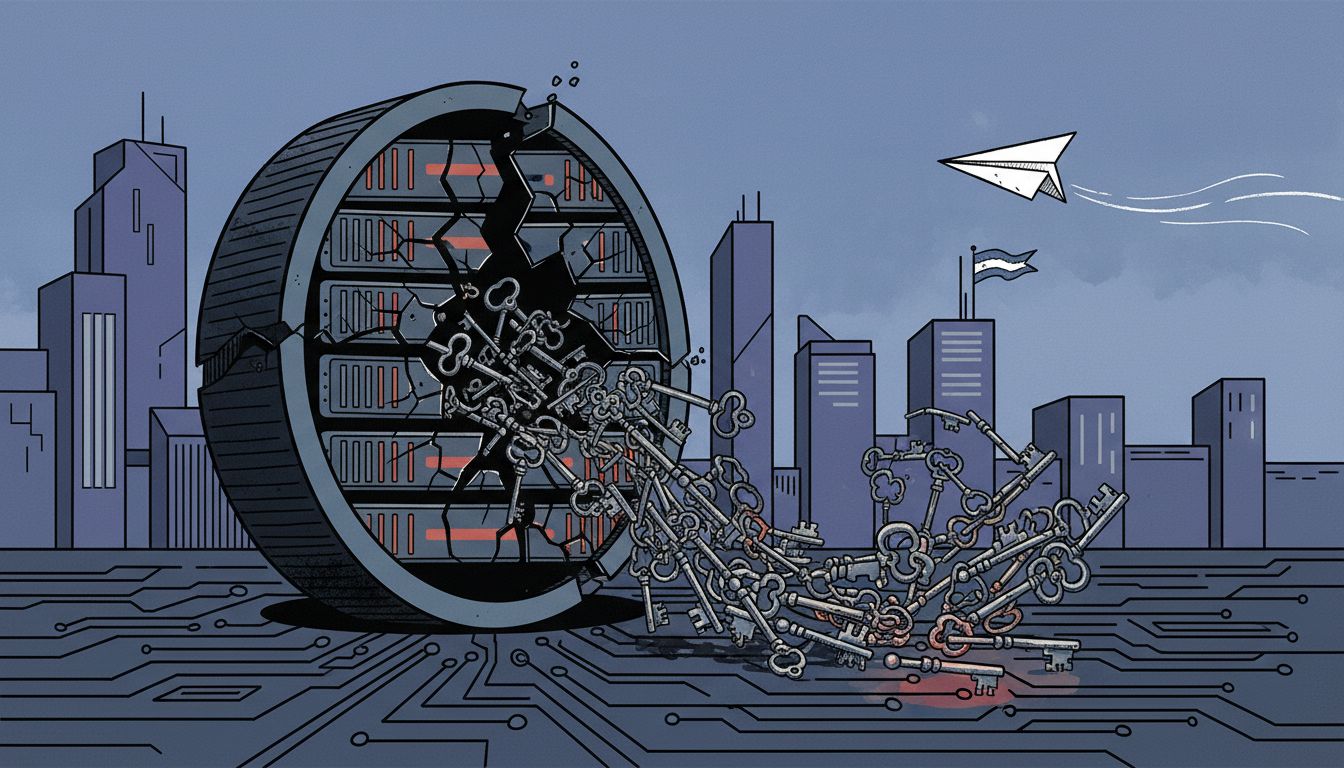
When HashiCorp flipped Terraform to a non-compete license in 2023, it revealed a structural problem the industry has been ignoring for decades.
Salary is the wrong unit of measurement for engineering talent. The real cost is in what doesn't get built, what breaks, and what slows everyone else down.
Getting interrupted is bad. What you do in the first 30 seconds after is what actually determines how long you stay lost.
Most productivity systems make it frictionless to capture work and painful to complete it. Here's how to flip that ratio.
Discounting your way to early traction feels like progress. It's usually the first step toward building a business that can't survive.
The customers who save your startup in year one are often the ones who quietly strangle it in year three. Here's why.
Join thousands of readers who get our weekly breakdown of the most important stories in technology.
Free forever. Unsubscribe anytime.