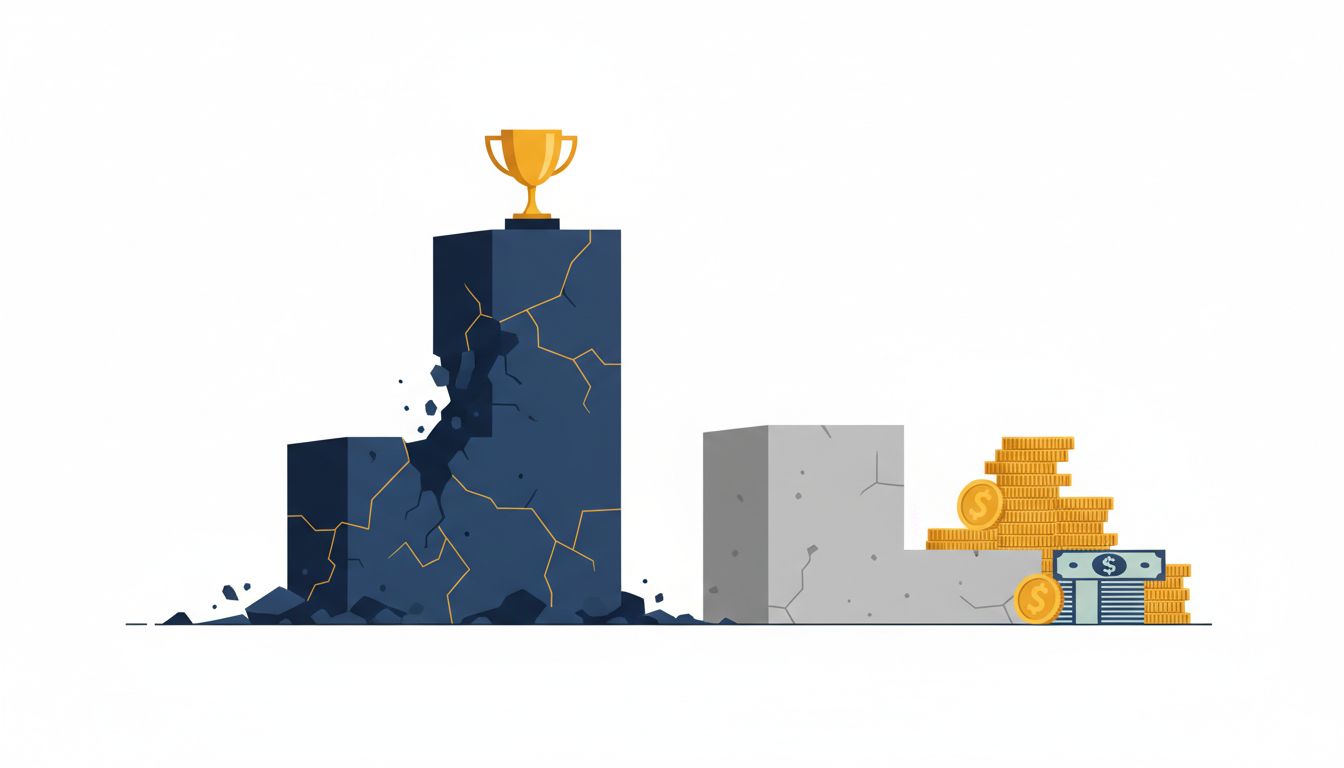

Market leadership is expensive. The company that wins the most customers, captures the most headlines, and defines the category also absorbs the costs of building that category in the first place. The second-biggest player watches all of this happen, then prices accordingly.
This is not a consolation argument for runners-up. It is a structural feature of how tech markets work, and ignoring it leads to some badly misread competitive situations.
The market leader pays for market creation
When Salesforce spent years convincing enterprises that software-as-a-service CRM was trustworthy, every competitor who came after got that education for free. When Uber spent billions subsidizing rides to normalize app-based transportation, every subsequent rideshare entrant inherited customers who already understood the concept.
The category leader funds the sales cycle, the analyst relations, the conference keynotes, and the failed experiments that taught the industry what not to build. Challengers inherit the resulting market without the invoice. This dynamic shows up in R&D spending: dominant players routinely spend a larger share of revenue on research than their closest rivals, because they are simultaneously maintaining their position and inventing the next version of the market.
Second place attracts customers who already know they want an alternative
A buyer who comes to the number-two player has usually already considered the market leader and decided against them, often for concrete reasons: price, contract terms, customer support quality, or a feature mismatch. That buyer arrives self-qualified. The sales cycle is shorter, the deal is easier to close, and the customer is frequently more loyal because they made a deliberate choice rather than a default one.
This is the opposite of the market leader’s situation. The leader captures every buyer who enters the market, including the ones who will churn in six months because they were never quite the right fit. As the wrong customers can quietly drain a company’s resources, the leader’s scale advantage carries a hidden cost in customer quality.
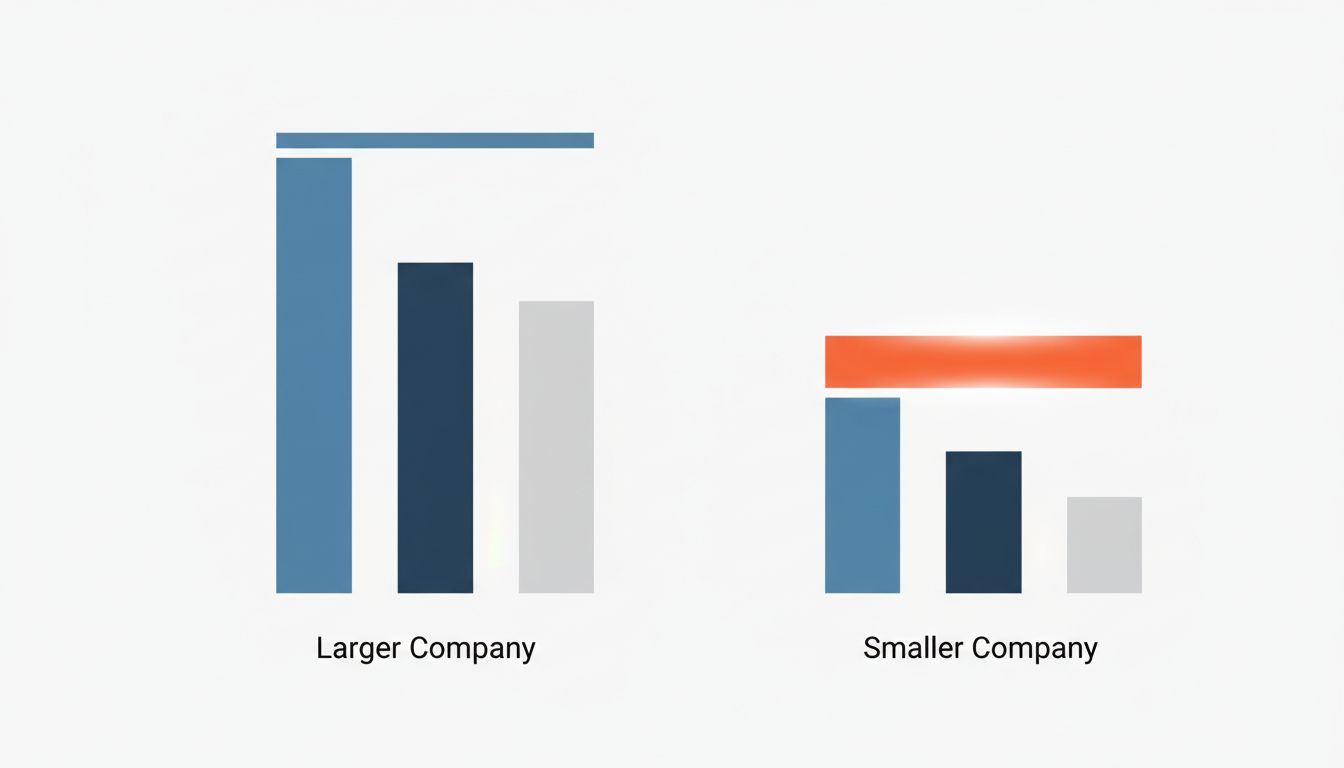
The leader must defend everywhere. The challenger chooses its battles.
A dominant platform cannot afford to cede any significant segment. Enterprise, mid-market, verticals, geographies: the leader must maintain credibility and presence across all of them because any visible retreat becomes a story. The challenger has no such obligation. It can concentrate resources on the segments where it wins most reliably, build deeper relationships there, and charge more for a product that fits those customers precisely.
Microsoft’s Azure sat comfortably behind AWS for years while generating operating margins that rivaled or exceeded Amazon’s cloud business in several reporting periods. Microsoft did not need to be first in cloud to be profitable in cloud. It needed to be good enough for enterprises that already trusted Microsoft, a customer base it already owned. The cost of acquiring those customers was effectively zero.
Pricing power skews toward the underdog
Market leaders get scrutinized. Their pricing is visible, debated, and frequently used as a benchmark. Enterprise buyers negotiate against the leader’s published rates. Analysts flag any increase. The leader’s pricing becomes a political act as much as a business one.
The second-place player sets prices in reference to the leader but with more freedom to experiment. It can charge a premium to customers who specifically want an alternative (and there are always such customers). It can offer aggressive discounts to win strategic accounts without those discounts becoming industry-wide expectations. Pricing flexibility, which is one of the most underrated drivers of margin, sits more naturally with the challenger.
The counterargument
Network-effect businesses genuinely favor the winner. Social platforms, payment networks, and marketplaces become more valuable as more people use them, which means second place can be a permanent disadvantage rather than a comfortable perch. MySpace did not monetize its way out of losing to Facebook. Second place in a network-effects market often means a slow decline toward irrelevance.
The argument here is narrower: in markets where switching costs are moderate, where enterprise relationships matter, and where the product can be meaningfully differentiated, second place is structurally advantaged on profitability even when disadvantaged on scale. Infrastructure software, cloud services, productivity tools, and most B2B categories fit that description. Consumer social does not.
The position that actually matters
Investors and analysts spend considerable energy tracking market share rankings. The better question is where the margin is going. A company with 30% market share and a clear niche of loyal, price-insensitive customers frequently generates better returns than the company with 50% share and the overhead of maintaining it.
The market leader sets the price of admission for the whole industry. The second-biggest player just has to show up and collect.