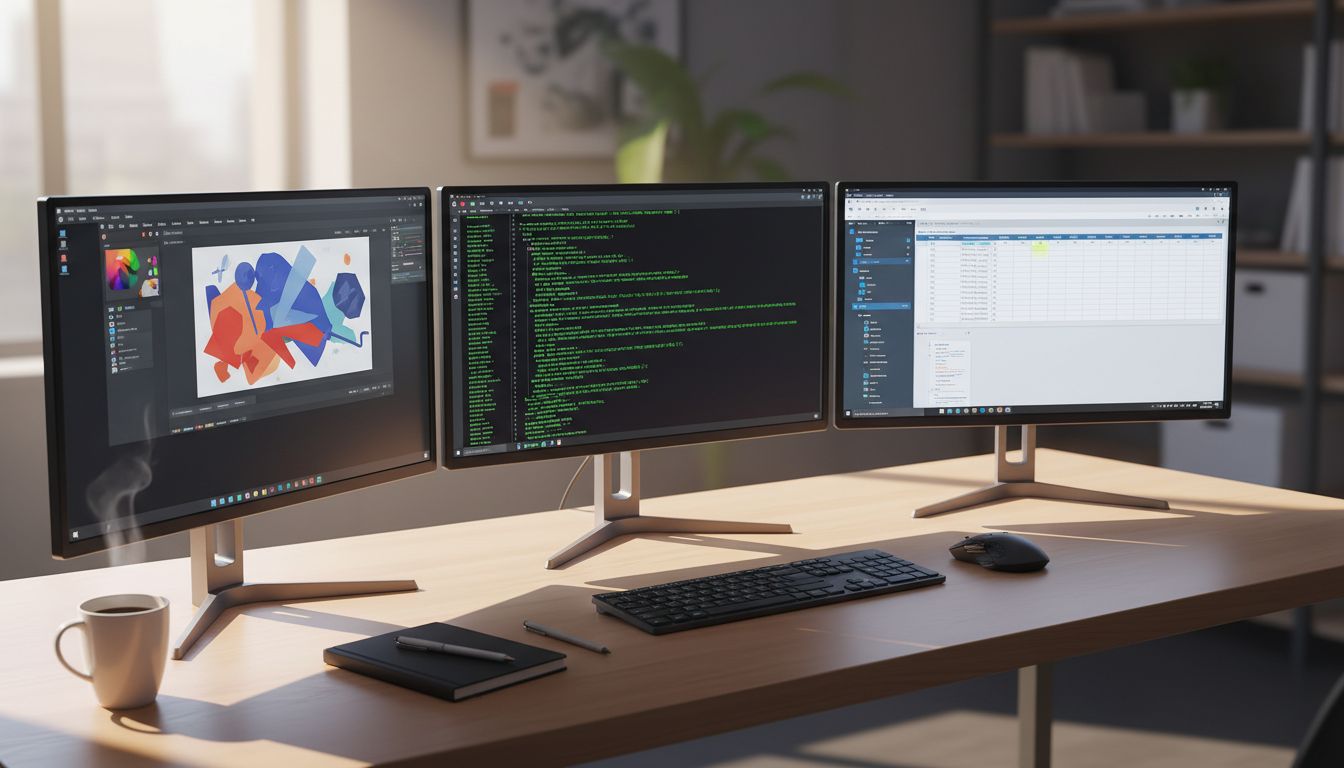
How Top Tech Executives Use the '3-Device Rule' to Protect Their Best Thinking
The most productive executives don't manage their devices. They architect them. Here's the simple rule that keeps deep work intact.
Tools, workflows, and strategies for getting more done with technology.
The most productive executives don't manage their devices. They architect them. Here's the simple rule that keeps deep work intact.
Your phone's notification system isn't a communication tool. It's a behavioral conditioning engine, and the engineers who built it know exactly what they made.
The best remote workers aren't optimizing for frictionless tools. They're strategically adding friction to protect their focus.
The secret isn't discipline or better apps. It's a filtering architecture that mirrors how good software handles queues.
You memorized Ctrl+Z in a week but still forget three-finger swipe after months. The reason reveals something fascinating about how your brain builds habits.
The secret productivity hack nobody's selling you: the most effective people aren't optimizing their tools. They're eliminating them.
The more apps you add to your workflow, the less you get done. Here's the counterintuitive reason why, and what to do about it.
In a world drowning in productivity apps, top performers are quietly going analog. Here's the surprisingly technical reason why paper wins.
You block 30 minutes for a task that takes two hours, then blame yourself for falling behind. The problem isn't your discipline. It's a predictable cognitive bias baked into how you plan.
Inbox zero feels productive. But one engineering team's obsession with it quietly hollowed out their most important work.
Join thousands of readers who get our weekly breakdown of the most important stories in technology.
Free forever. Unsubscribe anytime.