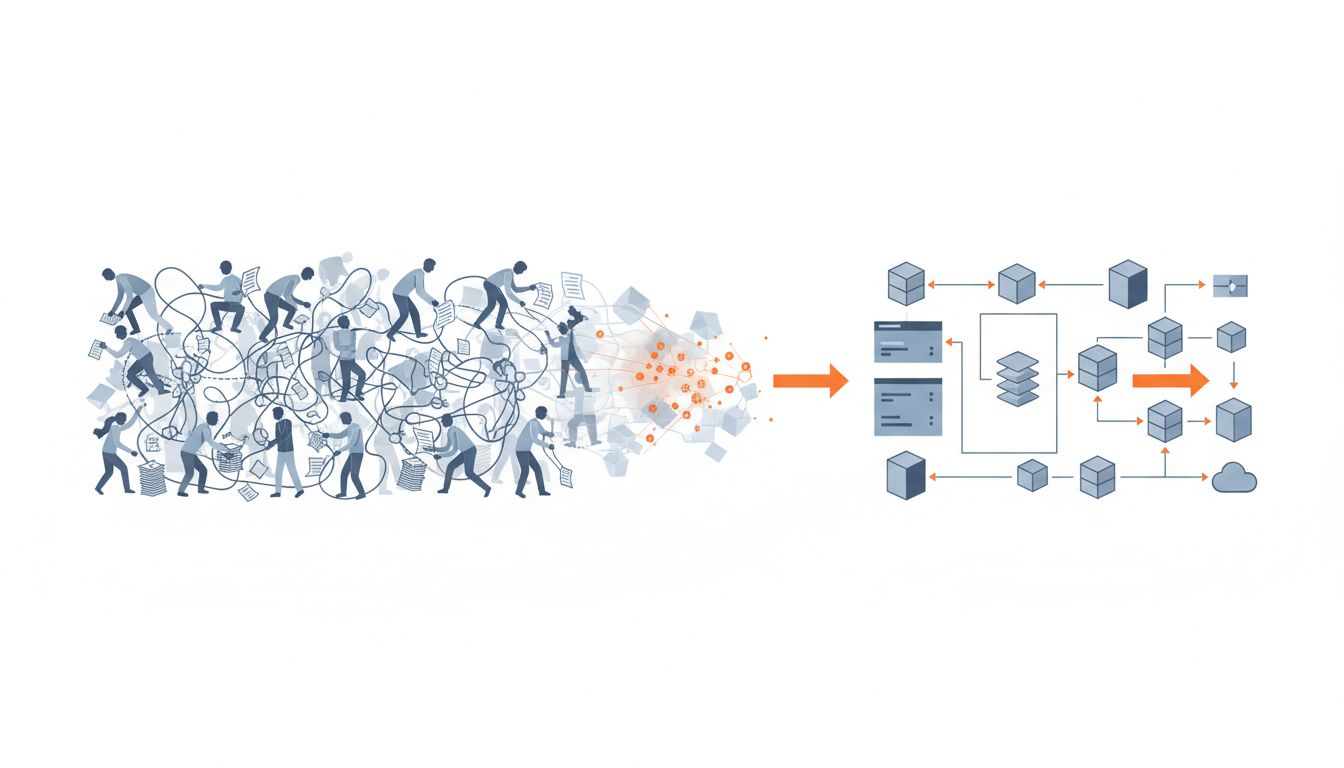

A founder I knew raised a $4 million seed round on the strength of a waitlist and a compelling deck. Within six months, he had thirty employees, a VP of Sales, a VP of Marketing, a head of Customer Success, and a product that maybe fifty people were actually using in any meaningful way. A year later, the company was dead. Not because the idea was bad. The idea was fine. It died because he built the machine before he knew what the machine was supposed to make.
This pattern is not rare. It is, arguably, the dominant failure mode in venture-backed startups, and it gets less attention than it deserves because it looks like ambition. Hiring fast looks like momentum. Opening new offices looks like expansion. Scaling the sales team looks like confidence in the product. From the outside, and sometimes from the inside, premature scaling is nearly indistinguishable from winning.
What Premature Scaling Actually Is
The term gets thrown around loosely, so let’s be precise. Premature scaling is not simply growing too fast. It’s growing a specific function of your business beyond what your current level of product-market fit can support. You can have high revenue growth and still be premature scaling if your unit economics are broken and you’re papering over them with volume. You can have modest headcount and still be premature scaling if you’ve built an enterprise sales team before you understand what you’re selling or who you’re selling it to.
The Startup Genome Project published research years ago that defined premature scaling as one of the top reasons startups fail, finding that companies that scaled prematurely were roughly twice as likely to fail. The specific mechanics they identified matter: premature scalers tended to hire too aggressively in sales and marketing before product-market fit, spend disproportionately on customer acquisition before they had retention figured out, and build out organizational complexity before the business model was validated.
That last point is underappreciated. Organizational complexity has compounding costs. Every VP you hire creates a coordination layer. Every team you spin up creates interfaces between teams. Every process you formalize calcifies a way of doing things that might need to change. When you’re still figuring out what you’re building, that overhead isn’t neutral. It actively slows you down and makes pivoting expensive in ways that aren’t just financial.
The Funding Trap
Venture capital has a complicated relationship with this problem because it both causes it and sometimes masks it. The logic of VC encourages founders to deploy capital aggressively, because the model rewards outlier returns and outlier returns usually require fast growth. A founder who sits on their seed round for two years validating carefully is not the founder most VCs are optimizing for.
So founders get the money and feel pressure, explicit or ambient, to show they’re using it. Headcount becomes a proxy for progress. The pitch for the next round often centers on how much you’ve built out the team and organization. This creates an incentive to scale the org chart even when the product isn’t ready to support it.
The cruel irony is that the capital meant to help you survive often becomes the mechanism of your death. You spend it building infrastructure for a business that doesn’t exist yet, and then you run out before the business materializes. Burn rate is actually the wrong number to watch, but the more foundational issue is that most founders are burning on the wrong things.
What You Need Before You Scale
There’s a test worth applying before any significant scaling decision: can you describe your best customer in a sentence, and can you reliably find more of them? If you can’t answer both parts clearly, you’re not ready to scale sales. Full stop.
Product-market fit is famously hard to define precisely, but the functional version is this: a meaningful percentage of your existing customers would be genuinely disappointed if your product disappeared, and they’re using it in ways that make sense for the problem you’re solving. Sean Ellis’s 40% benchmark (where at least 40% of surveyed users say they’d be “very disappointed” if they lost access to the product) is a reasonable heuristic, though the specific number matters less than the honesty of your assessment.
The wrong customer problem is worth taking seriously here. Many startups mistake activity for fit. They have customers, revenue is growing, and the team is excited, but the customers they have aren’t the customers the product was built for. Scaling into that situation doesn’t fix it. It amplifies it. You end up with a larger version of a misaligned customer base, a support burden that doesn’t reflect your intended product direction, and a harder pivot because now you have obligations to people you’re trying to move away from.

The Engineering Side of the Problem
Premature scaling isn’t just an organizational or go-to-market failure. It happens in the codebase too, and it has the same structure: building for a scale you haven’t earned yet.
I’ve watched engineering teams spend six months building distributed infrastructure for a product with a few hundred active users. The reasoning is always the same: we need to be ready when it takes off. But the readiness cost is paid upfront, in engineering time that could have been spent making the product better for the users you actually have. And the distributed infrastructure you built for a hypothetical future often turns out to be wrong for the actual future, because you didn’t know what the load patterns would look like.
This is a version of the same trap. You’re investing in scale before the thing you’re scaling is proven. The more unglamorous reality is that doing things that don’t scale, at the right moment, is a feature rather than a bug. It keeps you close to the problem. It forces you to understand each customer relationship in detail. That understanding is what eventually lets you build the right scaled version.
How to Actually Do This Differently
The practical answer requires being honest about what phase you’re in. There are roughly three phases: finding the thing, proving the thing, and scaling the thing. Most scaling decisions make sense in phase three and are destructive in phase one or two.
In phase one, your job is to learn as fast as possible. Almost everything that looks like scaling is a distraction. Hiring sales people before you’ve personally sold the product is almost always premature. Building a customer success team before you understand why customers succeed or fail is premature. Formalizing processes that exist to teach new employees is premature if you don’t know yet what the right process is.
In phase two, your job is to validate that what you found in phase one is repeatable. Can someone else sell it the way you sold it? Can customers acquire value without you personally holding their hand? Do the unit economics work at small scale in a way that suggests they’ll work at large scale? This is the phase where you should start building the muscle memory for scaling, not the scaled infrastructure itself.
Phase three is when you actually scale, because now you’re making copies of something that works rather than investing in something that might work.
The discipline required to stay in the right phase is underrated. There’s enormous social pressure, from investors, from the press, from other founders, to skip to phase three as quickly as possible. Resisting that pressure is genuinely hard, especially when you’re watching competitors raise more money and make more noise. But most of those competitors are building the machine before they know what it’s supposed to make.
The Survivors Have a Common Story
Look at the companies that actually made it through to sustainable scale, not the ones that raised a lot and burned out, but the ones that built something durable. The common thread is almost always a longer-than-expected period of doing things by hand, serving a small number of customers very well, and learning in detail before automating or hiring or expanding.
Stripe famously signed up early users by manually visiting startups and installing the library for them. Airbnb’s founders personally photographed early hosts’ homes. These stories get told as charming founding anecdotes, but they’re actually the strategy. The founders were learning what made the product work before they tried to make the product scale.
The founders who skip that phase, usually because they have money and feel pressure to deploy it, often end up building a large organization that’s optimized to deliver something nobody actually wants, or something that works but not in the way they built the org to support.
What This Means
If you’re pre-product-market fit, almost every scaling decision is premature. Headcount, process, infrastructure, sales teams, marketing spend: all of it should be minimal until you have clear signal that what you’re building is something people genuinely need and will keep paying for.
If you’re post-product-market fit, scale the things that are working and nothing else. Don’t build out functions you think you’ll need. Build out the functions that are currently the bottleneck to delivering more of the thing that’s working.
If you’re not sure which phase you’re in, you’re almost certainly not in phase three. The test is simple: would your best customers be genuinely upset if you disappeared tomorrow, and do you know reliably how to find more of them? Until both answers are yes, the next dollar you spend should be on answering those questions, not on scaling an organization built to answer them at volume.