
The simple version
The company that invents a market spends years and enormous amounts of money teaching customers why the thing should exist. The second company walks in after that work is done and just has to be better.
What the pioneer actually builds
In the late 1990s, a company called Friendster launched and became the first social network to achieve real scale. Tens of millions of users. The founders had, with genuine effort and real money, convinced a large portion of the internet that connecting with friends through a website was worth doing. Then the site buckled under its own load, the experience degraded, and by the time the engineers had caught up, MySpace had arrived with a working product targeting the same now-educated audience.
MySpace didn’t have to argue for the concept of social networking. Friendster had already done that. MySpace just had to function. And for a few years, it dominated.
Then Facebook showed up.
This is the pattern, not the exception. The pioneer shoulders what economists call the cost of market creation: advertising that explains a new behavior, salespeople who have to reframe how customers think about their problems, early adopters who are willing to tolerate a rough product because nothing else exists. These costs are real and they are enormous.
The pioneer’s curse
There’s a specific trap that first movers fall into, and it’s not just about money. It’s about learning.
When you build a product before the market exists, you are guessing. You guess who the customer is, what problem they actually have, what they’re willing to pay. Some of those guesses are right. Many aren’t. But here’s the problem: you build an entire organization, culture, and codebase around your initial guesses. Every subsequent learning has to fight against what you already built.
The second company gets to study you. They watch which customers stay, which ones churn, what features get used, what gets ignored. They read your one-star reviews. They talk to the customers you lost. They build for the market that actually exists, not the one you imagined.
This is sometimes called the “fast follower” advantage, but that framing understates what’s happening. The second company isn’t just moving faster. They’re operating with better information.

Search is the cleanest example in tech history. Before Google, there was AltaVista, Excite, Lycos, and a handful of others. Those companies proved that people would use search engines constantly, developed the business model of selling ads against search results, and trained hundreds of millions of users to type their questions into a box. Google launched in 1998, years after the market existed, and applied a better algorithm to a proven product category. The infrastructure, the habits, the advertiser relationships — all of that groundwork had been laid. Google just had to be more accurate.
Why this isn’t just survivorship bias
When you push back on this idea, the obvious objection is that you’re only remembering the second companies that won. For every Google there’s a second-mover who also failed. That’s true. Following someone into a market is not a guarantee of anything.
But the economics still favor the follower in a specific and measurable way: customer acquisition cost. When a market is new, getting someone to try your product requires convincing them to change their behavior entirely. That is the most expensive kind of selling. When a market is established, you’re convincing someone to switch, which is a much cheaper argument to make. You can compete on price, on features, on service quality. These are arguments customers understand because they’ve already bought the thing.
The pioneer, meanwhile, often has to keep doing expensive market-creation work even after competitors arrive, because their brand becomes synonymous with the category in a way that makes them responsible for explaining it to new customers. Salesforce spent years and a great deal of money explaining what cloud CRM meant. Companies that followed them into the market got to say “it’s like Salesforce but” and skip straight to differentiation.
What the pioneer gets instead
None of this means being first is worthless. First movers get something real: the chance to lock in customers before they have alternatives.
The companies that successfully defend a first-mover position almost always do it through switching costs, not through the advantage of being first per se. Amazon built Prime so that customers would feel the cost of leaving. Salesforce built an ecosystem of integrations so that ripping it out meant ripping out everything connected to it. The early network effects that Facebook built made it structurally harder to leave as more of your social graph arrived.
Without those kinds of structural locks, first-mover advantage tends to erode. The pioneer becomes a history lesson.
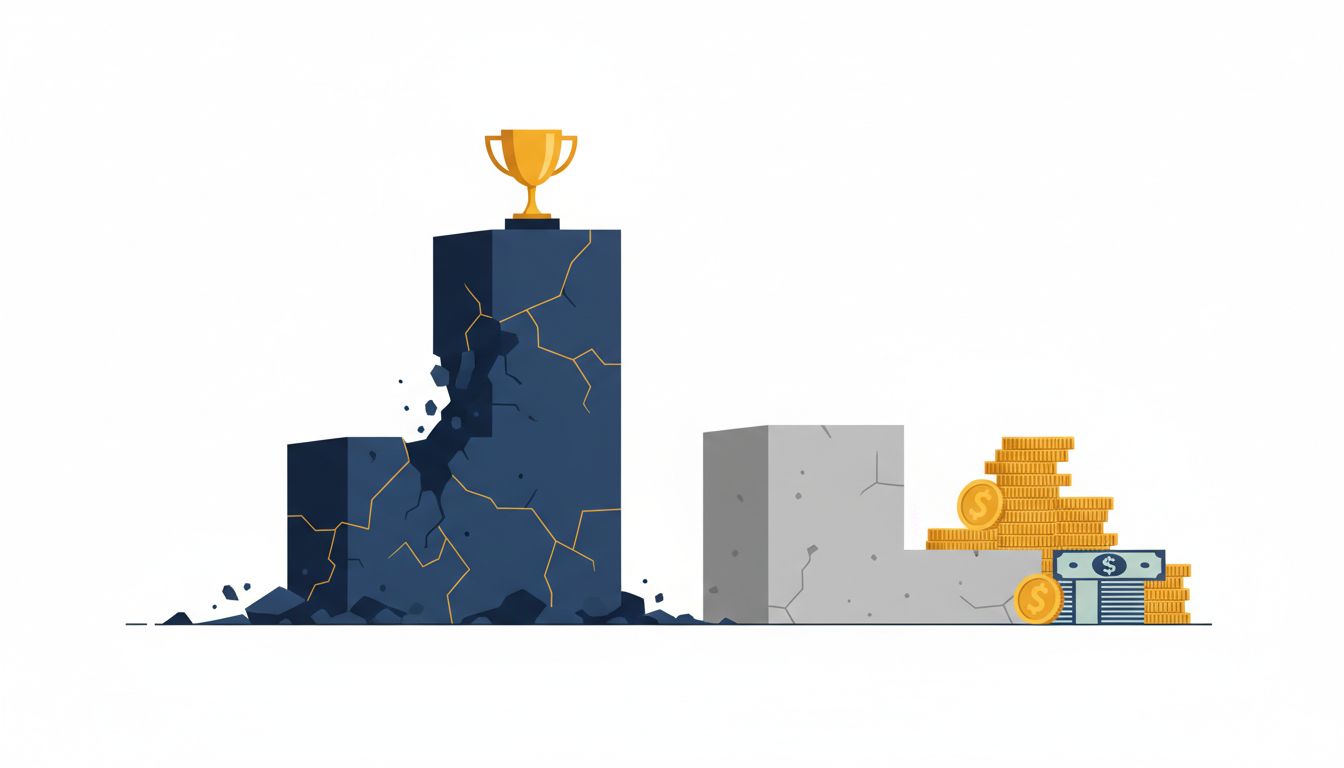
The honest read on being first into a market is that it’s a tremendous opportunity that most companies squander, and a genuine burden that well-capitalized followers are happy to let you carry. You get the glory of the origin story. They get the profit.
If you’re building something new, this shouldn’t make you pessimistic. It should make you precise. Understand exactly which parts of your first-mover position are durable, which customer relationships create real switching costs, and which advantages you think you have will simply become a roadmap for whoever arrives second. Because they are watching.