
In 1997, Steve Jobs returned to Apple and did what founders do: he killed products, fired people, and bet the company on a handful of ideas. He was right. The iMac saved Apple. The iPod remade it. The iPhone defined a decade. The mythology writes itself.
But here is the thing nobody talks about at startup conferences. In 2000, Jobs hired Tim Cook away from Compaq to run operations. Apple at that point was a design studio with a supply chain problem. Cook built a manufacturing and logistics operation so lean and so precisely tuned that it became, arguably, the most effective industrial machine in consumer technology history. When Jobs died in 2011, Cook took the CEO job. Apple’s revenue in fiscal 2011 was roughly $108 billion. By 2023 it had crossed $380 billion.
Jobs invented the products. Cook invented the company that could actually make and sell them at scale. One of those jobs is more celebrated. The other one is more important.
The Setup
This is not a knock on first founders. The person who has the original insight, tolerates the early chaos, and refuses to quit when everyone sensible would, deserves enormous credit. Building something from zero is a specific and rare skill.
But there is a particular mythology in startup culture around the visionary founder, the person who “sees around corners,” the one who gives the TED talk. This mythology creates a blind spot. Companies that survive long enough to matter almost always go through a transition where a second critical figure arrives and does something the founder could not or would not do: build the organization.
First founders are often (not always) optimized for speed and conviction. They are good at ignoring people who tell them no. They are bad at building systems that work without their personal involvement. Those are, frequently, two sides of the same personality.
The second founder is the person who arrives after the initial idea has been validated, recognizes what’s actually working, and constructs the infrastructure around it. They are not a caretaker. They are a builder of a different kind.
What Happened at Apple
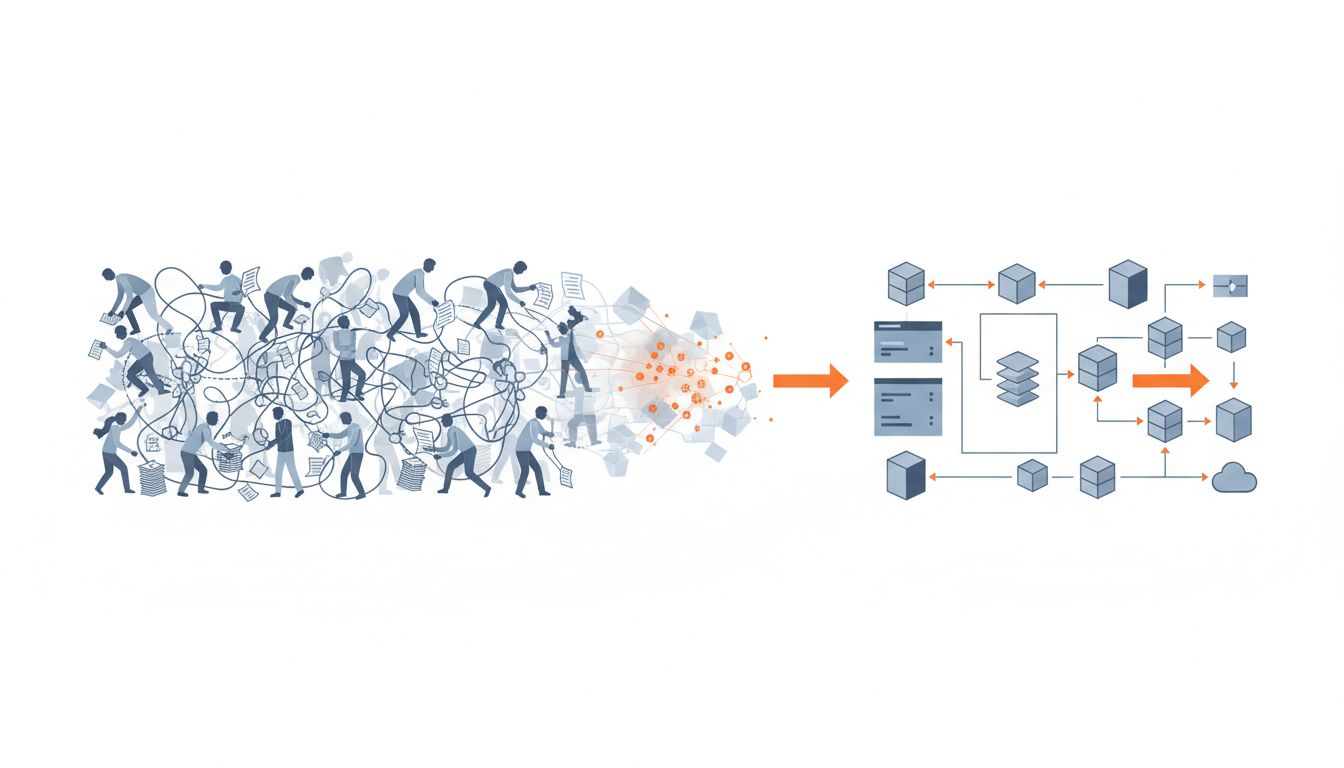
When Cook arrived, Apple’s supply chain was a mess. Jobs had already simplified the product line, which gave Cook something to work with. But the actual manufacturing, inventory management, and logistics were costly and slow. Cook did something that sounded boring and turned out to be transformative: he outsourced manufacturing to partners in Asia, reduced the number of warehouses, and pushed inventory turnover to levels that made Wall Street analysts blink.
Apple’s inventory days fell dramatically under Cook’s management. The company stopped building products speculatively and moved toward a demand-driven model. This is not the kind of thing that ends up in a biography’s exciting chapters. But it is what made the iPhone launch viable. Without the operational scaffolding Cook built, Apple could not have shipped tens of millions of units per product cycle. The product vision and the operational reality had to be the same size, and they were not the same size when Cook showed up.
Cook also built the relationships with suppliers, particularly with Foxconn and TSMC, that gave Apple preferential access to manufacturing capacity and next-generation components. When Apple wanted the best available display or chip, they got it first because of deals Cook had structured. Competitors were often literally waiting in line behind them.
None of this was Jobs. Jobs understood it was necessary and hired someone who could do it. That judgment, arguably, was Jobs’s most important single decision.
Why It Matters Beyond Apple
Apple is the famous example, but the pattern shows up everywhere once you start looking.
Eric Schmidt’s arrival at Google in 2001 is another version of this story. Brin and Page were brilliant and had built something real, but the company needed an adult in the room, as the saying went at the time, for both operational and political reasons. Schmidt provided a structure that let the founders keep doing what they were good at while the business scaled past the point where founder-energy alone could sustain it.
At a smaller scale, you see this at companies that never become famous. A founder builds a product with genuine traction, hits a growth ceiling, and brings in a co-founder or early executive who rebuilds the hiring process, the customer success function, the financial controls. The company doubles. The founder gets the credit. The second person gets a smaller equity stake and a title that doesn’t fit on a conference badge.
This isn’t just a fairness complaint. The misattribution creates practical problems. Your first hire will define culture more than you will, but founders often treat operational hires as interchangeable infrastructure rather than as people who are actively shaping the company’s DNA. If you undervalue what they do, you underpay them, you give them insufficient authority, and eventually they leave or disengage at exactly the moment you need them most.
What We Can Learn
The honest version of this lesson is uncomfortable for founders to hear, because it implies a limit to their own value.
First, recognize the transition. There is a specific inflection point in most companies where the skills that got you to product-market fit are not the skills that will get you to scale. Founders who recognize this early and bring in someone complementary survive it. Founders who don’t often watch their companies plateau or collapse under their own weight. The inability to spot this transition is one of the most consistent patterns in startup failure stories.
Second, give the second founder real authority. The dynamic that kills companies is hiring someone operationally strong, giving them a title, and then undercutting every decision they make because you’re still running the company the way you did when it was five people. Cook was not a figurehead. He had genuine control over operations. Jobs understood that micromanaging someone of Cook’s caliber would just mean Cook would leave.
Third, think about what kind of founder you actually are. This is where most founders refuse to go honestly. Are you genuinely good at building organizations? Or are you good at building products and convincing people the product matters? Those are different things. Being honest about which one you are is not weakness. It’s the precondition for finding someone who complements you.
The startup press covers founding stories. The company-building story is less cinematic, which is why it gets less coverage. But the second company into a market usually wins not because the second idea was better, but because the second company often had better organizational infrastructure behind the idea. The same logic applies inside a single company. The second critical founder, the person who figures out how to make the thing real at scale, is frequently doing harder and less celebrated work than the person who had the original idea.
Jobs saw what Cook could do and got out of his way. Apple became the most valuable company in the world. The lesson is not complicated. It is just difficult to act on.