

A founder I know spent three months writing his company’s values document. He had the words framed and mounted in the office. Then he hired his first engineer, a brilliant guy with a habit of treating everyone around him like they were slightly stupid. Within a year, four subsequent hires had unconsciously adopted the same condescending shorthand. The values on the wall said “respect” and “collaboration.” The culture said something else entirely.
This isn’t a cautionary tale about one bad hire. It’s an illustration of a structural reality that most founders acknowledge and almost none act on: the person you bring in first carries disproportionate cultural weight, probably more than you do.
The founder’s influence is more limited than you think
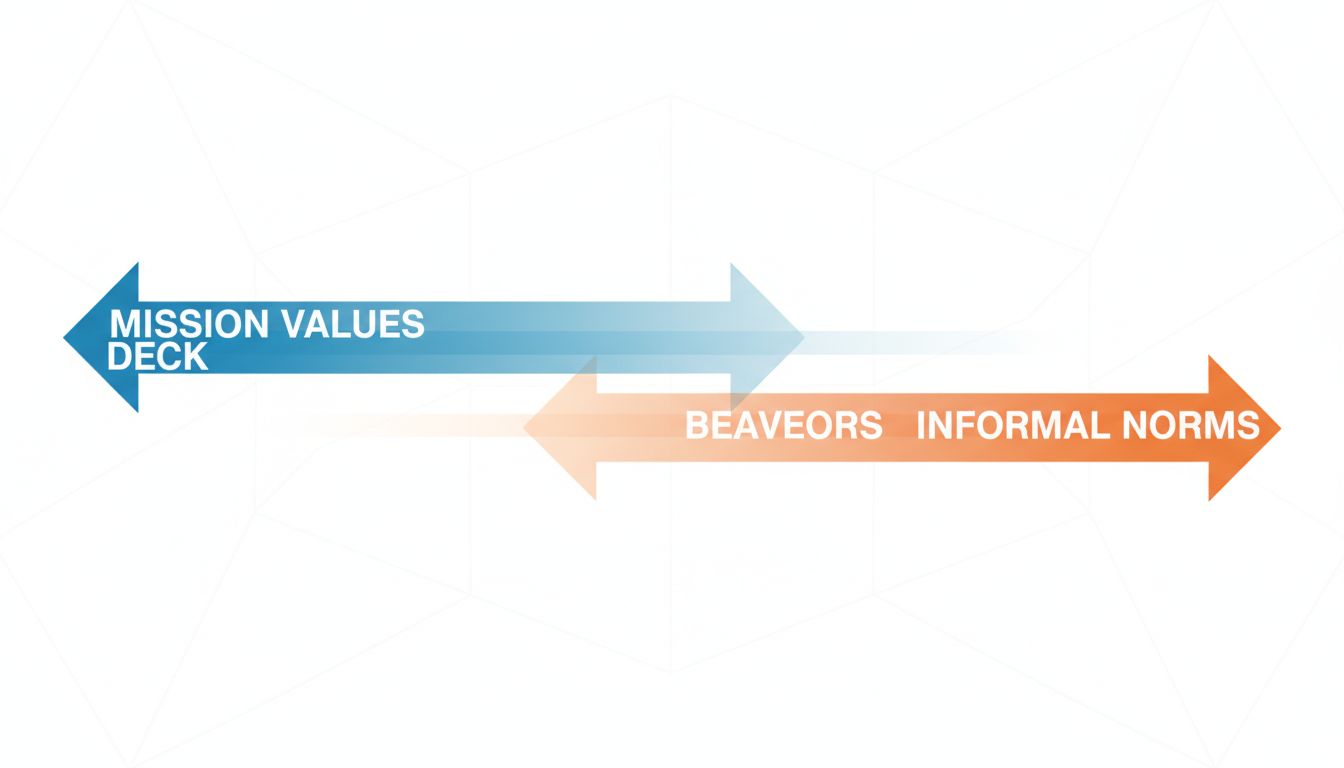
Founders tend to overestimate how much direct shaping they do. You write the mission statement. You make the pitch deck. You tell the founding story. But you’re also stretched thin, context-switching constantly, and often emotionally inaccessible to early employees in ways you don’t realize. The first hire, by contrast, is usually working shoulder-to-shoulder with everyone who comes after them. They onboard the second hire. They define what “good work” looks like through their own example before any formal standards exist. They establish the informal register: how blunt is too blunt, how late is acceptable, whether admitting you don’t know something is respected or punished.
Founders set the stated culture. First hires set the practiced culture. Those two things are often not the same.
Early patterns calcify fast
Organizational behavior research consistently shows that norms established in a group’s early days are sticky in ways that later norms are not. When a company is two or three people, every behavior is visible. Everyone can see whether the first engineer ships messy code and moves on or cleans up after themselves. Everyone can see whether the first salesperson lies to close a deal or holds the line. These aren’t just individual behaviors, they become the template for what’s expected.
By the time you’re at twenty people, the culture you have is largely the culture you’re keeping. Changing it requires explicit, sustained effort, the kind that costs real attention and usually some painful turnover. The window for low-friction culture-setting closes earlier than most founders expect.
You can’t be everywhere, but they are
At ten employees, you might interact directly with every person every day. At twenty, that’s already breaking down. But your first hire is embedded. They know the product as well as you do. They’ve developed working relationships with the whole team. They become a cultural proxy for your company in every room you’re not in, which is most of them.
This is why the first hire’s habits matter more than their skills in many cases. A slightly less technically gifted engineer who communicates clearly, supports colleagues, and does what they say they’ll do will build a healthier culture than a 10x engineer who treats feedback as an attack. You can compensate for skill gaps through tooling and process. You cannot easily compensate for a culture that has learned to normalize bad behavior because the first person they worked closely with normalized it first.
The counterargument
The obvious pushback here is that a strong founder can override a bad first hire. Bring the person in, recognize the problem, let them go before the damage spreads. And this is true in theory. The issue is that most founders are deeply reluctant to fire early hires, partly for emotional reasons (you’ve been through a lot together) and partly for practical ones (they know everything). The organizational knowledge a first hire accumulates in six months is significant. The cost of losing them feels enormous. So founders often accommodate, rationalize, or work around the problem instead of solving it, and all the while, the pattern is spreading.
The stronger version of the counterargument is that some founders really do have such strong cultural gravity that the first hire’s influence is secondary. I’d grant this in rare cases. But if you’re banking on your own personality to override whatever culture your first hire creates, you’re betting on something that’s hard to maintain as you grow and step back from the day-to-day.
What to actually do about it
Hire slowly for the first two or three roles. More slowly than feels comfortable. The urgency to fill a seat is real, but the cost of filling it wrong is much higher than the cost of waiting. When you’re evaluating candidates, spend at least as much time on how they treat other people as on their credentials. Talk to people they’ve worked with, not just people they’ve listed as references.
And be honest with yourself about what kind of culture you’re actually modeling, not what the values doc says, but what your actual behavior teaches. The first hire will amplify whatever they observe. If they observe a founder who is honest about uncertainty, who treats service workers well, who gives credit generously, that’s what gets amplified. The same is true in the other direction.
Your culture document is almost certainly fine. It doesn’t matter as much as you think. The person you hire first is something you actually have control over, if you treat that decision with the weight it deserves.