The simple version
Every startup attracts customers before it understands who its customers should be. The dangerous part isn’t attracting the wrong ones. It’s listening to them.
The trap has a name
Imagine you’ve built something. It works, kind of. A handful of people are using it, and they have opinions. Loud ones. They want features, they want changes, they want you to go in a direction that feels almost right but slightly off. You’re grateful for the attention. You comply.
This is how promising startups quietly ruin themselves.
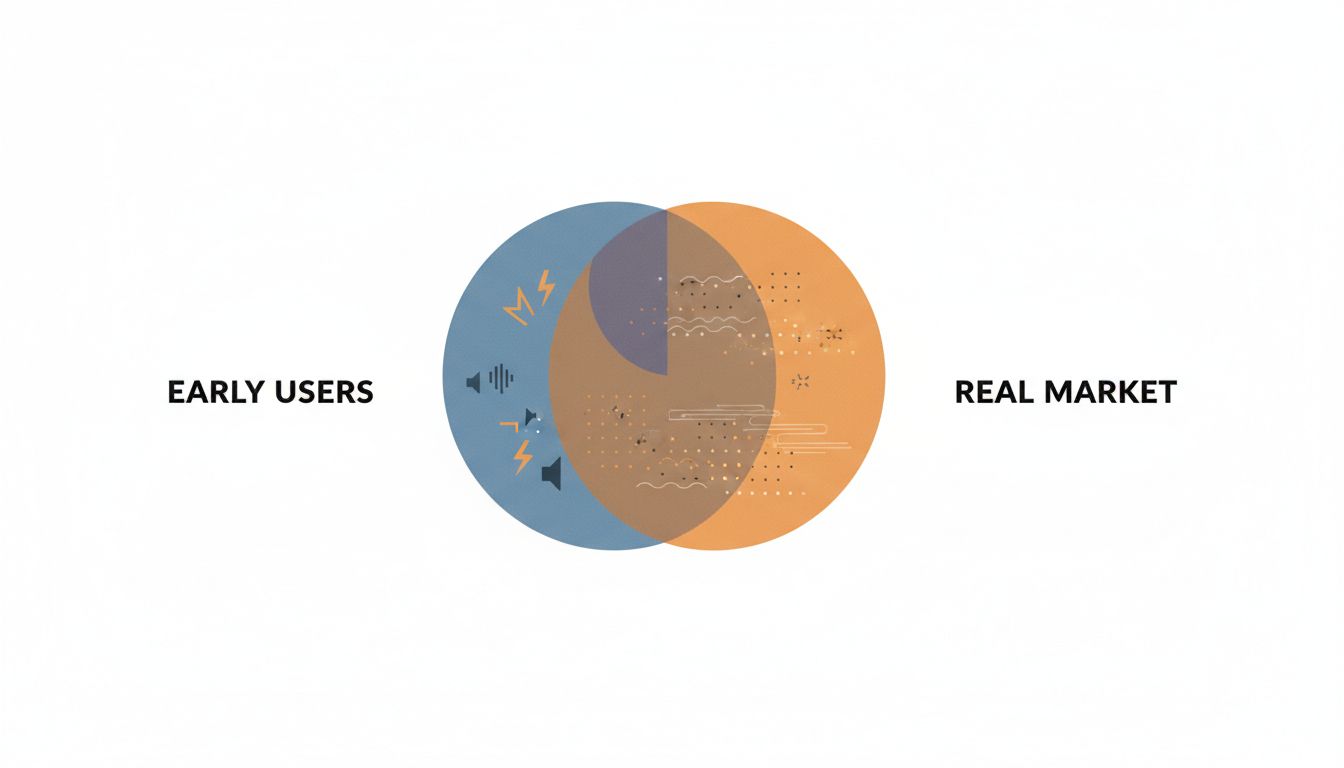
The concept has been called “earlyvangelists” gone wrong, or the “false positive customer,” but the mechanics are always the same. You find people willing to pay (or engage, or use) before you’ve found people who genuinely need what you’ve built. Those early users shape your roadmap, your positioning, your team’s intuition about the product. And when your real market finally shows up, you’ve already become something slightly wrong for them.
Three companies came within reach of this trap and barely got out.
Slack was a video game company
This one gets told often, but usually with the wrong emphasis. Slack didn’t start as a messaging app. It started as Glitch, an online multiplayer game that Tiny Speck had spent years and millions of dollars building. The game launched in 2011 and shut down a year later. Not enough players. The market didn’t want it.
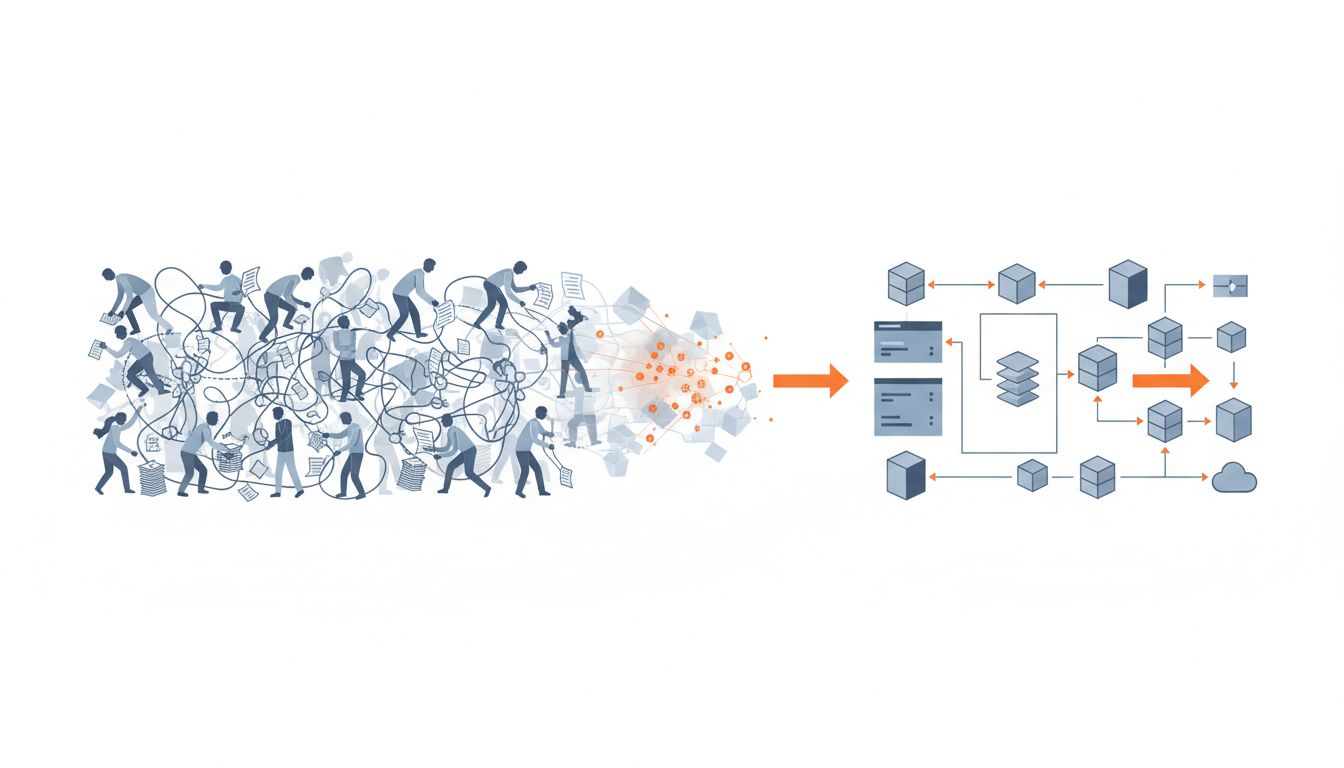
But while making the game, the team had built an internal communication tool for themselves. When Glitch died, they looked at what they had left, and that tool was the most useful thing in the wreckage. Stewart Butterfield and the team spent several months rebuilding it into what became Slack, which launched in 2013.
Here’s the part worth sitting with: Tiny Speck spent years serving the wrong customer. Glitch players weren’t the market. The market turned out to be software teams who needed something better than email. The entire game was, in retrospect, an expensive research project that accidentally produced the right answer to a different question.
If Glitch had been moderately successful, a zombie product limping along on a small dedicated audience, Butterfield might never have been forced to look at what else the team had built. Moderate failure saved them from total failure.

Spotify almost became a label’s distribution tool
In Spotify’s early days, Daniel Ek spent enormous energy negotiating with the major labels. That was necessary, obviously. You can’t build a music streaming service without licenses. But the negotiation shaped more than the legal agreements. It shaped the product’s early identity.
For a window in the company’s history, Spotify’s real customer wasn’t the listener. It was the label. The labels wanted DRM, limited free tiers, geographic restrictions, and all manner of friction designed to protect CD sales and iTunes revenue. Spotify built much of that. The product in its early licensed form was a compromise document as much as a user experience.
What Ek understood, and what the labels did not, was that the real market was the person who would otherwise pirate music. Not the casual buyer. The committed listener who already had thousands of songs and would absolutely go back to BitTorrent if you made the legal option annoying enough. Serving the labels meant building a product that was worse than the illegal alternative. The tension was real and it lasted years.
Spotify’s escape was scaling fast enough that the labels needed them more than Spotify needed the labels. That’s a hard-won position, and it required never fully becoming a label product even when the labels were functionally calling the shots.
Airbnb’s early guests were conference attendees
Brian Chesky and Joe Gebbia started Airbnb by literally renting out air mattresses in their San Francisco apartment during a design conference in 2007, when hotel rooms were sold out. The first guests were conference attendees. The first listings were around major events.
This is charming origin-story material. It’s also a description of a very different business than what Airbnb became. A conference-driven lodging platform serves a specific, episodic demand. People who need a cheap floor during SXSW are not the same people who want to stay in a Parisian apartment for a week because hotels feel sterile.
The pivot happened gradually and then suddenly. Y Combinator pushed the team to go door-to-door in New York, talking to actual hosts and guests. What they found was that the demand they were seeing wasn’t about events or cheap overflow. People wanted to travel like locals. Hosts wanted meaningful extra income, not a one-time convention windfall.
Airbnb’s design conference customers weren’t wrong, exactly. They just pointed toward a small market. The real market was hiding one layer underneath, visible only once the team stopped assuming they understood it.
What these three cases actually share
None of these are stories about pivoting because the original idea failed. They’re stories about the first customers providing a misleading signal. Glitch players said the game was good but sparse. Conference attendees said the air mattress idea was clever but niche. Labels said streaming could work if it was controlled enough. All of those signals were technically true and strategically wrong.
The pattern is that early customers reveal demand, but they don’t reveal the shape of the market. They tell you that something works somewhere. They rarely tell you where that somewhere actually is.
Founders who survive this stage tend to share one habit. They treat early customers as data points rather than stakeholders. They’re grateful for every user, but they stay relentlessly curious about who isn’t showing up yet, and why. As the team at The Startups With the Clearest Vision Pivot the Most points out, the willingness to change direction isn’t a sign of confusion. It’s often the clearest sign that a team understands what they’re actually building.
The dangerous founders are the ones who let the first customers become the permanent customers, building features, writing copy, and making hires to serve people who were always just passing through.
The uncomfortable practical advice
If you’re early-stage, here’s the thing no one wants to say directly: your most enthusiastic current users might be your biggest liability.
Not because enthusiasm is bad. Because enthusiasm from the wrong person pulls you deeper into a market that doesn’t scale. Your Loudest Early Adopter Almost Killed Your Startup covers this dynamic specifically. The person filing the most feature requests, attending your webinars, evangelizing your product to their network, might be a member of a tiny segment that shares nothing with your eventual real market.
This isn’t an argument for ignoring users. It’s an argument for asking harder questions about who they are and why they’re here, before their preferences get baked into your product’s DNA.
Slack, Spotify, and Airbnb each found their real market. But each of them spent meaningful time, money, and credibility serving the wrong one first. The difference between their stories and the stories of companies that didn’t make it is not that they avoided the wrong customer. It’s that they noticed before the wrong customer became the only customer.