
The simple version
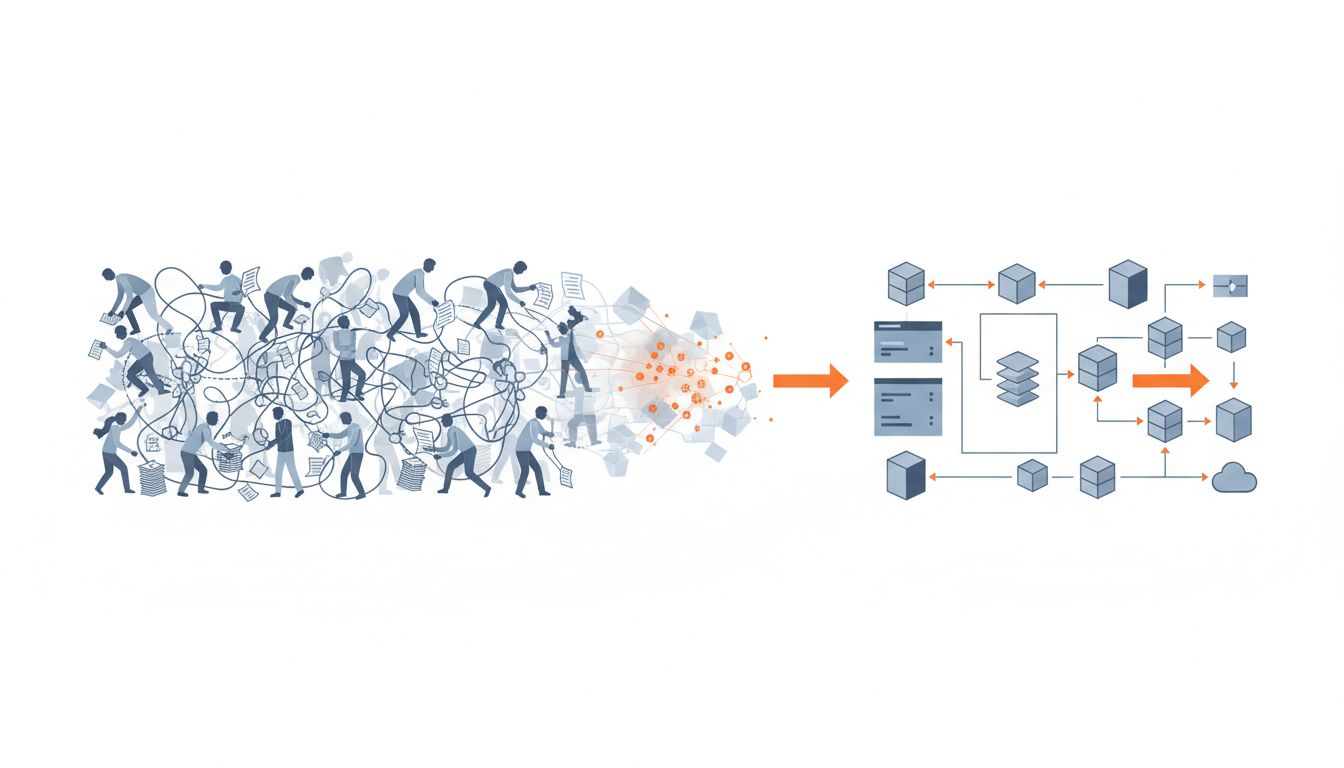
Your first customers are a skewed sample of the market, and if you build what they ask for, you’ll end up with a product that serves them perfectly and almost no one else.
Why this happens
Picture a founder six months into a B2B SaaS product. They have eight paying customers. Six of them are asking for the same feature: a deeply custom export format that maps to a legacy reporting tool most of their industry stopped using three years ago. The customers are real, the revenue is real, and the request feels like signal. So the team builds it.
Eighteen months later, the sales team can’t close new accounts because the product has calcified around a workflow that prospects don’t recognize. The eight original customers are happy. Everyone else is confused.
This is not a hypothetical. It happens constantly, and it happens for a reason that’s almost impossible to avoid in the early stages: the people willing to pay for an unfinished product are not typical customers. They’re outliers.
Early adopters are usually more technically sophisticated, more tolerant of friction, more willing to adapt their workflows to fit your tool, and more opinionated about the specific problem you’re solving. These are the qualities that make them valuable early on. They’re also the qualities that make their feedback systematically misleading.
The selection bias nobody talks about
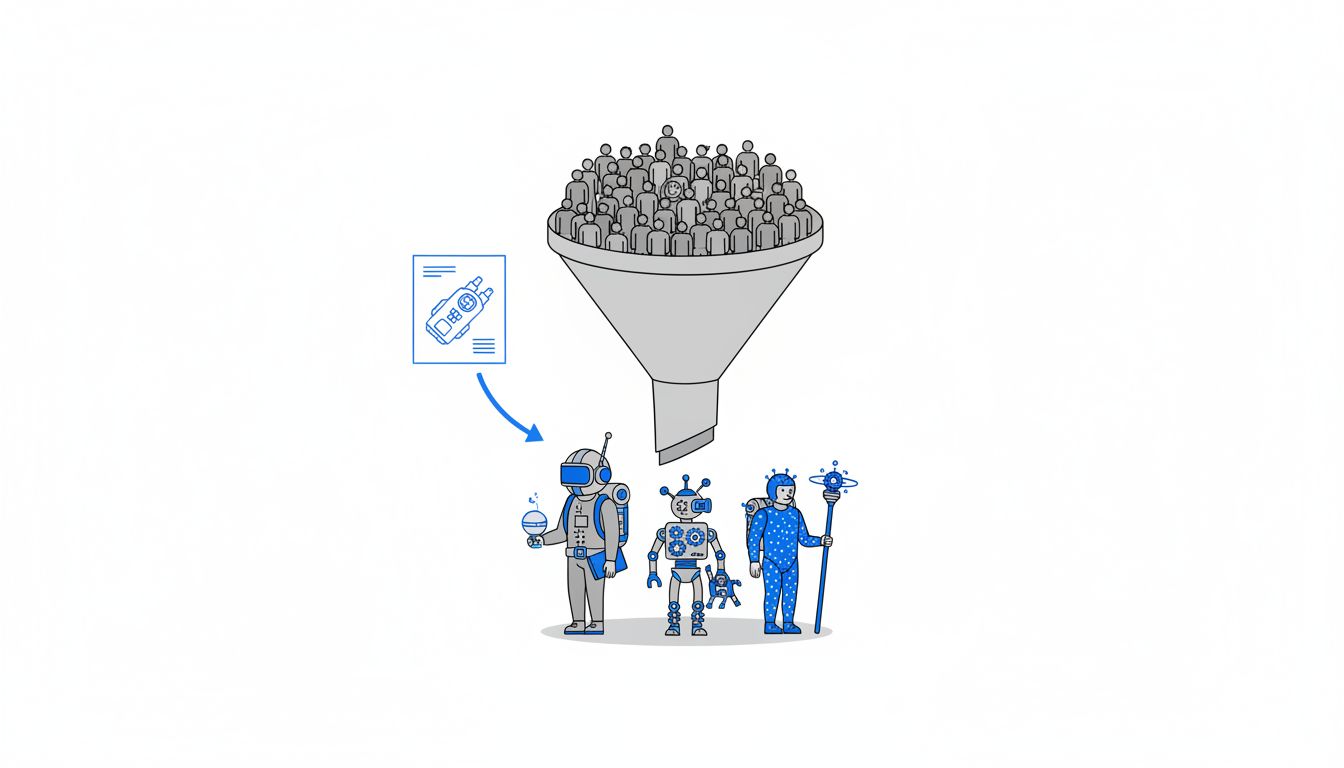
When you land your first ten customers, you’re not drawing randomly from the market. You’re drawing from a very specific pool: people who found you (probably through a personal connection or a niche community), who cared enough about this problem to try an unproven product, and who had enough patience to work through the rough edges.
That’s a biased sample, and building to their requests is like a restaurant redesigning its menu entirely based on feedback from the customers who showed up during a soft launch that was only announced in a single Reddit thread.
The customers you don’t have yet, the ones who represent the real market size you’re chasing, have different habits, different constraints, and different tolerance for complexity. They didn’t find you. You need to go find them, and you need to understand their needs before your product has fully taken the shape of someone else’s.
This is compounded by something psychologically uncomfortable: early customers have leverage. They’re keeping you alive. When they ask for something, it feels dangerous to say no. The founder who pushes back on a customer request when they have eight customers and three months of runway is a rare and specific kind of person.
The features that look like validation
Here’s where it gets subtle. Not all early-customer requests are traps. Some of them point at real, generalizable pain. The hard part is learning to tell the difference in real time.
A useful question: is this customer asking for a solution, or describing a problem? “We need a CSV export with these seventeen specific columns” is a solution request. “We spend two hours a week manually reconciling data between your tool and our finance system” is a problem description. The second one is worth building around. The first one might be worth building, but you should find out whether the underlying problem exists for other customers before you spec it out.
Another test: when you ask this customer why they need the thing they’re requesting, how many layers of company-specific context do you have to peel back before you hit something universal? If by the third “why” you’re deep into their org structure or legacy vendor relationships, that’s a red flag.
The best early customers aren’t the ones who give you the most feature requests. They’re the ones who help you understand the problem at a level of abstraction that makes the solution generalizable. These customers exist, but they’re less common than the ones who just want their specific workflow automated.
How to keep the signal and cut the noise
The first thing is to treat your early customer cohort as a data set, not an oracle. They’re telling you something real about a version of the problem. Your job is to figure out how representative that version actually is.
That means getting out of your early customer base faster than feels comfortable. Before you build any significant feature, talk to people who are not yet customers: people who looked at your product and didn’t buy, people in adjacent roles at similar companies, people who are solving the problem with a spreadsheet or a competitor. Their perspective will often feel less urgent because they’re not paying you, but it’s frequently more reliable.
Second, track which requests come from customers who look like your target market versus customers who were just enthusiastic enough to get in early. They might be the same people. Often they’re not. If you’re building a product for mid-market operations teams and your most vocal early customer is a solo founder who hacked together an unusual workflow, their requests deserve a different weight.
Third, and this is uncomfortable: be willing to disappoint early customers in service of the broader product. This doesn’t mean ignoring them. It means being honest when a request is specific to their situation rather than representative of the market. The best early customers will respect this. Some won’t, and losing them might be the right call.
What this actually looks like in practice
One pattern that works: separate your feedback loops. Keep a close, responsive relationship with early customers for understanding problems. But run a separate, broader research process for deciding what to build. The early customers inform the problem space. The market research informs the solution.
Another thing worth doing: look at what your early customers are not complaining about. Early adopters are more likely to work around friction silently. The things that don’t bother them might be the exact things that will block everyone else.
The founders who navigate this well tend to share one trait: they stay genuinely curious about people who aren’t using their product. They treat the non-customer as just as interesting as the paying customer. That’s a harder habit to build than it sounds, because the non-customer doesn’t email you, doesn’t show up in your support queue, and doesn’t validate your belief that you’re building something people want.
But the non-customer is the market. And the market is the only thing that scales.