
The Scheduling Fallacy That Productivity Culture Refuses to Kill
Open any calendar app and you’ll find the same advice baked into its design: block time for everything, color-code your commitments, fill the white space. Productivity influencers have turned this into a near-religious practice. The implicit logic is appealing, especially to developers and engineers who think in systems. If you schedule focus time the same way you schedule meetings, you protect it. You’ve allocated the resource. The work will happen.
Except it mostly doesn’t. Not the hard work, anyway.
The problem isn’t with structure itself. It’s with what happens at the neurological level when you repeatedly chop your day into short segments, and how dramatically that conflicts with what hard cognitive work actually requires. Treating deep work like a calendar event doesn’t protect it. It just makes you feel better about not doing it.
What Deep Work Actually Requires to Get Started
Deep work, in the sense Cal Newport describes it in his 2016 book, isn’t just “focused work.” It’s the kind of cognitively demanding work that produces novel output: debugging a gnarly concurrency issue, designing an API that’s genuinely easy to use, writing code that handles edge cases you had to reason your way into seeing. The defining characteristic is that you can’t do it in a fragmented way and produce the same result. The state itself is the precondition for the output.
Getting into that state takes time. Studies on attention and cognitive load consistently show that reaching full concentration on a complex problem takes roughly 15 to 20 minutes of uninterrupted engagement, and that’s assuming you’re starting from a mentally clear baseline. If you were just in a meeting, or checking Slack, or doing anything else that demanded a different kind of attention, you’re carrying residual cognitive load from that context. Sophie Leroy at the University of Washington has a term for this: attention residue. Your mind hasn’t fully disengaged from the previous task, so part of your processing budget is still allocated elsewhere.
Now imagine you’ve blocked 9:00 to 10:00 for “deep work on the authentication refactor.” You spent 8:45 to 9:00 clearing your email. You open your editor at 9:01. Realistically, you might hit full concentration by 9:20 at the earliest, and you’ll need to start winding down mentally by 9:50 if you have something at 10:00. You bought yourself about 30 minutes of actual deep work, packaged in a one-hour block. And that’s a good day.
The Context-Switching Tax Is Compounding
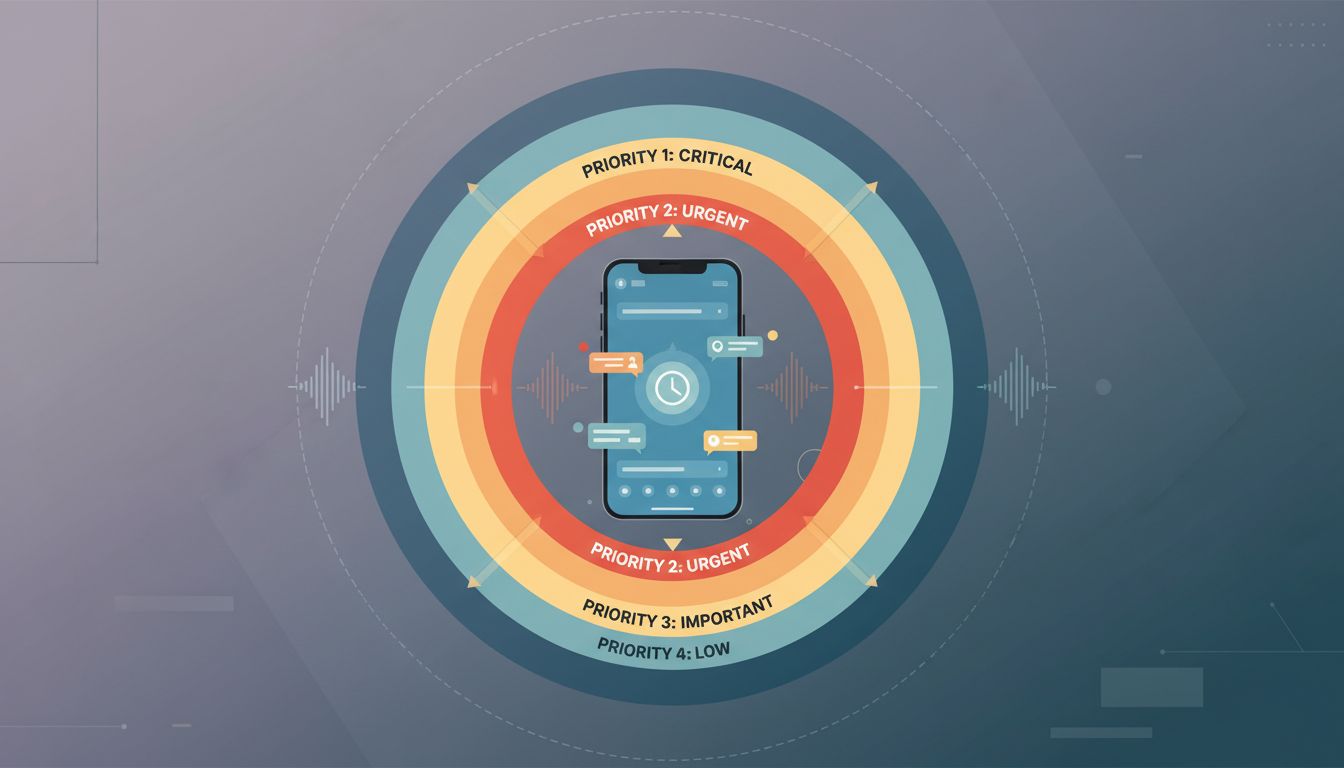
The attention residue problem compounds when your day has many transitions, not just a few. Each switch costs you re-entry time on the next task. More perniciously, the anticipation of an upcoming context switch degrades the quality of the work you’re doing right now.
This is observable in your own behavior if you pay attention. When you know you have a meeting in 45 minutes, you don’t fully commit to a hard problem. You work at a shallower depth because some background process is tracking the clock. You choose a subtask that feels completable in the available window. You avoid pulling on threads that might take you somewhere unpredictable. The cognitive equivalent of trying to fall into a deep sleep knowing you have to wake up in an hour.
The irony is that this behavior is rational given the constraints you’ve created. You’re not being weak-willed; you’re correctly modeling the situation. The problem is that the situation is wrong.

Why 25-Minute Intervals Are Especially Counterproductive for Technical Work
The Pomodoro Technique, which prescribes 25 minutes of work followed by a 5-minute break, is probably the most widely recommended time-management framework in software development circles. And it’s genuinely useful for a narrow category of work: repetitive tasks, administrative processing, anything where attention fatigue is the primary constraint rather than depth of concentration.
For work that requires you to hold a complex model in your head, 25 minutes is actively harmful. Think about what it means to be debugging a race condition in a multi-threaded system, or working through the implications of a schema change across six related services. You’re building up a working model of the system’s state space, tracking multiple variables, forming hypotheses. That model lives in your working memory. It’s fragile. It takes time to construct. When you break after 25 minutes, you don’t pause the model. You lose most of it.
When you come back, you spend the first 10 minutes of your next interval reconstructing what you had. You never get back to the depth you’d reached if you’d simply kept going. The Pomodoro timer, in this context, is a scheduled memory flush.
This is not a theoretical concern. Experienced developers already know this intuitively, which is why so many of them do their best work late at night or early in the morning, when the calendar is empty and nobody expects them to respond to anything. The absence of structure isn’t the advantage. The absence of interruption is.
The Measurement Problem That Makes Fragmented Days Look Fine
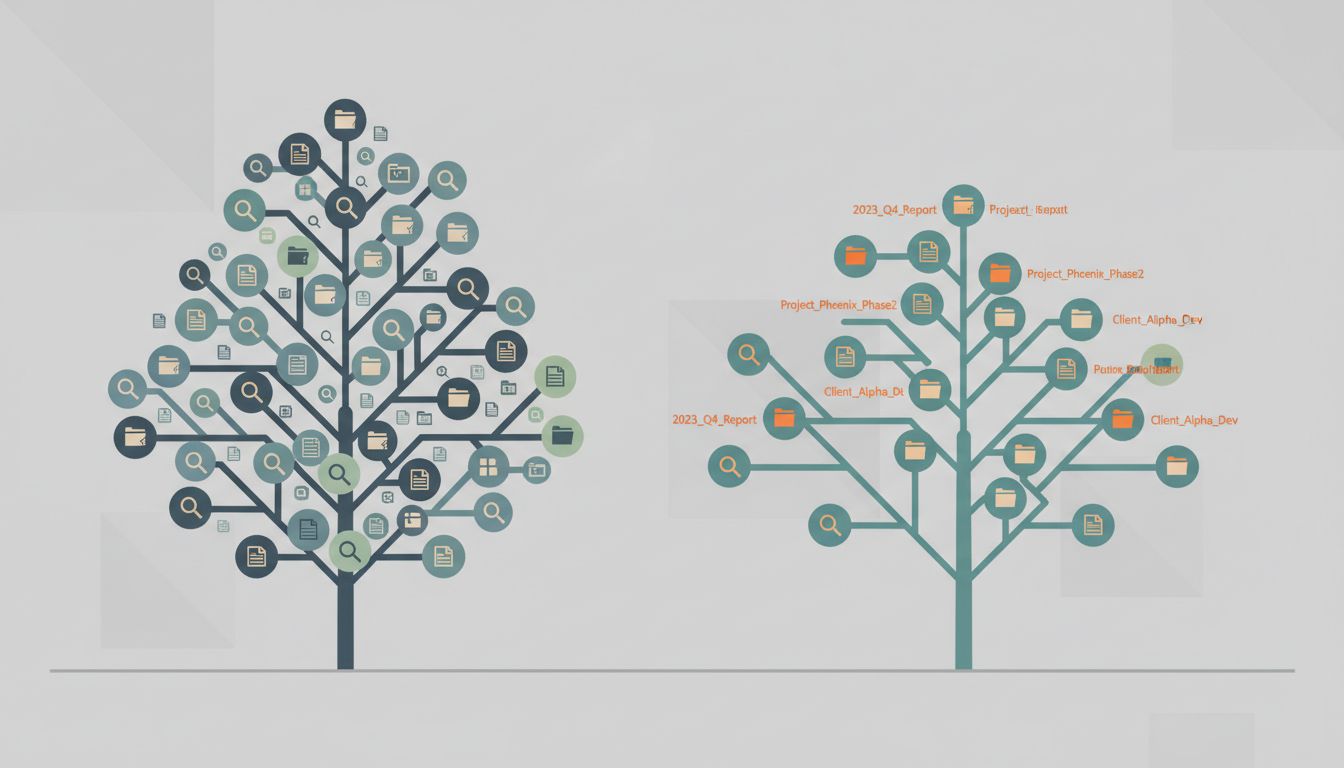
Part of why heavy time-blocking persists is that it’s hard to measure the cost. If you have a day with eight distinct one-hour blocks and you check off tasks in most of them, that looks productive by any metric a manager or productivity app would track. Tickets closed, commits made, emails answered. The counterfactual, what you might have produced with four uninterrupted hours on your hardest problem, doesn’t show up anywhere.
This is the same class of problem as benchmark performance versus real-world performance. You can measure what’s easy to measure and optimize for that, while the thing that actually matters degrades invisibly. The gap between what looks good on paper and what’s actually happening is real in software performance and it’s equally real in how people spend their cognitive capacity.
The tasks that fill fragmented time blocks tend to be the ones that feel productive without being strategically important. Responding to messages, reviewing PRs (at a surface level), writing up meeting notes. These things need to happen, but they’re not the work that moves projects forward in a meaningful way. They’re the work that expands to fill available space.
What a Schedule That Actually Supports Deep Work Looks Like
Newport’s recommendation, which aligns with what researchers like Anders Ericsson found studying expert performance, is to work in blocks of at least 90 minutes, ideally longer, with hard stops and genuine recovery between them rather than shallow filler. Two to four hours of actual deep work per day is more productive than eight hours of fragmented shallow work, and it’s cognitively sustainable in a way that perpetual context-switching is not.
The practical shape of this is less about adding blocks and more about protecting long uninterrupted stretches. For a developer, that might mean: all meetings on Tuesday and Thursday afternoons, no Slack notifications before noon, a hard rule that code review happens at a designated time rather than reactively throughout the day. The goal is to create an environment where you can legitimately forget about everything else for two or three hours at a stretch.
This requires saying no to things that fragment your schedule. It requires being honest with your team about when you’re available versus when you’re working. It almost certainly requires some negotiation with your calendar and organizational culture, neither of which will naturally accommodate it. Recurring meetings are often the biggest structural obstacle, not because they’re always wasteful but because they’re distributed throughout the day in ways that prevent sustained focus blocks from forming.
The Scheduling Instinct You Have to Override
There’s a specific instinct worth naming here: the urge to schedule deep work in whatever gaps exist after meetings, rather than scheduling meetings around protected focus time. Most people do this because meetings feel fixed and focus time feels flexible. That gets the priority exactly backwards.
Meetings are coordination overhead. Important, sometimes necessary, but overhead. Deep work is where the actual value gets created. If you schedule them in the wrong order, you end up with whatever leftover time and attention meetings didn’t consume. That’s not a focus block. That’s cleanup time.
The developers who consistently produce high-quality, architecturally sound work over long periods are almost universally people who have arranged their schedules to protect long stretches of uninterrupted time. Not because they’re disciplined in some heroic sense, but because they understand that the kind of thinking their work requires simply cannot happen in a fragmented day. The calendar reflects that understanding. The work reflects the calendar.
What This Means
Time-blocking as commonly practiced creates an illusion of protection while actually guaranteeing fragmentation. Each block boundary is a context switch, and every context switch incurs re-entry cost and attention residue on the next task. For work that requires building and holding complex mental models, these costs are not minor. They prevent you from reaching the depth where hard problems get solved.
The right response isn’t to abandon scheduling. It’s to invert the scheduling priority: protect long uninterrupted stretches first, fit everything else around them. Two three-hour blocks of genuine deep work will produce more than six one-hour “focus blocks” sandwiched between meetings, every time. The uncomfortable implication is that getting better at this requires making your calendar look less full, not more organized.