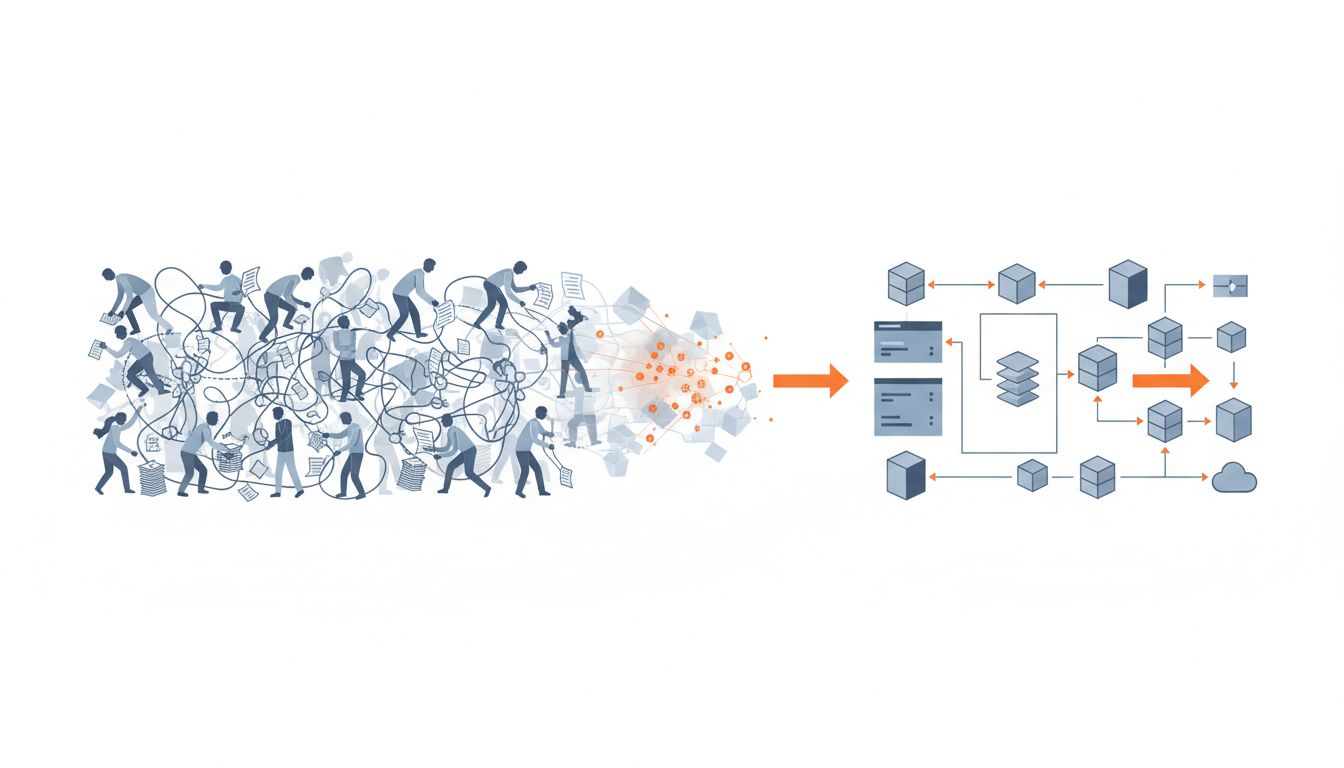

A founder I know spent two years building a data pipeline tool almost entirely around one customer’s feedback. That customer accounted for nearly 60% of revenue, sent detailed product requests, and evangelized the product internally. Then the customer’s engineering team shipped their own version in-house. The startup didn’t die immediately, but it never recovered its footing. The worst part? The warning signs were obvious in retrospect.
This scenario is more common than anyone in the startup world wants to admit, and the standard advice, “diversify your customer base,” is correct but insufficient. When a best customer turns competitor, most founders face a deeper problem: they built the product for one audience and that audience just graduated.
Your best customer was training your future competitor
The moment you give a sophisticated customer deep access to your product, your roadmap, and your unit economics, you are running an accelerated education program. This is not a metaphor. When Salesforce built out its platform, the partners who integrated most deeply were also the ones best positioned to understand where Salesforce’s margins came from and where the product was thin. Some of them eventually competed directly.
The same dynamic plays out at every scale. A SaaS startup signs an enterprise customer who negotiates custom features, sits in on quarterly business reviews, and slowly reverse-engineers your cost structure through pricing conversations. By the time they decide to build internally, they have a year’s worth of your product thinking for free.
This is not a betrayal. It is a rational outcome of deep customer relationships. The mistake is treating deep engagement as pure upside.
Dependence on one customer is a structural problem, not just a revenue risk
Founders often frame customer concentration as a revenue risk, a number to manage for investors. That framing is too narrow. When a dominant customer accounts for the majority of your product decisions, you are no longer building a product. You are running a dedicated development shop with one client.
The consequences extend beyond that customer leaving. Your product ends up optimized for their specific workflow, their existing integrations, their internal politics. When they exit (whether by building internally or just churning), you discover your product doesn’t fit anyone else very well either. The wrong customer can distort your entire trajectory, and a customer who becomes a competitor is just a more dramatic version of that same problem.
Contracts don’t protect you the way founders think
The first instinct when a customer shows signs of building competitive capabilities is to reach for legal remedies. Non-compete clauses, IP protections, data usage restrictions. These matter and you should have them, but founders consistently overestimate their deterrent value.
Enforcing a contract against a former customer requires time, money, and a tolerance for making yourself radioactive to every similar prospect in that market. The legal threat is real only if you’re prepared to actually use it. Most early-stage startups are not. The customer knows this.
Contracts are a floor, not a ceiling. Build your defensive moat somewhere else.
The actual defense is pace and depth
The only durable response to a customer-turned-competitor is being too far ahead to catch, or being embedded too deeply to replace. Neither of these is achieved through legal strategy.
Being too far ahead means shipping faster than your former customer’s internal team can move, which is genuinely achievable because internal tooling projects at large companies are notoriously slow and poorly resourced. Being too deeply embedded means building integrations, switching costs, and institutional knowledge that an internal rebuild would take years to replicate.
This is where many founders get the response exactly wrong. When a key customer signals they might build internally, the instinct is to get defensive, slow down negotiations, and wait for clarity. The right move is to accelerate. Ship features that make the internal build case harder to justify. Go deeper into the parts of the workflow they haven’t touched yet.
The counterargument
The reasonable objection here is that close customer relationships are still worth it, that the startup that refuses to give customers deep access will lose to the one that does. This is true. Arm’s-length customer relationships produce generic products.
But there’s a difference between building with customers and building for one customer. The former generates insights that improve the product for everyone. The latter generates dependency. The goal is to extract the signal from a powerful customer relationship without letting that customer become the de facto product manager.
The founders who navigate this best treat their best customers as research subjects, not partners. They listen carefully, synthesize the insight into the product, and make sure the resulting feature serves ten customers, not one.
If your best customer is also your biggest single revenue source, your most active feedback provider, and the company whose internal roadmap most closely resembles yours, you don’t have a great customer. You have a countdown timer. The question is whether you’re building fast enough that when it goes off, it doesn’t matter.
The founders who survive this are not the ones with better contracts. They’re the ones who recognized the dynamic early, kept building, and made the internal rebuild decision look like a lot of work for a worse outcome.