Imagine you’re a VC in 1999, and someone pitches you a search engine. You’d probably pass. Why? Because there’s already a search engine. Several, actually. AltaVista, Lycos, Excite. The category is solved. Except it wasn’t, and Google walked in second (or fifth, depending on how you count) and built one of the most valuable companies in history.
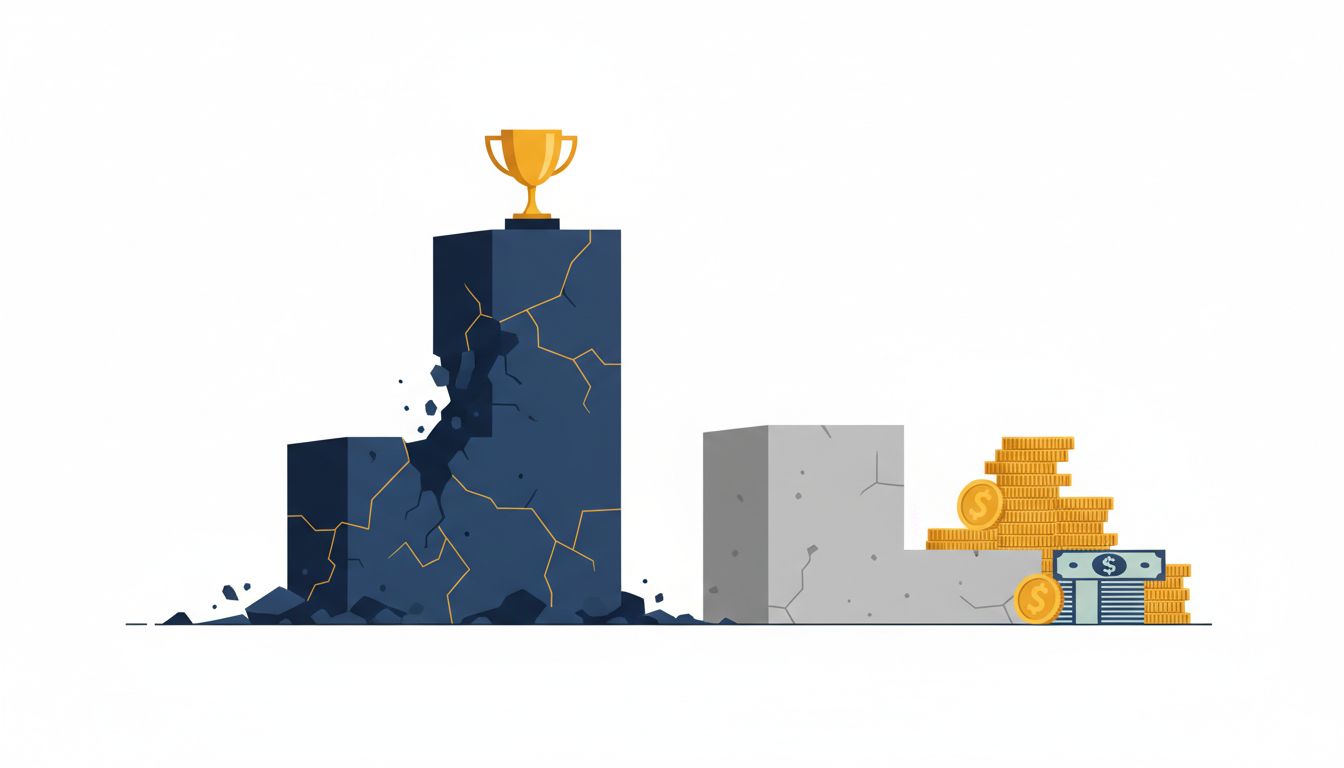
This pattern repeats so consistently that treating first-mover advantage as a genuine strategic asset requires real justification. Most of the time, being first is a burden you hand to your eventual successor.
1. The Pioneer Pays to Educate the Market
Building demand from scratch is brutally expensive. The first company into a space has to explain what the product is, why anyone should want it, and why the way people currently do things is wrong. That’s not just a marketing cost, it’s a years-long process of cultural change that you fund mostly on behalf of your competitors.
Tivo invented the DVR category. They ran ads, they did PR, they spent heavily to teach Americans that they could watch TV on their own schedule. By the time the cable companies started bundling DVRs into their set-top boxes, the education was complete. Tivo had done the hard work, and the incumbents captured the benefit.
The second company into a category walks into a room the first one already heated.
2. Early Products Are Prototypes for the Actual Market
The first version of anything is almost always wrong, not because the founders were incompetent, but because you cannot know what customers actually want until you watch them struggle with what you built. The pioneer absorbs all of that friction. They learn which features matter, which assumptions were wrong, which customer segment is actually willing to pay.
MySpace was the dominant social network before Facebook. Friendster came before MySpace. Each generation handed its successor a better understanding of what people actually wanted from social software. Facebook didn’t invent the social network. They inherited a decade of market research from companies that didn’t survive it.
The second mover gets to skip the most expensive part of product development: figuring out what to build.

3. First Movers Lock Themselves Into Early Decisions
Here’s the trap that rarely gets discussed. When you’re first, you build for the market as it exists in year one. Your architecture, your contracts, your team structure, your pricing model, all of it gets optimized for a customer base that’s mostly early adopters with unusual needs. By the time the mass market shows up, you’re stuck.
This is partly what happened to BlackBerry. They built an extraordinary product for corporate email on mobile devices. When consumers started demanding apps, touchscreens, and cameras that didn’t look like an afterthought, BlackBerry’s hardware supply chain, software platform, and enterprise sales motion were all anchored to decisions made for a different era. Apple came in fresh.
The second mover gets to make their foundational decisions with more information. That’s a structural advantage, not luck.
4. Distribution Channels Mature Just in Time for the Follower
When the first product in a category launches, the infrastructure to sell it often doesn’t exist yet. There are no comparison sites, no review blogs, no reseller partnerships, no analyst reports. The pioneer has to build distribution almost from scratch alongside the product itself.
By the time a credible competitor enters, all of that exists. There are reviewers who understand the category, buyers who know what questions to ask, channel partners who’ve already sold the concept once. The market infrastructure that the pioneer spent years building is now available to anyone.
This is especially visible in enterprise software, where new categories often require years of education before procurement teams know how to evaluate them. The company that enters after the category is understood often closes deals faster than the company that invented the category.
5. Investor Patience Is Finite, and Pioneers Burn Most of It
Venture math is unforgiving. A first mover often raises early, burns through several rounds proving the market is real, and by the time the category is clearly valuable, they’re negotiating their fourth or fifth round from a position of weakness. The narrative has shifted from exciting to complicated.
Meanwhile, a second mover can raise against a proven market. They can point at the pioneer and say: the demand exists, the model works, we just do it better. That’s a much easier pitch. They raise at better terms, with more conviction from investors who’ve now seen the space mature.
The pioneer spent years arguing the market would exist. The follower raises money after everyone agrees it does.
6. “First Mover” Is Often Just Survivorship Bias in Reverse
When we think about first movers who won, we’re mostly thinking about companies that locked in genuine network effects or proprietary infrastructure before anyone else could. That’s a real and narrow advantage. eBay’s liquidity as the first major online auction market made it extremely hard to displace. The same with some payment networks.
But the examples people reach for to prove first-mover advantage tend to be cherry-picked. For every Amazon (which entered online retail early and kept compounding), there are dozens of Webvans and Pets.com, companies that entered first into markets that weren’t ready, burned capital establishing the category, and then watched someone more patient walk in and take it.
First-mover advantage is real in specific conditions: when switching costs are high, when network effects are strong, and when the product reaches the right customers before competitors can respond. Outside those conditions, being first is mostly a disadvantage dressed up as a narrative.
The honest version of startup strategy acknowledges this. The startups with the clearest vision pivot the most, and often that pivoting is possible precisely because they watched a first mover prove the space. You don’t have to be the one who discovers the territory. You just have to be the one who builds something worth keeping once someone else draws the map.