
The Check That Changes Everything
You’ve been building for six months on savings, credit cards, and pure stubbornness. Then someone hands you a check. Not a letter of intent, not a pilot, not a “we’re very interested” email that goes cold. An actual transaction. Money moves from their account to yours.
The feeling is hard to describe if you haven’t been there. It’s relief and validation and proof, all at once. For about 48 hours, it’s the best you’ve felt since you started the company.
Then the requests start coming.
This is where founders get into trouble. Not because early customers are bad people, but because the incentive structure of that first transaction quietly warps everything: your roadmap, your hiring, your positioning, and your sense of what the company actually is. By the time most founders realize what happened, they’ve built something that works perfectly for one company and not at all for anyone else.
Why This Customer Has So Much Power
The first paying customer has leverage that no subsequent customer will ever have, and it doesn’t come from the contract. It comes from the psychological weight of the transaction.
Before they paid, you had a theory. After they paid, you have evidence. That distinction matters enormously to how founders process everything that comes next. When this customer asks for a feature, it no longer sounds like a request. It sounds like data. It sounds like product direction. It sounds like the market speaking.
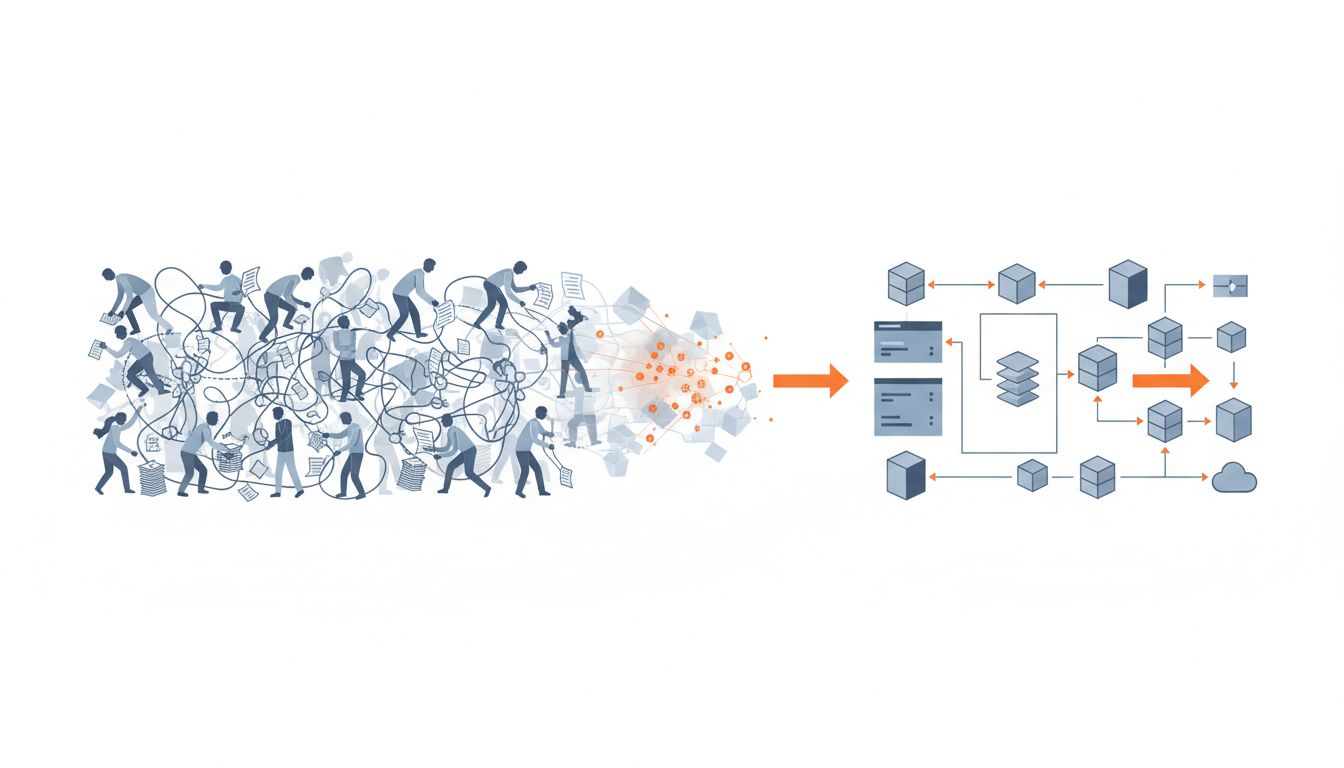
So founders build the feature. And then the next one. And then they hire someone specifically to support this customer’s integration requirements. And then the roadmap for the next quarter is, if you squint at it honestly, basically a list of things this one company needs.
I’ve watched this happen to smart founders who knew the theory. Knowing the trap doesn’t make you immune to it when the alternative is losing your only revenue.
The Specificity Problem
Here’s the technical failure underneath the strategic one: early customers almost always have highly specific needs that feel general.
A mid-sized logistics company signs up for your workflow automation tool. They have a particular approval chain, a specific data format they export from their legacy system, a compliance requirement tied to their industry. They explain all of this to you, and you listen carefully, because they’re paying you. You build exactly what they need.
What you’ve built is an excellent solution for mid-sized logistics companies with that approval chain structure and that legacy system. You probably don’t know that yet, because you only have one data point. You think you’ve built something broader.
This is the specificity trap. The first customer’s requirements feel like requirements because they come with money attached. But every company has idiosyncratic needs mixed in with genuine category needs, and you can’t reliably tell which is which from a sample size of one.
The founders who avoid this trap are the ones who treat the first customer’s requests as hypotheses rather than directives. Every feature request gets the same question: “If we removed this customer from the equation entirely, would we still build this?” If the honest answer is no, you’re building custom software on someone else’s dime, not a product.
The Revenue Hostage Situation
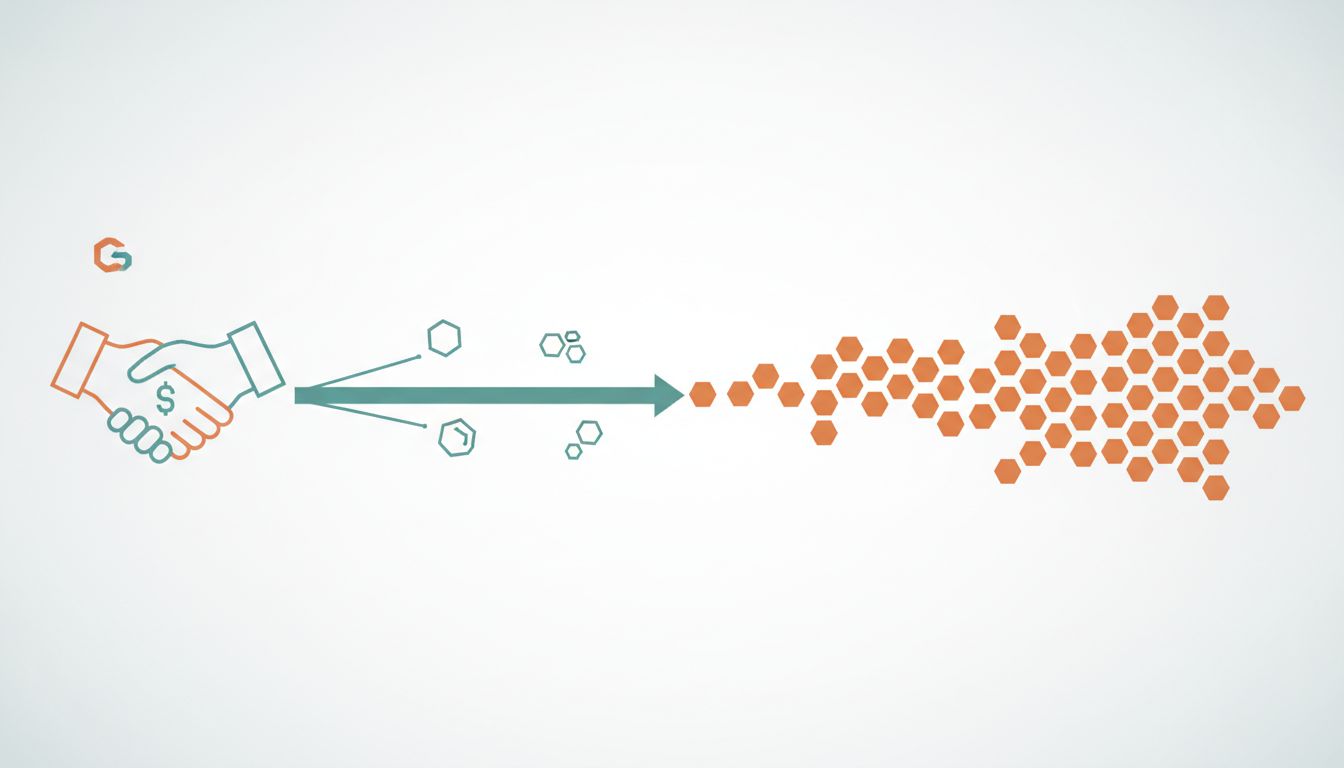
There’s a harder version of this problem that doesn’t get talked about enough. Sometimes the first customer doesn’t just influence your roadmap. They become the financial floor you can’t go below.
Scenario: you close a deal worth 40% of your annual revenue target. Maybe more. You’ve made promises in the sales process, the customer has real internal dependencies on your product, and you genuinely cannot afford to lose them. Not this quarter. Probably not next quarter either.
You are now, functionally, a hostage. Not because they’re threatening you, but because the math threatens you on their behalf. Every time they push back on a pricing increase, you fold. Every time they request prioritization of something that benefits no other customer, you say yes. You’ve built a business where one party has disproportionate control over your decisions without having any equity.
This is the dynamic that kills companies slowly. They don’t flame out. They just gradually become a services firm for their first customer while calling themselves a software company. The exit never comes because the business doesn’t scale, and the business doesn’t scale because the product was never really designed for a market.
The moment you sense this happening, the only move is to accelerate acquisition of other customers, even at lower prices or worse terms, specifically to dilute the first customer’s share of revenue. A customer who represents 10% of your revenue has no leverage. A customer who represents 60% owns you.
What Good Founders Do Differently
The founders who navigate this well do something counterintuitive: they treat the first customer as a learning source while deliberately limiting their influence as a decision-maker.
Practically, this means separating discovery conversations from product decisions. You listen to everything the customer says. You take detailed notes. You probe their underlying problems, not just their stated requests. Then you go away and decide, without them in the room, what you’re going to build, and you build it for the category they represent, not for them specifically.
It also means being honest with the customer about what you’re doing. The best early-customer relationships I’ve seen are the ones where the founder says, explicitly: “We want to learn everything from you, and we’re going to use that to build something that works for hundreds of companies like you. That means we won’t always build exactly what you ask for, but it also means the product will keep getting better in ways you’ll benefit from.”
Some customers will reject that framing. Good. You’ve learned something important about the fit before you’ve made a decade of commitments.
The Signals Worth Watching
There are specific indicators that tell you whether you’re learning from your first customer or being captured by them.
The clearest one: are you excited to show this customer what you built, or anxious about whether you built what they asked for? Excitement suggests you’re leading the product. Anxiety suggests they are.
Another one: when you talk to prospective customers, do you find yourself describing your product in terms of what your first customer does? “We work with logistics companies that have legacy ERP systems” is a description of your one customer, not your market.
A third signal is in the roadmap. Pull up the last six months of shipped features and honestly map each one back to its origin. If more than a third trace directly to a single customer’s explicit request, the product is drifting toward custom software. This doesn’t mean stop building for them. It means you need to be building at least twice as fast in directions they didn’t ask for.
The related risk, worth reading about separately, is what happens when that early customer decides to build what you sell themselves. By then, you’re fully exposed.
The Paradox of First-Mover Validation
Here’s the thing that makes this so genuinely hard: everything I’ve described is also how great products get built.
Listening obsessively to early customers, building exactly what they need, staying close to their workflows, making them successful, using their success as the proof point that brings in more customers. This is the playbook. It works. Companies have been built this way.
The difference is in whether you’re building a product or a dependency. A product solves a category problem that many companies share. A dependency solves one company’s specific problems in ways that don’t generalize. The behaviors look identical from the outside for the first twelve to eighteen months. The divergence shows up when you try to sell to customer number eleven.
If selling to the eleventh customer requires no customization, no explanations about why you built certain things the way you did, no awkward conversations about features that exist for reasons that don’t apply to them, you built a product. If every new customer feels like a fresh negotiation about what the product actually is, you built a dependency and called it a product.
What This Means
The first paying customer isn’t your enemy. They’re your most important teacher and your most significant risk, simultaneously, and you have to hold both of those truths at once.
Take their money. Study them relentlessly. Let their problems shape your understanding of the market. But never let them shape the product by themselves. The product belongs to the category they represent, not to them specifically.
Set revenue concentration limits early, before you need them. If one customer is above 30% of revenue, treat that as a structural problem requiring immediate action, not a sign of how well things are going.
And the next time a customer asks for something, before you write it into the roadmap, ask yourself: am I building this because the market needs it, or because I can’t afford to say no? Your honest answer to that question will tell you more about where your company is headed than any board presentation.
First revenue is real validation. Don’t let it become a lease on your company that someone else holds.