
Paul Allen wrote a book about his time at Microsoft. He called it Idea Man, which is honest in a way he probably didn’t intend. Allen had the ideas. Gates had the obsession. The company needed both, but only one of them slept under his desk at the office.
This is not a knock on Allen. It’s an observation about a pattern that shows up constantly in startup history, one that the founder mythology machine consistently buries: the person who joins second, or co-founds without getting top billing, or arrives eighteen months in when the product is half-built and the runway is terrifying, is often the one who determines whether the company survives.
We tell startup stories badly. We organize them around the originating idea and the person who had it. That framing feels intuitive, but it optimizes for narrative convenience over operational truth.
What ‘Second Founder’ Actually Means
Let me be precise about the claim, because ‘second founder’ is doing some work here.
I’m not talking about the co-founder who was present from day one but happens to hold the COO title instead of CEO. I mean the person who enters after the founding moment, after the initial conviction has been established, and who takes ownership of a domain the first founder either can’t or won’t cover. Sometimes they have a co-founder title. Sometimes they’re an early employee who ends up carrying the company functionally. The distinction between ‘co-founder’ and ‘early key hire’ matters for cap tables but not for this argument.
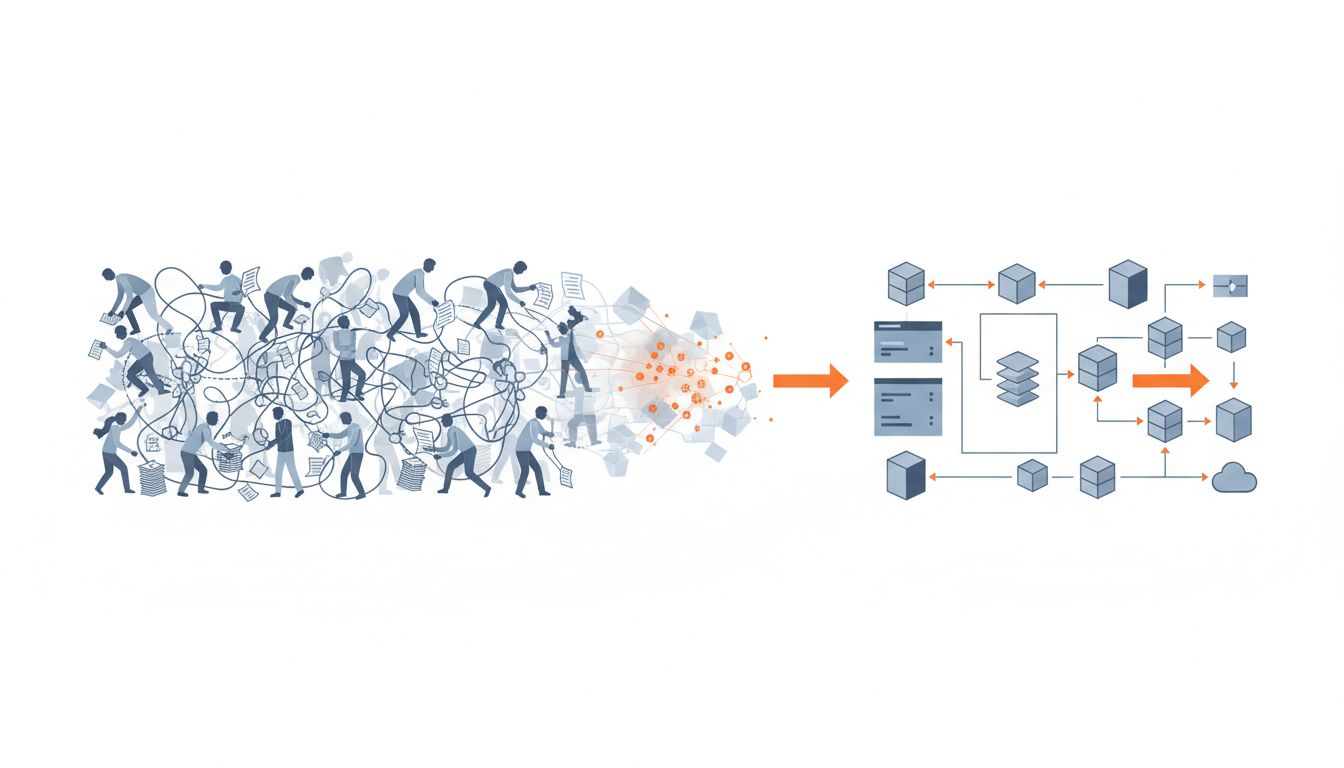
The pattern looks like this: a technical founder (or a sales-driven founder, or a domain-expert founder) builds something real but ungovernable. They can create but not scale. They can recruit but not manage. They can fundraise but not close. Then someone walks in who can do the thing the founder cannot, and the company either takes off or doesn’t depending on whether that person stays.
The Operator Problem Founders Won’t Admit
Here’s the uncomfortable version of this: many first founders are not good at running companies. They’re good at starting them. These are genuinely different skills, and the startup world does a poor job of separating them because it wants its heroes to be complete.
Brian Chesky is a legitimate exception, a founder who learned to operate at scale and became a strong CEO through multiple growth phases. But for every Chesky, there are dozens of technically brilliant or creatively visionary founders who hit a wall around the twenty to fifty person stage, when the company stops being a shared hallucination held together by proximity and starts needing actual systems.
The second founder, or the COO who arrives at that inflection point, often provides something specific: they make the first founder’s vision executable. Not by diluting it, but by translating it into the operational language of hiring pipelines, revenue targets, customer success workflows, and quarterly planning. Sheryl Sandberg at Facebook is the obvious example, obvious enough that people have started rolling their eyes at it, but the eye-rolling doesn’t make it wrong. Facebook at fifty employees was a different organizational challenge than Facebook at five thousand, and Zuckerberg was honest enough with himself to know he needed help with the latter.

Why the Mythology Gets It Wrong
The founding story is a fundraising tool before it’s a historical record. VCs want to back missionaries, people with irrational conviction who will work through conditions that would make a sane person quit. So founders learn to tell origin stories that foreground their personal obsession. The board deck, the TechCrunch profile, the podcast circuit, all of it centers the first founder because that’s what the genre demands.
This creates a feedback loop where the second founder’s contribution gets systematically undercounted. Operationally critical people get credited with ‘execution’ as if execution were a minor footnote to the genius of the idea. It isn’t. Most ideas that fail don’t fail because the idea was bad. They fail because nobody could build the machine to deliver it.
The equity structure reinforces this. A co-founder who joins six months after incorporation, even if they spend the next eight years making the company work, often holds a fraction of what the founding team holds. That’s a negotiated outcome, and it’s defensible in some ways, but it shapes how contributions get narrated after the fact. People conflate equity share with impact. The numbers say one thing, so the story says the same thing, and the actual operational history gets compressed.
This connects to something worth reading on this site: your first hire is a thesis statement about what you believe. The hire that comes right after the founding moment tells you more about what the company actually needs than almost anything the pitch deck says.
The Complementarity Requirement
The best founding pairs, however the ‘founding’ is defined, have something specific: genuine complementarity with genuine mutual respect. Not tolerance. Not grudging acknowledgment. Actual respect where each person understands that the other’s skills are not just useful but irreplaceable.
This breaks down in predictable ways. The first founder gets press coverage, and begins to believe they deserve primary credit for everything. The second founder starts to feel like a supporting character in their own career and either leaves or becomes quietly resentful. Either outcome is bad for the company.
The reverse failure mode also exists. A second founder who can run operational circles around the first sometimes starts to believe the first founder is unnecessary overhead. That’s usually wrong. The first founder, even when they’re bad at management and organizational design, is often still the person who holds the original vision most clearly, who can recruit based on conviction, who can carry the company through a crisis by sheer force of belief. Removing them rarely produces what the second founder imagines it will.
The functional structure that works is when the first founder’s domain and the second founder’s domain don’t overlap much, and when they’ve agreed on who owns what. Product vision versus operational delivery is the classic split. Technical architecture versus go-to-market is another. The moment both people are fighting over the same decisions, something is wrong with the structure.
When the Second Founder Arrives Too Late
There’s a timing problem that kills a lot of this.
First founders often wait too long to bring in the person who can run the company they’re building. They hire for execution at the individual contributor level, thinking they can manage execution themselves, when the real gap is at the organizational design level. By the time they admit the gap, the company has built habits and structures around the founder’s operational limitations, and the person who comes in to fix it has to fight the org before they can improve it.
The right time to bring in a genuinely complementary co-founder or operating partner is usually earlier than feels comfortable. When the product has early validation but before the team is large enough to have developed dysfunctional patterns around founder limitations, that’s the window. After twenty employees, the culture is already set in ways that are hard to undo.
The second founder who arrives into dysfunction has a harder job than the one who arrives into ambiguity. Ambiguity is workable. Dysfunction requires excavation before construction.
What This Means for How You Build
If you’re the first founder, the honest question to ask is: what am I actually bad at, and is my answer to that question calibrated to reality or to my ego? Most founders have a reasonably accurate picture of their strengths. They have a much less accurate picture of where they’re creating bottlenecks.
The people who can tell you the truth about this are your early employees, who watch you operate daily. Not your investors, who have an interest in maintaining your confidence, and not your co-founders in the early days, when everyone is too close to the work to see the patterns clearly.
If you’re the person being recruited as the second founder or the critical early operating hire, the question is whether the first founder is actually ready to share control or is looking for a smart executor who will implement their decisions faster. Those are very different jobs. The first one can be a real partnership. The second one will eventually produce a conflict, and in that conflict, the first founder usually wins on the org chart even when they’re wrong on the merits.
The companies that figure this out, where the first founder’s vision and the second founder’s operational machinery genuinely compound each other, look qualitatively different from the ones where one person is carrying the load. They grow faster. They survive harder stretches. And the stories they tell afterward usually attribute it all to the first founder’s brilliance, which tells you something about how much the mythology costs us in terms of actually understanding how companies work.