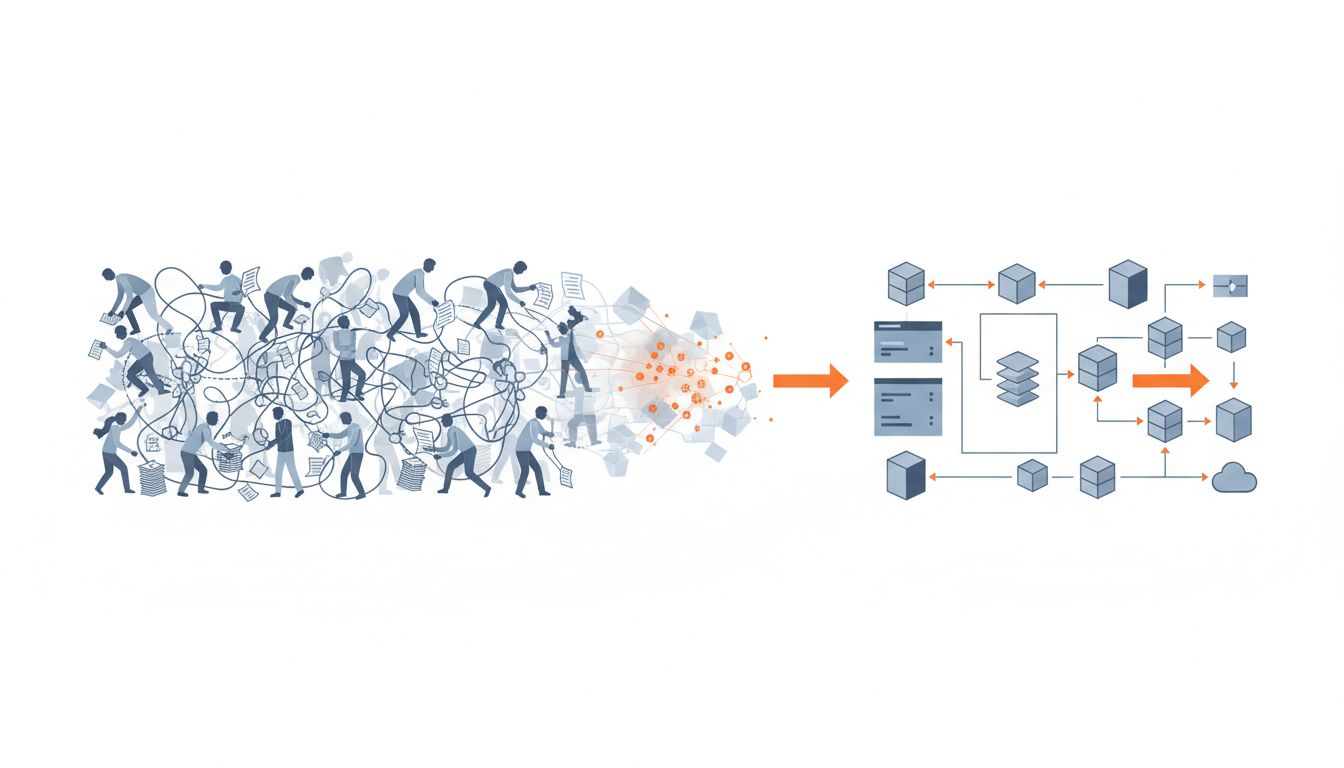
A founder I know spent three years building analytics software for retail chains. One customer represented 40% of his revenue, sent glowing references, and flew his team out for quarterly reviews. Then that customer hired a VP of Engineering and quietly started building in-house. By the time the founder found out, they had an 18-month head start and were shopping his other customers.
This story is not unusual. What’s unusual is how many founders are surprised when it happens.
1. You Were Never Partners, You Were a Vendor With Extra Steps
The moment a customer represents more than 20-25% of your revenue, they stop being a customer and start being a dependency. And dependencies, when they get large enough, get managed rather than cultivated. Your contact at that company isn’t thinking about your success. They’re thinking about their budget cycle, their job security, and whether it would be cheaper to build what you do themselves.
This doesn’t make them villains. It makes them rational actors. The problem is that founders, especially technical founders, often mistake deep product access and honest feedback for partnership. Those things are useful, but they’re not loyalty. They’re due diligence on whether building in-house is worth it.
If your best customer is asking increasingly specific questions about your architecture, your data model, or your pricing logic, that’s not curiosity. That’s research.
2. Your Product Roadmap Has Been Shaped by Their Needs, Not the Market’s
Here’s the trap that’s easy to miss: when a big customer dominates your revenue, they tend to dominate your roadmap too. Feature requests become priorities. Their edge cases become your core functionality. You spend two years building something that solves their problems perfectly, which means you’ve built something that solves your next customer’s problems only partially.
When that big customer eventually competes with you, they have an even nastier advantage. They don’t just know your product, they shaped it. They know exactly where it’s weak because they’ve been quietly using it as a test environment for their own requirements.
The strategic lesson is painful but clear: your best early customer can become your worst problem not because they’re adversarial, but because letting them drive your product direction is a slow form of capture.
3. The Signs Are Always There Before the Call
I have never heard a story where a customer went from enthusiastic partner to direct competitor without leaving a trail. The trail is just easy to ignore when the checks are clearing.
Watch for: hiring patterns (a company that’s been buying your product starts posting for engineers with your tech stack), declining engagement (fewer support tickets, less usage of new features, shorter renewal conversations), and changing relationship dynamics (you start getting routed to procurement instead of product or engineering). Any one of these is a yellow flag. Two or more and you should be running scenarios.
The most dangerous version is when usage stays high but enthusiasm goes flat. They’re still using you because they haven’t finished building their replacement. You’re in a maintenance phase whether you know it or not.
4. Concentration Risk Is the Real Villain
The customer-turned-competitor problem is almost always a concentration problem first. No single customer should be positioned to materially damage your business by leaving, regardless of why they leave.
This sounds obvious and is almost universally ignored. Early-stage startups take the revenue where they find it, and there’s nothing wrong with that. But there’s a difference between accepting concentration as a temporary condition and letting it calcify into your business model. If you’re 18 months in and one customer is still above 30% of revenue, that’s not a growth story, it’s a single point of failure.
The discipline of diversifying your customer base is also the discipline that limits how much damage any one defection can do, competitive or otherwise.
5. When They Go Competitor, Your Reaction Defines the Next Chapter
Some founders respond by going to war: aggressive pricing against the former customer, legal threats over IP, public fights. This almost never works and usually accelerates the damage. Enterprise buyers hate drama. The moment you become known as the company that fights with its customers, your sales cycles get longer.
The smarter move is to immediately answer two questions. First: what do you know that they don’t? You’ve been selling to their competitors. You understand the market dynamics they’re entering with fresh eyes. That knowledge is a real advantage if you move. Second: does their entry validate the market enough that new customers are easier to close? Sometimes a well-resourced competitor entering your space is the proof-of-concept you’ve been struggling to demonstrate.
The companies that survive this transition are the ones that treat the moment not as betrayal but as a forcing function. You were going to have to compete eventually. Now you have a timeline.
6. Contracts Won’t Save You, But They Can Slow the Bleeding
Yes, you should have non-compete and IP protection clauses in your customer contracts. No, they will not prevent a determined company from building competing software. What they can do is buy you time and negotiating leverage.
More importantly, review what data and access you’ve given to large customers. API access to your raw data pipeline, detailed export functionality, deep integration documentation handed over without tracking: these are things that look like customer success work and function as a knowledge transfer to a potential competitor. You don’t have to be paranoid, but you do have to be deliberate.
The relationship you have with a big customer when things are going well is not the relationship you’ll have when they decide to compete. Design your contracts, your data access, and your documentation handoffs for the second scenario, not the first.
7. The Best Defense Is a Product They Can’t Afford to Rebuild
In the end, the only durable protection against a customer becoming a competitor is building something that’s genuinely hard to replicate. Not hard because it’s complex, but hard because you’ve accumulated advantages they can’t buy: network effects, proprietary data, distribution relationships, brand trust with the buyers they’re trying to reach.
If your product is one engineering team and 18 months away from being rebuilt by a well-funded customer, you don’t have a moat. You have a head start. Head starts erode. Moats compound.
The question worth sitting with isn’t “how do I stop customers from competing with me?” It’s “what am I building that makes competing with me a worse idea every quarter?” That’s a harder question, but it’s the only one that actually matters.