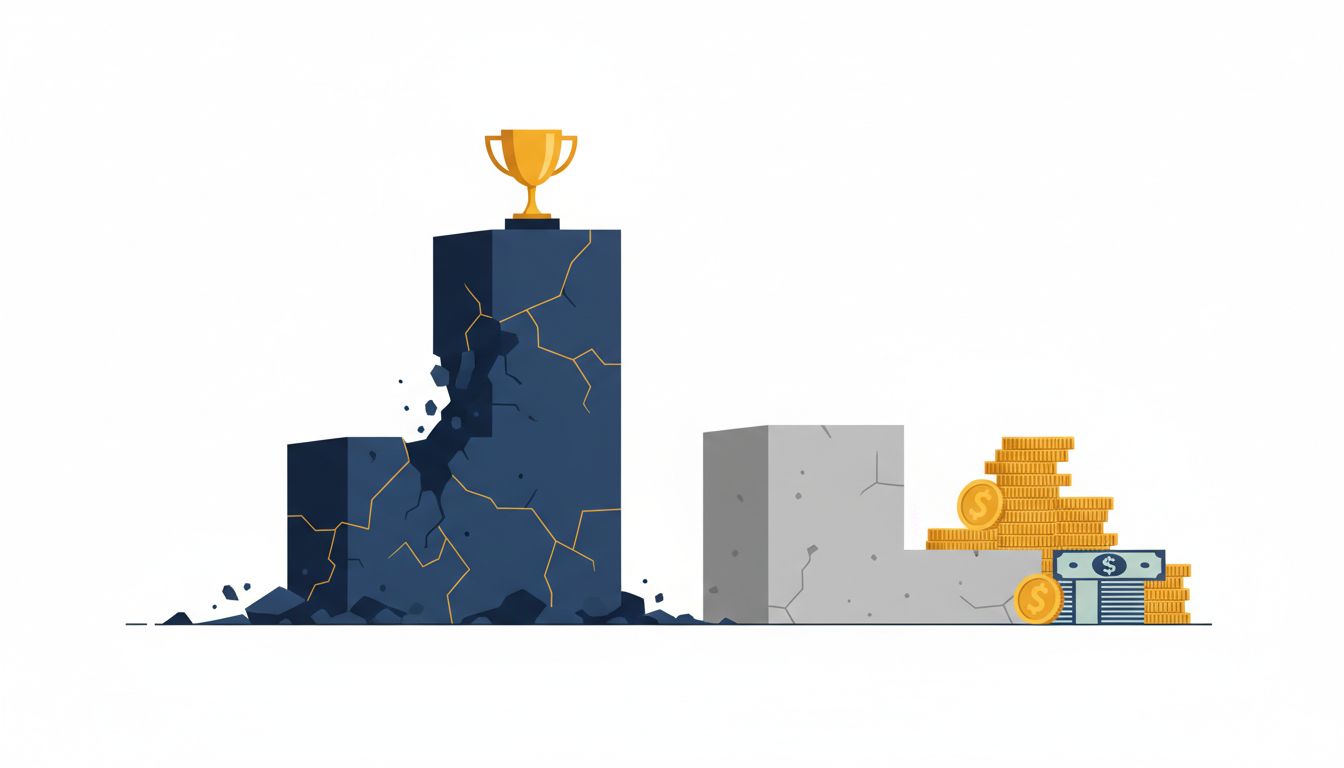

In 2015, AMD was in genuine trouble. The company had spent years trying to compete with Intel on every front, losing ground on both performance and margins. Its stock had fallen so far that analysts were openly asking whether the company would survive. Intel had more than 80% of the x86 processor market. AMD had the scraps.
Then something interesting happened. AMD stopped trying to win the market and started trying to win a business.
The Setup
The conventional startup story treats market share like a scoreboard. First place wins. Everyone else is just subsidizing the winner’s R&D. The logic feels airtight: network effects compound, distribution advantages compound, brand advantages compound. Winner takes all.
This logic is not wrong. It’s just incomplete.
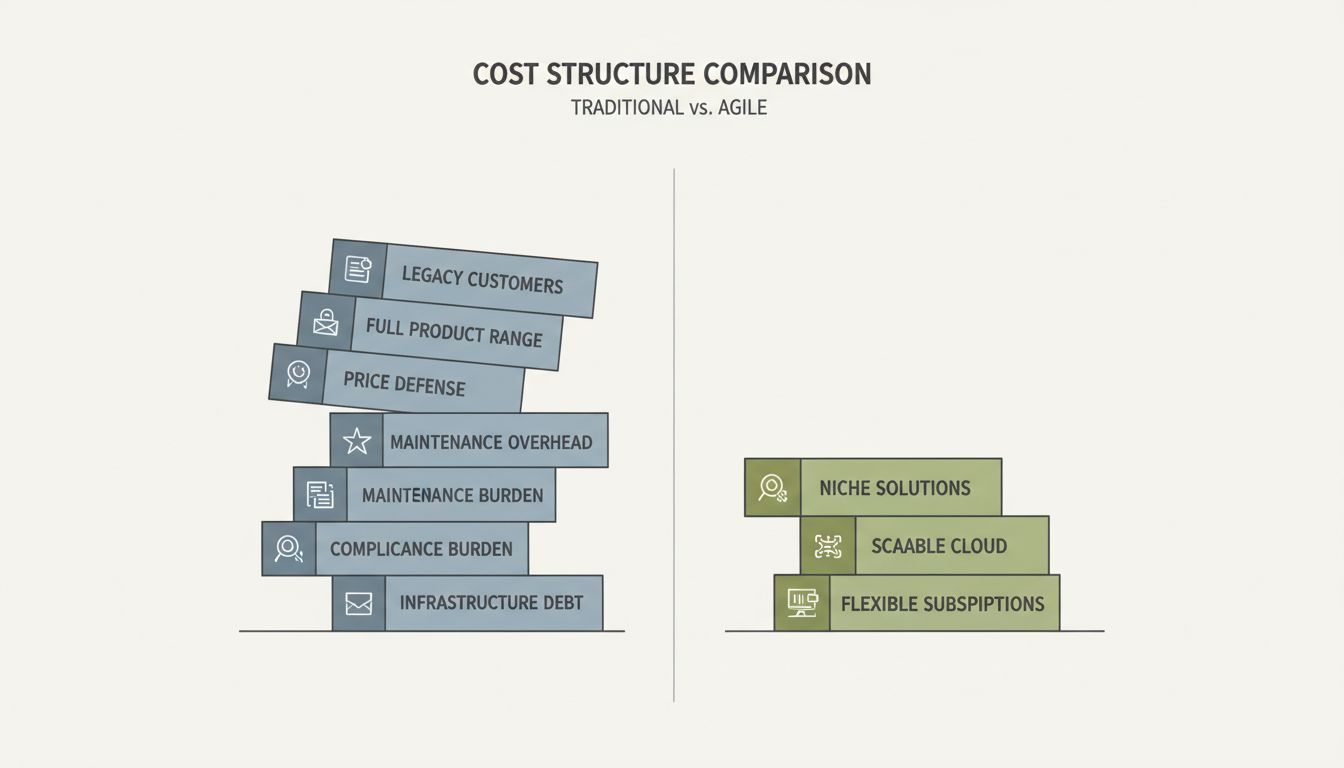
What it misses is the cost structure of winning. Being the market leader in a brutally competitive tech category means you have to defend that position constantly. You have to chase every customer segment, respond to every competitor move, and maintain engineering capacity across the full product range. The revenue is real. So is the spending.
The second-place company gets to do something the leader cannot: choose its battles.
What AMD Actually Did
Under Lisa Su, who became CEO in 2014, AMD made a set of decisions that looked like retreat at the time. The company sold its manufacturing operations (spinning them out as GlobalFoundries), which meant giving up vertical integration but also shedding enormous capital expenditure. It narrowed its focus to the processor architectures where it could actually compete, and it made a long bet on a new architecture called Zen.
Zen launched in 2017. It wasn’t better than Intel’s best chips across every metric. It didn’t need to be. It was good enough, at a price that Intel couldn’t easily match without cannibalizing its own margins. AMD targeted the customers Intel was systematically underserving: budget-conscious PC builders, cloud providers optimizing for cost per core, and eventually the high-end desktop market where enthusiasts had been starved of real competition.
Intel, for its part, had the market leader’s problem. It had to protect margins across its entire customer base. It had massive fabs to keep running. It had a sales organization built around defending existing relationships. Every time Intel cut prices to compete with AMD, it was cutting prices on products it was already selling to millions of customers at higher margins.
AMD had none of that legacy to protect. It could price aggressively in the segments it wanted to win because it had no installed base to cannibalize.
By 2020, AMD’s gross margins had climbed from roughly 31% in 2015 to above 44%. Intel’s margins were under pressure and falling. AMD was earning more per dollar of revenue despite selling a fraction of the total units. The second-place company was printing better money than the winner.
Why This Pattern Keeps Showing Up
AMD’s story isn’t unique. The pattern repeats across tech categories with enough regularity that it deserves a name. Call it the challenger’s dividend.
The market leader carries costs the challenger doesn’t. Sales teams covering every segment. Support infrastructure for every customer tier. Engineering resources defending product lines that exist mainly to prevent the competitor from gaining a foothold. These costs are real and they’re structural. They don’t go away when times get hard.
The challenger, by contrast, has to be selective. Not because it’s disciplined, but because it has no choice. It cannot afford to chase every customer. So it chases the right ones, the ones underserved by the incumbent, the ones whose needs the leader is ignoring to protect its core business. Your Biggest Fan Is the Customer You Keep Ignoring is a dynamic the market leader creates for its competitors constantly.
There’s also a pricing dynamic that rarely gets discussed. The second-place company competes on value. The first-place company competes on inertia. Customers pay the leader a premium partly because switching is expensive and partly because the brand is trusted. But that premium is a target. The challenger just has to be good enough to make switching worth it, not definitively better. “Good enough at a lower price” is a devastating competitive position, and it’s almost always available to the number two player.
What This Means If You’re Building a Company
The startup instinct is to go for market dominance. Grow fast, capture share, make the economics work later. There are businesses where this is the right strategy. Payments networks, operating systems, social platforms, any category where the value of the product is determined by how many other people use it, these are genuine winner-take-all markets and you should try to win them outright.
But most tech businesses aren’t actually like that. They’re markets with a strong incumbent, decent switching costs, and customers who are moderately satisfied but not delighted. These are not winner-take-all markets. They’re markets where the second-place company can build a very good business by being selectively better rather than comprehensively dominant.
The decision AMD made in 2014 wasn’t to give up. It was to stop pretending it could win by Intel’s rules. It found the customers Intel was underserving, built products those customers actually wanted, and priced them in a way that made the switching calculus easy. It didn’t need to beat Intel everywhere. It just needed to beat Intel somewhere, consistently, and let the margin math do the rest.
If you’re building a company into a category with an entrenched leader, that’s the question worth sitting with. You probably cannot outspend them. You probably cannot out-distribute them. But you almost certainly can serve someone better than they do. The market leader’s scale is also their constraint. They cannot move fast for the small customer, cannot price flexibly for the cost-sensitive buyer, cannot take risks on the experimental use case.
That’s your opening. Not to beat them. To make them irrelevant for the customers they’ve decided aren’t worth fighting for.
AMD never outsold Intel. It didn’t need to. It built a business that, by some measures, has become the better one. Second place turned out to be a fine place to be, as long as you stop acting like you’re in second place.