
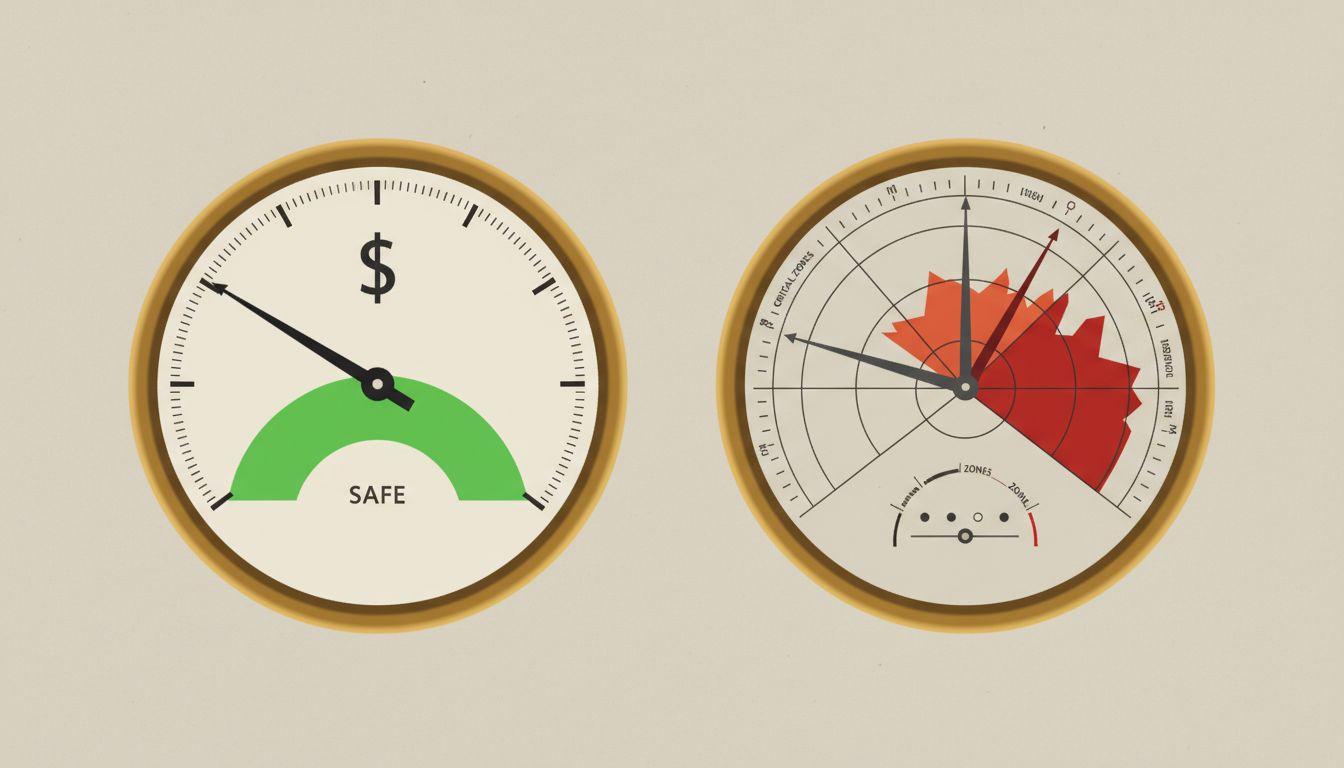
A founder I know spent three months optimizing her burn rate. Cut contractors, deferred two hires, renegotiated the office lease. She walked into her Series A pitch with a burn rate that looked conservative and responsible. The investors passed. Not because of the number, but because of what the number was hiding: her revenue had been flat for nine months, her best customer was quietly looking at alternatives, and her cost cuts had gutted the team doing the work that mattered. The burn rate looked fine. The company was dying.
This is the burn rate trap. It’s a clean, easy number. It fits on a dashboard. It gives founders something concrete to manage when everything else feels uncertain. But optimizing for it is like judging a car’s health by how slowly it’s consuming gas. You can always burn less by going nowhere.
The Number Burn Rate Actually Tells You
Burn rate answers one question: how long until the account hits zero? That’s useful information, but it’s the wrong question to be obsessed with. The right question is whether you’re making progress fast enough to justify the spend. Burn rate without a velocity component is noise.
Runway matters, obviously. You need enough time to find out if your thesis is right. But founders who manage primarily to extend runway often do it by slowing down the experiments that would tell them whether the thesis is wrong. That’s not conservation, it’s procrastination with a spreadsheet attached.
The number that actually predicts whether a startup survives early stage is burn multiple: how many dollars you’re burning for every dollar of new ARR you’re adding. A company burning $500k a month while adding $500k in new ARR has a burn multiple of 1. A company burning $500k while adding $100k has a burn multiple of 5. Both companies might look identical in a burn rate conversation. They are not the same company.
What Obsessing Over Burn Rate Actually Costs You
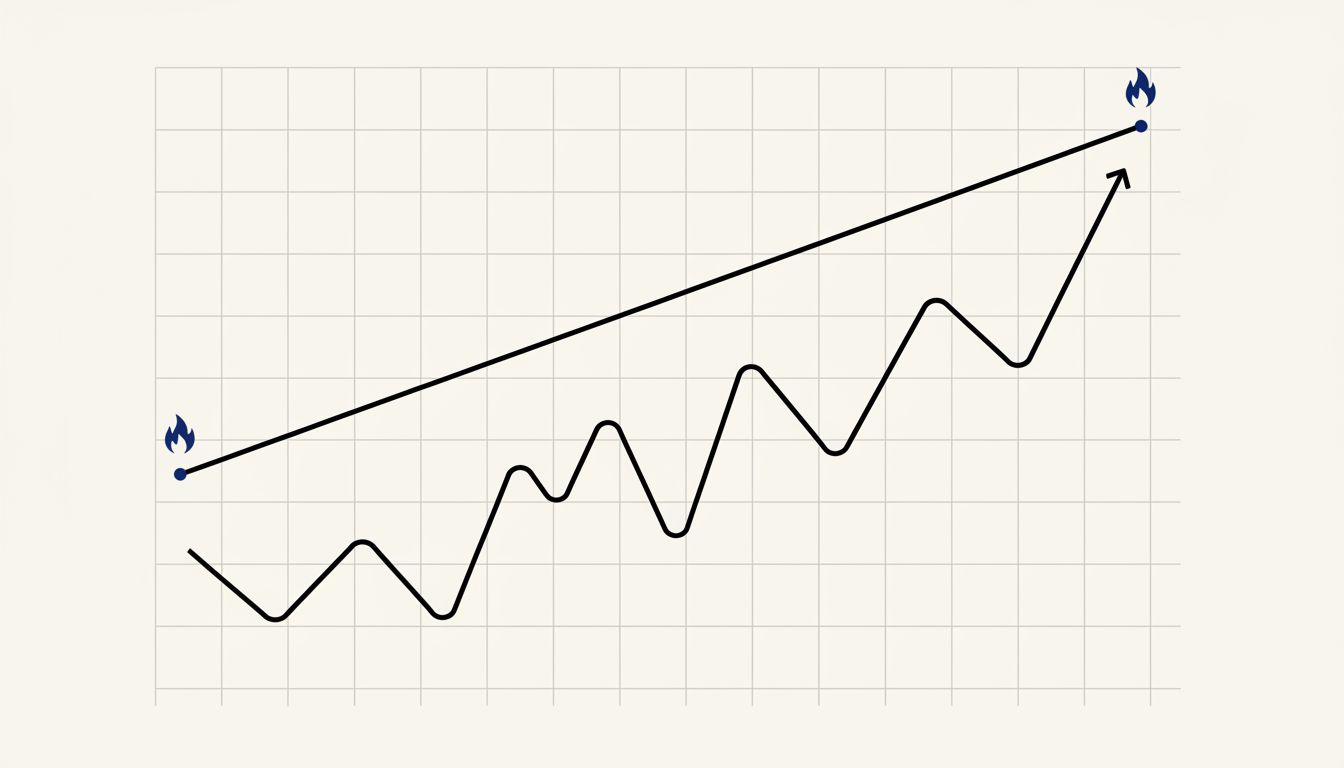
When you make burn rate the primary metric, you start making decisions that optimize for the number instead of the outcome. You cut the expensive senior engineer and keep two cheaper ones. You eliminate the sales person who hasn’t closed yet instead of the one who closed deals that churned immediately. You stop sponsoring the conference that generated three qualified leads a month because the cost is visible and the attribution is murky.
This is exactly the dynamic behind why the cheap engineer costs more than the expensive one. The same logic applies to every cost decision a startup makes under burn rate pressure. Cheap decisions feel responsible. They’re often just slow.
There’s a more insidious version of this problem. Burn rate pressure causes founders to stop taking risks. Not bad risks, but the necessary kind. The experiment that costs real money but would answer a critical question. The hire who’s expensive but would unlock the next phase. The market expansion that requires upfront spend before the revenue follows. Every one of these looks wrong when you’re staring at burn. Every one of them might be exactly what the company needs.
Frugality is a virtue in startups. Burn rate obsession is frugality’s neurotic cousin.
The Metrics That Burn Rate Crowds Out
If you’re running a B2B SaaS company and you’re not watching net revenue retention with at least as much attention as burn rate, you’re flying blind on the metric that determines whether your business has any underlying health at all. NRR above 100% means your existing customers are spending more over time. It means that even if you stopped acquiring new customers entirely, revenue would still grow. It also means your burn, relative to the value you’re creating, is actually shrinking.
Churn, pipeline velocity, and sales cycle length tell you things about your near-term survival that burn rate simply doesn’t contain. A company with a 90-day sales cycle and strong pipeline might look like it’s spending irresponsibly in month one. The burn rate dashboard doesn’t know that three deals are about to close.
Gross margin matters more than burn rate in most capital-efficient business models. Burning $300k a month at 75% gross margin is a fundamentally different situation than burning $300k at 30% gross margin. Same number on the dashboard. Completely different underlying businesses.
What to Watch Instead
None of this means burn rate is irrelevant. You need a runway number. Eighteen months is better than six. But treat it as a constraint to be aware of, not a target to minimize.
The metrics worth actively managing are the ones that tell you whether spend is converting to progress. Burn multiple is the most direct. New ARR per dollar spent gives you a similar read. If you’re pre-revenue, track the leading indicators of product-market fit more carefully than you track dollars out the door, because the dollars out the door only matter if the fit never comes. As product-market fit is often a mistake you survived, the goal is staying alive long enough to learn, not just cutting your way to a longer runway.
Set a burn floor, not a burn ceiling. Know the minimum responsible spend to move at the speed your market requires. Anything above that floor should be scrutinized. Anything below it should raise questions about whether you’re actually competing.
The founders who navigate early stage well have internalized something that’s genuinely hard to hold onto when the account balance is dropping every month: money spent on the right things isn’t loss. It’s investment. The job is knowing the difference, and you can’t know it from a burn rate dashboard alone.
The company my acquaintance was running eventually raised a bridge round, not because the burn rate looked better, but because she started tracking the right things and finally got honest about what the numbers were telling her. The burn rate had been fine the whole time. That was the problem.