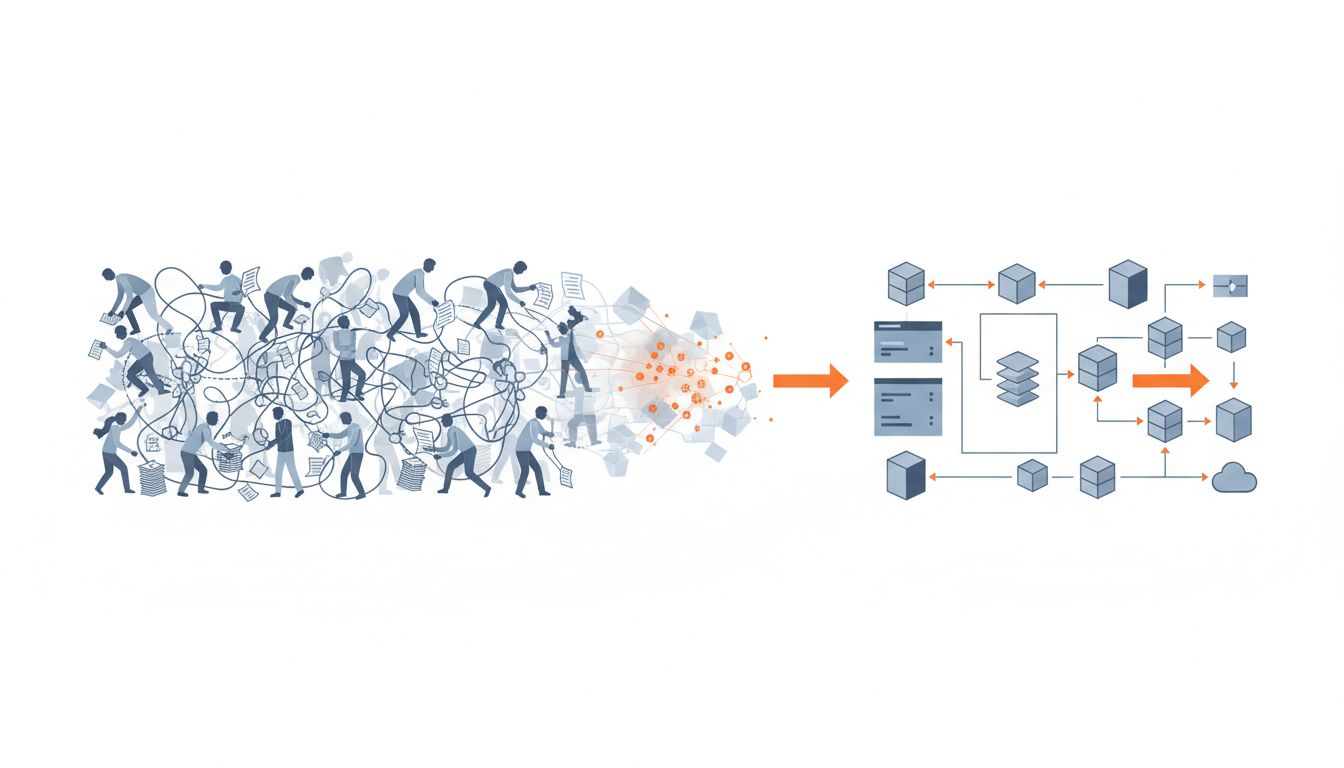

Imagine you’re six months into building a product. You have paying customers. The checks clear. The feedback is positive. And you are absolutely, completely pointed in the wrong direction.
This is not a hypothetical. It happened to three of the most successful technology companies of the last twenty years, and in each case the companies almost couldn’t see it because the early customers were too polite, too present, and too willing to pay.
Stripe Was Almost a Backend Service for Developers Who Hated Payments
Before Stripe became the default payments infrastructure for the internet, it was a solution to a very specific problem: online payments were painful to integrate. The Collison brothers, Patrick and John, built early versions to scratch their own itch and the itch of developer friends who were furious about the state of payment processing APIs.
The early users were other developers. Technical, opinionated, grateful. They sent feedback, filed issues, asked for features. But here’s the thing: what developers wanted and what would make Stripe a large business were not the same list. Developers wanted clean APIs, good documentation, and to never think about PCI compliance again. That’s a tooling product. That’s a developer-experience play.
What the Collisons eventually understood was that payments infrastructure was not a tooling category. It was a business-critical infrastructure category, one where the real customer was not the engineer integrating Stripe but the founder or finance team whose business depended on the money actually moving. The product had to serve the developer (who would implement it) and the business (who would live with it). The early customer base, enthusiastic developers with side projects, almost defined the product in a way that would have kept it niche.
Stripe’s growth only made sense once they stopped treating “developer-friendly payments” as the destination and started treating it as the entry point into something much larger: business financial infrastructure. The Atlas product, the revenue recognition tools, the Treasury product — none of that comes from listening to the first wave of developer users. It comes from understanding who actually needed to trust them with real money at scale.

YouTube Was Almost a Dating Site
This one is less metaphorical. YouTube launched in 2005 with a feature called “Me at the Zoo” energy, but the original concept, as described by co-founder Jawed Karim in interviews, included a dating-video component. The idea was that users could upload short videos of themselves as a way of connecting romantically. Hot or Not meets video hosting.
The dating angle went nowhere. But something interesting happened: people kept uploading videos anyway. Not dating videos. Just… videos. Clips from TV. Funny moments. Home recordings. The founding team, rather than forcing users back onto the dating concept, paid attention to what people were actually doing with the product.
The pivot wasn’t dramatic. It was more like the founders looked at their own product and said “oh, apparently this is what it is.” The critical move was not inventing a new direction but being willing to abandon the founding premise when reality contradicted it.
What makes this notable is how close they came to over-investing in the wrong thesis. If the early team had doubled down on the dating use case, A/B testing romantic matching features and building recommendation algorithms around compatibility, they would have competed in a crowded category against better-funded players. Instead they noticed organic behavior that nobody had planned for and followed it.
Google acquired YouTube in 2006 for $1.65 billion, roughly 18 months after launch. That acquisition almost certainly doesn’t happen if YouTube spends those 18 months as a dating product.
Slack Was a Game That Nobody Wanted to Play
Stewart Butterfield has now done this twice. Flickr emerged from the wreckage of a failed online game called Game Neverending. Slack emerged from the wreckage of a failed online game called Glitch.
Glitch launched in 2011 and shut down in 2012. It was a massively multiplayer browser game with a genuinely original aesthetic, and it failed to attract enough players to sustain itself. While building Glitch, the team had developed an internal messaging tool to coordinate across offices. When Glitch died, that tool survived.
The leap from “internal tool we built for ourselves” to “product we sell to other companies” is not obvious and it’s not small. Plenty of teams build internal tooling that would be useless to anyone else. What Butterfield’s team had was something that had been stress-tested by the actual chaos of building a consumer game across distributed teams: urgent coordination, file sharing, search, notification management. The internal constraints had shaped the tool toward genuine usefulness.
But the early Slack customer was, again, the wrong customer in an important sense. Tech companies with distributed engineering teams adopted it quickly because they recognized the problem it solved. The real prize, which took years to reach, was the much larger population of non-technical organizations: sales teams, operations departments, healthcare administrators. Getting there required a product that was useful to people who had never used IRC and didn’t have strong opinions about keyboard shortcuts.
The early adopter base almost locked Slack into a “developer communication tool” identity that would have capped its market size considerably. The product-market fit they found first was real but it wasn’t the fit that built a company worth $27 billion when Salesforce acquired it.
The Pattern Beneath All Three
These are not pivot stories in the way that word usually gets used, meaning a desperate lurch away from something failing. All three companies had something that was working when they made the critical adjustment. Stripe had paying developers. YouTube had users uploading videos. Slack had enthusiastic early adopters spreading it by word of mouth.
The problem in each case was that your first paying customer is your most dangerous trap not because they give you bad feedback, but because they give you very specific feedback that optimizes for their own use case. They are not lying to you. They genuinely want what they’re asking for. But building toward their requests means building away from the larger opportunity that you can only see if you look past them.
The practical question is how you actually do this while the early customers are in the room, vocal, and spending money. A few things these companies did that others didn’t:
They watched behavior, not just feedback. YouTube’s team noticed what users were actually uploading, not what they said they wanted from the product. Behavioral signals are harder to collect and harder to interpret, but they’re more honest than survey responses.
They treated early success as a signal, not a destination. It would have been easy for Stripe to declare success in the developer-tooling category. The Collisons treated it as evidence that they had a wedge, not that they had arrived.
They were willing to make the early adopters uncomfortable. Slack’s push into enterprise sales and non-technical teams required building features and workflows that their earliest fans didn’t ask for and sometimes didn’t like. That’s a genuinely hard call to make when the people complaining are also your most visible champions.
None of this shows up in the mythology of these companies, which tends to emphasize the elegance of the original vision. The reality is messier and more instructive. They all almost became something smaller than they are. The reason they didn’t is that the founders paid closer attention to what was actually happening than to the story they wanted to tell about it.