
The simple version
Prompt engineering works because language models predict likely continuations of text, so your prompt shapes the probability space of what comes next. The words matter less than the context and structure you create.
Why ‘magic words’ leads you astray
A lot of people treat prompting like a combination lock. Find the right phrase, get the result. “Say ‘think step by step’ and the AI gets smarter.” “Start with ‘you are an expert’ and watch it perform.”
This mental model isn’t entirely wrong, but it’s wrong enough to cause problems. It encourages you to cargo-cult phrases you found on Reddit without understanding why they sometimes work. It makes you fragile, because the moment an approach stops working you have no framework to recover. And it misses the actual levers you have.
The better model: you are writing the beginning of a document, and the model is completing it. Your prompt is evidence about what kind of document this is, what audience it’s for, what register it should use, and what a good continuation looks like. Everything that works in prompt engineering flows from this.
What you’re actually controlling
When you write a prompt, you’re influencing a few things:
The implied context. If you start a prompt with “I’m a cardiologist reviewing a patient chart,” you’ve told the model something about who it’s writing for. A good continuation of that document looks different from a good continuation of “explain heart disease to me.”
The expected format. Models are good at pattern-matching to document types. If your prompt looks like the start of a bulleted list, you’ll probably get a bulleted list. If it looks like an email, you’ll get email formatting. This is why telling the model “respond in plain prose, no bullet points” works, and it’s also why using examples (few-shot prompting) is so powerful. You’re not magic-wording it, you’re showing it the shape of what you want.
The difficulty of the task as presented. This one matters more than people realize. A model generating a response to “what’s the capital of France” doesn’t need to do much before producing “Paris.” A model generating a response to a complex reasoning problem needs to surface the relevant reasoning steps before it commits to a conclusion. Asking it to “think step by step” works (and research from Google, including the 2022 Wei et al. chain-of-thought paper, confirmed this) not because those words are magic, but because they push the intermediate reasoning into the text where it can inform what comes next. You’re restructuring the task, not casting a spell.

The three things worth actually spending time on
Given that framing, here’s where your effort should go:
1. Specify the output, not just the input. Most weak prompts describe the question without describing the answer. “Tell me about nuclear fusion” is a weak prompt. “Explain the current state of nuclear fusion research in three paragraphs, for a reader who understands basic physics but hasn’t followed recent developments” is a strong one. You’ve defined length, audience, and scope. The model has a much narrower target to hit.
2. Give examples when format matters. If you need outputs in a specific structure (a JSON object, a particular report format, a specific tone), show one or two examples rather than describing them. Descriptions of formats are fuzzy. Actual examples are precise. This is the highest-leverage prompting technique available to you right now and most people underuse it.
3. Break complex tasks into stages. Ask a model to do too many things at once and it trades quality on each subtask to satisfy all of them. Instead of “analyze this contract, identify risks, summarize them, and suggest revisions,” run those as sequential prompts where each builds on the last. You get better results on each stage and you can catch and correct errors before they compound. This is especially relevant if you’re prompting programmatically, where model updates can shift behavior in ways that break multi-step chains.
What the model doesn’t have that you assume it does
Here’s the thing that trips up most people: you know what you want. The model doesn’t. Every failure to communicate your intent is a place where the model fills in the gap with its best guess, which is often the most common version of what was asked, not the specific version you needed.
This is why “write me a blog post” produces generic output. The model’s best guess at what that means is the statistical average of blog posts in its training data. If you want something specific, you have to communicate that specificity. Not through keywords, but through context, examples, and constraints that narrow the space of valid continuations.
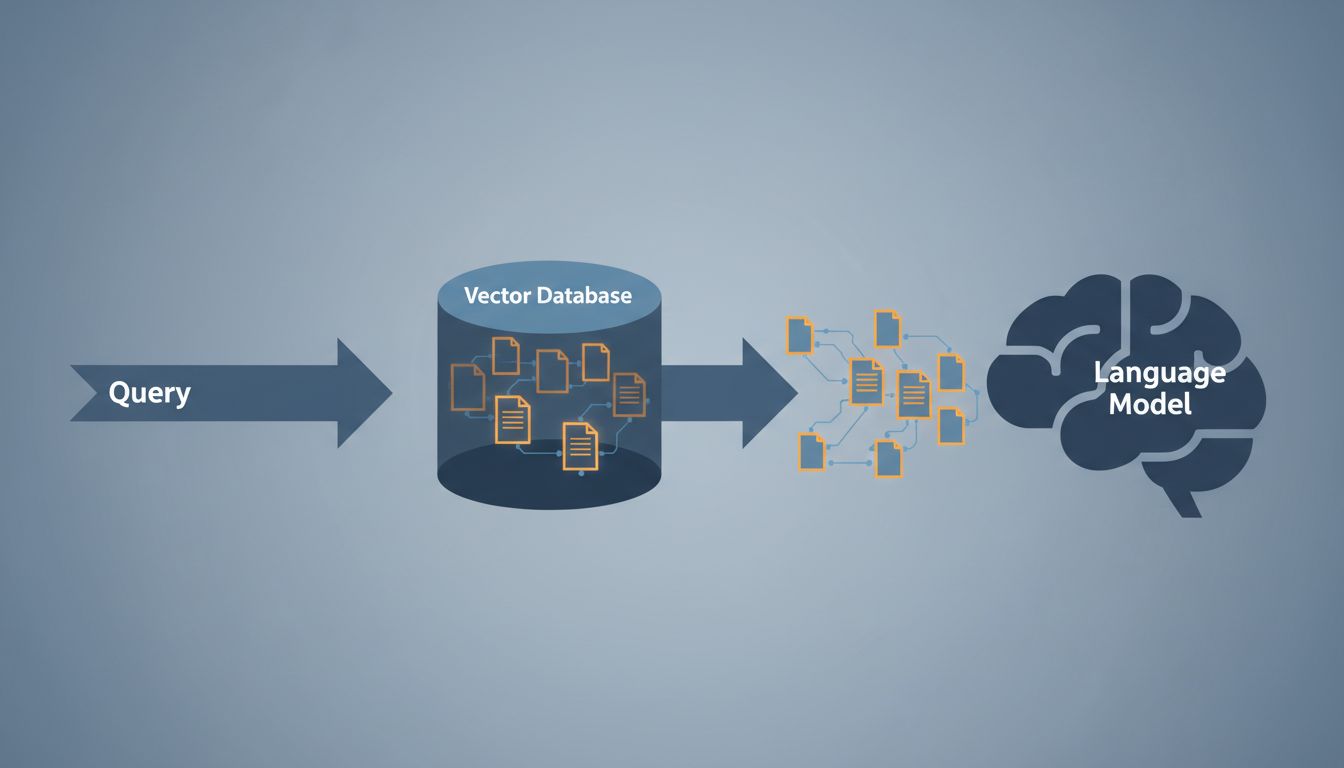
It’s also worth noting that models are not retrieving facts from a database. They’re generating plausible text. This distinction matters when accuracy is on the line. Why AI confidence tells you nothing about accuracy is a real problem, and no amount of prompting fully solves it. Good prompting reduces errors by giving the model better structure to work within. It doesn’t turn a probabilistic system into a deterministic one.
The practical upshot
You don’t need to become a prompt engineer in the credentialed, LinkedIn-title sense. But you do need to stop thinking about prompts as incantations and start thinking about them as drafts. A prompt is the first part of a document you want the model to finish. Write it like you’d write the setup to something you actually want to read, and you’ll outperform 90% of what people get from these tools.
Adjust based on output. If the model produced something in the wrong register, look at your prompt for signals that invited that register. If the output is too vague, look for where your prompt was vague. The feedback loop is fast. Use it.
Prompt engineering is a skill, but it’s a normal skill, not a mystical one. It rewards the same things good communication always rewards: clarity about what you want, specificity in how you describe it, and the patience to revise when your first attempt misses.